Šeimyniškiai hillfort: a fortified castle site in Lithuania
Site at a Glance
- Rating
- 4.6
- Popularity
- Very Low
- Country
- Lithuania
- Primary era
- Medieval
- External website
- Open
- Eras represented
- Medieval
- Civilizations
- Grand Duchy of Lithuania
- Site type
- Military
- Remains
- Castle
On this page7 sections
History
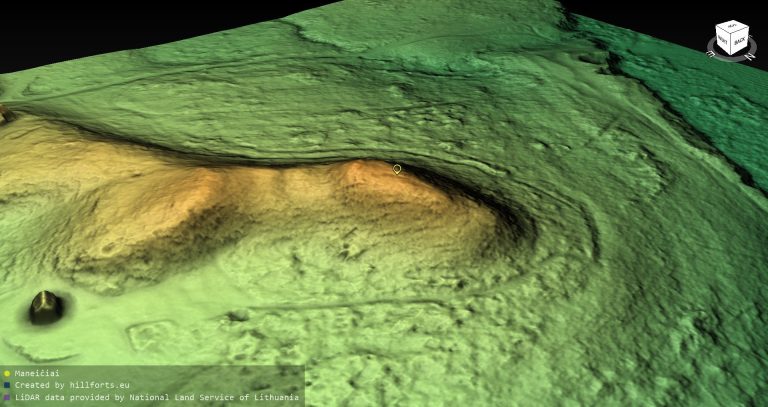
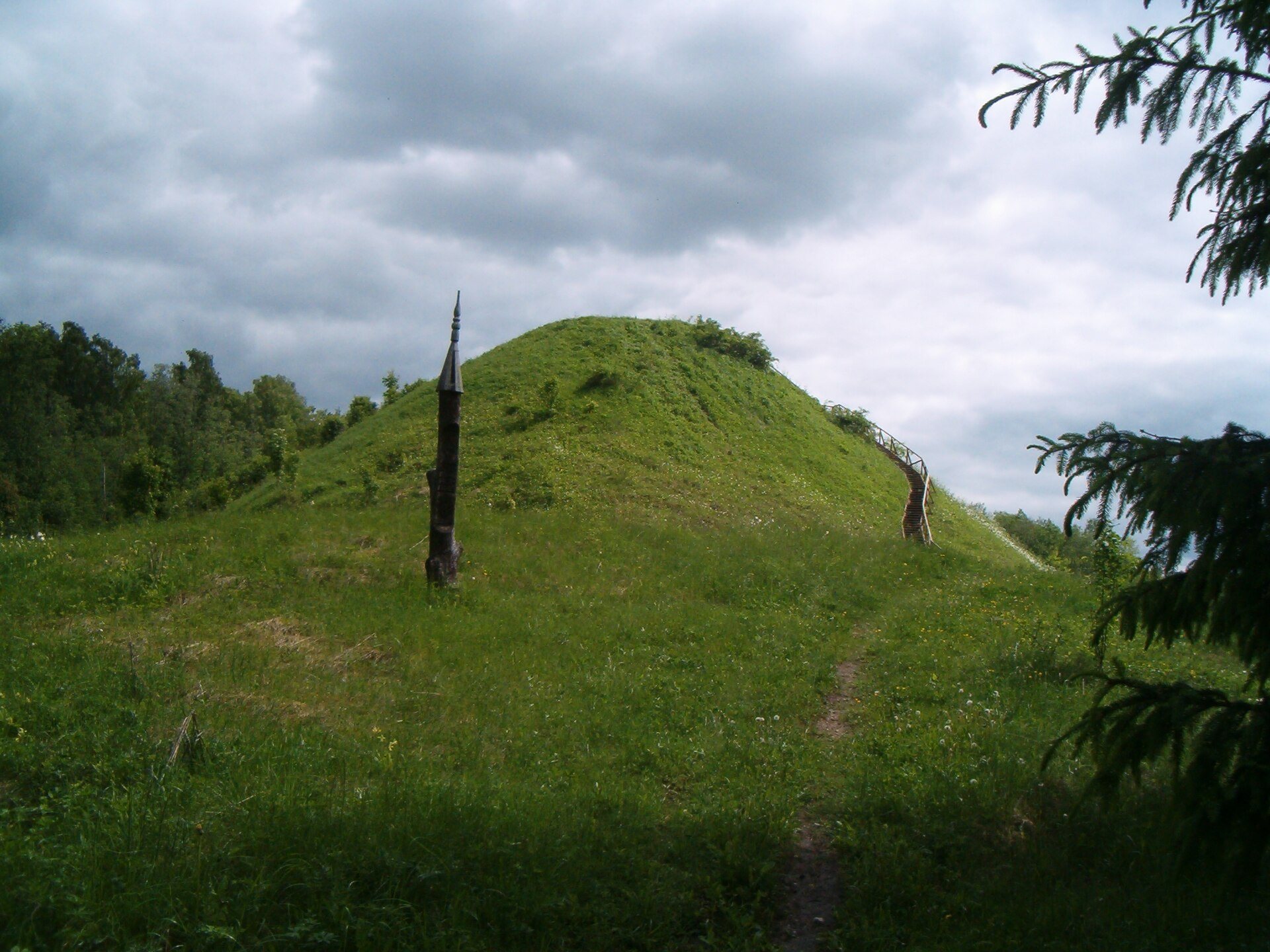
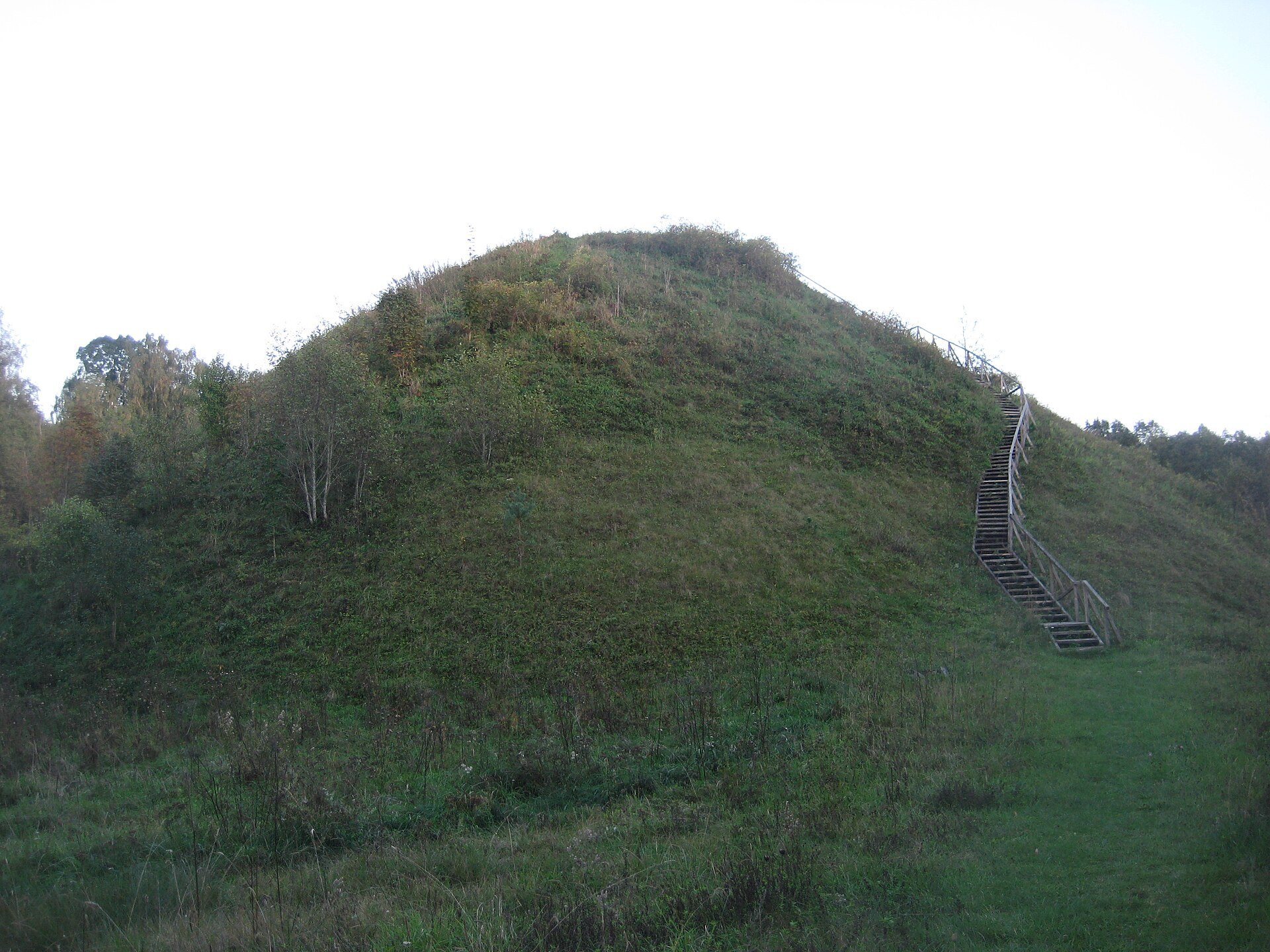
Šeimyniškiai hillfort in Lithuania is a fortified site comprising a hillfort, an outwork, and a settlement at its foot. Dating from the first millennium to the fifteenth century, it is identified with Užpaliai Castle, which is mentioned in 1338.
Medieval castle and frontier warfare
In March 1373, the Livonian Order, a medieval Catholic military order active in the eastern Baltic and involved in frontier conflicts with Lithuanian territories, attacked the castle’s outwork at night. The attackers burned it, killed all its occupants, and drove away 70 horses.
The Livonian Order burned the castle again in early February 1433. It was rebuilt soon afterward. A castle commander is recorded at Užpaliai in 1448, and a meeting intended to regulate the border with Livonia was planned there in 1453.
Investigation and protection
The Institute of History surveyed the hillfort in 1958 and 1970. Finds from the site are held by the National Museum of Lithuania. A Lithuanian government resolution of 19 May 1998 declared the site a cultural monument. Its protected territory covers 4.7 hectares, while its visual protection subzone covers 1,902,000 square metres.
In 1997, about 60 ares of alder woodland on the northern slope were cleared to expose the hillfort. The work was carried out in winter, when frozen ground reduced damage to the slope. Ploughing has damaged the hillfort and outwork, and erosion has affected their northeastern slopes toward the Piliaus stream.
Remains
Hillfort
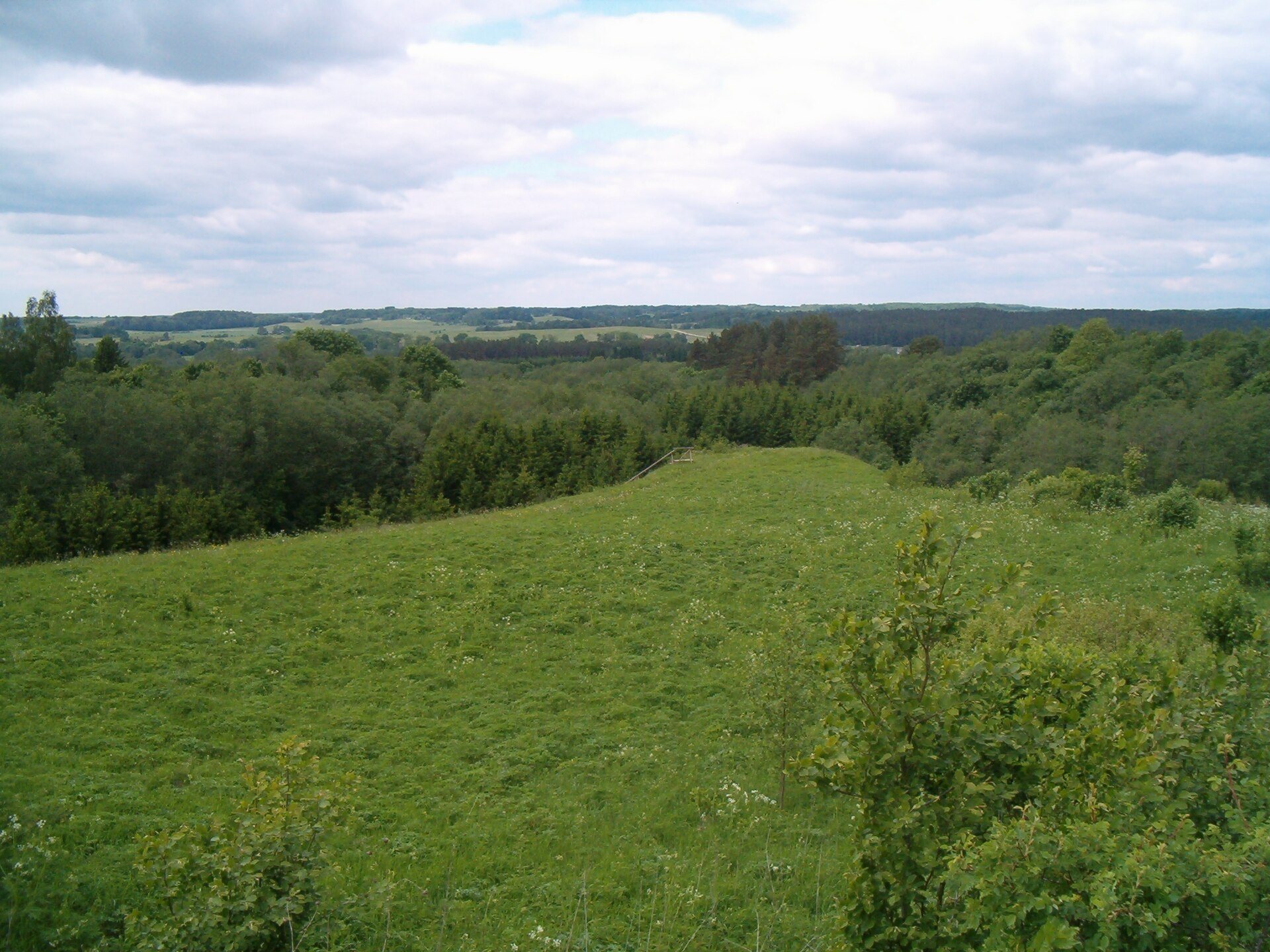
The hillfort occupies a highland promontory where the Piliaus stream meets the site from the northeast and the Pilupis from the southwest. Its steep slopes rise 16 metres. The plateau has an elongated trapezoidal form on a northwest-southeast axis. It measures 70 metres in length, is 40 metres wide at the southeast end, and narrows to 19 metres at the northwest end. Crossbow arrowheads have been found on the plateau.
A rampart enclosed the plateau. At the southeast end, it is 4 metres high and 28 metres wide, with a 4-metre-wide top. A ditch beyond it extends for 120 metres, reaches 10 metres in depth and 50 metres in width, and has a bottom 10 metres wide. The northeastern rampart is 1 metre high and 8 metres wide, with a top 1.5 metres wide. The northwestern rampart is conical, measuring 1.2 metres in height and 19 metres in width, while ploughing has levelled the southwestern rampart.
At the northwestern foot lies a silted ditch 15 metres wide, followed by a rampart 1 metre high and 10 metres wide. Remains of a road 10 metres wide extend along the southeastern foot. The hillfort is covered by grass, while trees grow on its northeastern slopes.
Outwork
The outwork lies southeast of the hillfort, beyond its ditch, between the valleys of the Piliaus stream and the Pilupis. Its trapezoidal plateau extends from southeast to northwest for 160 metres. It is 55 metres wide at the northwest end and 130 metres wide at the southeast end. Rough-surfaced and wheel-thrown pottery has been found on the plateau.
A rampart 0.5 metres high and 8 metres wide was built at the southeastern end of the outwork and curves onto its northwestern slope. Beyond it is a ditch 130 metres long and 24 metres wide. The ditch is 6 metres deep on the outwork side and 4 metres deep on the exterior. A 1-metre-wide terrace follows the southeastern slope of the ditch from west to east toward the outwork and survives as part of an old road. The outwork’s steep slopes rise 12 metres. It is covered by grass, and its northeastern slopes have been affected by erosion and ploughing.
Foot settlement
A settlement occupies approximately 1 hectare at the southwestern and northeastern foot of the hillfort, forming the third part of the fortified site alongside the hillfort and outwork.