Anta da Portelagem and Mamoas do Rápido: Prehistoric Burial Monuments in Portugal
Site at a Glance
- Popularity
- Very Low
- Country
- Portugal
- Primary era
- Bronze Age
- Eras represented
- Stone Age, Bronze Age
- Civilizations
- Unclassified
- Site type
- Burial
- Remains
- Necropolis
On this page9 sections
History
Prehistoric origins
The Anta da Portelagem and Mamoas do Rápido form a prehistoric burial complex at Vila Chã, Portugal. The Anta da Portelagem dates to around 3000 BC and belongs to the Megalithic Necropolis of the Vila Chã Plateau, a group of about two dozen monuments. In northwestern Iberia, anta is a local term for a dolmen or its stones, while mamoa refers to a characteristic Neolithic burial mound.
Investigation and protection
Francisco Martins Sarmento investigated the Anta da Portelagem in the late nineteenth century. Later, a University of Portucalense team led by Eduardo Jorge Lopes da Silva studied it and the Rápido group. The site received Property of Public Interest status in 1999.
Remains
Burial monuments
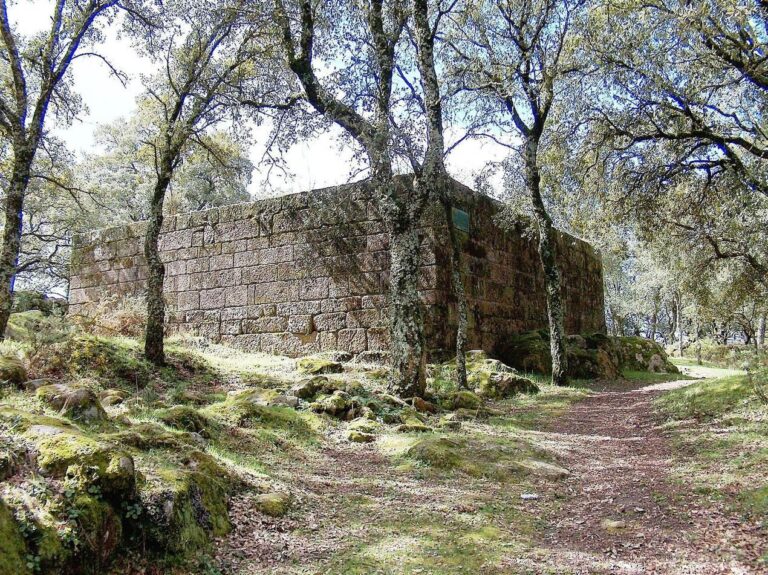
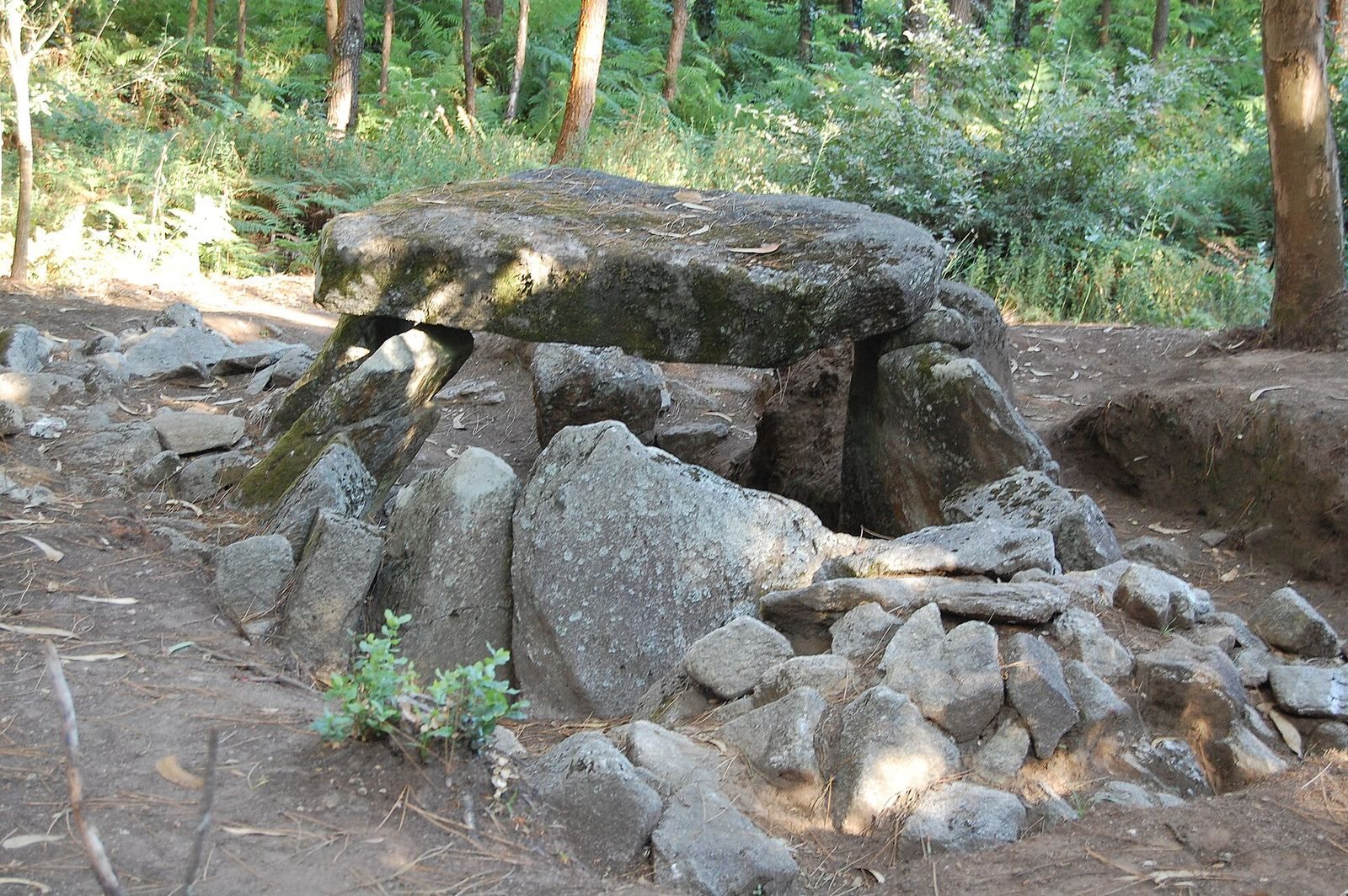
The monuments stand on the Vila Chã parish plateau. The Anta da Portelagem combines an earthen burial mound with a stone chamber, while the nearby Rápido group comprises two mounds and a dolmen.
Anta da Portelagem
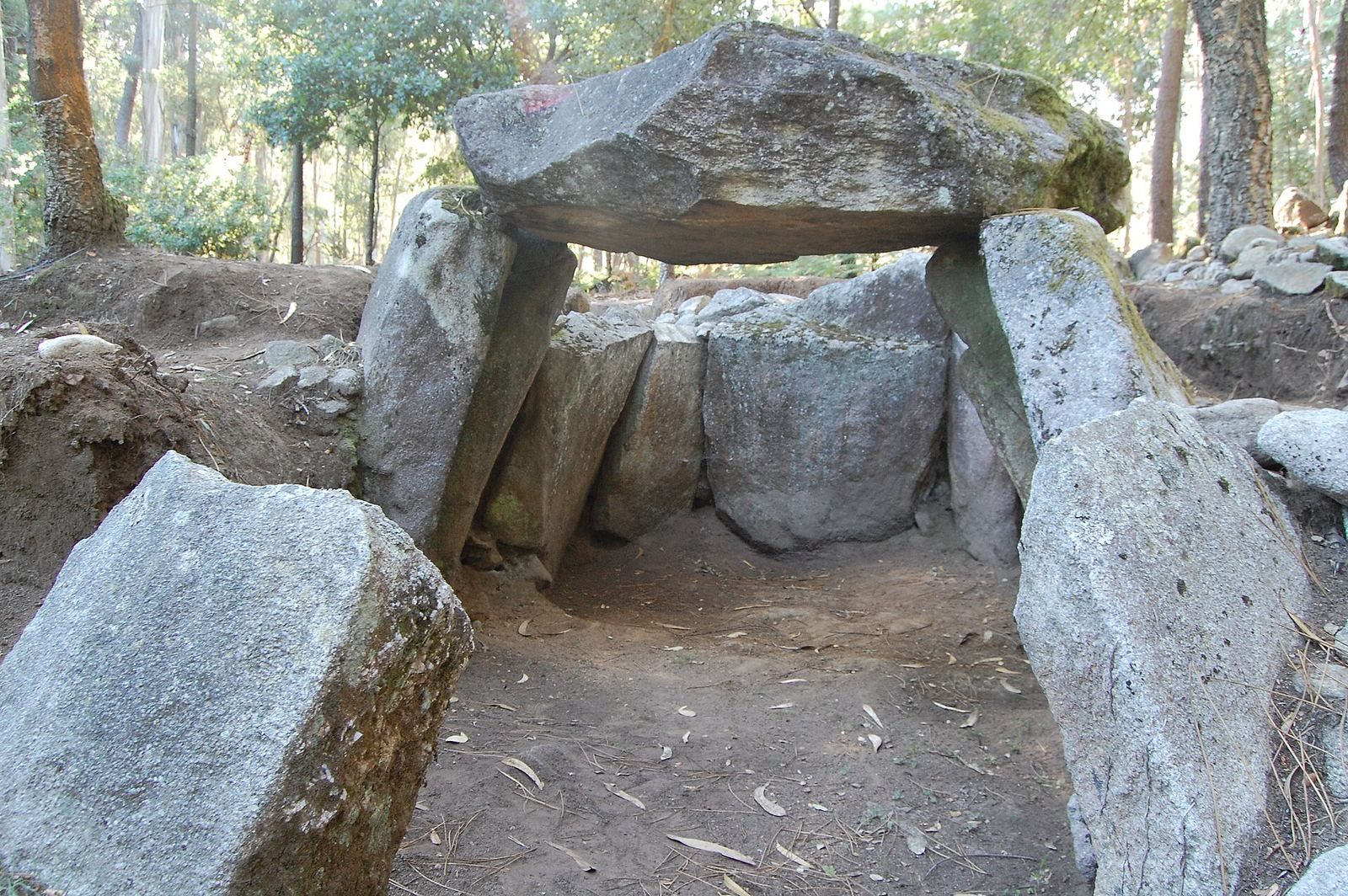
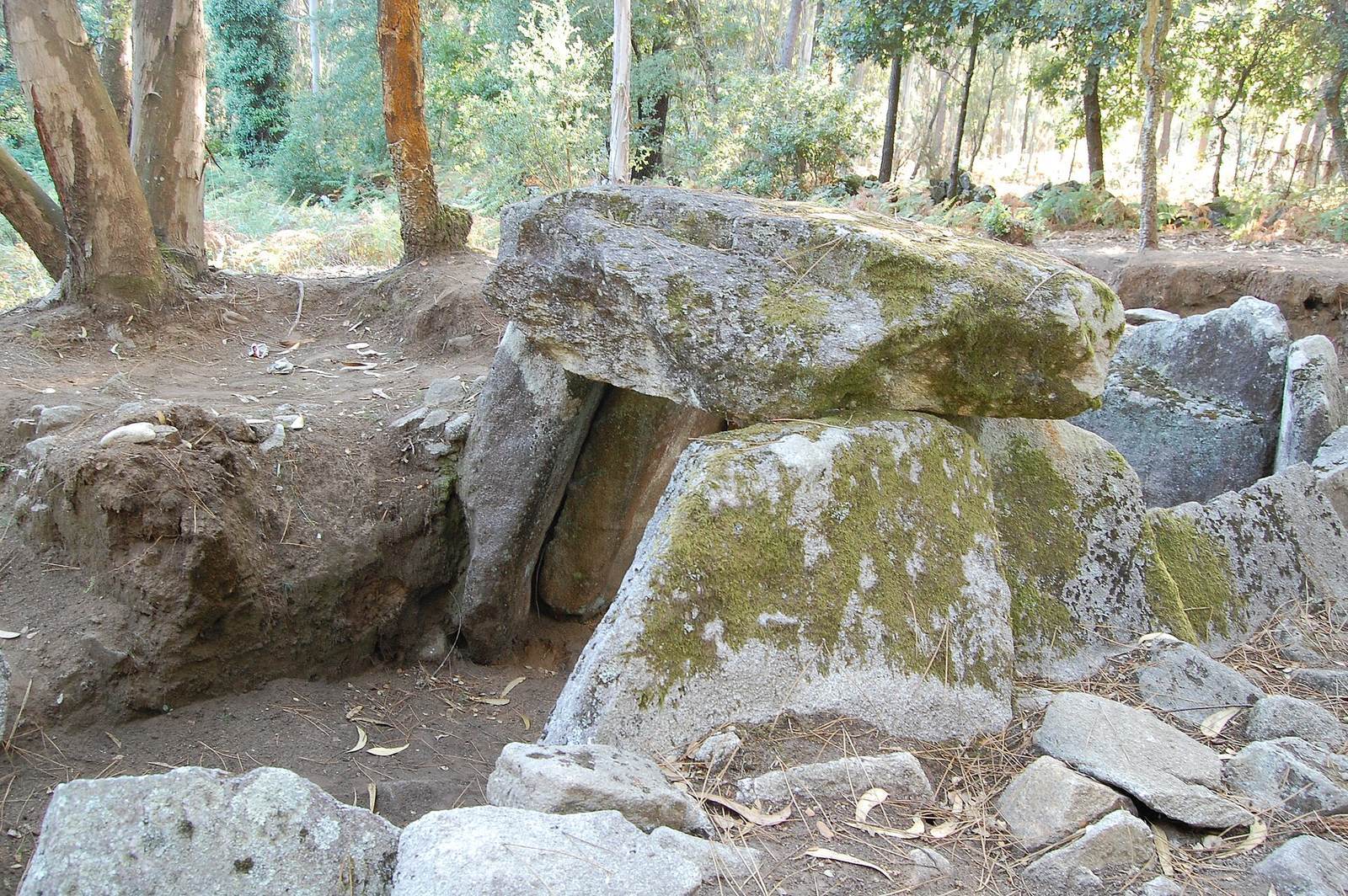
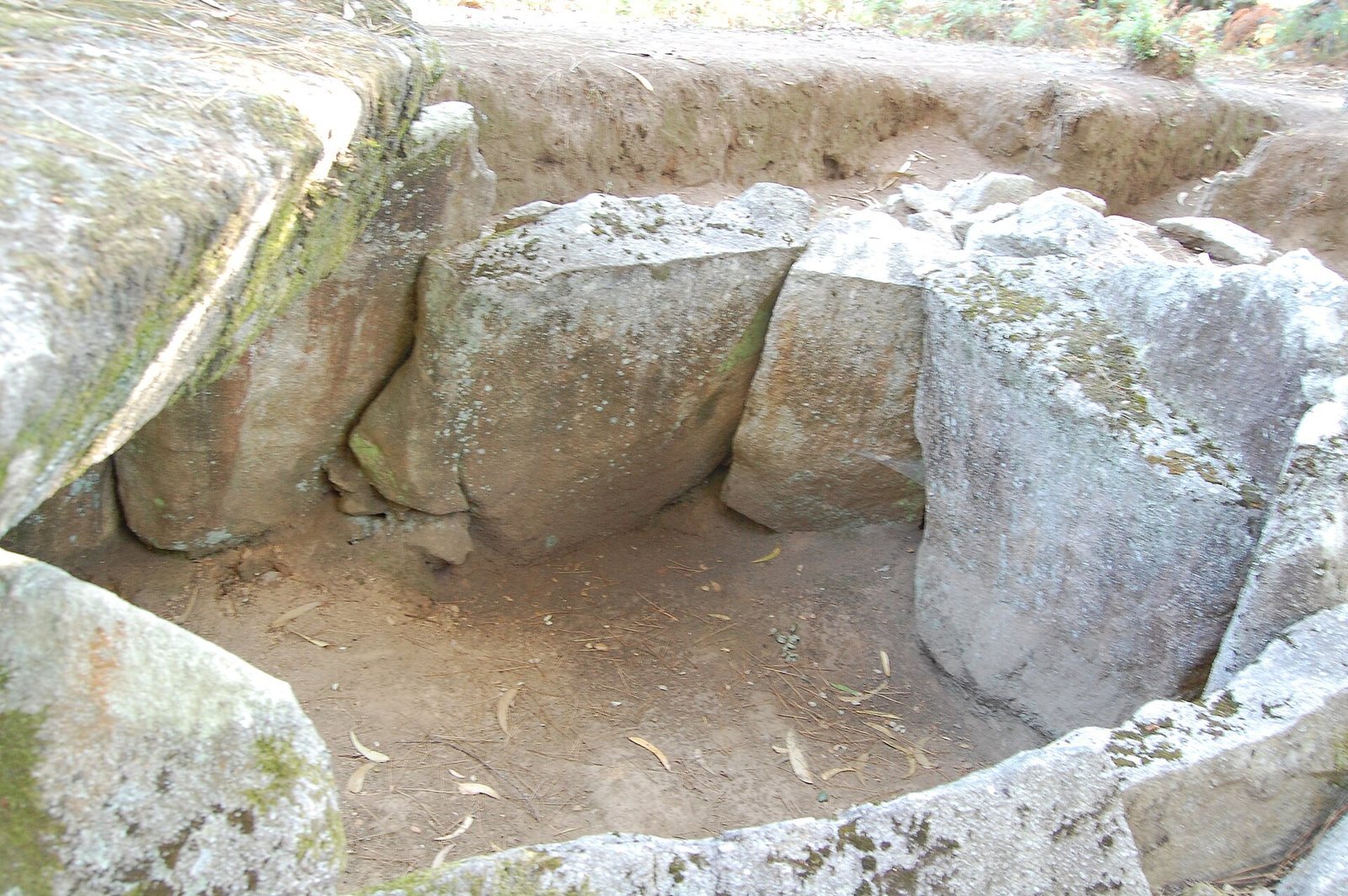
The monument is relatively well preserved. Its subrectangular burial chamber was formed from 14 or 15 granite slabs of different sizes, of which 12 remain, some partly broken. A stone casing around the mound meets the chamber slabs. One unusually large capstone survives above the chamber.
Rápido mounds
The two earthen mounds show signs of disturbance. Holes in their coverings appear to mark where burial chambers lie.
Rápido III
Rápido III, the group’s dolmen, remains in good condition. Its interior has engravings and paintings associated with megalithic funerary art. Engraved slabs there have been the subject of study.
Recovered objects
Finds from the Anta da Portelagem include five arrowheads made of quartz and flint, further arrowheads, and fragments of Bell Beaker pottery, a prehistoric ceramic style named for the bell-shaped form of some vessels. Another find is a vessel with an angled handle decorated with bosses along its ridge. Materials recovered through work at the monuments also include pottery fragments, knives, necklace beads, quernstones, and other objects of granite and schist. The recovered materials are held at the Municipal Museum of Esposende.