Shuya Kremlin: A Medieval Wooden Fortress in Russia
Site at a Glance
- Popularity
- Medium
- Country
- Russia
- Primary era
- Early Modern
- Eras represented
- Medieval, Early Modern
- Civilizations
- Russian
- Site type
- Military
- Remains
- Citadel
On this page10 sections
History
The Shuya Kremlin was a wooden fortress in Russia, probably built in the fourteenth century. It defended a settlement in a region repeatedly attacked by the Kazan Tatars, the people of the medieval Kazan Khanate in the middle Volga region.
Kazan Tatar attacks and rebuilding
During the fifteenth and sixteenth centuries, the threat of further attacks led to earthen defenses at Shuya and elsewhere in the region. In 1539, Kazan Tatars led by their khan, Safa Giray, burned the fortress. Its defenses were then extensively rebuilt, and its plan became more regular.
The Time of Troubles and later enclosure
In 1609, followers of False Dmitry II burned the Kremlin. False Dmitry was a pretender to the Russian throne during the Time of Troubles, a period of dynastic crisis and political upheaval in the late sixteenth and early seventeenth centuries. The attackers came from their base at Tushino and acted against Vasily Shuisky, then tsar, or Russian monarch, and the people of Shuya for remaining loyal to him.
A fortified enclosure apparently stood at the site again in the seventeenth century. In a petition dated 1671, Grigory Bubnov, a military and administrative governor, referred to it.
Decline and modern interpretation
People began removing the earthen ramparts for practical purposes from the mid-nineteenth century. They remained into the early twentieth century, and in the 1920s earth from them was used to build a dam near October Bridge. The former fortress is now designated a federal-level cultural heritage site in Russia. A three-dimensional reconstruction is displayed at the nearby Balmont Local History Museum.
Remains
Site plan and defenses
Ground plan and earthworks
The fortress occupied the elevated left bank of the Teza River. Its ground plan formed an irregular trapezoid, with a slight bend on the river-facing side. The river bounded it to the northwest; a moat and an earthen rampart, 3.4 metres high, protected the other sides.
Palisade and gates
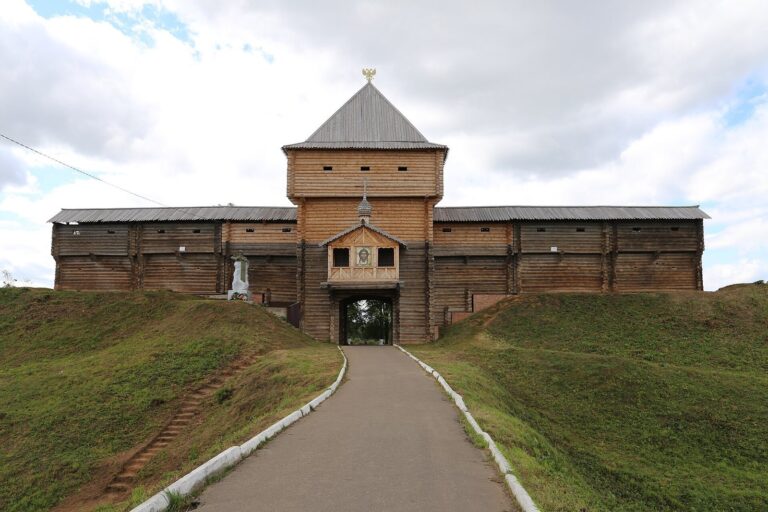
A palisade ran along the top of the rampart and beside the river. Five gates pierced the defenses: the Trading Gate, also called Nikolsky, the Alekseevsky Gate, the Taynitsky Gate, and two Water gates. Towers stood above all but the Taynitsky Gate. Seven more towers included corner towers and others built without gates.
Interior and surrounding settlements
Within the enclosure were siege yards, properties that owners used as refuge during an attack, belonging to princes, boyars, and nobles. The boyars were members of the upper ranks of Russian nobility. The fortress also contained a prison, the Cathedral of the Intercession, a church dedicated to the Orthodox saint Paraskeva Pyatnitsa, and a cemetery. Outside the walls, the settlement known as the posad, along with communities of serving men and resident servicemen, lay to the south and east.
Surviving traces
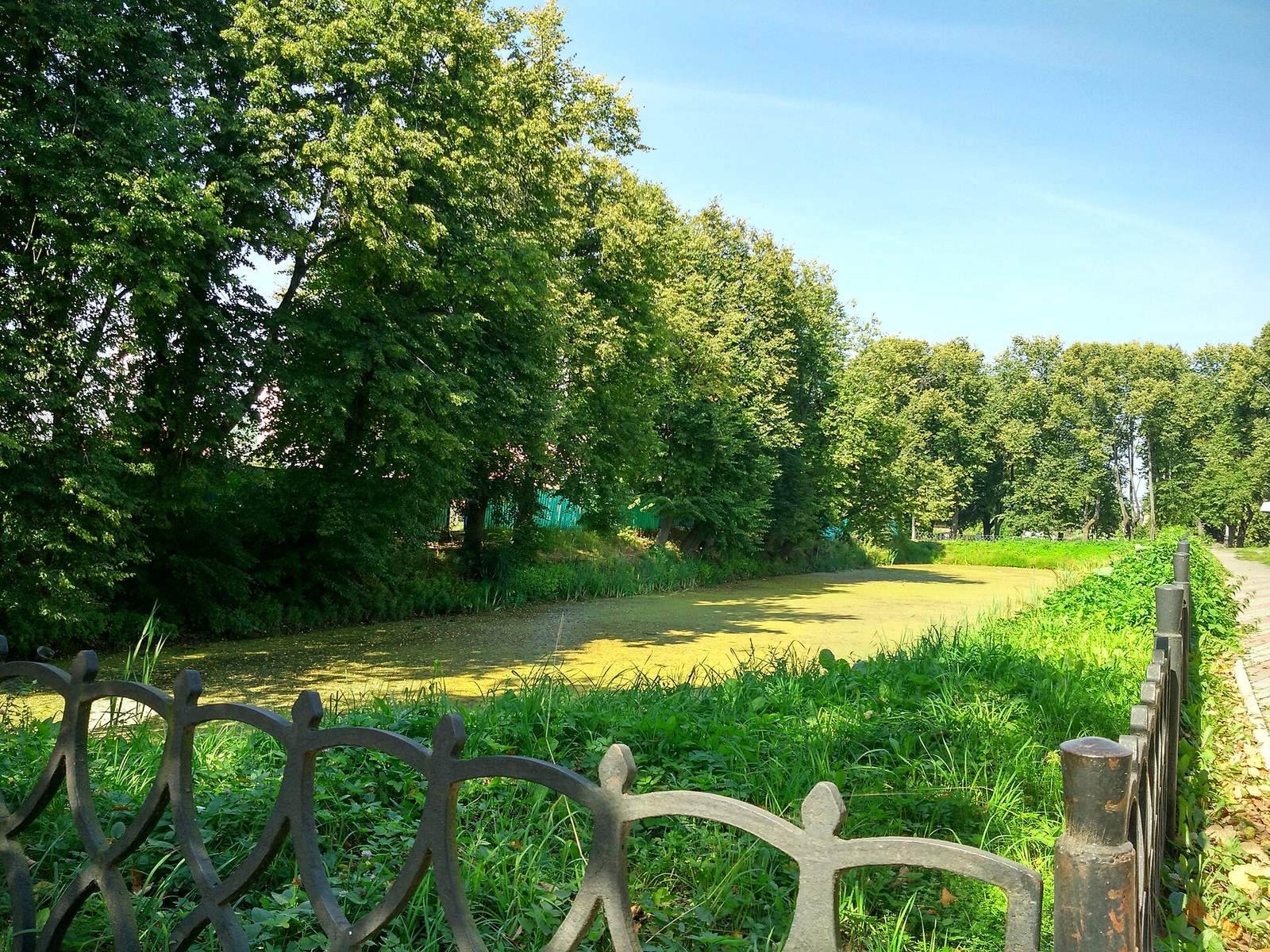
The moat is the sole surviving part of the defensive works. A small water-filled section forms a pond enclosed by a cast-iron railing. Brick posts with metal grilles, installed in 1841, mark the former gates. Artifacts have been found in the area of present-day Soyuznaya Square, which occupies the former Kremlin site. Folk tradition also places a tunnel between the fortress and the Teza River.