Ancient Theatre of Halicarnassus: A Greek Theatre in Bodrum
Site at a Glance
- Popularity
- High
- Country
- Turkey
- Primary era
- Classical
- Eras represented
- Classical
- Civilizations
- Achaemenid, Carian, Roman
- Site type
- Entertainment
- Remains
- Theatre
On this page11 sections
History
Greek foundations
The Ancient Theatre of Halicarnassus is a Greek theatre in Bodrum, Türkiye, at the site of ancient Halicarnassus, the capital of Caria. Its construction is attributed to Mausolos, the fourth-century BC ruler of Caria and a satrap, or provincial governor, under the Achaemenid Persian Empire. The date is uncertain: proposals range from the fourth century BC, during Mausolos’s rule, to the early third or late second century BC. The theatre is consequently placed in either the late Classical or Hellenistic period.
Roman alterations
During the Roman period, especially in the second century AD, the theatre was expanded and modified, taking on its final form. Despite these changes, it apparently retained its Greek character rather than becoming fully Roman.
Excavation and continued use
Excavations took place in 1973 under the direction of Umit Serdaroglu, after which the theatre was designated an open-air museum. The lower part was restored in 1976, 1985, and from 2000 to 2003; the Turkish Ministry of Culture and Tourism also renovated the theatre during the 1970s and 1990s. It is used for cultural events and performances, including concerts.
Remains
Layout and scale
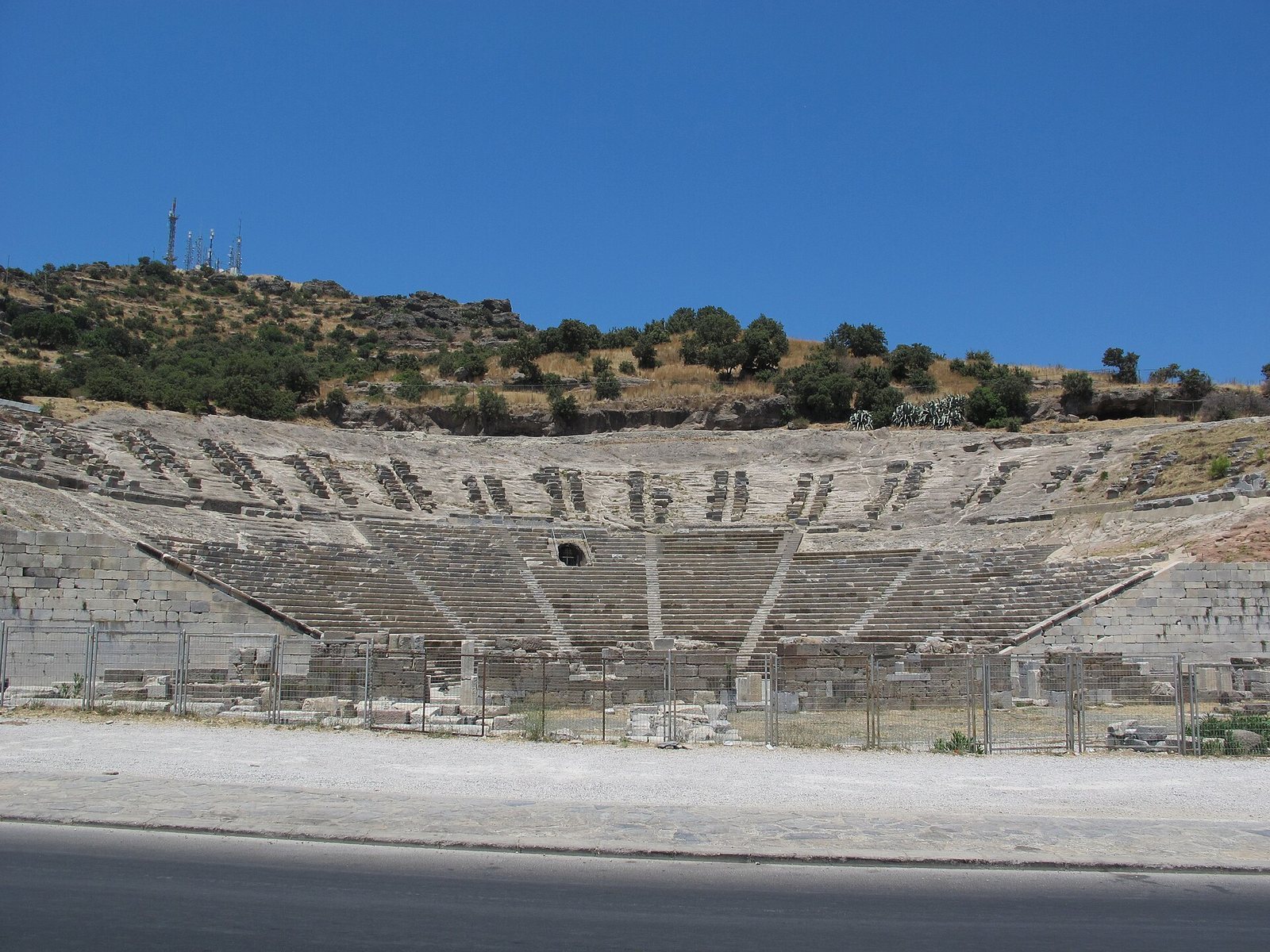
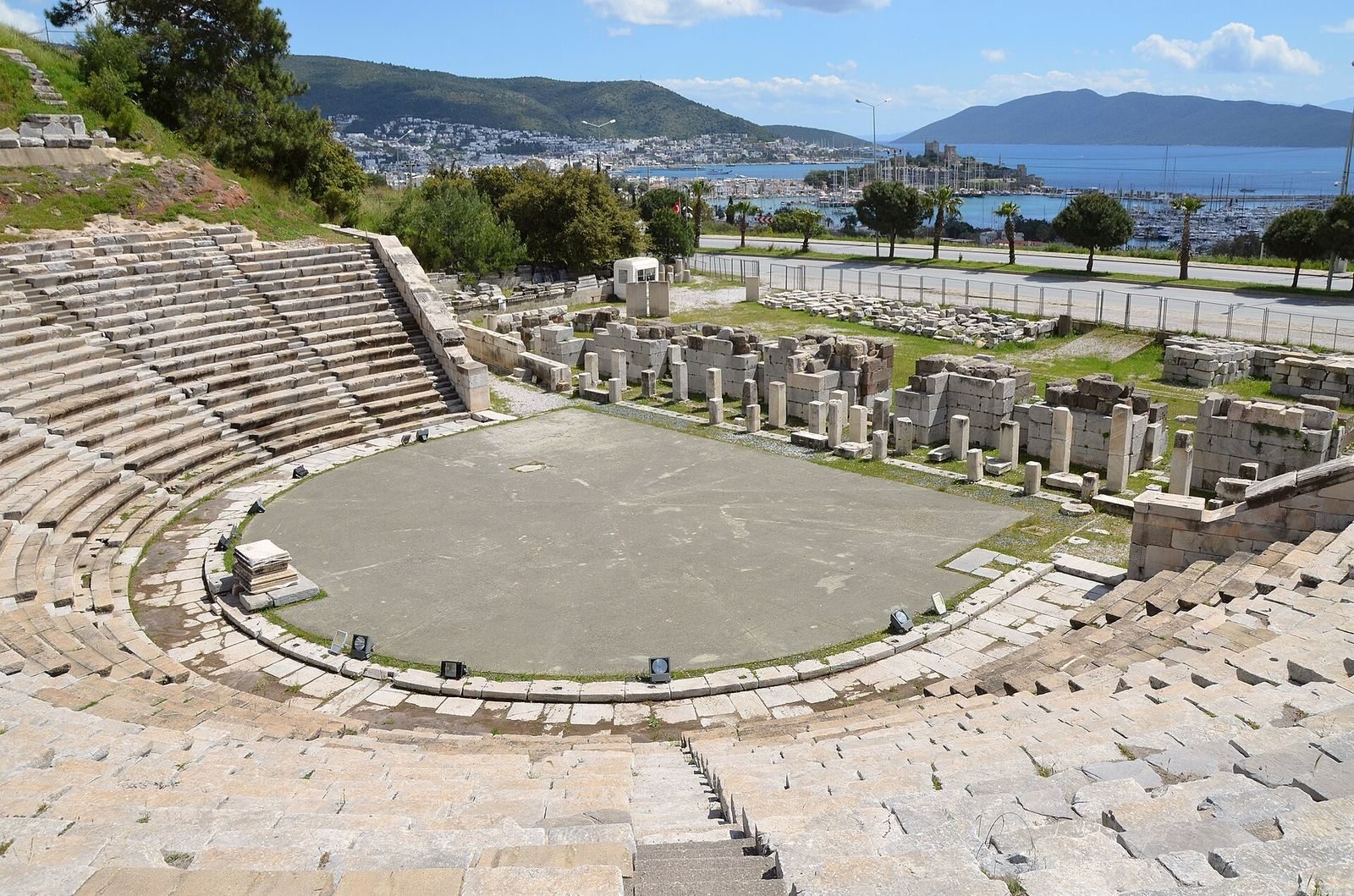
The theatre stands in the northern part of present-day Bodrum, on the southeastern part of the ancient city’s acropolis. Its overall plan is semicircular, arranged around a circular orchestra. The three main areas are the skene, the orchestra, and the cavea, or tiered seating. The theatre’s style is similar to that of the Ancient Theatre of Epidaurus in Greece.
Principal areas
Skene
The skene, a platform or stage building for actors beside the orchestra, was divided into two levels during the Hellenistic period.
Orchestra
The circular orchestra was the central performance area for choruses. It measures about 18 metres in diameter.
Cavea and seating
The cavea, or seating area for spectators, is about 86 metres wide. The theatre originally held approximately 10,000 to 13,000 people, and its present seating capacity is about 10,000. Some seats carry the names of spectators who reserved them in advance.
Condition and restoration
The theatre was in relatively good condition in 1815. Today, parts of it survive as partly restored ruins, including the restored lower section.