St. Nicholas Church in Lubla: A Late-Gothic Wooden Parish Church
Site at a Glance
- Popularity
- Low
- Country
- Poland
- Primary era
- Medieval
- Eras represented
- Medieval, Early Modern
- Civilizations
- Kingdom of Poland, Polish–Lithuanian Commonwealth
- Site type
- Religious
- Remains
- Church
On this page11 sections
History
Foundation and early rebuilding
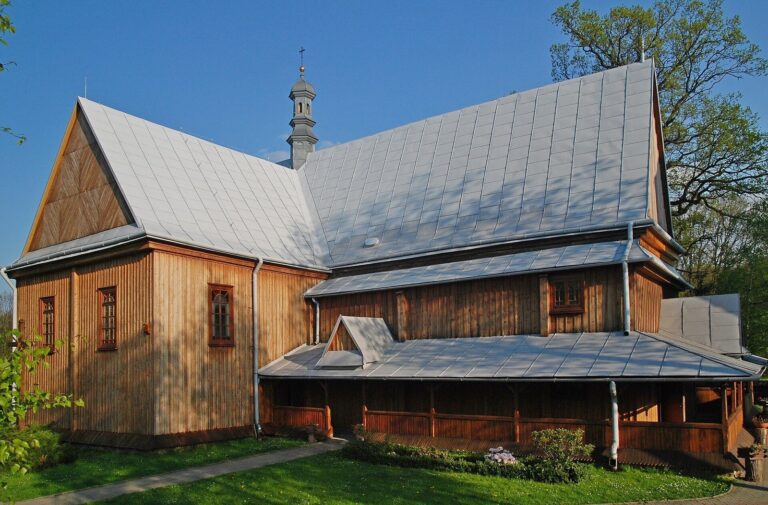
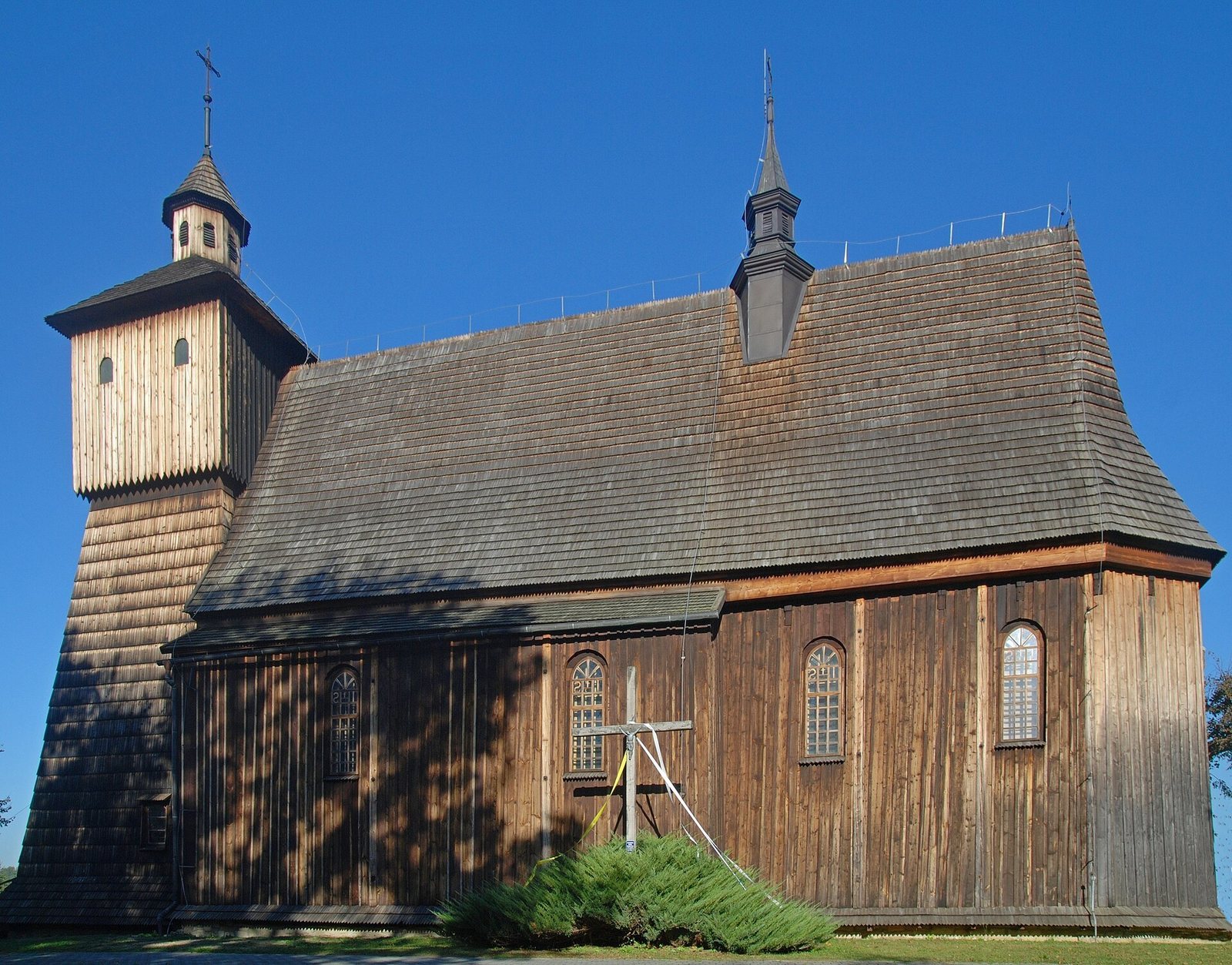
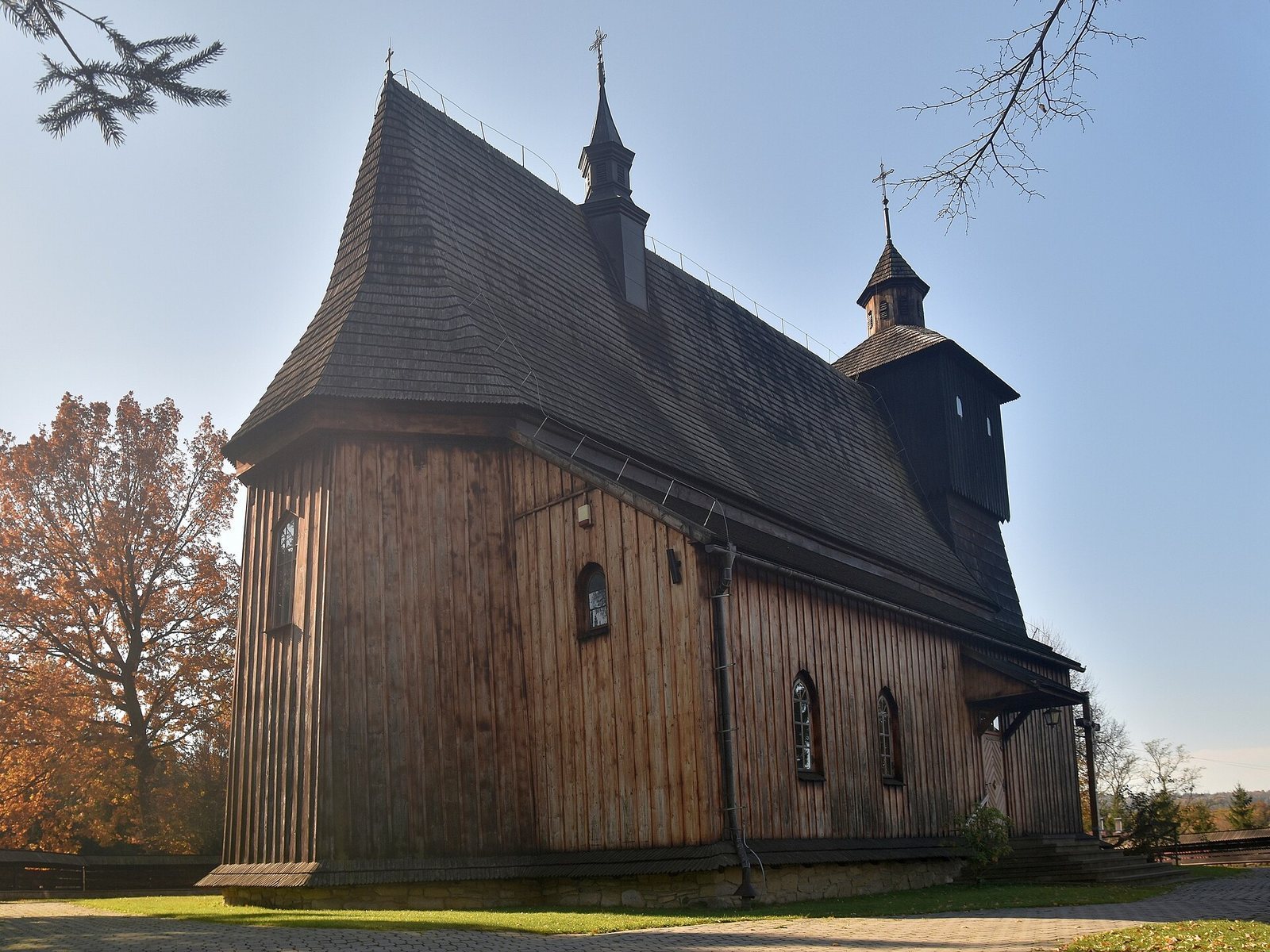
St. Nicholas Church in Lubla is a 15th-century Roman Catholic parish church in Poland, built in the late Gothic style of the later medieval period. Dedicated to St. Nicholas, a bishop of Myra in late antiquity who became widely venerated, the church was established in connection with the formation of the parish. Its construction is tentatively attributed to Mikołaj Grot, a Cistercian abbot, or head of a monastery in a Catholic monastic order, around the middle of the century. The church is regarded as one of the most valuable wooden monuments in the Strzyżów Foothills.
An earlier chapel may have stood on Holy Trinity Hill, east of the present church. It was probably an outlying place of worship served by clergy from elsewhere. The church itself was probably rebuilt around 1611, a year also given for its completion.
Repairs, destruction, and protection
Repairs took place in 1838, 1862, 1928, and 1945–1946. A tower built in 1793 was destroyed in August 1944 and reconstructed in 1995.
The church entered the monument register on 15 October 1948.
Remains
Timber building and roof
Building and doorways
The late-Gothic church is aligned east to west. Its walls are made from interlocking horizontal timbers set on a stone base, with exterior boards strengthened by upright timbers. The tower has a post-and-frame structure, in which upright posts support a timber frame. Two doorways have ogee arches, formed by joining concave and convex curves; these openings date to the turn of the 15th and 16th centuries.
Roof frame
The roof structure includes enclosed, box-like ceiling sections and interlocking hooked joints, a construction pattern associated with the oldest wooden churches of southeastern Lesser Poland. The original roof truss survives, with a central upright post supporting the frame.
Interior furnishings and decoration
Altars and sculpture
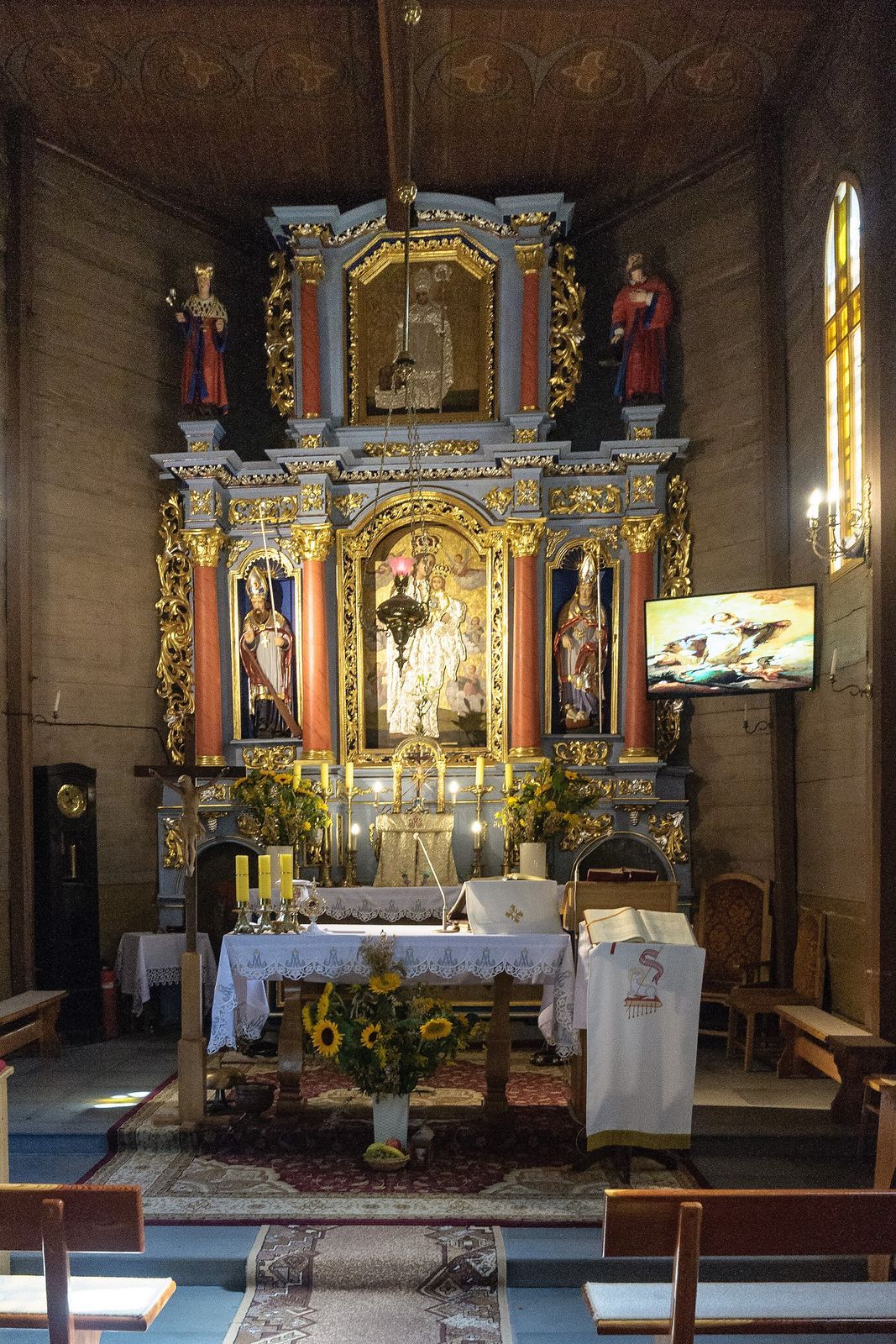
The church contains Baroque altars, an early modern style, dating to 1709 and 1769. A 17th-century Baroque crucifix is mounted on the rood beam, a crossbeam traditionally used to carry a crucifix. Six Rococo angels, in the decorative style that developed in the 18th century, are also part of the interior. The Rococo pulpit dates to 1778.
Paintings and furnishings
A Gothic painting of the Man of Sorrows, an image of Christ emphasizing his suffering and wounds, is probably from the 15th century and is titled Misericordia Domini. Late-Gothic panel paintings were covered with later paint in the early 20th century. A late-Baroque confessional, an enclosure where a priest hears sacramental confessions, dates to the end of the 17th century. Other sculptures and paintings date from the 17th to the 19th centuries. The former organ was made in the 17th century; the present organ dates to 1962 and has 11 stops, each controlling a set of pipes.
Painted decoration
The church’s multicolored painted decoration was renewed in 1880, 1929, and 1968. Gilding was carried out in 1970.