Ambrosiana Palace: Milan’s Library and Art Gallery Complex
Site at a Glance
- Rating
- 4.6
- Popularity
- High
- Country
- Italy
- Primary era
- Early Modern
- External website
- Open
- Eras represented
- Early Modern, Modern
- Civilizations
- Austrian Empire, Habsburg, Spanish
- Site type
- Civic
- Remains
- Library
On this page15 sections
History
Ambrosiana Palace is an Italian Baroque cultural complex in Piazza Pio XI, Milan, Italy, commissioned by Cardinal Federico Borromeo, a senior Catholic cleric who advised the pope and participated in papal elections. Borromeo planned an art gallery, a library, and a painting academy for the city. He sought to establish an art school in response to the Spanish rulers’ limited interest in art and to use art in the Counter-Reformation, the Catholic Church’s effort to renew its teaching and respond to Protestant movements.
San Sepolcro before the palace
In 1040, Benedetto Rozona built a church dedicated to the Holy Trinity on the site of San Sepolcro. It was rebuilt in 1100 in memory of Milanese participants in the First Crusade, a late-eleventh-century military expedition by western European Christians to the eastern Mediterranean. Bishop Anselm was among those commemorated, and the church acquired its present name at that time.
A rebuilding in the fourteenth century added two side aisles. Further alterations followed, and a major reconstruction in the late nineteenth century returned the church to Lombard Romanesque, a medieval architectural tradition associated with Lombardy.
Foundation and cultural purpose
Work on the palace began in 1603 and later passed between different hands. Borromeo laid its first stone on 30 August 1609, and the building was completed that year. The Ambrosiana Library opened there in 1609 and was among the world’s earliest libraries open to the public. The palace later housed both the library and the Pinacoteca Ambrosiana, its picture gallery.
Later changes and discoveries
Giacomo Moraglia altered and extended the palace between 1829 and 1836, and it was partly modified again in 1932. In 1928, the Ambrosiana took possession of San Sepolcro Church and its adjoining buildings. Restoration and refurbishment work there followed from 1928 to 1931.
A copy of Christopher Columbus’s letter in Castilian was found in the Ambrosiana Library in 1856. Its transcription was published in 1863 and a facsimile followed in 1866, marking a turning point in the study of Columbus. The copy’s importance lasted until Maisonneuve found a Barcelona edition printed by Pere Posa in 1895.
Remains
The seventeenth-century Baroque palace contains the Ambrosiana Library on its ground floor and the picture gallery in its upper rooms. Its interior courtyard forms part of the building, while the wider Ambrosiana complex also includes San Sepolcro Church and buildings adjoining it.
Palace entrances and facades
Piazza San Sepolcro entrance
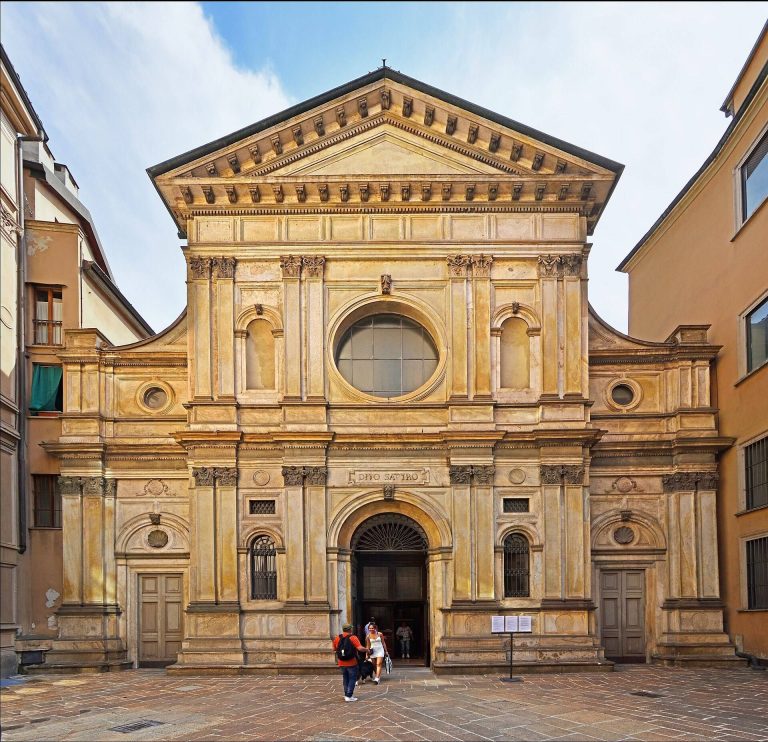
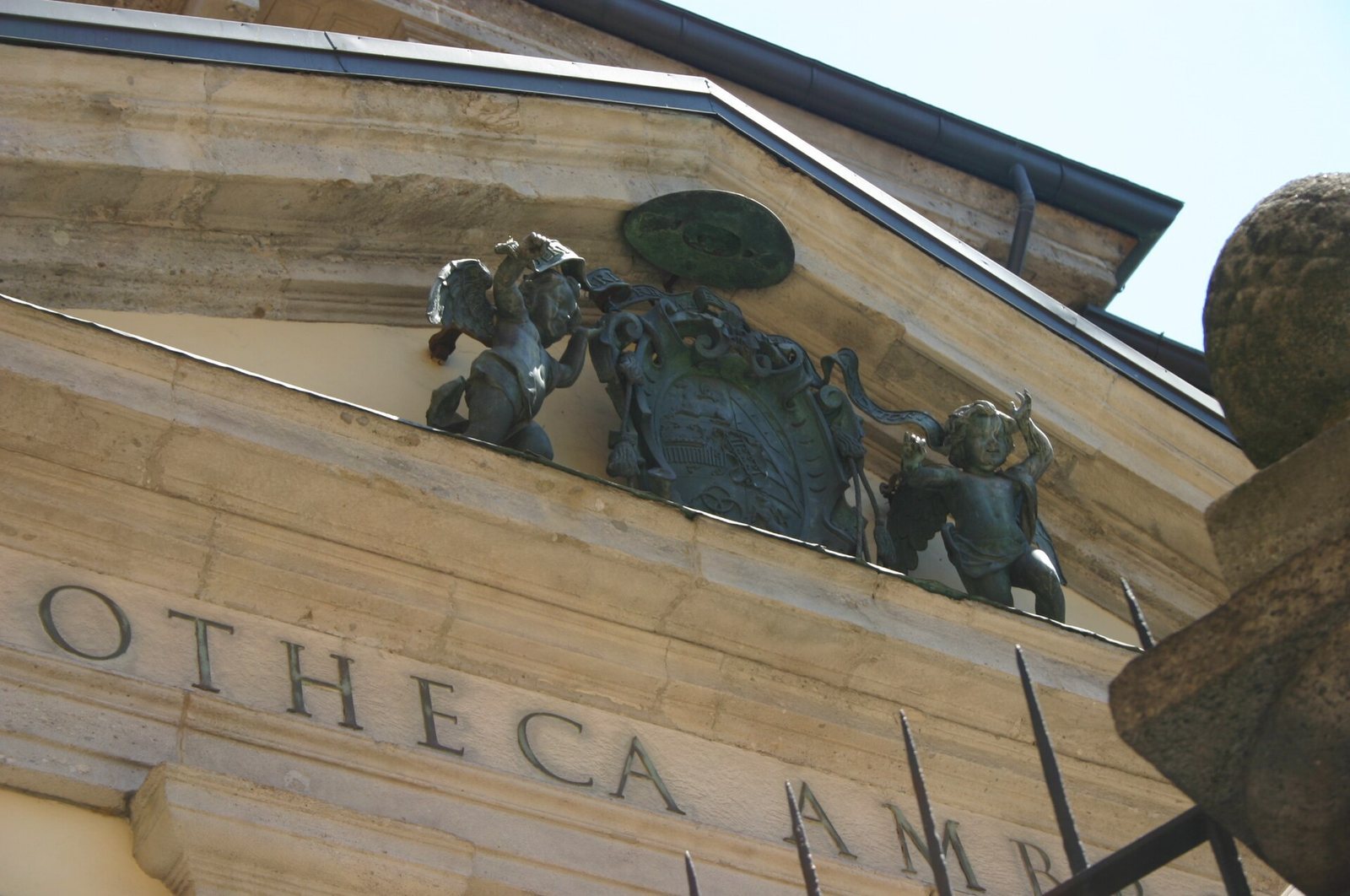
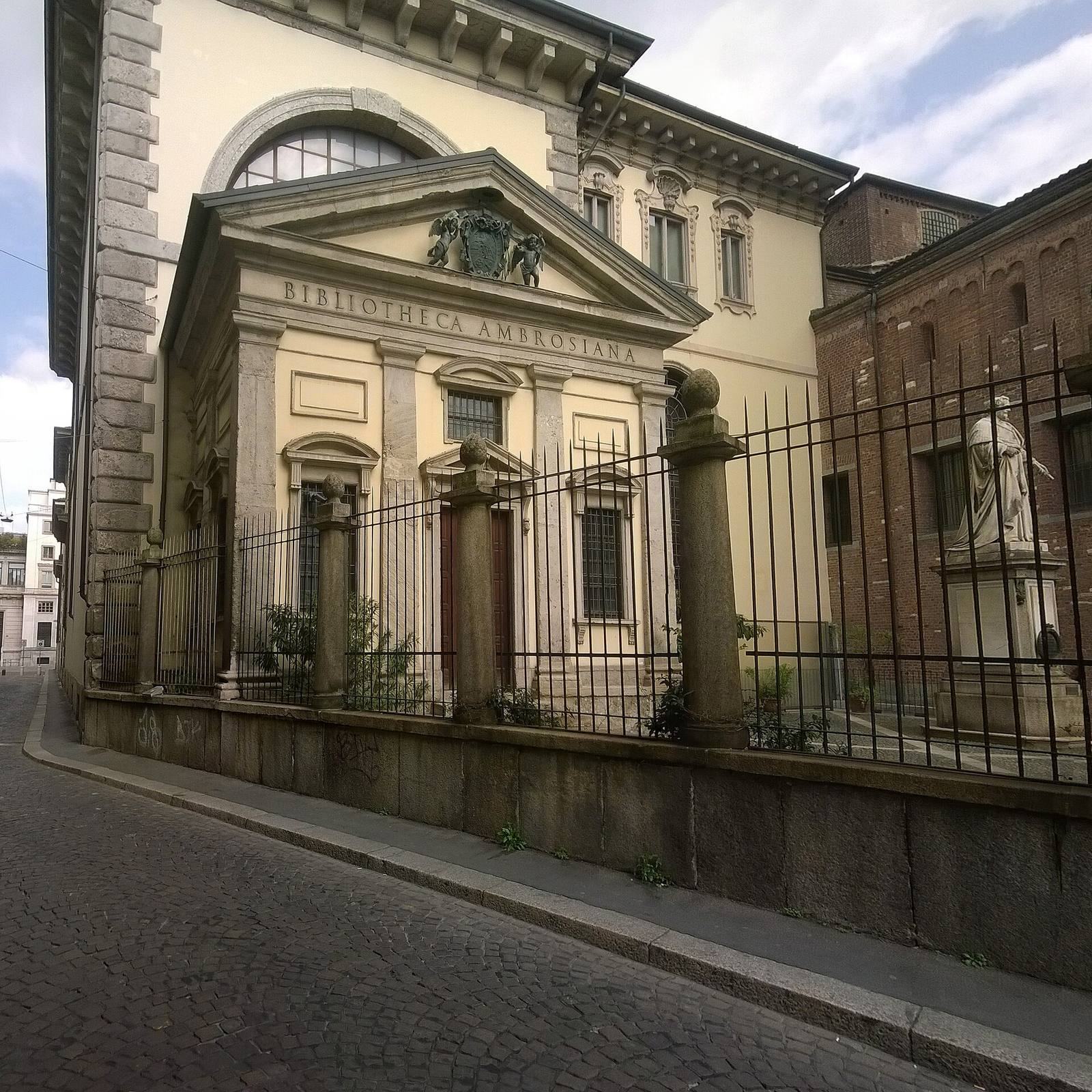
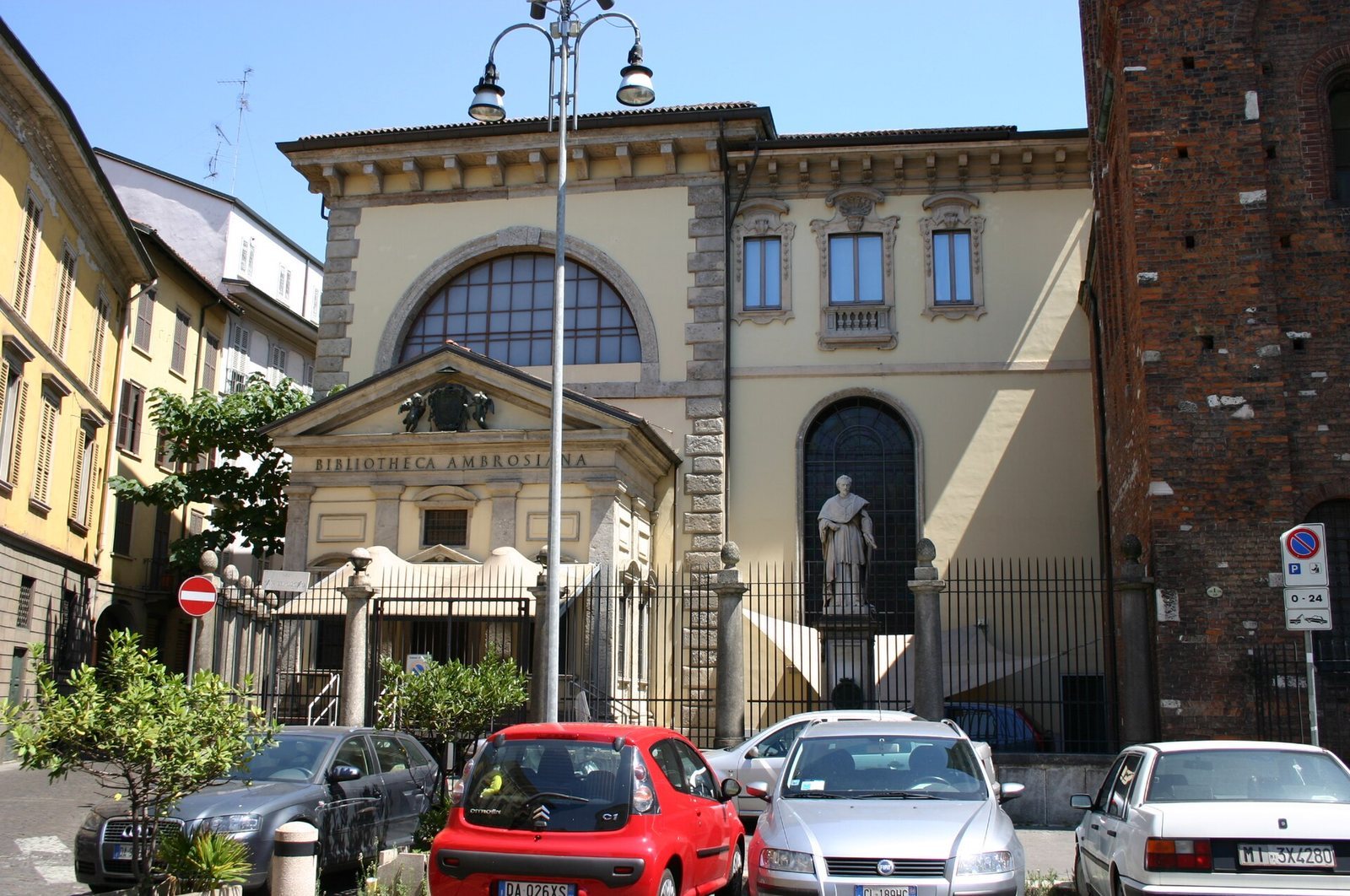
The earlier entrance faces Piazza San Sepolcro and takes the form of a classical porch. Four Doric pilasters, shallow column-like projections, support a pediment, the triangular upper section of the facade. The Borromeo family arms, decorated in Baroque forms and supported by cherubs, appear within it. The horizontal band above the entrance bears the inscription Bibliotheca Ambrosiana, and a stone statue of Federico Borromeo stands beside the porch.
Piazza Pio XI facade
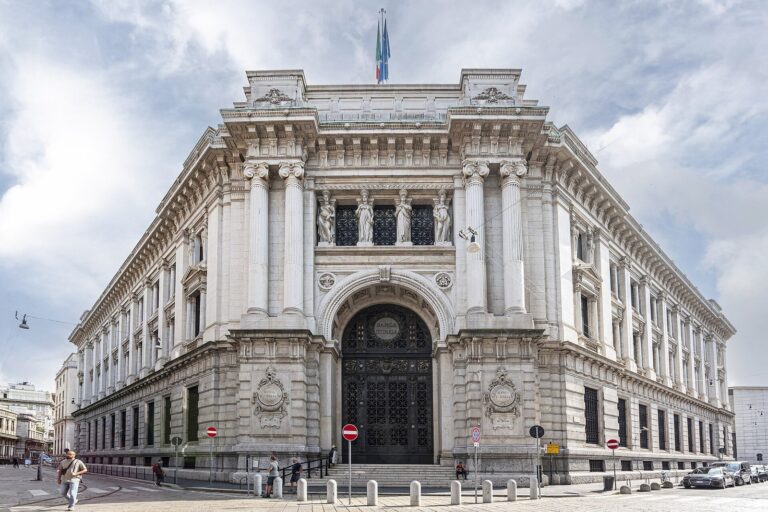
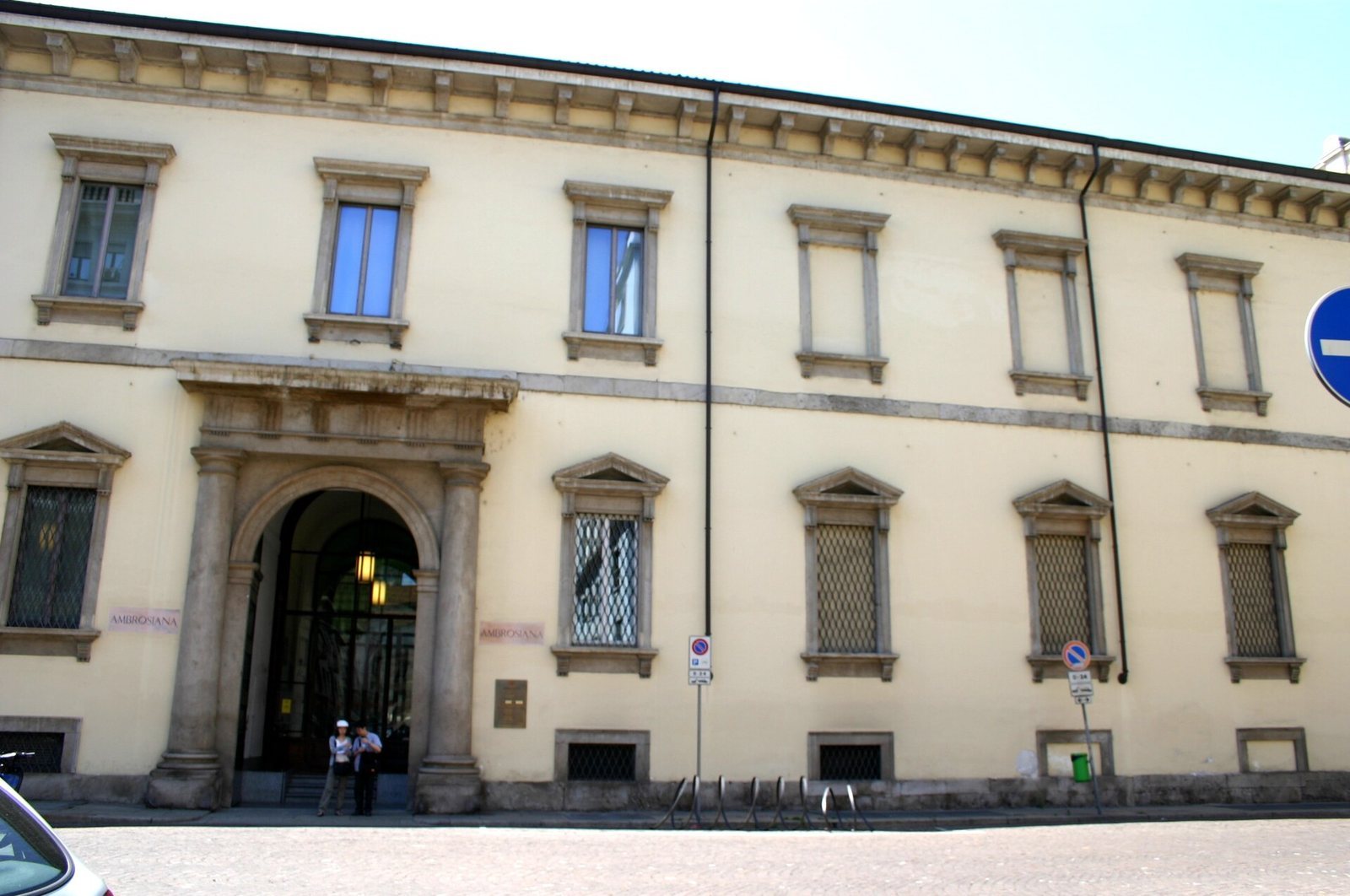
The present entrance is on Piazza Pio XI, formerly Piazzetta della Rosa. Its restrained facade was built by Moraglia as the gallery acquired new collections. The portal is framed by two Ionic columns, a classical column type, and the band above them is decorated with triglyphs, grooved elements of a classical frieze. Two tiers of windows, each with pediments, complete the facade.
Palace interiors and collections
Ambrosiana Library
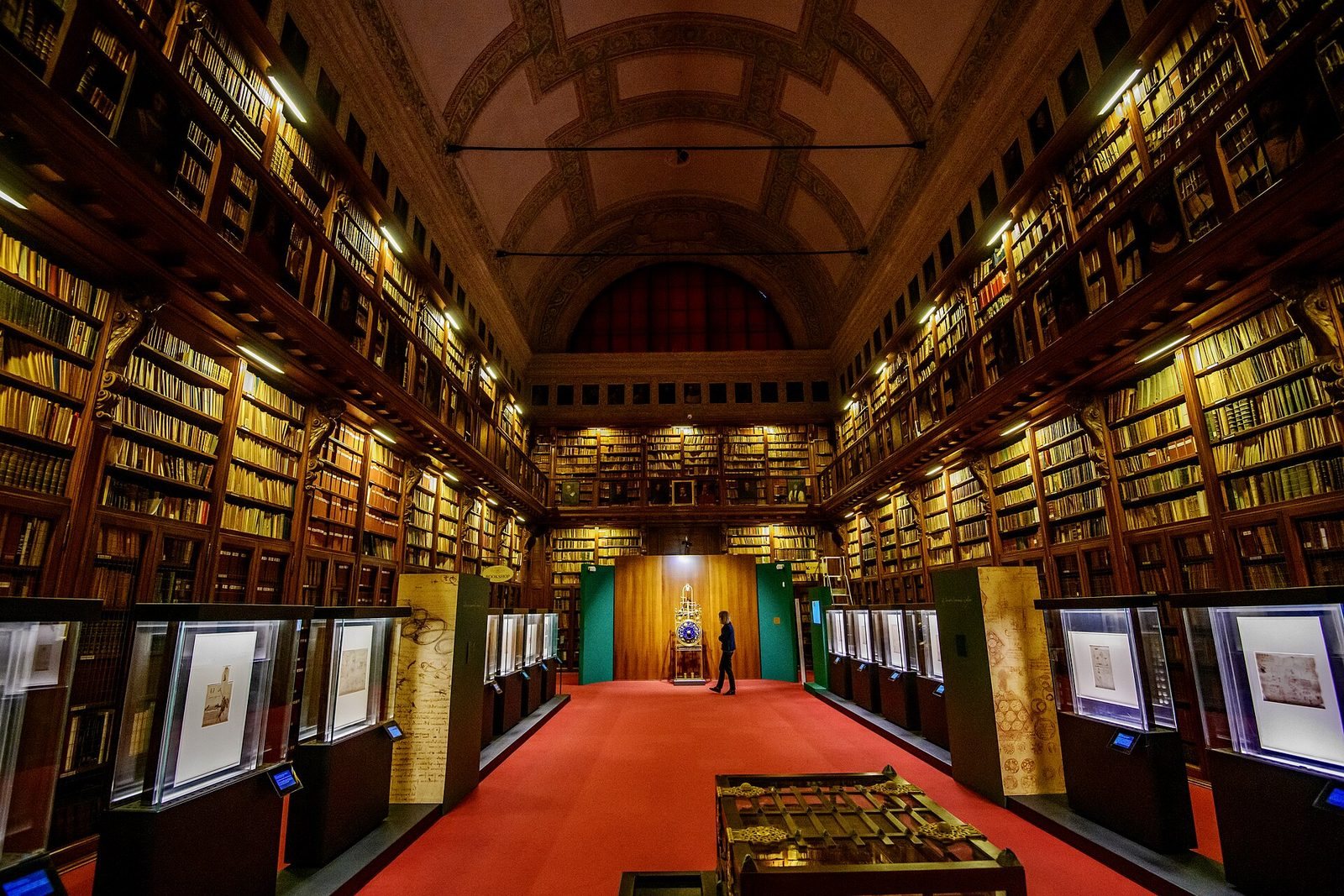
The library holds more than 400,000 volumes, 30,000 manuscripts, and 2,500 early printed books. Its holdings include an illustrated Iliad, parchment works by Plautus, Cicero, and Virgil, a Gothic Bible, Leonardo da Vinci’s Codex Atlanticus, and a 1353 copy of the Divine Comedy. It also contains manuscripts in Arabic, Hebrew, and other Eastern traditions. Letters belonging to Lucrezia Borgia are displayed with a lock of her hair.
Among the library’s ancient maps is the Beatus map, also called the Milan or Oña map. This medieval Christian world map is associated with Beatus of Liébana’s commentary on the Apocalypse. The library also holds a printed copy of Columbus’s letter in Castilian.
Picture gallery
The gallery occupies the palace’s upper rooms. Its paintings include Caravaggio’s Baroque works Still Life with Basket and Adoration of the Magi, and Leonardo da Vinci’s Renaissance Portrait of a Noblewoman. Other works include Ambrogio de Predis’s Portrait of the Musician Gaffurio, Bramantino’s Madonna of San Michele, Tiepolo’s Bishop, and Botticelli’s Virgin and Child.
Refurbished rooms
The refurbished interiors include the Medusa Room, which contains a small fountain by sculptor Giannino Castiglioni, and the Column Room, decorated with mosaics and Roman-style sculptures.
San Sepolcro Church
Church and transept
The church has two square towers and a Romanesque exterior, while Baroque elements shape its interior. Two groups of colored terracotta figures stand in chapels at opposite ends of the transept, the crosswise part of the church. The main altar, made of black-and-white marble, dates to the eighteenth century.
Crypt
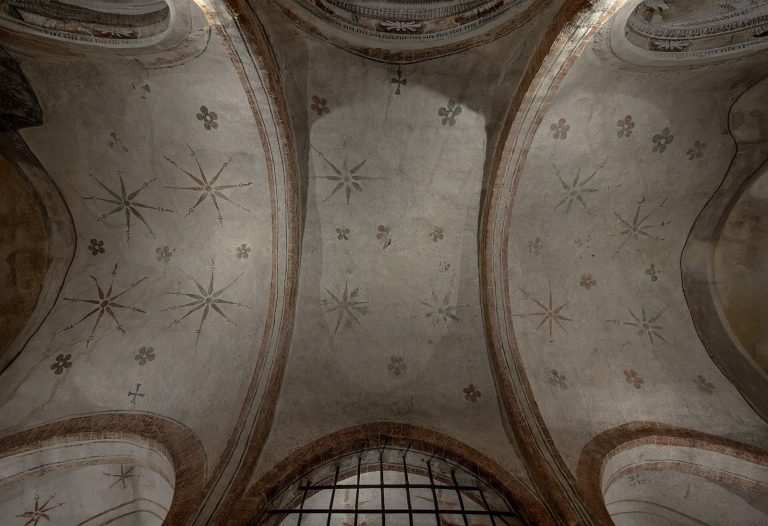
The eleventh-century crypt, a chamber beneath the church, is divided into five aisles by slender columns. In front of the apse, the rounded end of the church, stands a fourteenth-century sarcophagus containing relics from the Holy Land. A terracotta statue of Saint Charles Borromeo is beside it.