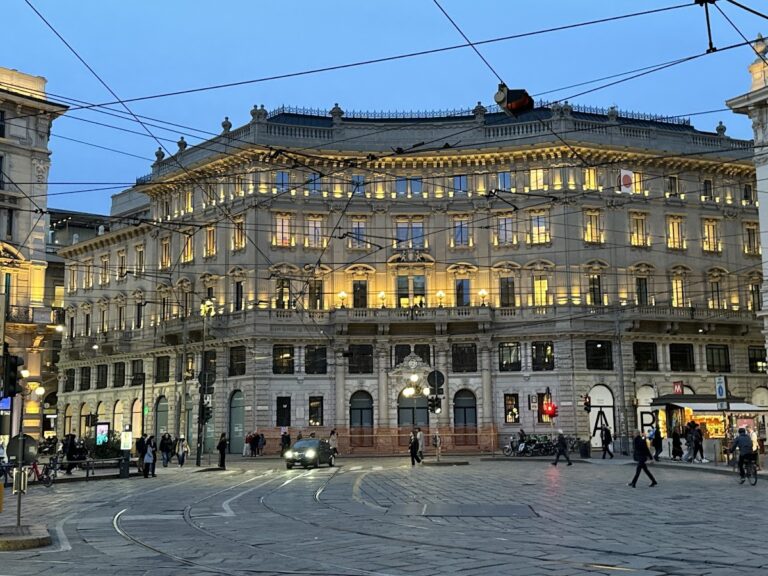
Palazzo Carminati: A Historic Palace Facing Milan Cathedral
Site at a Glance
- Rating
- 4
- Popularity
- Very Low
- Country
- Italy
- Primary era
- Modern
- Eras represented
- Modern
- Civilizations
- Italian
- Site type
- Domestic
- Remains
- Elite Residence
On this page7 sections
History
Construction and naming
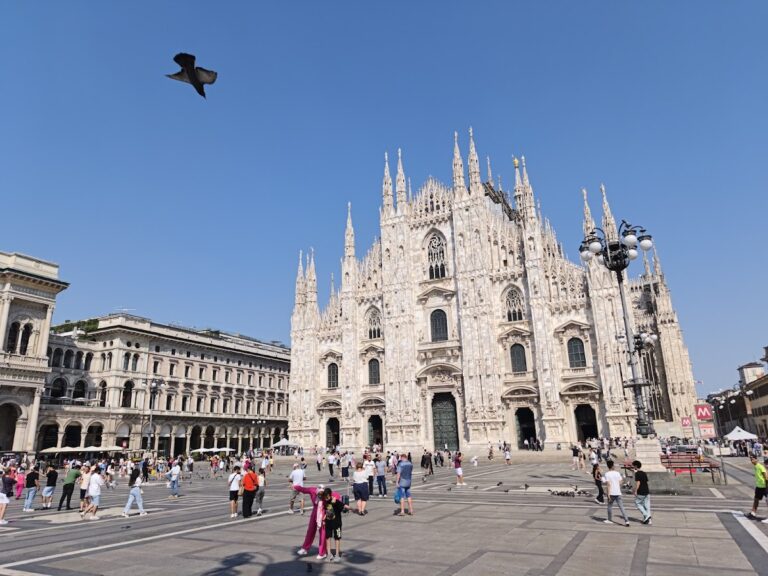
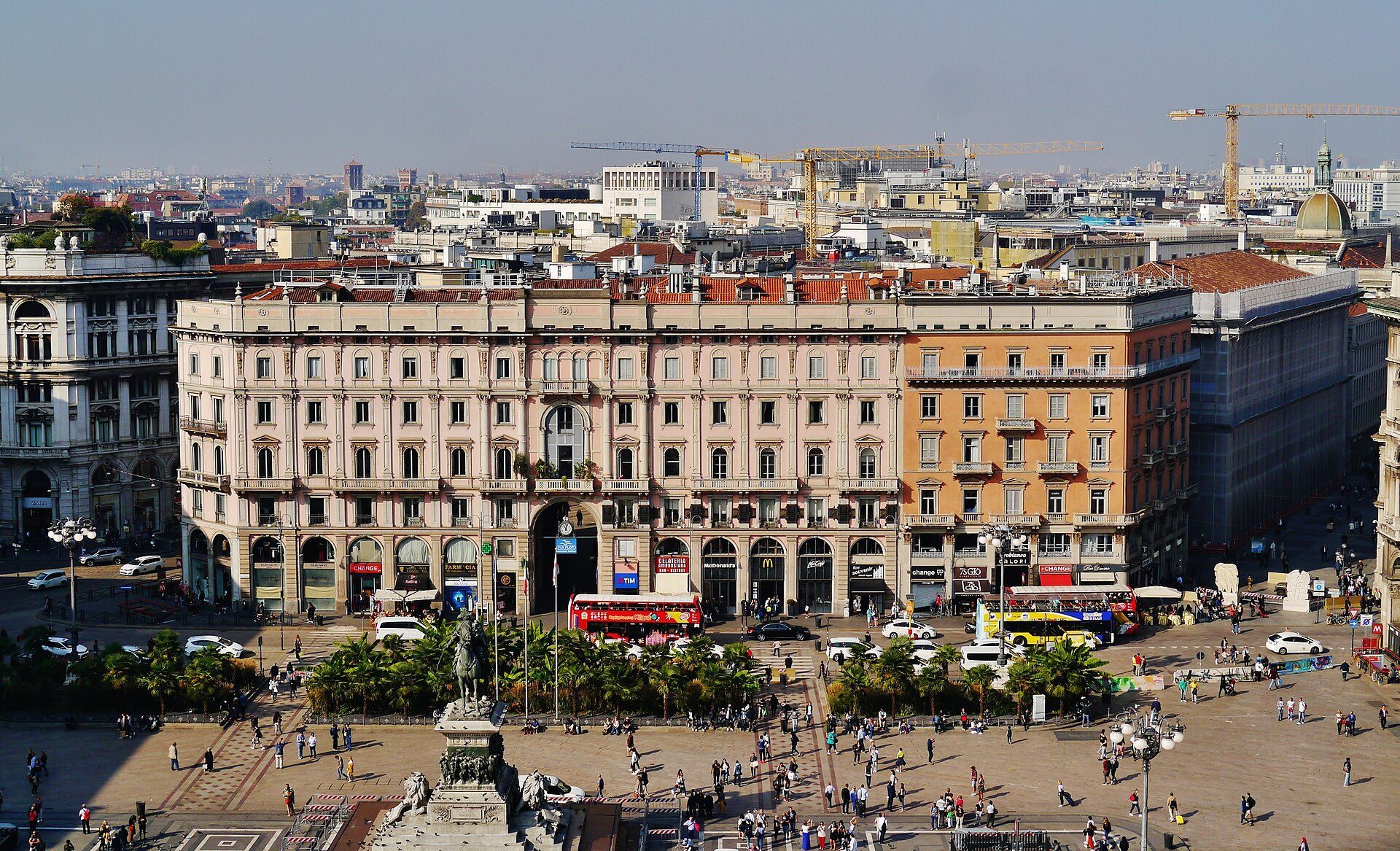
Palazzo Carminati is a historic palace in Milan, Italy, built in 1867 as the private residence of Giacomo Cesati, a wealthy Milanese industrialist involved in silver manufacturing. It stands on the west side of Piazza del Duomo, Milan’s central square, directly opposite the Duomo, the city’s principal Gothic cathedral.
The building took its present name from the Carminati restaurant on the ground floor. That establishment replaced the Casanova beer hall, linking the palace’s identity to the commercial life of the square.
The era of illuminated advertising
During the twentieth century, Palazzo Carminati became a familiar landmark of Milan and a symbol of the city’s commercial and economic growth. Large advertising signs first appeared on its facade in the 1920s. By the 1960s and 1970s, the displays had become especially rich and colorful, producing a visual effect compared with Broadway and Times Square in New York and Piccadilly Circus in London.
The illuminated signs made the palace widely recognizable throughout Italy through appearances in films and television. They also inspired poems, including Milano by the Italian poet Umberto Saba. The facade was further associated with a 1960s Cynar advertising commercial featuring the Italian actor Ernesto Calindri.
Changes to Piazza del Duomo
In 1990, after the completion of Metro Line 3 works that had affected Piazza del Duomo during the preceding decade, a large monumental fountain was proposed for the space in front of the palace. Designed by the Italian architect and designer Ignazio Gardella, the unbuilt project would have substantially altered the southern part of the square and completely obscured Palazzo Carminati.
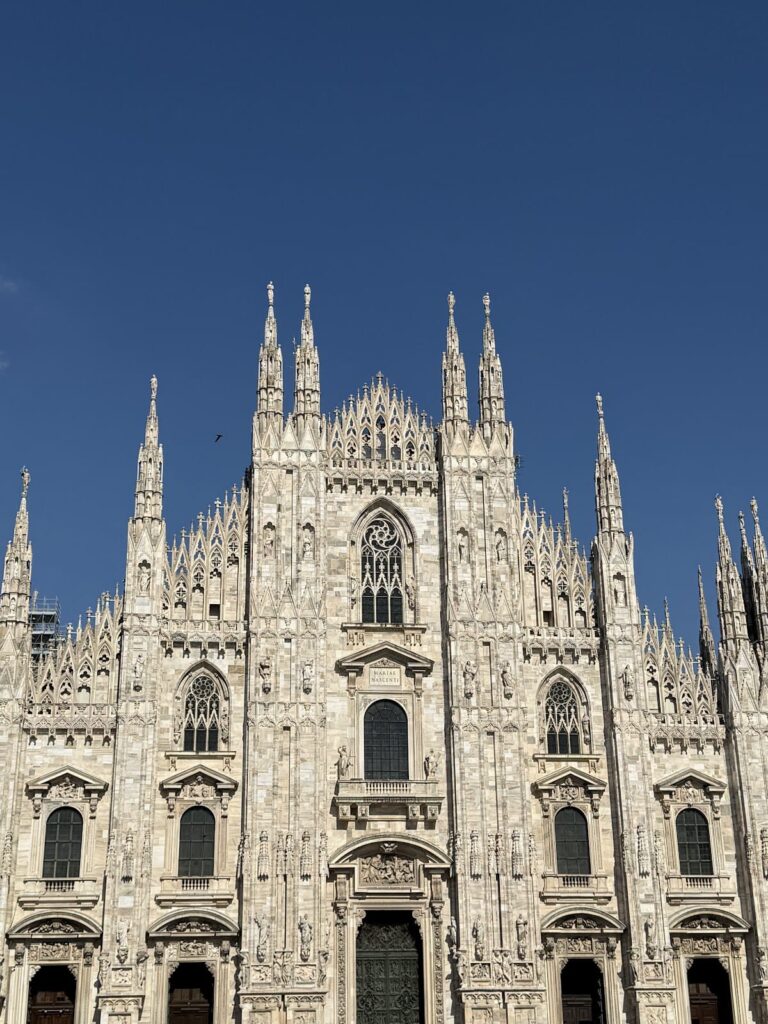
From 1994, during the administration of Milan mayor Marco Formentini, a temporary fountain stood in front of the building. Its jets reproduced the profile of Milan Cathedral’s spires, and it was dismantled after operating for a few years. In 1999, following a prolonged campaign for greater urban decorum, the advertising signs were removed under the administration of mayor Gabriele Albertini, implementing a policy begun by Formentini’s predecessor. This ended the period when Piazza del Duomo was used for television advertising spots, although the decision was later criticized.
Remains
Main facade
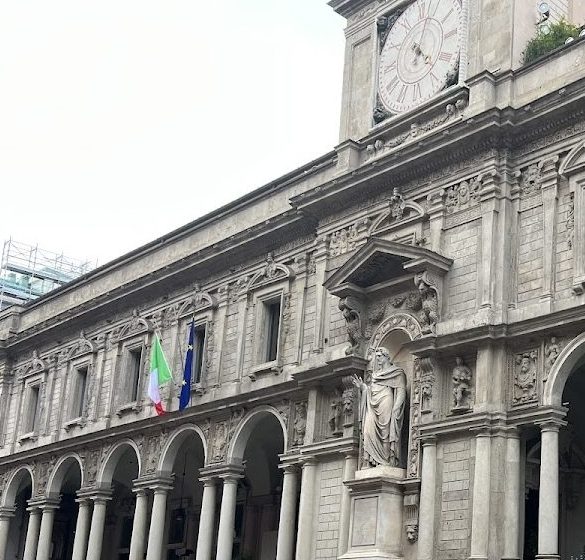
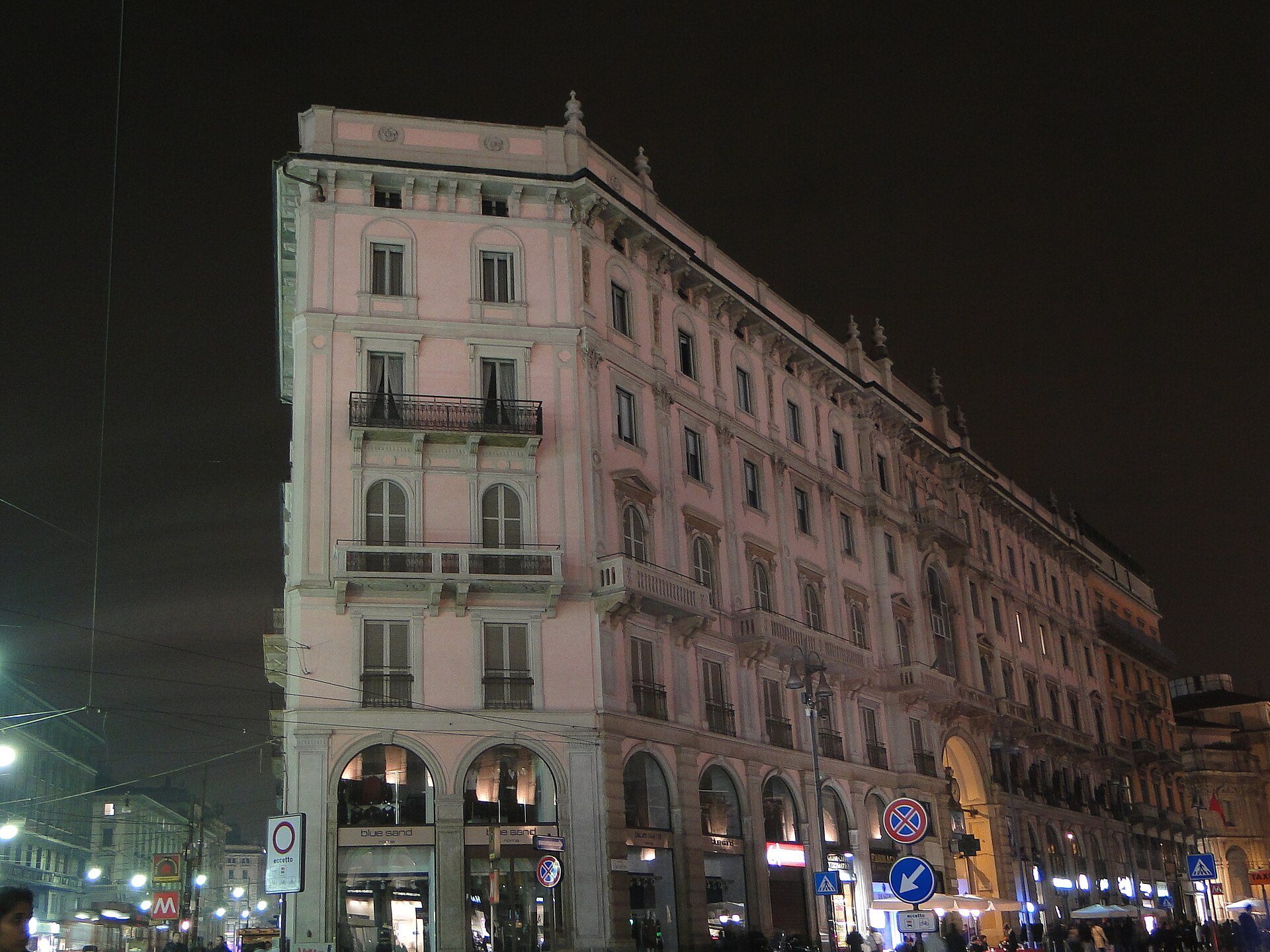
Palazzo Carminati has four floors and a plastered main facade organized vertically by tall pilasters. These frame windows topped by triangular pediments, while elaborate capitals and corbels supporting the cornice soften the building’s compact mass. The facade ends in a cornice with stone pinnacles aligned above the pilasters. During the twentieth century, large neon advertising signs were attached to the facade and covered much of its surface.
Plan and rear elevation
The palace has an irregular plan divided into two parts by the Passaggio Duomo, a passage connecting Piazza del Duomo with Via Orefici. Its rear elevation, facing Via Orefici, is undecorated. When Palazzo Carminati was built, that street was little more than an alley. The building remains in civilian use.