Palazzo dei Giureconsulti: A Renaissance Civic and Commercial Palace in Milan

Site at a Glance
- Rating
- 4.4
- Popularity
- Low
- Country
- Italy
- Primary era
- Early Modern
- External website
- Open
- Eras represented
- Medieval, Early Modern
- Civilizations
- Duchy of Milan, Holy Roman Empire, Spanish
- Site type
- Civic
- Remains
- Palace
On this page10 sections
History
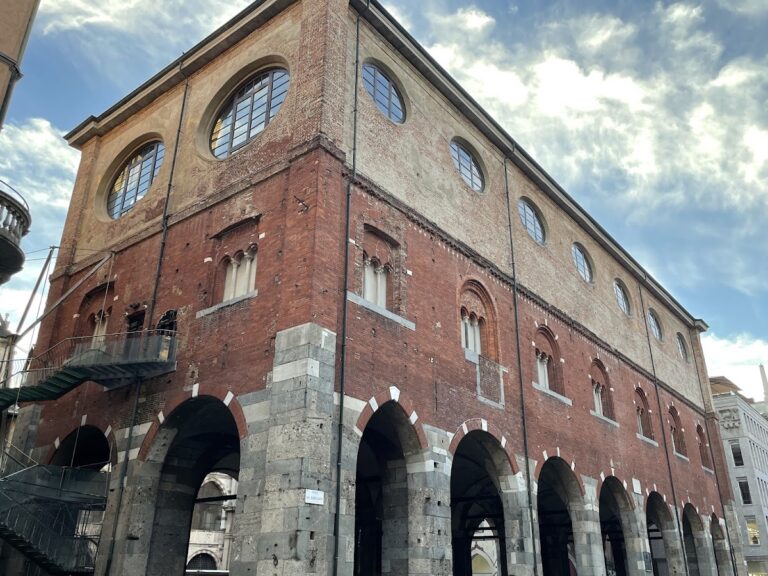
Palazzo dei Giureconsulti is a Renaissance civic palace in Milan, Italy, whose present building began in 1562 in the Mannerist style. It stands in the medieval civic center on Piazza Mercanti, beside Piazza del Duomo, and occupies the site of a thirteenth-century palace used by notaries.
Construction and civic functions
The Milanese nobleman Giovanni Angelo Medici commissioned and financed the new palace. He later became Pope Pius IV, a sixteenth-century pope from Milan. Vincenzo Seregni designed the building for the Collegio dei Nobili Dottori, a civic school that trained lawyers, judges, senators, and captains of justice for the administration of Milan and its state. The palace also provided offices where lawyers and notaries gave paid consultations.
During the Renaissance, the upper floor housed the twelve members of the Tribunale di Provvisione, Milan’s highest administrative body. In the first half of the seventeenth century, these officials commissioned prominent Milanese artists to decorate a chapel within the palace. In 1644, about half of the building’s decorative elements were reused on the principal facade of the Palatine School, a prestigious Milanese educational institution, after that building was damaged by fire.
Commercial use and restoration
The palace ceased to serve as an educational institution during the nineteenth century. It subsequently housed the Milan Stock Exchange, the telegraph, and the Banca Popolare di Milano. In 1911, the Chamber of Commerce of Milan acquired the entire building and made it its headquarters. It remains associated with the Chamber and is also known as Palazzo Affari ai Giureconsulti or Palazzo Affari.
Bombing in 1945 severely damaged the palace, which became the first Milanese building to undergo postwar restoration. A further restoration and functional recovery began in 1983 under the direction of Gianni Mezzanotte, with Roberto Menghi designing the interior installations. Completed in 1991, the work introduced telecommunications, audiovisual equipment, and simultaneous-interpretation systems. These changes adapted the historic palace for conferences and other functions while retaining its association with Milan’s civic and commercial life.
Remains
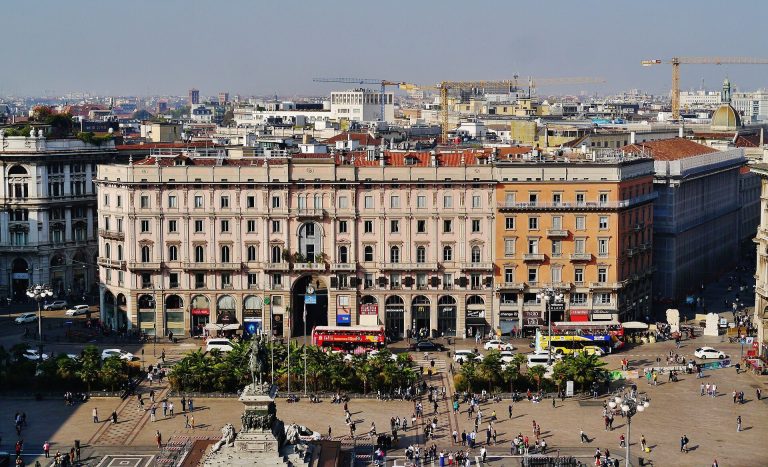
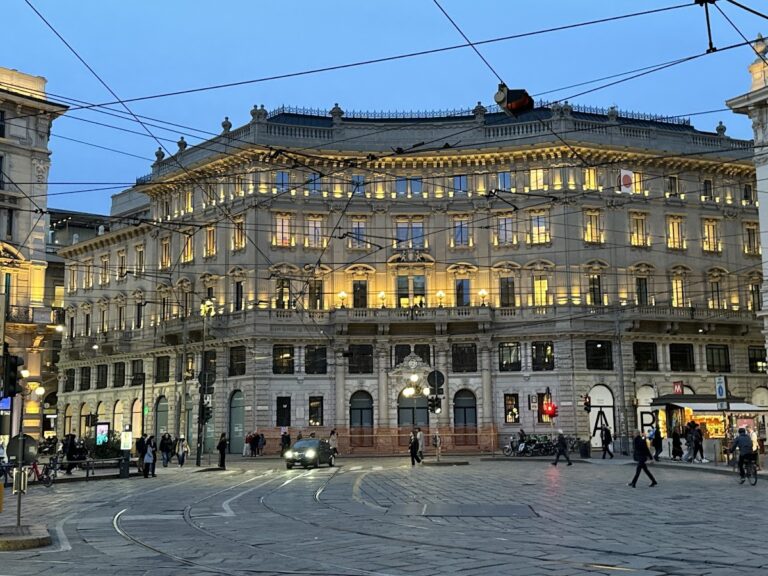
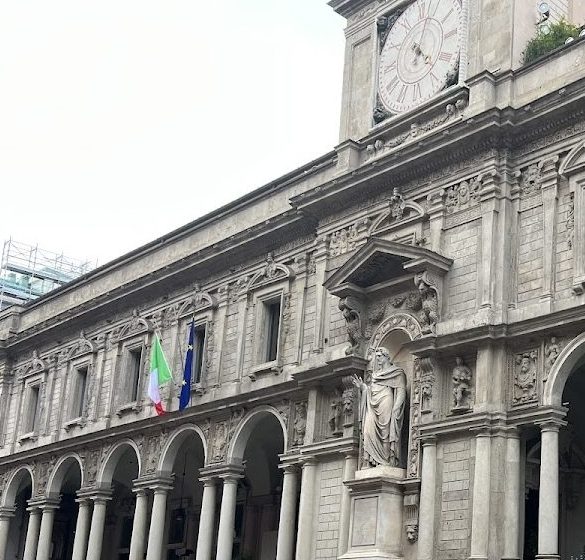
Palazzo dei Giureconsulti occupies an entire side of Piazza Mercanti, whose center contains the Palazzo della Ragione, a historic civic and judicial building. The palace has four levels, including the basement, and covers approximately 4,000 square metres. Its broad principal facade combines a central tower with two wings in a carefully ordered Mannerist composition.
Facade and tower
Principal facade
The ground floor is formed by an elevated open portico reached by several steps from the square. Its arches use the serliana form, with a central arch flanked by two lower rectangular openings. Paired columns, rustication, pilasters, sculptures, and decorated rectangular windows on the upper floor organize the facade and give it an elaborate architectural character.
Civic tower
A pre-existing tower built by Napo Torriani, a thirteenth-century Milanese political and military leader, was incorporated into the palace, probably along with parts of the earlier walls. Adapted to the palace’s style, it became a civic tower. It originally contained the Zavataria bell, donated by the Milanese podesta, or chief municipal official, Zavatario della Strada. The bell announced civic events, the curfew, fires, and public executions, and was also used in connection with firefighting. The present clock later replaced it.
Interior spaces and artistic remains
Conference and exhibition rooms
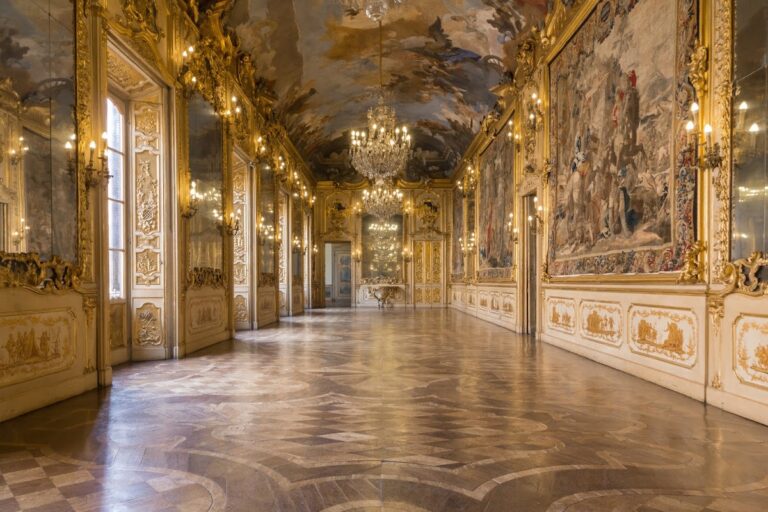
The basement contains a 280-square-metre exhibition hall and another hall used for fashion shows. On the ground floor, the Sala Colonne accommodates up to 100 people. Smaller rooms on the first floor serve business meetings, other meetings, and round-table discussions. Modern telecommunications, audiovisual equipment, and simultaneous-interpretation systems form part of the building’s adapted interior installations.
Seventeenth-century chapel decoration
A chapel inside the palace received its decoration during the first half of the seventeenth century. Its associated cycle of paintings, regarded as a masterpiece of Milanese Baroque art, is now held by the Pinacoteca of the Castello Sforzesco, the painting gallery in Milan’s Sforza Castle.