Roquefort Covered Alley: A Neolithic Passage Tomb in France
Site at a Glance
- Popularity
- Very Low
- Country
- France
- Primary era
- Stone Age
- Eras represented
- Stone Age, Medieval
- Civilizations
- Unclassified
- Site type
- Burial
- Remains
- Tomb
On this page15 sections
History
The Roquefort Covered Alley is a megalithic passage tomb on the Roquefort spur in Lugasson, Gironde, France. Architectural reassessment favors a Middle Neolithic design, the middle phase of the Neolithic, while finds and radiocarbon dates indicate use during the Late Neolithic, its later phase, around 3600–3000 BCE, and into the middle of the third millennium BCE.
The spur lies at the southern end of the Bellefond limestone plateau, on the grounds of Château Roquefort. It belongs to a broader prehistoric landscape that includes the Grand Moulin site, the Sabatey and Curton covered alleys, the Bignon dolmens, the Pontaret menhirs, and the Fontarnaud caves. The caves were occupied from the Paleolithic to the Bronze Age.
The tomb was once classified as a Breton-influenced monument of the Final Neolithic. That interpretation relied in part on an assumption about the tops of its standing stones. Later architectural reassessment challenged the classification and favored a Middle Neolithic design. Older pottery and stone tools also point to activity on the spur before, or around, the tomb’s construction.
Medieval reuse
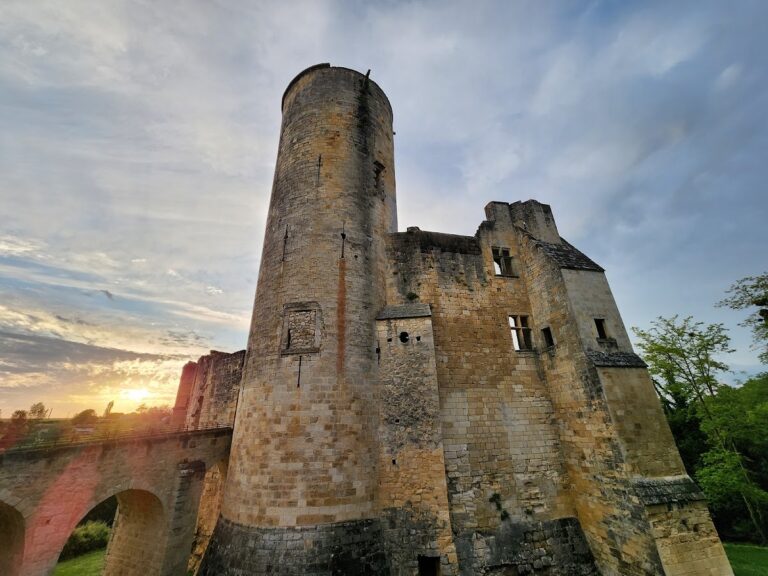
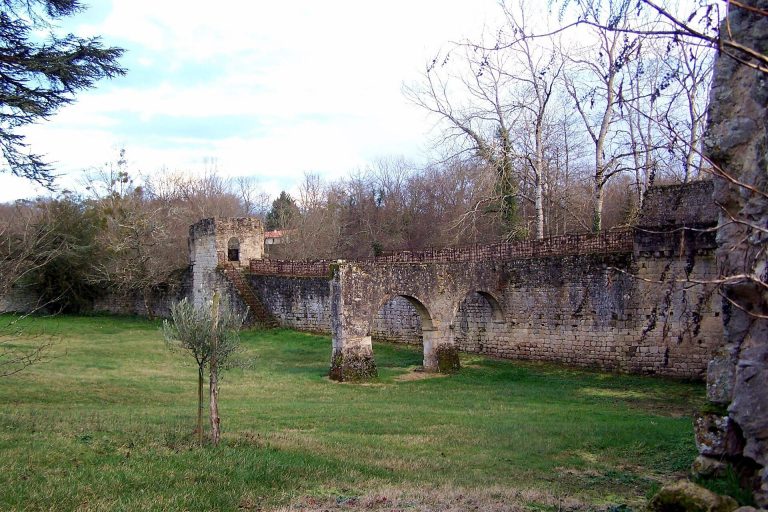
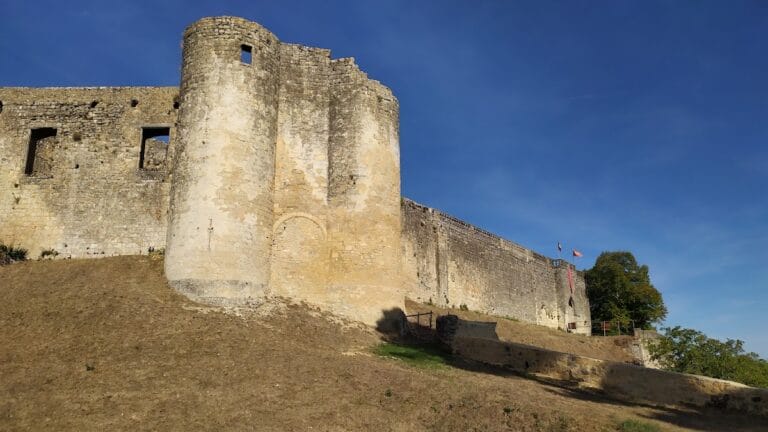
The tomb was incorporated into a defensive rampart built across the spur during the Middle Ages. The rampart had previously been assigned to the Protohistoric period, the time before written records for a society, but radiocarbon dating of a long bone found within it supports a medieval date. Its builders placed it over the tomb’s original stone mound.
A separate ditch-like feature detected by geophysical survey also appears to date to the Middle Ages. Pottery recovered from the feature provides preliminary support for that dating.
Archaeological investigation
The Roquefort spur drew the attention of the Girondin archaeologist Léo Drouyn in the nineteenth century, but the covered alley itself was identified only in the early twentieth century, after it had become part of the rampart. In 1922–23, Jean-Joseph Labrie, the priest of Lugasson, excavated the tomb. He described a large burial place with numerous burials and modest grave goods. He did not publish an excavation report, and his unstudied collection was later lost.
From 1967 to 1976, archaeologist Julia Roussot-Larroque investigated the plateau for evidence of Neolithic settlement. Three test trenches opened in 1967 included one on the spur’s southeastern slope, where four archaeological layers were identified and later subdivided. In 1972, she cleaned the tomb and recovered about 440 objects, including bones, flint, beads, pottery, and human remains. Her work ended after a dispute with the landowner. Trenches opened across the entrance in 1975 and 1976 examined the relationship between the tomb and rampart.
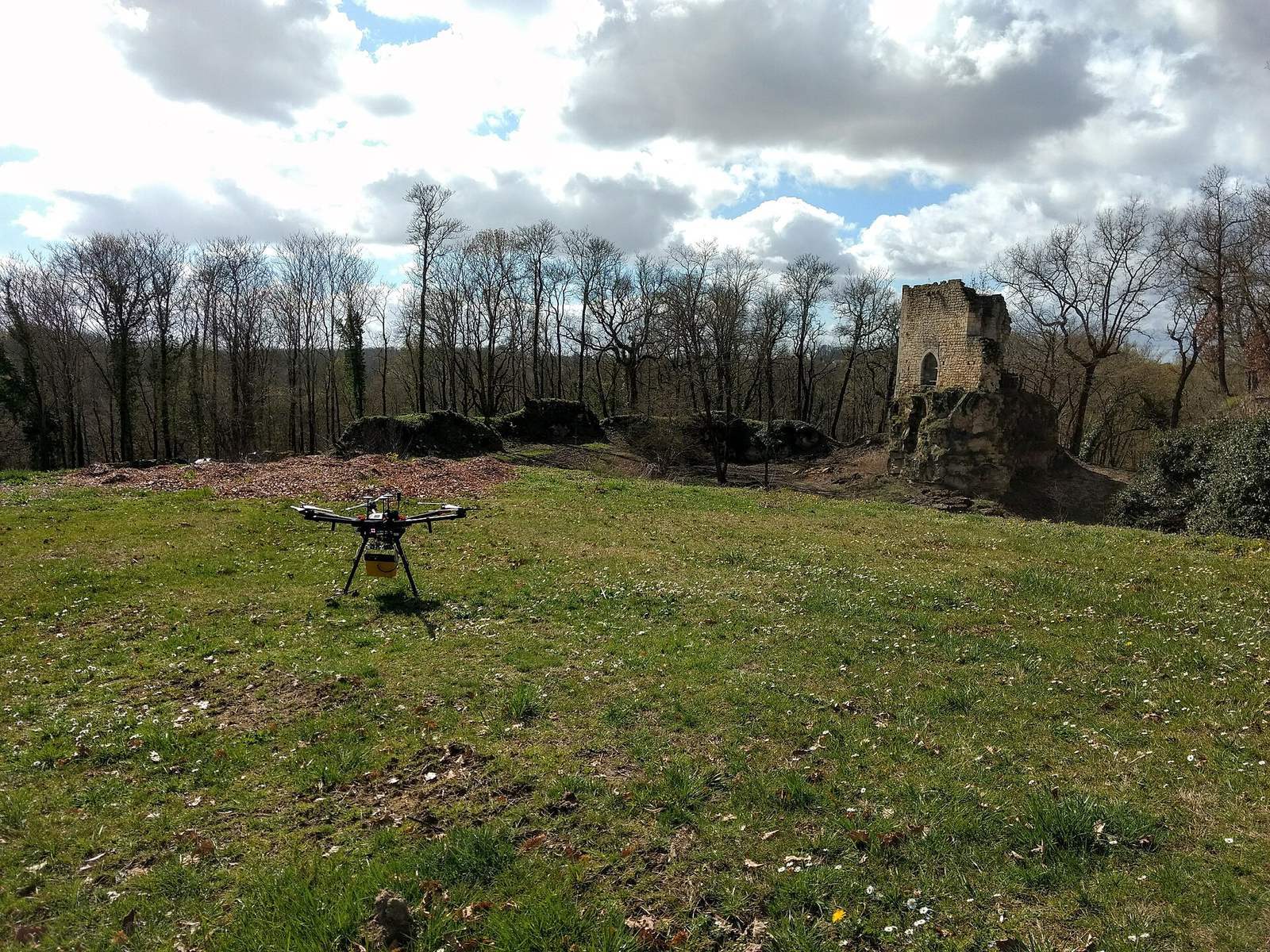
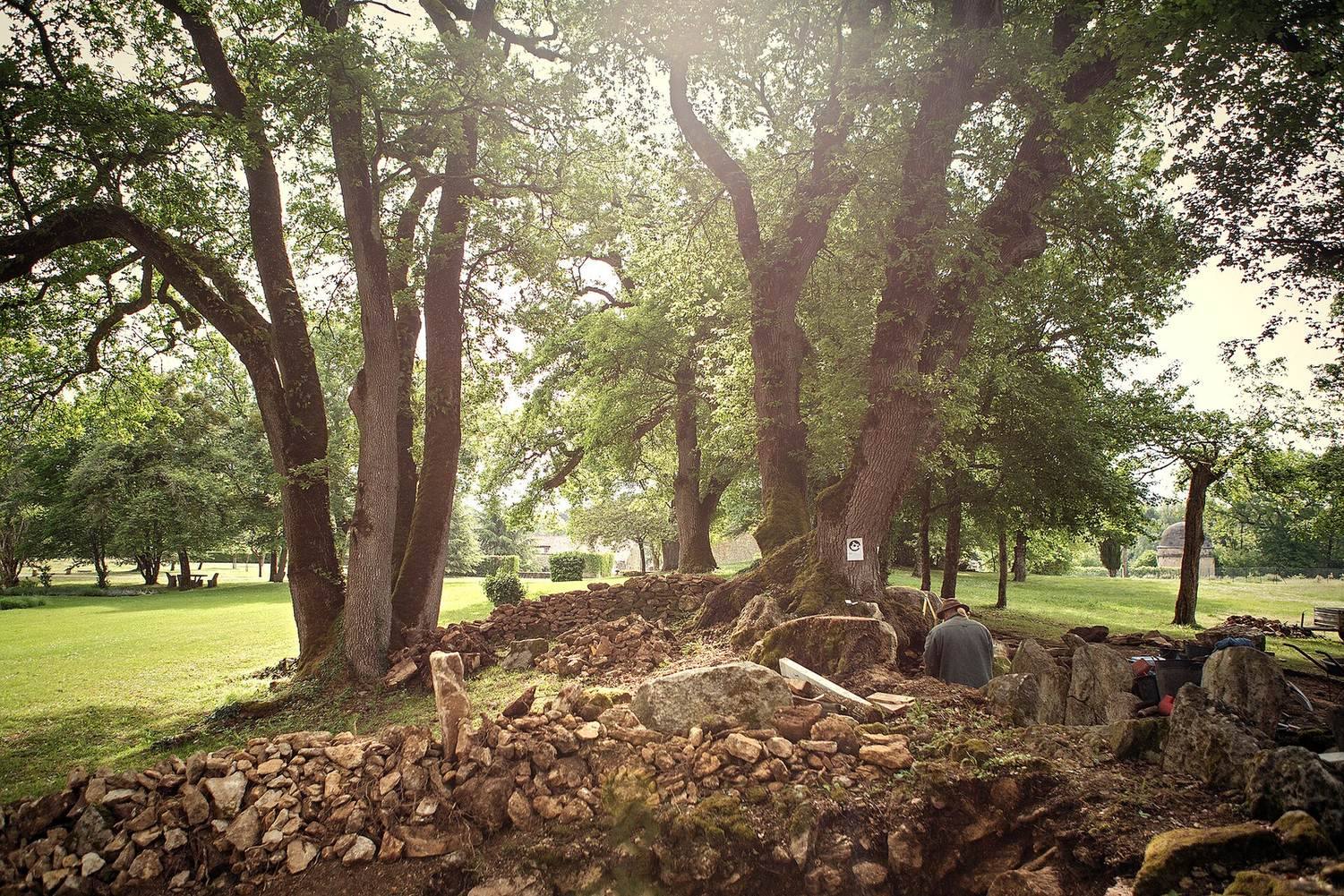
Excavations resumed in 2019 at the request of the current owners, as part of a research program on the development of megalithic monuments along the Atlantic coast. Five test trenches explored the tomb and nearby settlement evidence, including the Middle Neolithic Roquefort cultural group defined by Roussot-Larroque. A further campaign in 2020 extended the work inside the tomb and across parts of the plateau. Geophysical surveys and conservation assessments accompanied the excavations, while researchers cleaned the stones and made three-dimensional records of the site.
Remains
The monument is a northwest–southeast passage about 14 m long and 1.40 m wide on average. It is built from Asterias limestone, a pale stone rich in fossil starfish. Its form belongs to a regional type of megalithic passage tomb, generally built above ground with a fairly consistent width and height.
Passage, floor, and roof
Passage and floor
Seven orthostats, or upright structural stones, line the south side, and eleven line the north. They range from 58 cm to 1.88 m high. Some have fresh breaks that suggest their height was reduced later, while the natural tops of other stones appear to preserve their original form. Very short blocks stand opposite taller pillars, indicating that some of the stones may not have supported the roof. The two sides also differ in their arrangement: the south wall has upright stones in its middle and stones laid on edge at either end, while the north wall has a more varied pattern.
The floor consists of 26 slabs laid over smaller packing stones. It rises gently by about 60 cm from the entrance to the rear. Individual slabs range from 0.40 m to 2 m long, and the largest measures 207 by 122 cm. Some overlap, and their arrangement suggests that they were laid from the rear toward the entrance before the standing stones were installed. The limestone varies in color and grain: the largest floor slabs are beige, most wall stones range from white to orange-yellow, and a few blocks have a coarser texture that points to different stone sources.
Cairn and roof
A long cairn, a mound of stones covering a burial, originally surrounded the passage. It was made of small limestone slabs and faced with slabs set on edge. Part of the mound remained until 2019. Trees grew over it, and their roots reached into the chamber and damaged the stonework. Loose blocks around the tomb average about 0.50 m thick and resemble the surviving roof stones in shape and grain. Some may be fallen roof slabs; water-worn hollows and recent break surfaces show that the blocks have undergone prolonged exposure as well as more recent movement.
The roof was formed from cover slabs. Three are described as remaining, with other blocks lying nearby; two of the three were removed in 2019 for safety, and the remaining slab is broken in two. The surviving slabs measure about 1.60–1.90 m long, too short to span the passage securely in its present arrangement. The different pillar heights and the short roof slabs suggest that the cairn may have helped carry the roof, possibly with stones projecting inward between the pillars and slabs. The original ceiling was probably at least as high as the tallest pillar and may have risen higher in the middle.
Rampart and plateau features
Medieval rampart
The rampart lies directly on the original cairn. Excavations across the entrance identified three levels associated with the rampart, one of them resting against the tomb’s standing stones. A trench also exposed carefully built stonework that may have formed the rampart’s front face.
Surveyed features
Magnetic survey detected a ditch about 2.5 m wide running east–west across the spur. Electrical survey placed the bedrock generally less than 0.5 m beneath the surface, with irregular outcrops, and identified a high-resistance feature uphill from the tomb whose purpose remains uncertain.
Carved end slab
The end slab is the only upright stone with a broad, convex top shaped by removing material. It is also the only wall stone dressed across its whole surface by pecking, leaving circular marks about 1–1.5 cm across. Eight cupules, small hollows deliberately made in stone, form a horizontal, hooked motif on its inner face. The cupules are slightly oval and measure about 4 by 4 to 6 by 5 cm. Their shape and manufacture indicate prehistoric carving. Erosion has damaged the reddish-pink surface, including the area around the eighth cupule. Comparable carved forms occur on the end slab of the nearby Curton covered alley, on a pillar at Grah Niol, and at the Table of the Merchants, a passage tomb at Locmariaquer.
Excavated objects and human remains
Pottery
Pottery recovered in 2019 spans the Neolithic, the Protohistoric period, and the Middle Ages. Most pieces came from disturbed contexts and include pottery mixed with sand or shell. A group found together at the foot of what may be the cairn’s front face refitted into fragments from two vessels; three vessels were distinguished in all after refitting. Two sherds have Protohistoric decoration, and the most complete vessel dates to the end of that period or the beginning of the Iron Age. A Neolithic fragment with clay knobs resembles pottery of the Middle Neolithic Roquefort group and may predate the tomb or have been placed beside its mound.
Stone tools and ornaments
Most of the stone tools and other flint material came from beneath the floor slabs. Finds include a scraper, two truncated pieces, and three projectile points. Two points from beneath the paving, one of them a Bétey-type projectile point, have characteristics associated with the Early Neolithic or the beginning of the Middle Neolithic. Fine flint debris indicates that some late stages of tool production took place at the site. Eleven personal ornaments were recovered in 2019, nine beneath the paving. They include shell pieces and beads made from shell, bone, or limestone.
Human and animal bones
The 2019 excavation recovered 905 human bone fragments, 524 of which were identified. More than half came from the covered alley, and nearly 40 percent of the alley’s human remains belonged to immature individuals. The trench beneath the paving contained remains representing four immature individuals and two adults or adult-sized individuals. Teeth recovered there showed some wear.
The excavation also produced 205 well-preserved animal bone fragments from sheep, cattle, goats, roe deer, and rabbits. Knife marks on some of the bones indicate that they were discarded after the meat had been consumed.