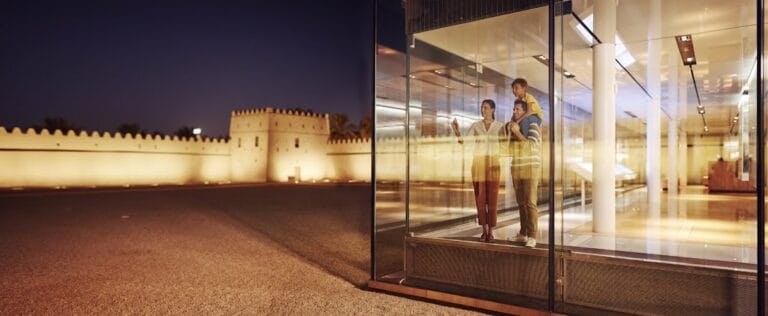
Al-Jahili Fort: A Historic Defensive Stronghold in Al Ain, UAE
Visitor Information
Google Rating: 4.5
Popularity: Medium
Country: United Arab Emirates
Civilization: Modern
Site type: Military
Remains: Fort
History
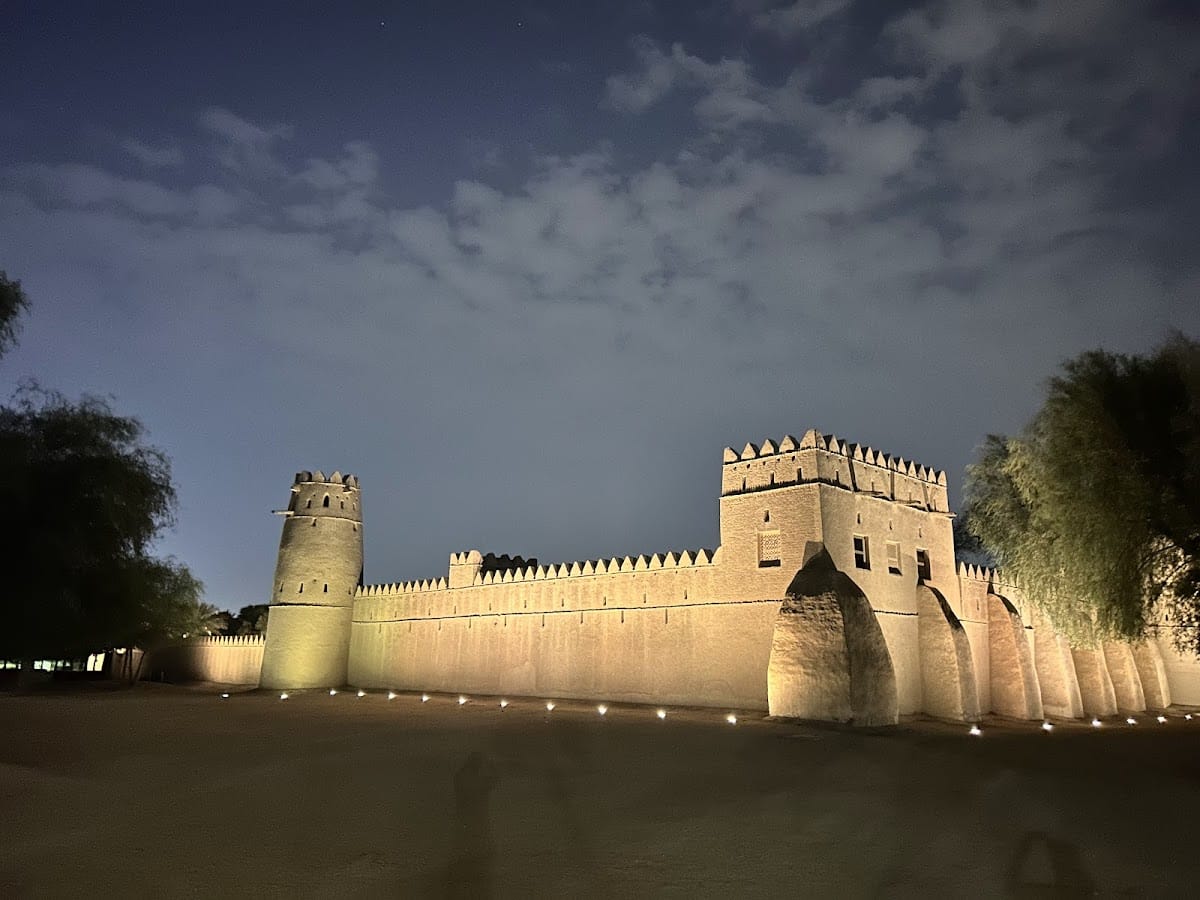
Al-Jahili Fort is located in the municipality of Al Ain within the United Arab Emirates. It was built in the late 19th century by the local ruling dynasty of the time, the Al Nahyan family, who were key leaders in the region.
The fort’s construction dates back to 1891 under the reign of Sheikh Zayed bin Khalifa Al Nahyan. He established the fort near the Al-Jahili Oasis with the primary aim of defending the city of Al Ain and protecting the valuable date palm plantations that surrounded the area. These agricultural resources were essential to the local economy, and the fort’s strategic position helped safeguard this prosperity.
In the early 20th century, the fort gained recognition from visitors and officials. British political agent Percy Cox noted the fort during his 1905 visit to the region, and a year later, the geographer J. G. Lorimer documented that it had been constructed during Sheikh Zayed’s leadership. This highlights the fort’s prominence as a regional stronghold during a period when maintaining tribal peace and security was essential.
From 1955 onward, the fort became a base for the Trucial Oman Scouts, a paramilitary force originally known as the Trucial Oman Levies. The Scouts used the fort to oversee the safety of mountain passes and to mediate tribal conflicts. Beyond military duties, they provided basic medical supplies and first aid, delivering these services to remote communities through camel patrols. This role underscored the fort’s importance in both defense and community support during a time leading up to the founding of the United Arab Emirates.
Following the establishment of the UAE in 1971, Al-Jahili Fort transitioned from a military installation to a historical site, reflecting the region’s heritage and its earlier phases of control. Restoration efforts began in the mid-1980s, led by the Department of Antiquities and Museums in Al Ain. These were later followed by a more comprehensive restoration between 2007 and 2008 overseen by the Abu Dhabi Authority for Culture & Heritage. This restoration included improving infrastructure to support cultural activities.
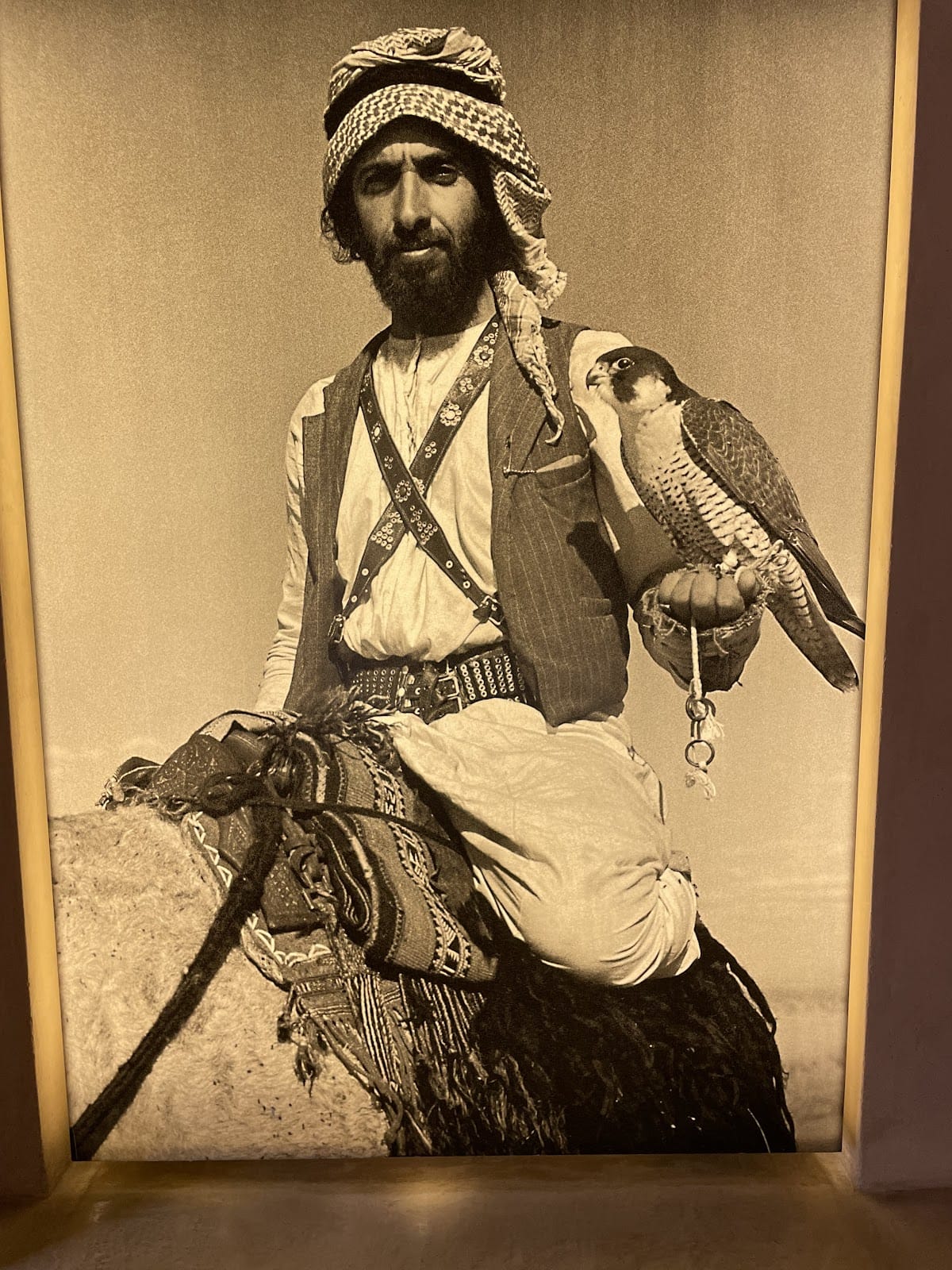
The fort today hosts a permanent exhibition dedicated to Wilfred Thesiger, a noted British explorer who developed a close relationship with Sheikh Zayed and conducted extensive explorations in the surrounding desert landscape. Plans for the future include expanding the fort’s role as a cultural center with added visitor services such as a library and audiovisual displays, alongside spaces for temporary art exhibitions.
Al-Jahili Fort’s restoration and preservation efforts have been internationally recognized, earning awards such as the Chicago Athenaeum International Architecture Award in 2010 and the Terra Award for contemporary earthen architecture in 2013. These honors reflect its architectural and cultural significance within the region.
Remains
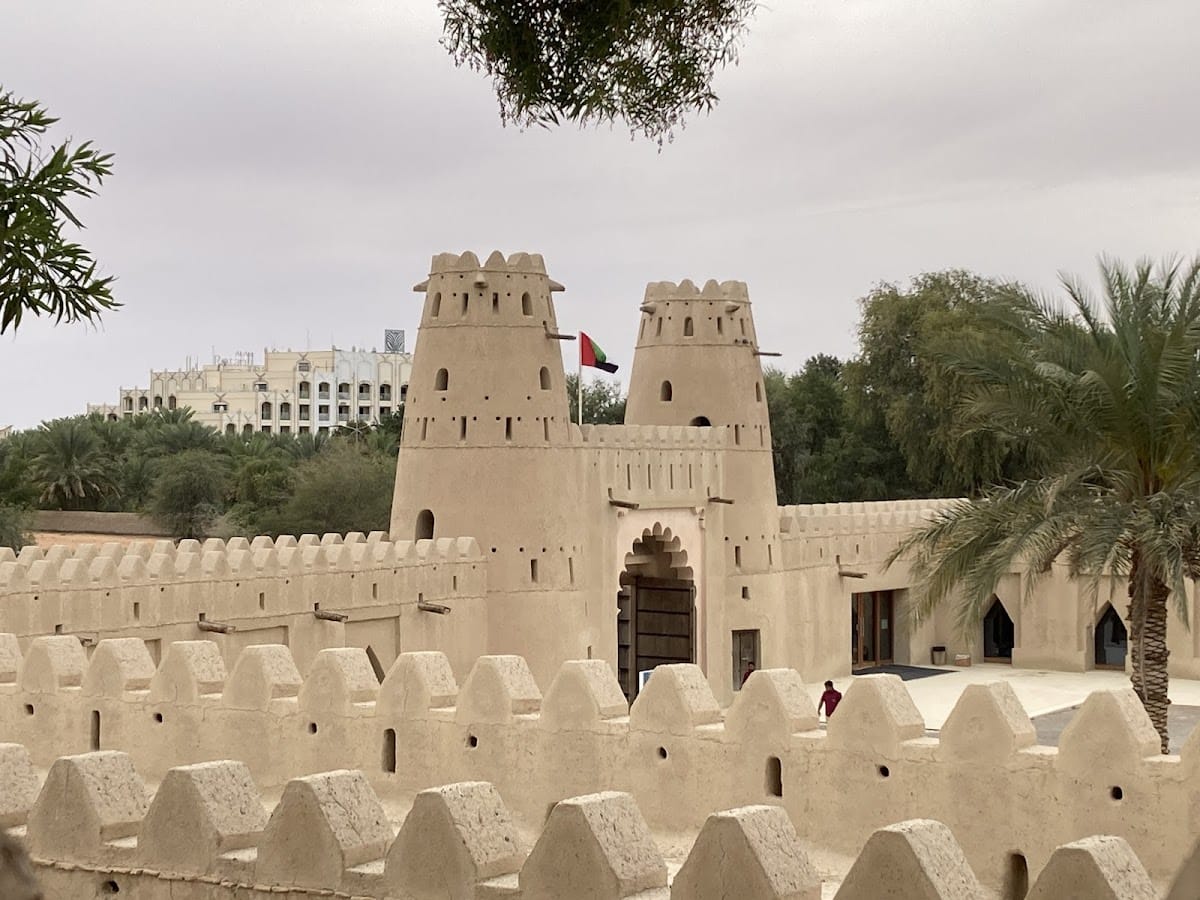
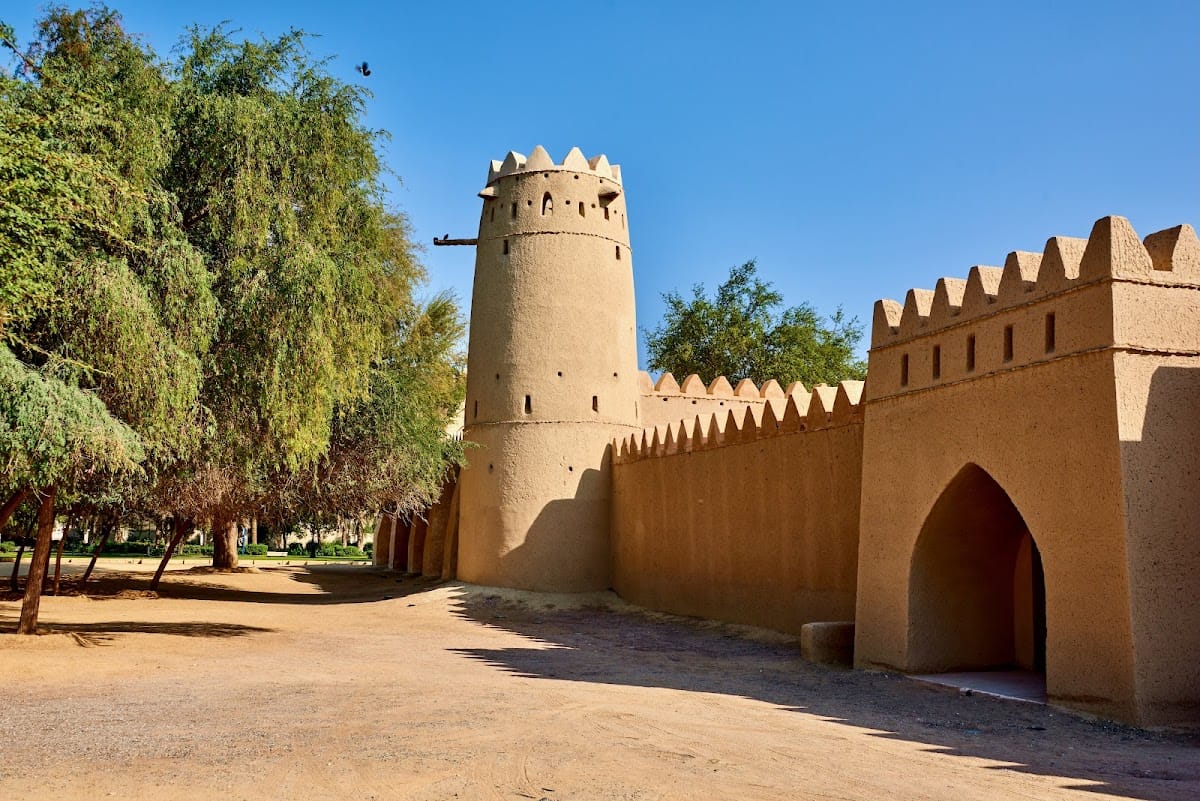
Al-Jahili Fort presents as a large, rectangular structure measuring approximately 118 meters on each side and rising to a height of about 8 meters. Situated in the southeastern part of Al Ain, its location near the Al Ain Castle Museum places it within a larger historical and cultural context. The fort is constructed primarily with traditional local methods suited to desert environments, exemplifying the military architecture of the area.
Each of the fort’s four facades is equipped with embrasures—small openings designed for rifle use—and triangular balconies that provided strategic points for defenders. These defensive elements highlight the fort’s role in surveillance and protection. Surrounding the fort is an external courtyard or public square, contributing to the overall layout of the complex and indicating areas for gathering or official activities.
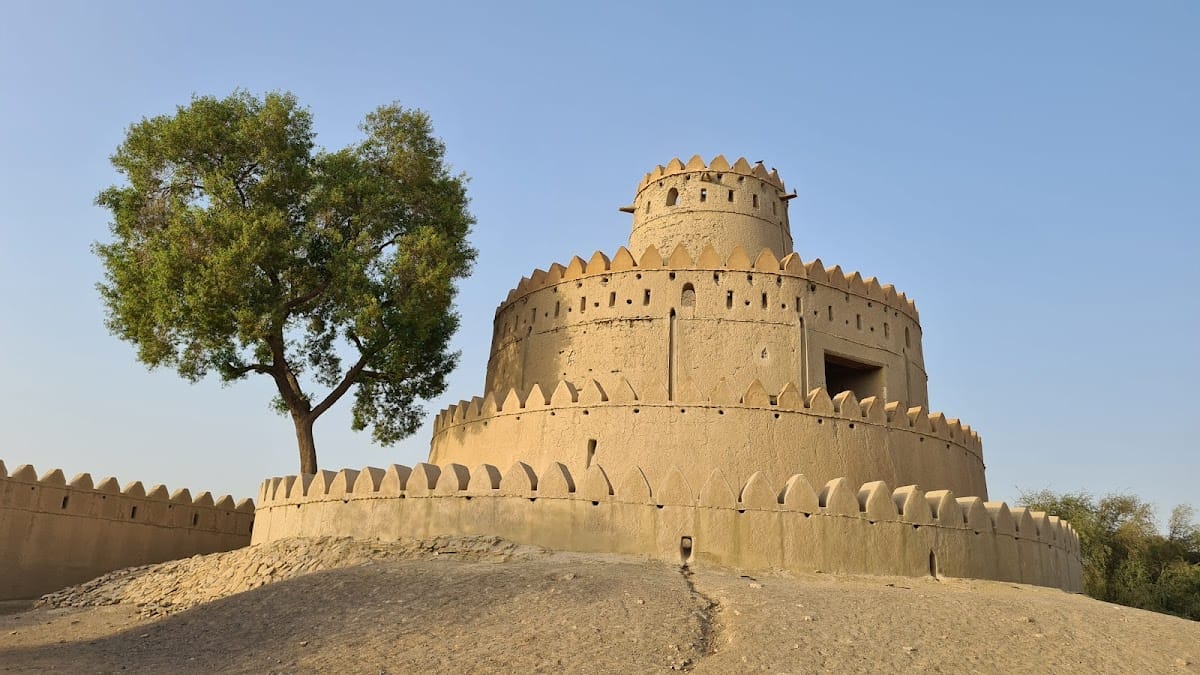
The fort features four towers that vary in shape and structure. Three of these are circular, each about 5 meters in diameter and standing 14 meters tall. Each circular tower consists of three floors, mirroring the design of the fort’s main entrance towers. These towers were likely vantage points for monitoring the surroundings. The fourth tower, positioned at the northwest corner, is rectangular with dimensions of roughly 7 by 4 meters and is nearly as tall as the others. This tower has two floors and is considered sturdier than its circular counterparts, suggesting a specialized defensive purpose.
Within the larger complex, a historic mosque stands adjacent to the fort’s walls, revealing a close relationship between military and religious spaces in the area’s historical layout.
A modern addition to the site is a helicopter landing pad on the eastern side of the fort. This feature has facilitated aerial photography, which documents the fort’s comprehensive design and aids in its conservation.
Due to ongoing restoration, the fort maintains much of its original architectural form and stands as a well-preserved example of regional fortifications. Its cultural significance has also inspired the creation of a smaller replica near the Sheikh Zayed Bridge in the Swat Valley, Pakistan, which was officially opened in 2013, reflecting its influence beyond the UAE.