Qasr Al Muwaiji: A Historic Fort and Museum in Al Ain
Site at a Glance
- Rating
- 4.6
- Popularity
- Medium
- Country
- United Arab Emirates
- Primary era
- Modern
- External website
- Open
- Eras represented
- Early Modern, Modern
- Civilizations
- Unclassified
- Site type
- Military
- Remains
- Fort
On this page8 sections
History
Qasr Al Muwaiji is an early twentieth-century fort and museum in Al Ain, United Arab Emirates, built during the reign of Sheikh Zayed bin Khalifa Al Nahyan by his eldest son, Sheikh Khalifa bin Zayed bin Khalifa Al Nahyan. Archaeological evidence places human settlement and oasis activity at Muwaiji before the fort was constructed, while a coin dated 1897 indicates that the building dates from after that year. The fort became closely associated with the Al Nahyan family and with the political and social history of Al Ain.
Muwaiji Oasis and the Fort’s Foundation
Muwaiji is the smallest of Al Ain’s oases and lies at the western edge of the oasis area, on the road towards Abu Dhabi. Archaeological evidence indicates that settlement in the oasis probably began between the seventeenth and nineteenth centuries. Agricultural activity dating from the eighteenth century shows the earlier importance of oasis cultivation, while excavations also identified several stages in the fort’s construction.
Al Ain occupied a strategic position between the Persian Gulf and the Arabian Sea and served as a stopping point on historic trade routes extending towards China. The wider area has evidence of habitation spanning more than 5,000 years. Qasr Al Muwaiji is associated with this long history through its relationship with the oasis, Al Ain, and the Al Nahyan family.
A Diwan and Family Residence
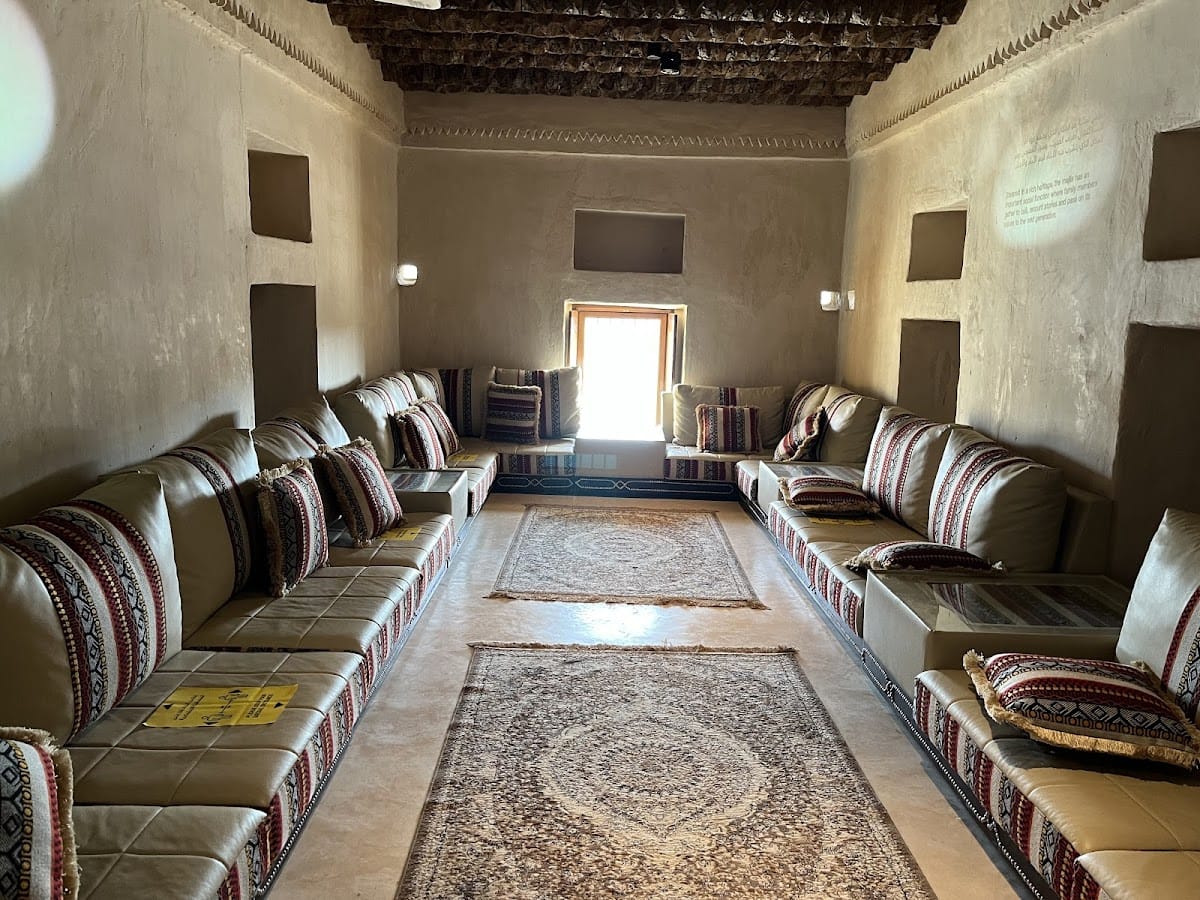
After Sheikh Khalifa bin Zayed bin Khalifa died, Qasr Al Muwaiji passed to his son, Sheikh Mohammed bin Khalifa bin Zayed Al Nahyan. Under Sheikh Mohammed, the fort served as a diwan, a council and reception space used for governance, public meetings, and receiving visitors. It also became a gathering place for people from the local community.
In 1946, Sheikh Zayed bin Sultan Al Nahyan became the Ruler’s Representative in the Eastern Region and moved into the fort. Sheikh Zayed bin Sultan, who later became Ruler of Abu Dhabi and the founding president of the United Arab Emirates, used Qasr Al Muwaiji as both his administrative diwan and family home. During this period, he married Sheikha Hessa, the daughter of Sheikh Mohammed bin Khalifa. Their eldest son, Sheikh Khalifa bin Zayed Al Nahyan, was born at the fort in 1948 and spent part of his youth there learning from his father.
Sheikh Zayed’s residence increased the fort’s political and social importance. The diwan was enlarged to twice its earlier size, and the kitchens, guest rooms, family accommodation, and mosque were expanded or improved. These changes allowed the complex to accommodate more visitors and larger public meetings.
Abandonment, Restoration, and Museum Use
In 1966, Sheikh Zayed bin Sultan became Ruler of Abu Dhabi and moved to Abu Dhabi with Sheikh Khalifa. Qasr Al Muwaiji was subsequently left unoccupied, and its buildings deteriorated. For many years, the site was used as a date-palm farm.
Restoration and rehabilitation began in several phases in the late 1970s. The programme expanded in 2009 to include archaeological excavation and conservation, with the aim of revealing the fort’s earlier condition and archaeological characteristics. Conservation incorporated earlier repairs as part of the building’s accumulated history. Traditional methods and materials were used, and as much original and previously repaired fabric as possible was retained in place. The restored complex opened as a museum in November 2015.
Qasr Al Muwaiji now functions as a museum and cultural exhibition. Its permanent presentation explores the fort’s history, the Al Nahyan family’s connection with it, the family’s succession to rule, Sheikh Khalifa bin Zayed Al Nahyan’s life and leadership, and the history of Muwaiji oasis from its earliest evidence of human activity to the present. It also emphasizes leadership, traditional Emirati values, and the role of water and oasis settlements in life at Al Ain.
Remains
The Fort Enclosure
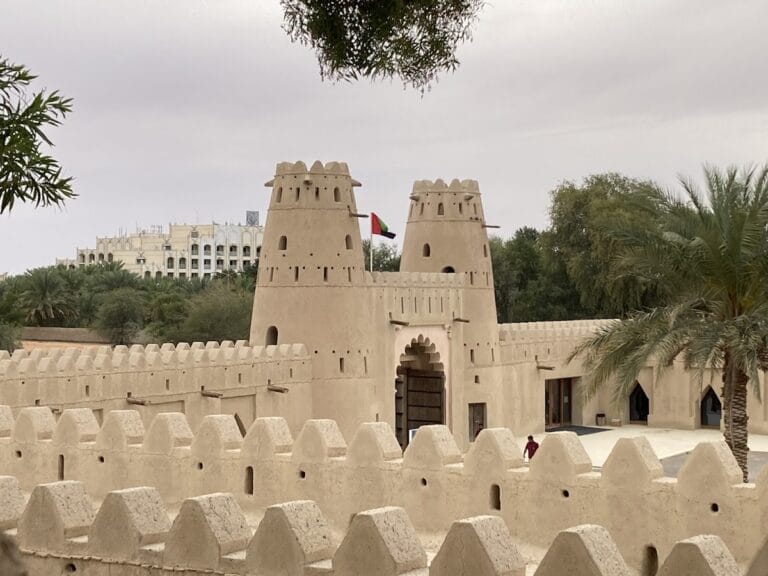
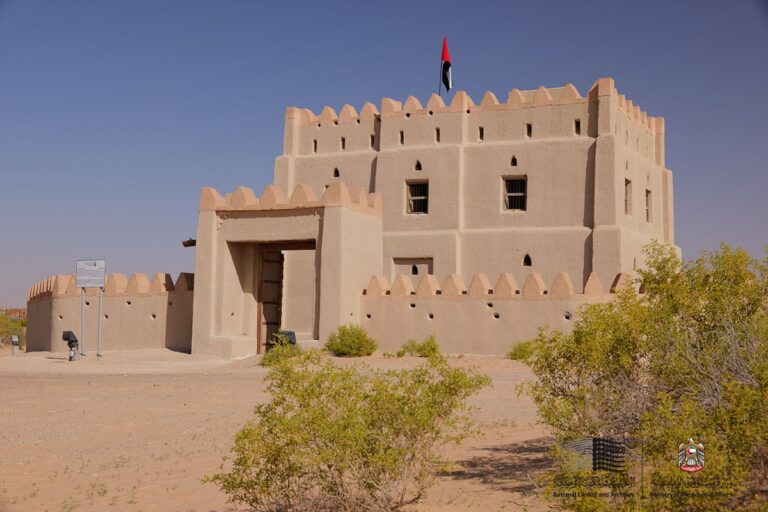
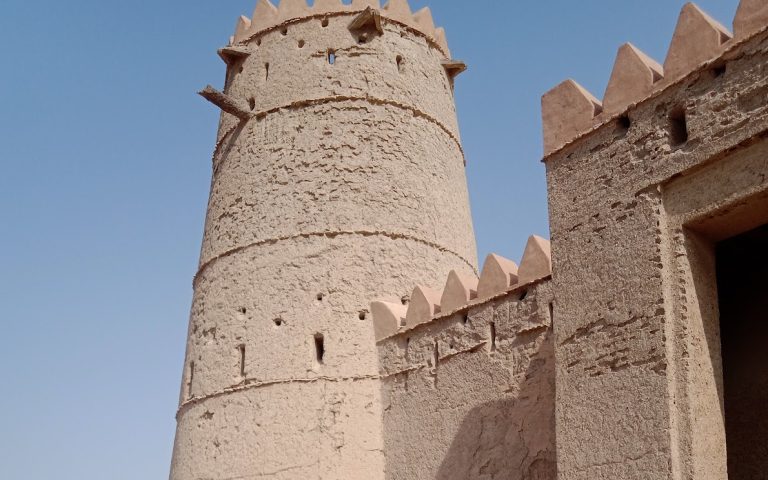
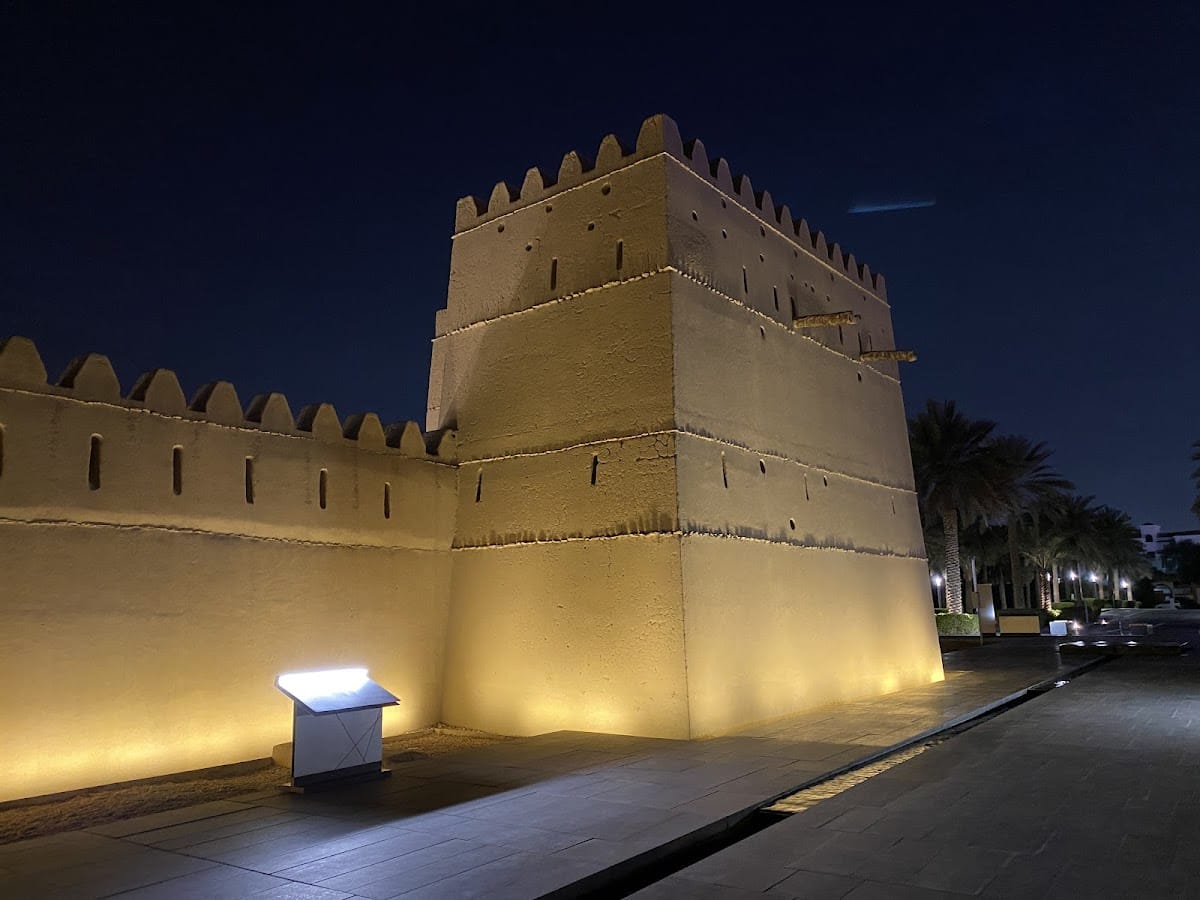
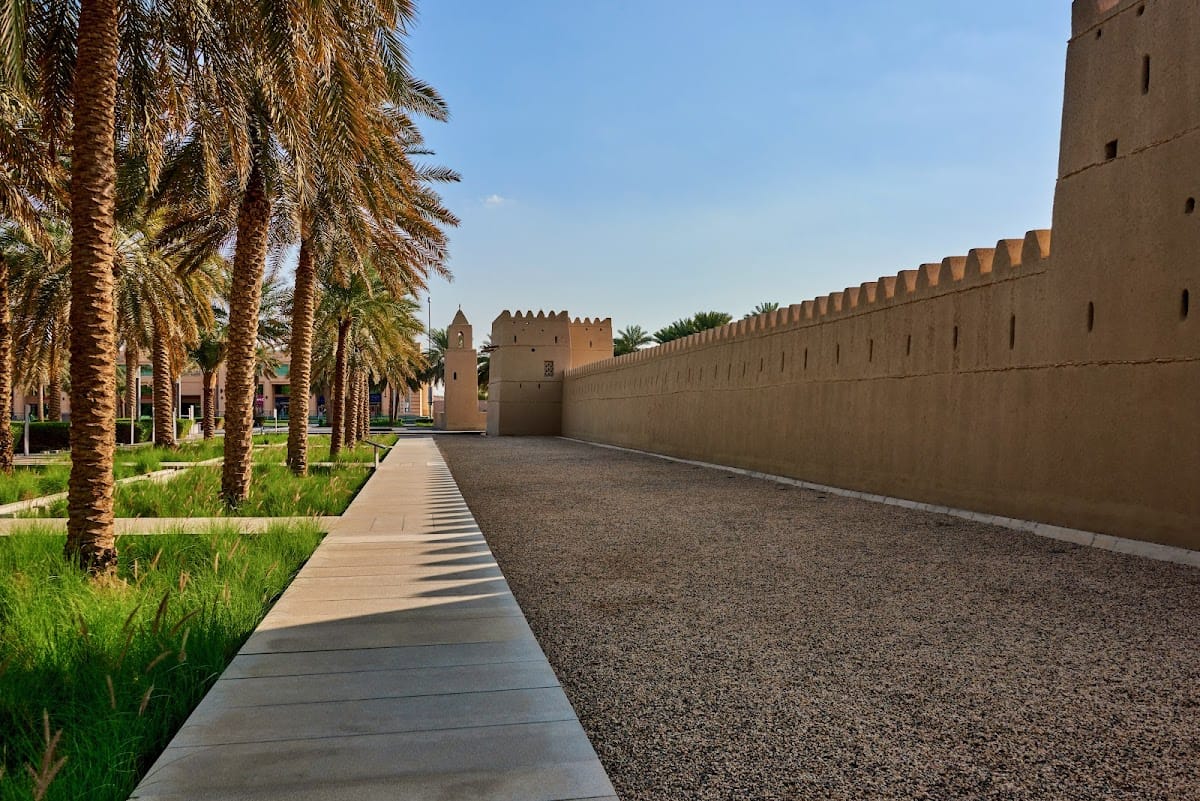
Qasr Al Muwaiji is arranged as a square enclosure with projecting towers at its corners and a large entrance gateway. These straightforward elements gave the fort a distinctive presence in Al Ain. Its walls were built from mud, a material that required regular upkeep in a climate marked by extreme heat and occasional heavy rainfall. Excavation revealed physical evidence for successive stages of construction, allowing the restored building to be understood as the result of more than one building phase.
Internal Spaces and Exhibition Courtyard
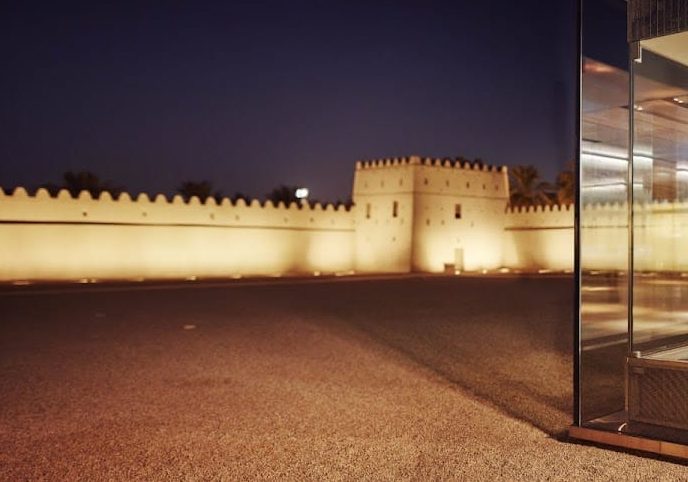
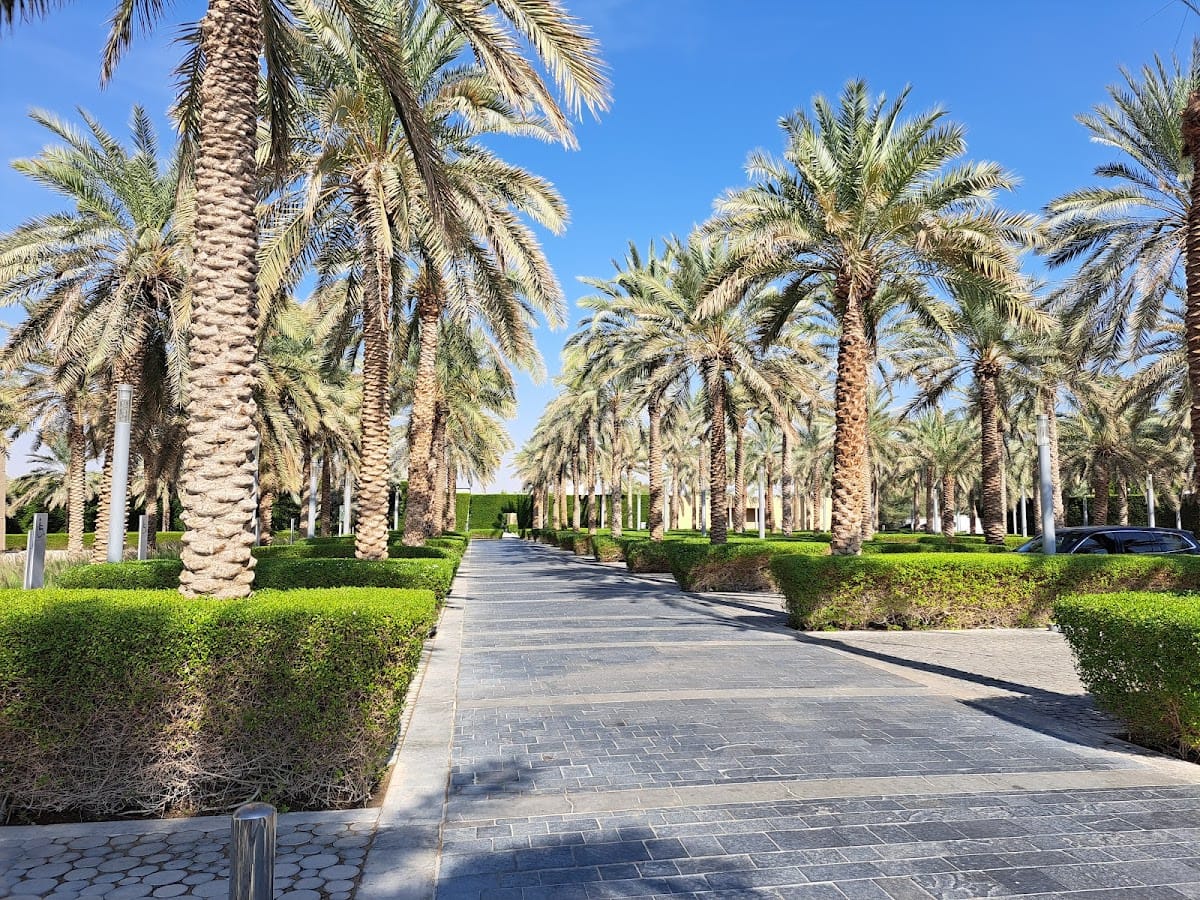
The complex contained a diwan, mosque, kitchens, guest rooms, and accommodation for the family. During Sheikh Zayed bin Sultan’s residence, the diwan grew to twice its earlier area, while other spaces were enlarged or improved for family life, visitors, and public meetings. The restored complex also includes an exhibition courtyard designed by Machado and Silvetti and their associates. Its restrained design was intended to complement the fort’s traditional structure and the landscaped areas around it.
Archaeological Evidence and Museum Displays
Excavations at Muwaiji uncovered remains of agricultural activity dating from the eighteenth century, providing physical evidence for the oasis before and around the period of the fort’s development. The restored fort now houses a permanent exhibition with rare photographs and material relating to Sheikh Khalifa bin Zayed Al Nahyan and the Al Nahyan family. Displays interpret the fort, Al Ain, and the oasis environment, linking the surviving building with the archaeological history of its setting.