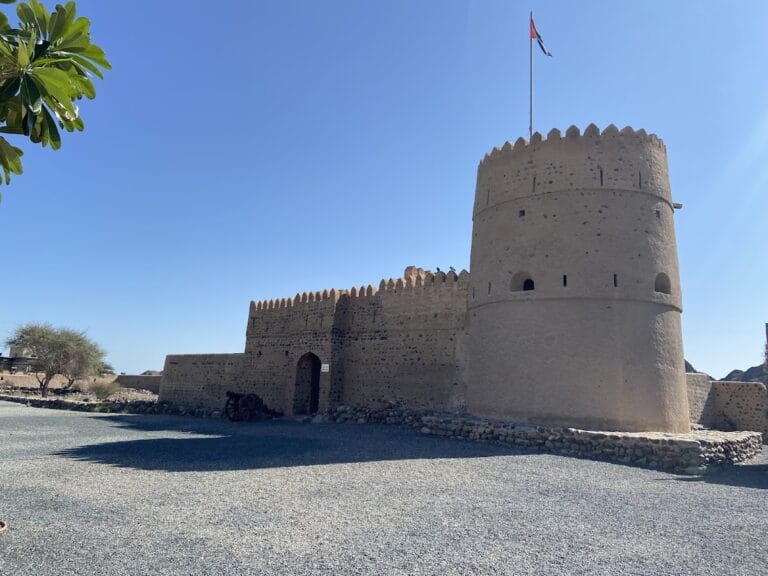
Al Hayl Castle: A Historic Fort in Fujairah, United Arab Emirates
Visitor Information
Google Rating: 4.4
Popularity: Low
Country: United Arab Emirates
Civilization: Modern
Site type: Domestic
Remains: Elite Residence
History
Al Hayl Castle is situated in the municipality of Fujairah, United Arab Emirates. It was constructed in the early 20th century by members of the ruling Al Sharqi family, who belong to the local Arabian tribal civilization that inhabited this region.
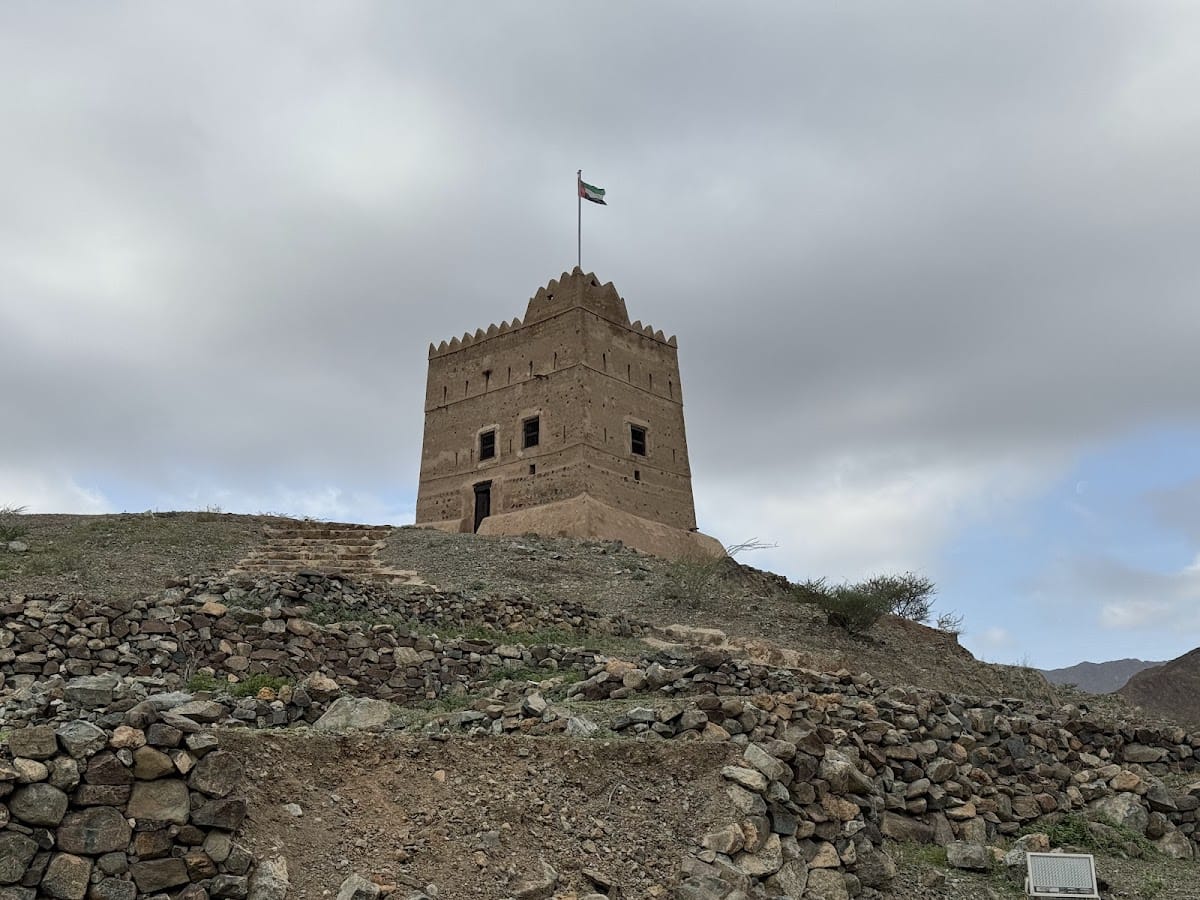
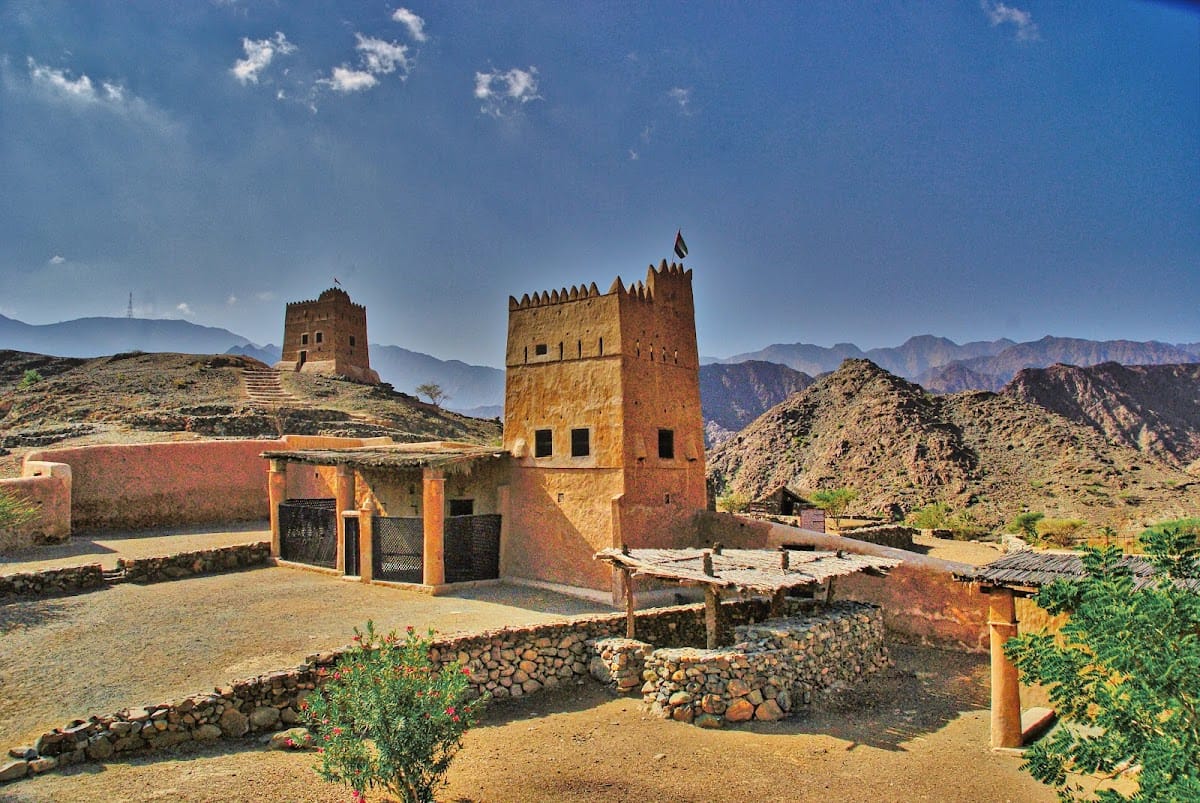
The fort’s principal phase began in 1932 when Sheikh Abdullah bin Hamdan Al Sharqi built it to serve as his main residence for about twenty years. During this period, the fort functioned as a fortified house, reflecting the need for security and authority within the local landscape. Sheikh Abdullah also oversaw the construction of a mosque, a majlis (a reception hall for guests), and a watchtower. The watchtower was initially intended as a home for his younger brother, Suhail, combining residential and defensive purposes.
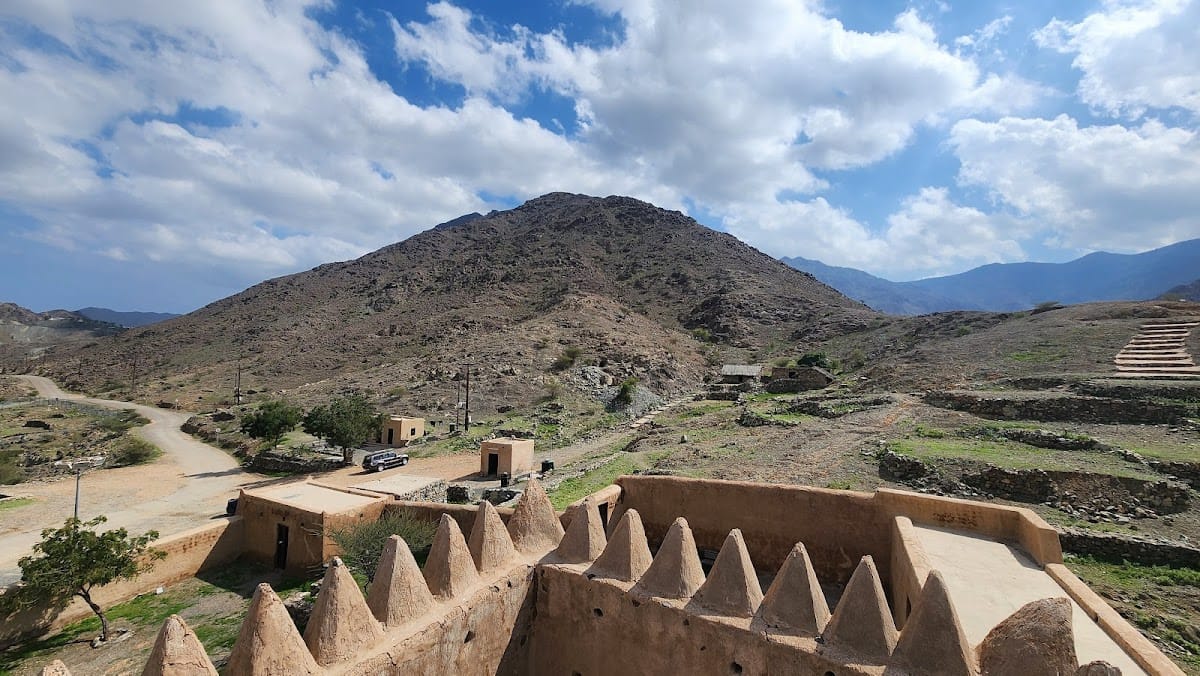
Records indicate that the surrounding settlement, known as Al Hayl village and traditionally inhabited by the Kunud tribe, flourished alongside the fort. However, in the late 1970s, the villagers moved downstream to a newly developed community located near the Al Hayl Dam, leaving the original settlement abandoned. Archaeological investigations reveal that the area around Al Hayl has a deep history of human occupation, extending back to the Umm Al Nar period (approximately 2600–2000 BCE), as evidenced by ancient tombs and petroglyphs dating from the Iron Age. These findings highlight the site’s long-standing significance in the region.
The builder families, notably the Bin Shamal family and a craftsman named Bin Shambi who were skilled in construction techniques, were responsible for erecting the fort. They were known for their craftsmanship in nearby areas including Kalba and Fujairah, suggesting a regional tradition of fort building during that era.
Remains
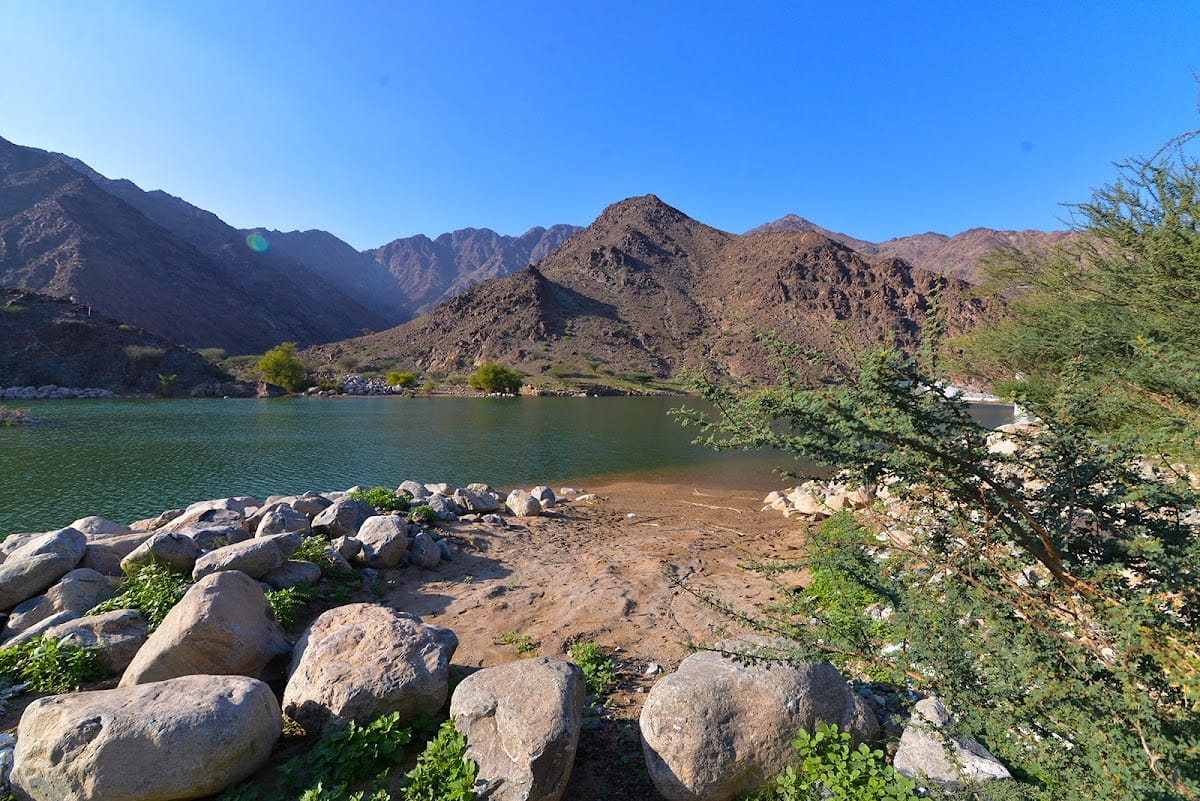
The architecture of Al Hayl Castle consists of a complex that includes a fortified courtyard house, a mosque, a majlis, and an adjacent watchtower. These buildings are positioned on a raised site approximately 231 meters above sea level in a mountainous desert environment. The layout reflects the combined roles of domestic living, religious practice, social gathering, and surveillance.
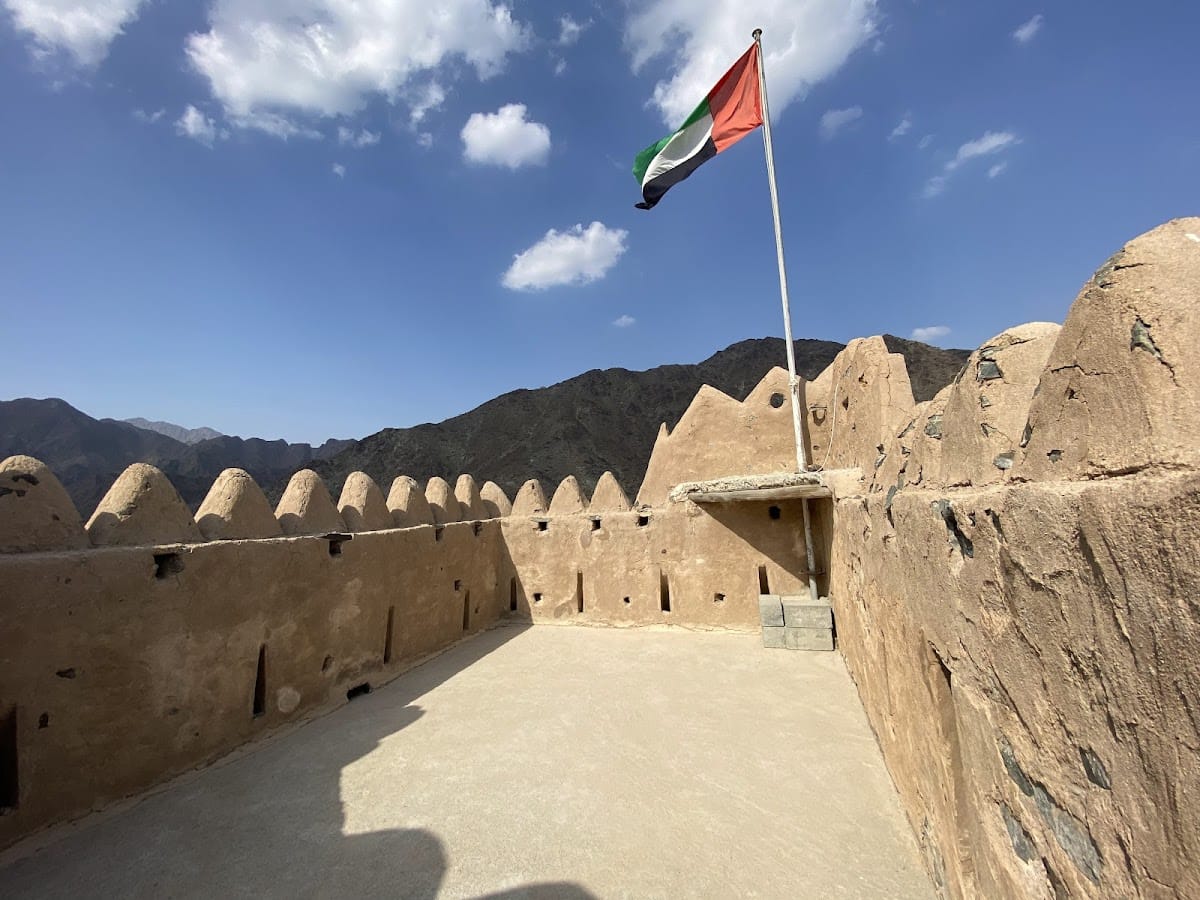
The primary materials used in construction are local stones known as gabbro and dolerite, which are dark, dense volcanic rocks. These stones are held together with a soft mud mortar, a common traditional bonding agent. The exterior walls are coated with plaster to provide a smooth finish, while the interiors are lined with gypsum plaster that adds strength and aesthetic consistency. Woodwork throughout the buildings, such as doors and ceiling supports, is crafted from mangrove and hardwood planks, materials valued for their durability.
The mosque served as a dedicated space for prayer and religious activities within the fort complex, though specific decorative elements are not noted. The majlis functioned as a reception hall where guests could gather, underlining its social importance.
The watchtower occupies a key position overlooking both the fort and the expanse of Wadi Hayl to the east and west. Constructed to provide broad views over the surrounding landscape and the old village, its design accommodated both residential uses—hosting Sheikh Abdullah’s brother—and surveillance functions. This dual purpose underscores the defensive and familial aspects of the tower.
Nearby village structures, associated with the traditional Kunud tribe inhabitants, have undergone restoration efforts, preserving their historical character. The fort stands prominently among these buildings as a testament to the early 20th-century settlement in the region. Despite modern development in the vicinity, the fort remains intact and maintains its historical presence within the mountainous terrain and harsh climate of Fujairah.