Al-Hannanah Mosque: A Shiite Shrine and Mosque in Najaf


Site at a Glance
- Rating
- 4.8
- Popularity
- Medium
- Country
- Iraq
- Primary era
- Medieval
- Eras represented
- Medieval
- Civilizations
- Ilkhanate, Safavid
- Site type
- Religious
- Remains
- Mosque
On this page6 sections
History
Al-Hannanah Mosque is an active Shiite mosque and shrine in Najaf, Iraq, associated with ziyarat, the devotional visitation of a sacred place accompanied by prayers and salutations. Built in the Islamic architectural style, its completion is dated to 1069–1070 CE, or 462 AH in the Islamic lunar calendar. The mosque stands north of Najaf’s old city on the route toward Kufa, about 1,000 metres from the tomb of Ali ibn Abi Talib.
Traditions of Ali and Husayn
The mosque is traditionally identified as one of three places where Ja’far al-Sadiq stopped and performed two-unit prayers. Ja’far al-Sadiq was the sixth imam of Twelver Shiite Islam and a major religious authority, and traditions credit him with identifying the location connected with Husayn ibn Ali’s head and establishing devotional practices associated with visits to it.
Shiite tradition holds that Husayn’s head was set down at this place while it was being taken to Kufa after the Battle of Karbala, the 680 CE conflict in which Husayn and his companions were killed. Husayn, the son of Ali ibn Abi Talib and the third Shiite imam, is the principal martyr commemorated during Ashura. The location is therefore also known as the Mosque of the Head. Another tradition places the captives from Husayn’s household in this area after his death on 10 Muharram 61 AH, before they were taken through the streets of Kufa.
A separate tradition connects the site with the night procession that carried Ali ibn Abi Talib’s body from Kufa toward Najaf. Ali was the first imam in Shiite Islam and the fourth caliph in broader Islamic history. According to Shiite belief, a pillar or wall bent in grief as his body passed. The ground or structure is also said to have lamented when Husayn’s head was brought there, an association linked to the interpretation of the name Al-Hannanah as referring to repeated lamentation or crying.
Construction and Changing Associations
The mosque’s completion is dated to 1069–1070 CE. One historical interpretation holds that it was built at the same time as the Imam Ali Shrine. Traditions attribute its construction either to Abbas I of Persia, a Safavid shah who ruled from 1588 to 1629, or to Ghazan ibn Hulagu Khan, an Ilkhanid ruler of Iran who reigned from 1295 to 1304. These attributions belong to different periods.
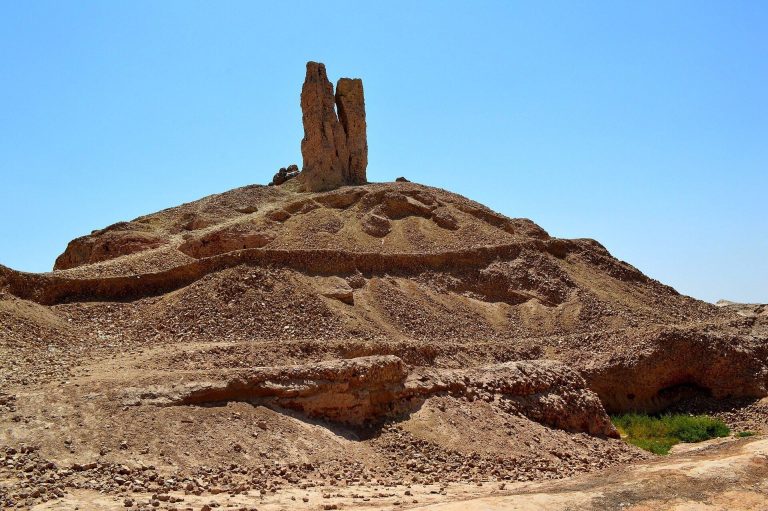
Another tradition connects the site’s earlier identity with a Christian monastery called Hanna. It is said to have been built by al-Mundhir I ibn al-Nu’man, ruler of the Lakhmid kingdom centered at al-Hira, who ruled from 418 to 462 CE. According to this explanation, the name developed from Hanna into Hannanah. The mosque is also associated with the Thawiya area, a mound near a leaning structure traditionally called the Leaning Pillar. The area contains the grave of Kumayl ibn Ziyad al-Nakha’i, an early Muslim figure traditionally linked with Ali, along with other graves of Ali’s associates.
Remains
Mosque Building
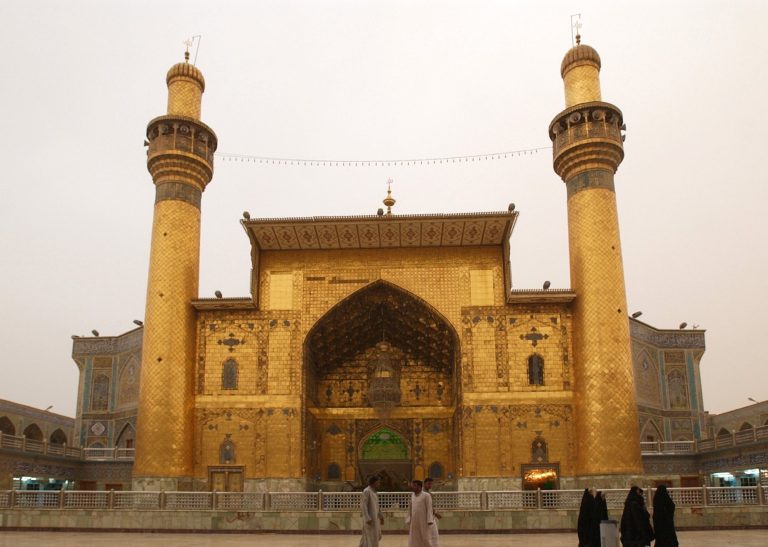
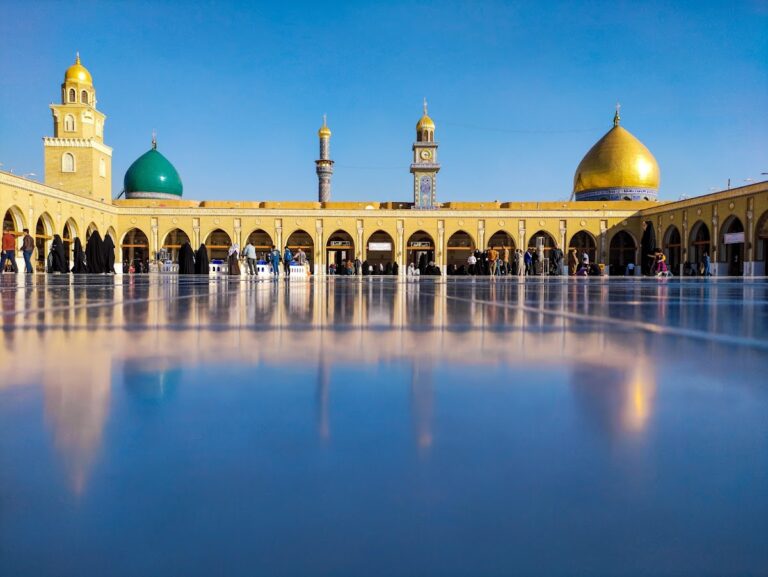
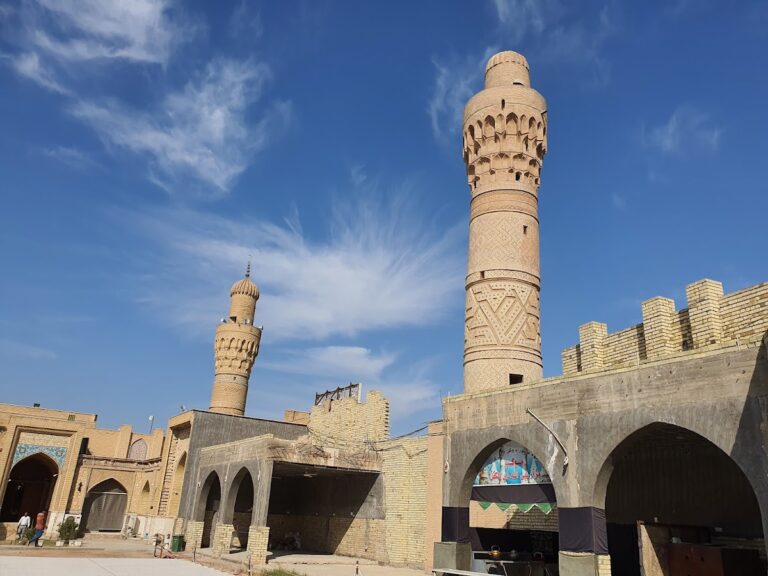
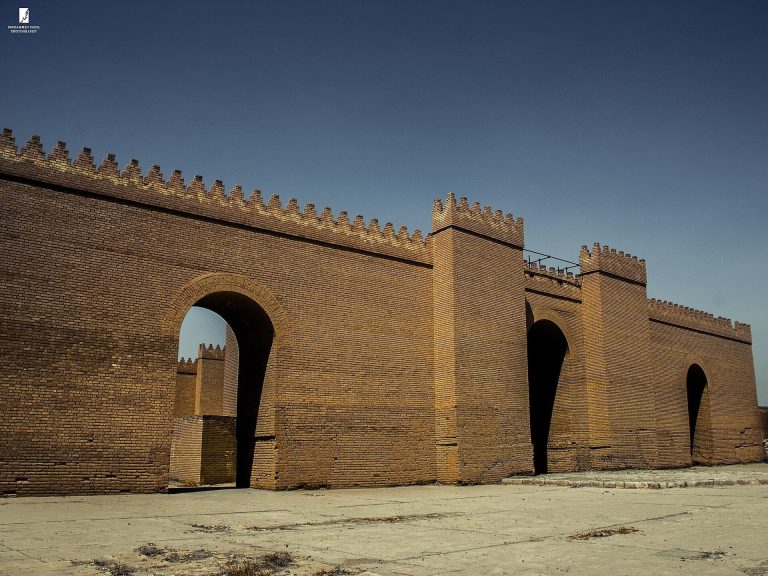
Al-Hannanah Mosque is built primarily of brick in the Islamic architectural style. Descriptions give the site an area of approximately 500 square metres in one account and 7,400 square metres in another. Reported dimensions place its height at about 40 to 50 metres, while estimates of prayer capacity range from roughly 1,000 to 5,000 worshippers. Descriptions also vary between one and two domes and between one and two minarets, so the surviving building is represented differently in these physical accounts.
Shrine and Associated Sacred Places
The mosque is physically associated with the place traditionally identified as the former leaning pillar or wall. One religious interpretation holds that the mosque occupies the location of that structure. Its central shrine tradition focuses on the spot where Husayn ibn Ali’s head was believed to have been placed during its transport toward Kufa. The surrounding Thawiya area includes the grave of Kumayl ibn Ziyad al-Nakha’i and other graves associated with companions of Ali ibn Abi Talib.