Afrasiyab: The Ruined Ancient and Medieval City of Samarkand, Uzbekistan
Site at a Glance
- Rating
- 4.4
- Popularity
- Low
- Country
- Uzbekistan
- Primary era
- Medieval
- Eras represented
- Iron Age, Classical, Medieval
- Civilizations
- Abbasid, Karakhanid, Samanid, Sogdian
- Site type
- City
On this page17 sections
History
Afrasiyab is the ruined ancient and medieval city of Samarkand in Uzbekistan, developed as a Sogdian urban centre from the seventh or sixth century BC and occupied until 1220. The Sogdians were an Iranian-speaking Central Asian population whose commercial and urban culture flourished before and during the early Islamic period. Afrasiyab formed the oldest part of Samarkand and became a major centre of Sogdian culture. Its earliest archaeological layers date to the middle of the first millennium BC, while coin evidence indicates occupation from the fourth or fifth century AD through the thirteenth century.
Foundation and Sogdian Samarkand
The settlement stood on elevated ground south of a river valley and north of a large fertile area now incorporated into Samarkand. This position provided defensive advantages. The name Afrasiyab is popularly linked with the mythical King Afrasiab, although scholars derive it from a Persian expression meaning “beyond the black river,” referring to the Siab River along the site’s northern boundary. The name “Castle of Afrasiab” first appears in written sources toward the end of the seventeenth century.
During the seventh century, Afrasiyab was ruled by Varkhuman, a Sogdian king of Samarkand. The city’s painted scenes show him receiving diplomatic embassies, including representatives from China. An inscription identifies Varkhuman by name, and Chinese historical writings also record him. The murals may belong to 648–651, when the Western Turkic Khaganate, a Turkic imperial polity in Central Asia, was declining while China’s Han dynasty was expanding into the region. Another proposed date places them shortly after 658, following the Tang dynasty’s conquest of the Western Turkic Khaganate. The Tang dynasty ruled China from 618 to 907.
Islamic Rule and Medieval Transformations
Arab forces besieged and captured Samarkand in 722. Under the Abbasid caliphate, an Islamic caliphate that ruled much of the Middle East and parts of Central Asia from 750 to 1258, a mosque was established at Afrasiyab probably between 750 and 825.
The Samanids, a Persianate Muslim dynasty that ruled much of eastern Iran and Central Asia during the ninth and tenth centuries, shaped an important later phase of the city. The Karakhanids, a Turkic Muslim dynasty that governed parts of Central Asia mainly from the tenth to the early thirteenth century, subsequently controlled Afrasiyab. A palace complex excavated in the 1930s belonged to the Karakhanid period, approximately the eleventh and twelfth centuries. An uprising against Khwarazmian rule destroyed it in 1212, after which the complex was rebuilt.
Afrasiyab was occupied until the Mongol invasion of 1220. Its coin assemblage reflects the city’s changing political connections. It includes issues of the Sasanids, Bukhar Khudahs, Umayyad and Abbasid caliphs, Samanids, Khwarazmian rulers, Karakhanids, Seljuks, and the Mongol ruler Möngke. Samanid coins were the most numerous, followed by Khwarazmian issues, while Karakhanid and Seljuk coins were the rarest.
Excavation and Interpretation
The first archaeological excavations took place in the late nineteenth century under Nikolay Veselovsky. During the 1920s, Mikhail Evgenievich Masson carried out extensive excavations, transferred finds to the Samarkand museum, and identified the remains of a Samanid palace. Excavation intensified again during the 1960s and 1970s. Much of the site’s occupation chronology based on coins was established by Viatkin.
Remains
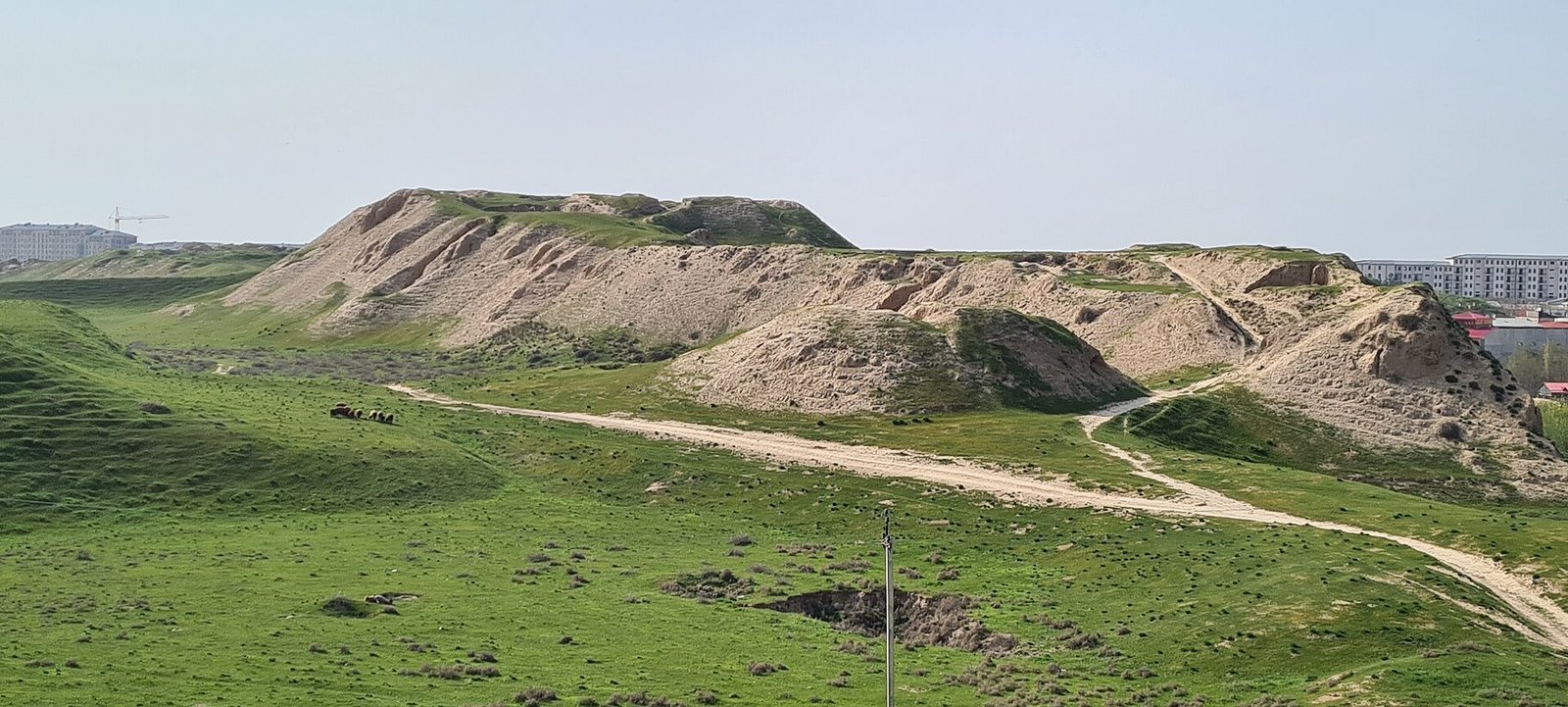
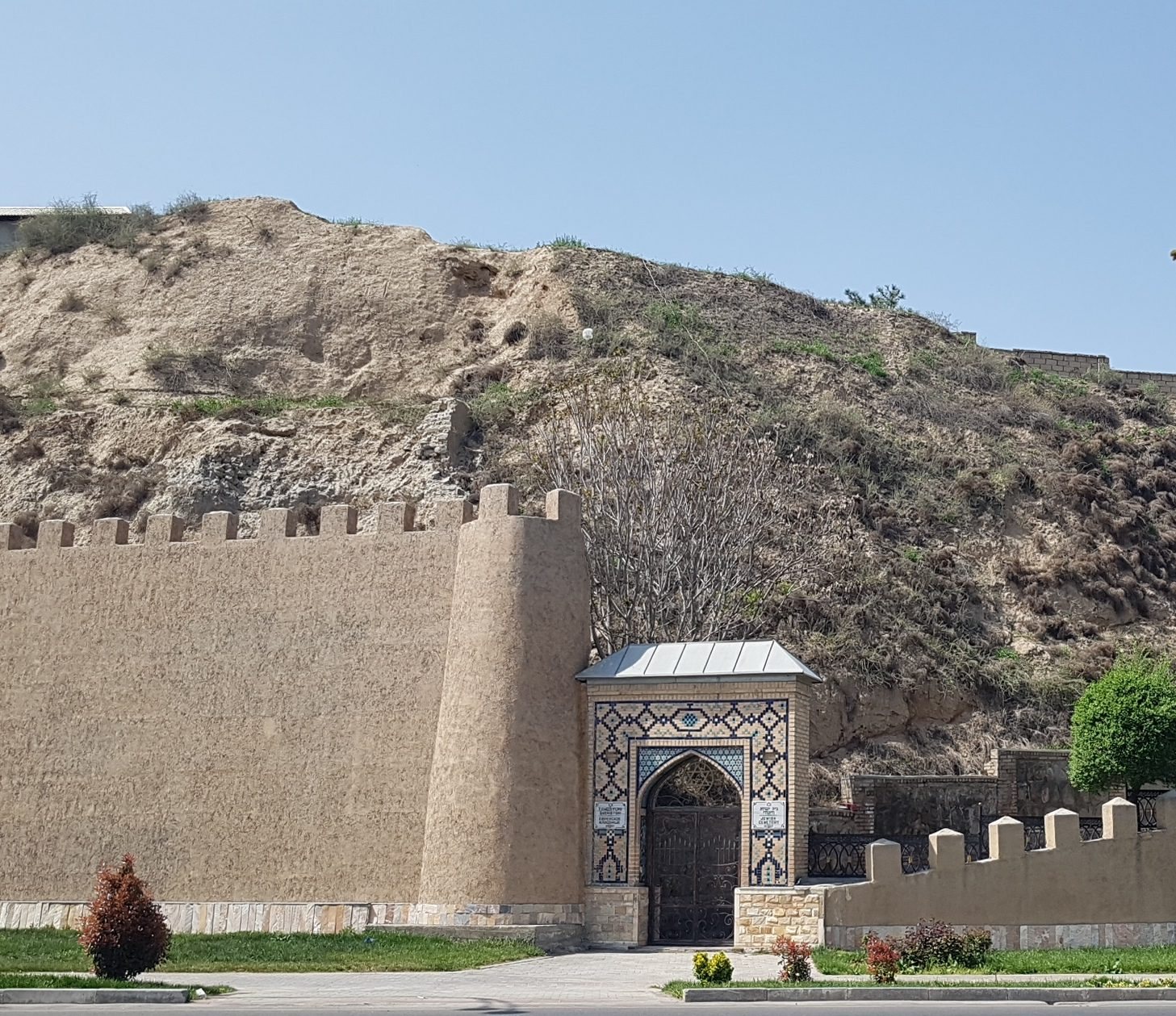
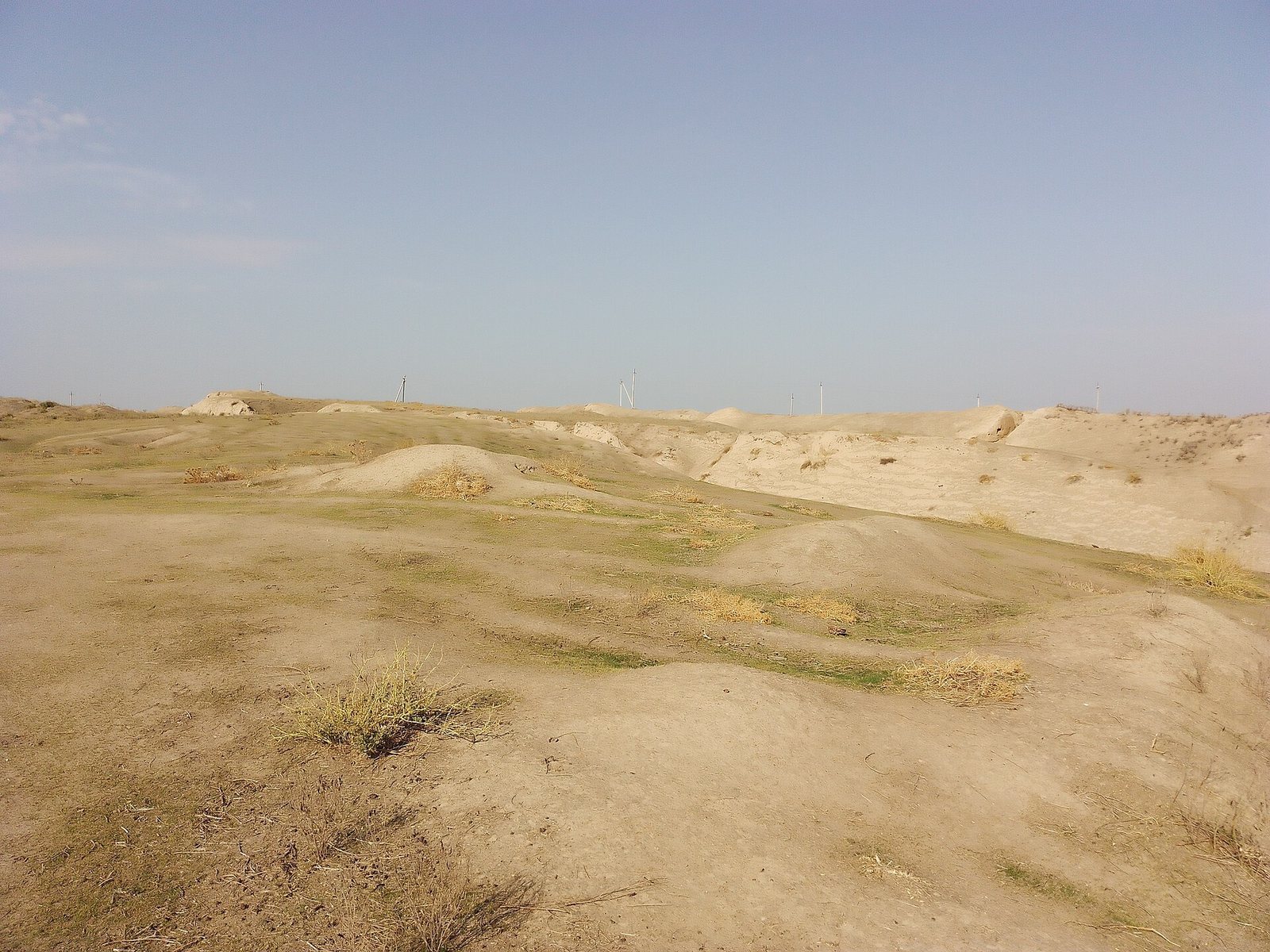
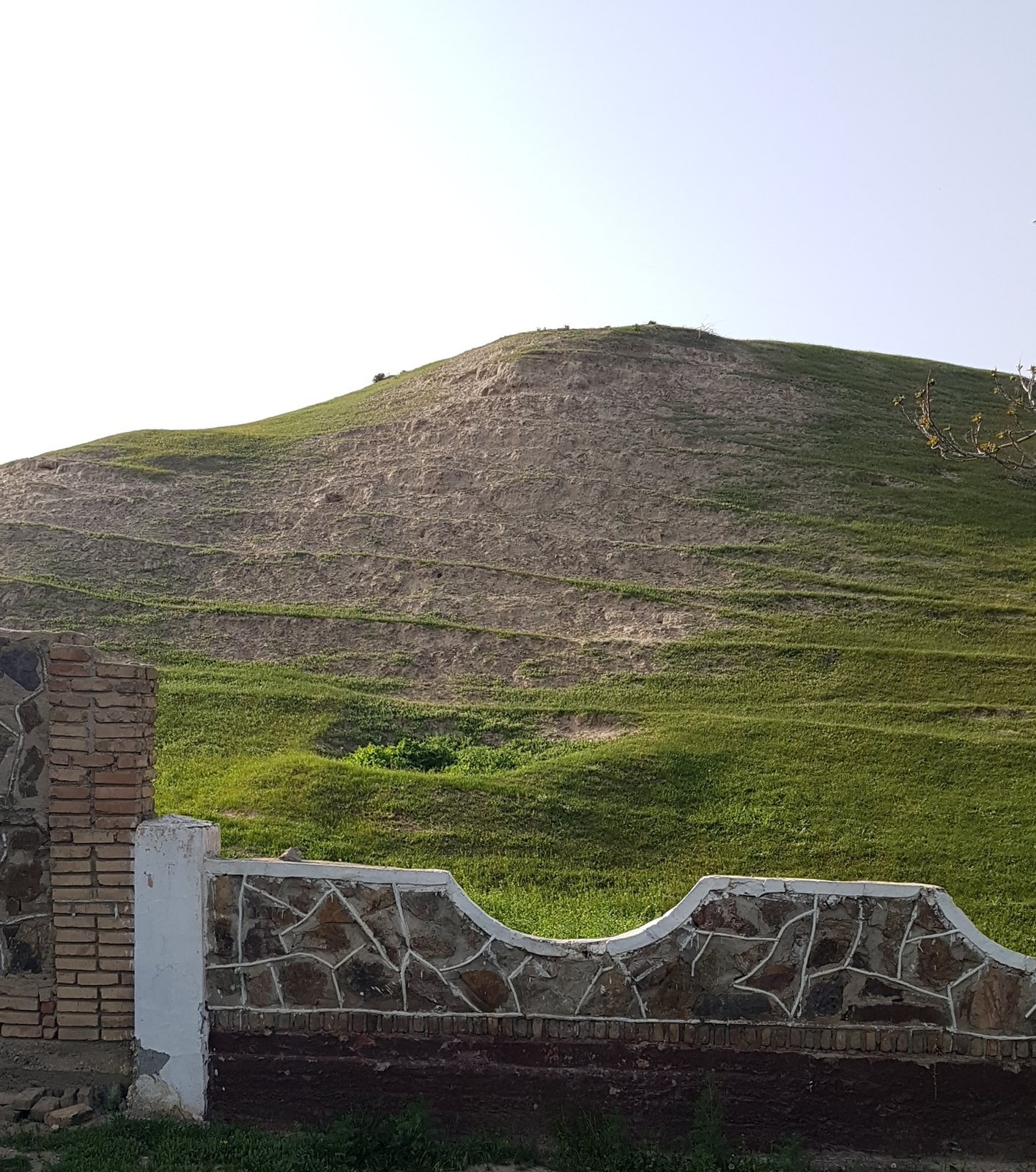
Afrasiyab covers approximately 220 hectares on a natural hill crossed by numerous hollows. Its plan was an isosceles triangle, with the base oriented toward the south, and archaeological layers reach between 8 and 12 metres in thickness. Massive clay-built elevations, the surviving remains of the enclosing walls, rise to approximately 40 metres on the interior. The city’s widest span measured about 1.5 kilometres. Its principal entrance stood in the middle of the eastern wall, while towers formed part of the defences. The recorded maximum length of the defensive remains was 3.34 kilometres, surviving in sections around the enclosure.
Water and Domestic Settlement
Water Supply
Channels, earthenware pipes, and wells supplied water to the settlement. Numerous reservoirs formed part of this system, including the largest near the southern wall. That reservoir held approximately 3,800 cubic metres, or about one million gallons.
Houses and Streets
Buildings obscured the narrow, crooked lanes as they collapsed, so the planned street network cannot be clearly reconstructed. Houses used unbaked bricks set on wooden frameworks and coated with clay. Some contained gypsum-lattice windows fitted with small pieces of glass.
Bathhouses
Five bathhouses date to the ninth and tenth centuries. Their facilities included cisterns, bathing pools, pipes for heat and water, dressing rooms, massage chambers, warm and cold halls, and open courtyards. Some spaces had carved stucco and fresco decoration.
Residential Buildings
Excavations in 1929 uncovered a twelfth-century house and a large shallow pit containing burnt wheat between the valley near the Siab irrigation canal and the mosque ruins. Residential remains appeared in three chronological levels. The lowest belonged to the first centuries AD, while the latest was associated with the Samanid period and tenth-century Samanid coins.
A wealthy tenth-century dwelling contained a domed hall covered inside and outside with richly carved gypsum stucco. Its surviving decoration is regarded as a distinctive example of medieval art.
Religious and Public Architecture
Early Mosque and Domed Structure
Excavations in 1924 exposed a Buddhist fresco and a richly moulded alabaster panel on the wall of an ancient room. They also revealed a well-preserved domed structure built of clay and faced with brick, with numerous objects found on its walls. A nearby small building carried an Arabic inscription expressing the Quranic declaration of God’s oneness. Coins from the ninth and tenth centuries date these discoveries.
Principal Mosque and Minaret
West of Afrasiyab stood the principal mosque and a minaret. The minaret was faced with stamped bricks bearing the Persian word “Ikhshid,” a title used by rulers of Samarkand and other Central Asian territories. The mosque was rebuilt several times. In the Samanid period it was square, with sides measuring 78 metres. During the Karakhanid period it became rectangular, measuring approximately 120 by 80 metres. Six entrances led into the building, whose columned hall contained chains for chandeliers. Carved stucco, carved terracotta slabs, and light-blue tiles formed part of its decoration.
Murals and Artistic Remains
Ambassador’s Hall
The Afrasiyab murals include Chinese envoys carrying silk and a string of silkworm cocoons to the local Sogdian ruler. Turkish delegations are identifiable by their long plaits, while Sogdian chamberlains and an interpreter present Tibetan messengers. Other scenes show a horseman and a diplomatic audience in the Ambassador’s Hall. One Turkish dignitary is identified as coming from Argi, associated with Karashahr in present-day Xinjiang. These scenes preserve the international setting of Varkhuman’s court through painted diplomatic encounters.
Pottery, Terracotta, and Glass
Glazed pottery included plates, dishes, and pitchers. Unglazed vessels were generally made on a wheel, well fired, and simply decorated. Their forms included large vessels, pitchers, jugs, saucers, and bowls. A less refined handmade type had carefully polished surfaces marked with parallel lines, diamond patterns, intersecting crosses, and spirals. Viatkin attributed this pottery to the Tripolje culture.
Terracotta slabs and miniature altars carried stamped floral designs on their inner and outer surfaces. Some altars also showed birds and columns, together with an Arabic inscription meaning “praise to God.” Glass was produced at Afrasiyab and made into small flasks, phials, tumblers, mugs, wineglasses, goblets, spoons, jugs, carafes, and bottles.
Burials and Tombstones
Tombstones were made from large river flagstones up to one metre long. Most date to the twelfth century, fewer to the thirteenth century, and a small number to the fourteenth century. Their Arabic inscriptions generally give the buried person’s name and the year of burial, while some stones also carry arabesque decoration. One uninscribed stone bears the profile of a head wearing a castellated crown resembling those shown on Bukhar Khudah coins. An elephant and a bird are engraved at its opposite end.