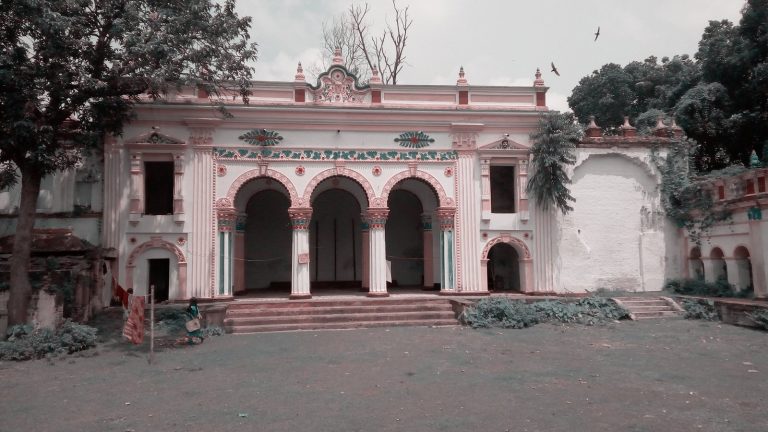
Adina Mosque: A Royal Congregational Mosque of the Bengal Sultanate
Site at a Glance
- Rating
- 4.3
- Popularity
- Medium
- Country
- India
- Primary era
- Medieval
- Eras represented
- Medieval
- Civilizations
- Bengal Sultanate
- Site type
- Religious
- Remains
- Mosque
On this page11 sections
History
Adina Mosque is a royal congregational mosque of the Bengal Sultanate in Pandua, West Bengal, India. Built during the reign of Sikandar Shah, the second sultan of the Ilyas Shahi dynasty, it belongs to the fourteenth-century Indo-Islamic architectural tradition. The mosque was commissioned in 1373 and completed in 1375, while discussion of its terracotta work places its construction between 1364 and 1374.
Royal foundation in Pandua
Pandua was the former capital of the Bengal Sultanate and a prosperous, cosmopolitan trading centre during the sultanate period. Adina Mosque was created after Bengal’s victories over the Delhi Sultanate in 1353 and 1359, and its scale and design expressed the political ambitions of the independent Bengal court. Its architecture deliberately recalled the grandeur of Persian imperial buildings and the hypostyle tradition associated with the Umayyad Mosque in Damascus. A hypostyle mosque is a prayer building whose roof rests on numerous columns or pillars.
Inscriptions present Sikandar Shah as an exalted, wise, just, liberal, and perfect ruler of Arabia and Persia, calling him the “Caliph of the faithful.” An inscription on the western facade names him as Abul Mujahid Sikandar Shah, son of Ilyas Shah, and voices the hope that his reign would last until the Day of Resurrection. These statements placed the mosque within the ruler’s wider claims to authority and imperial status.
Later use and decline
Sikandar Shah was buried in a tomb chamber attached to the mosque’s western wall and oriented toward Mecca. A later tradition holds that Raja Ganesha used the mosque as his royal court. Earthquakes damaged the building during the nineteenth century, after which it fell into disuse, while much of Pandua became overgrown or wilderness.
Adina Mosque is preserved as a Monument of National Importance in India. In modern political debate, claims by the Bharatiya Janata Party and Vishva Hindu Parishad that the mosque was built after the destruction of a so-called Adinath temple have prompted demands for its return to Hindus. The name “Adina” is generally understood to mean “Friday,” linking the building with the weekly congregational prayer.
Remains
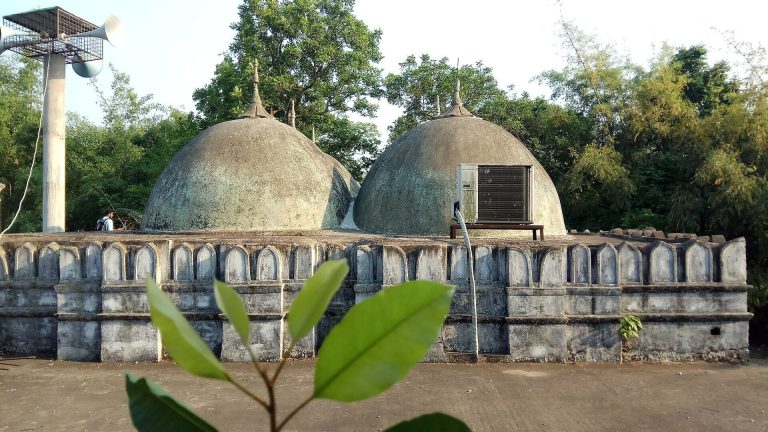
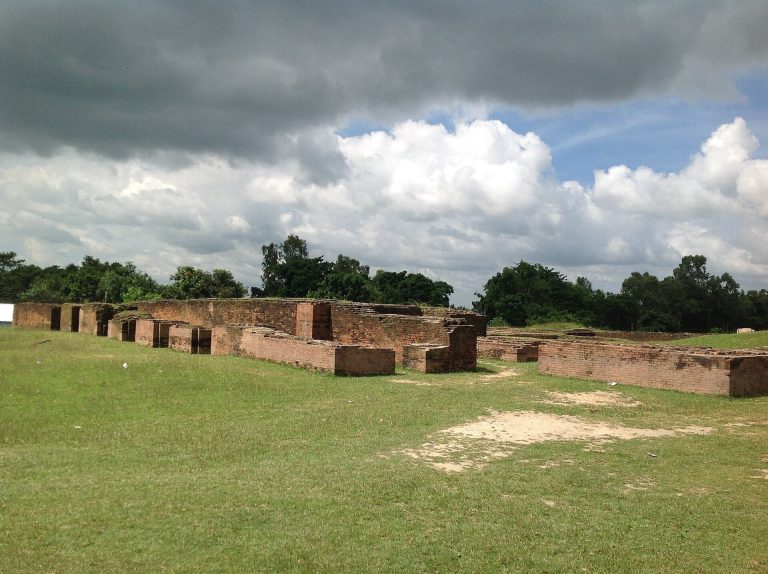
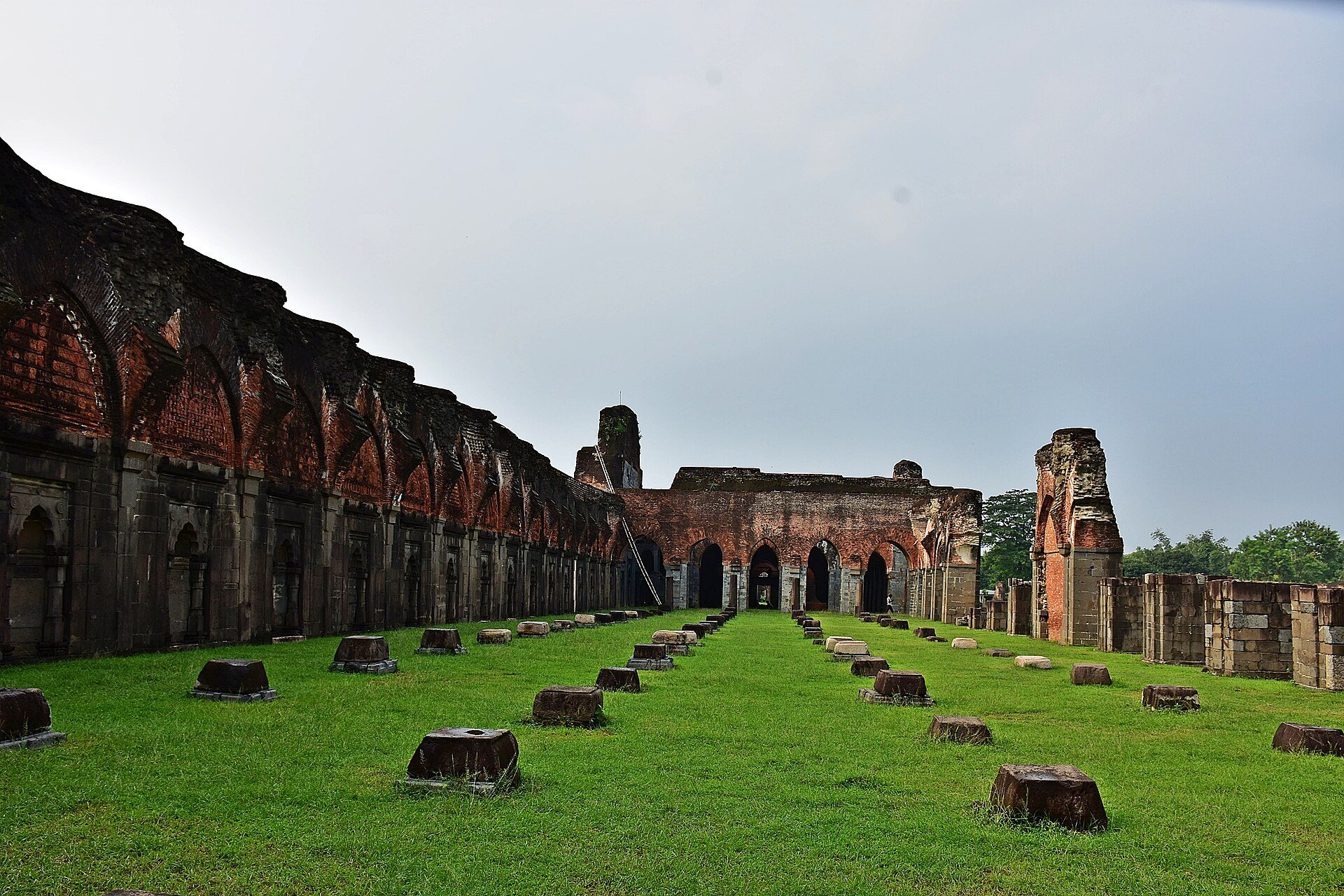
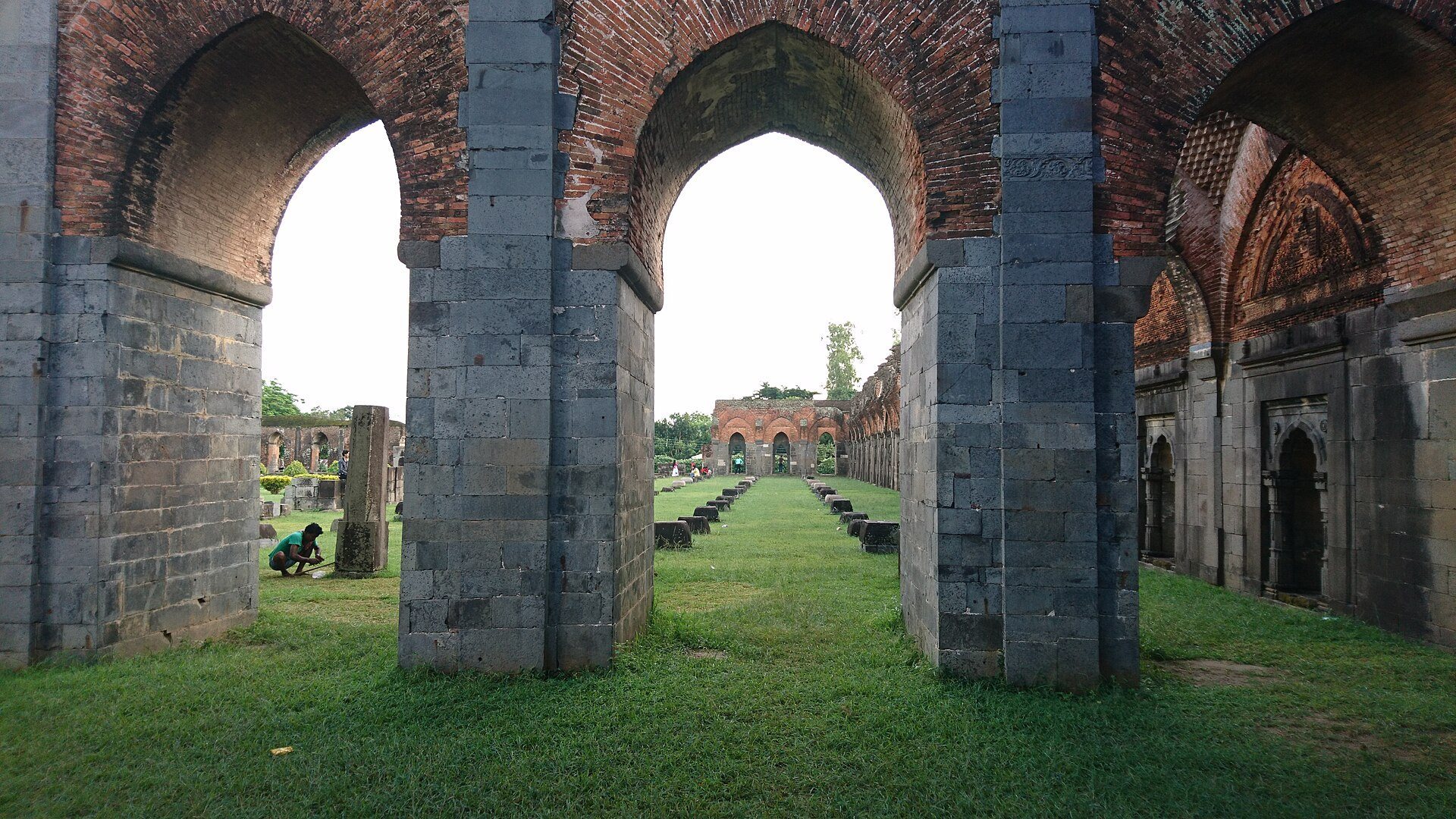
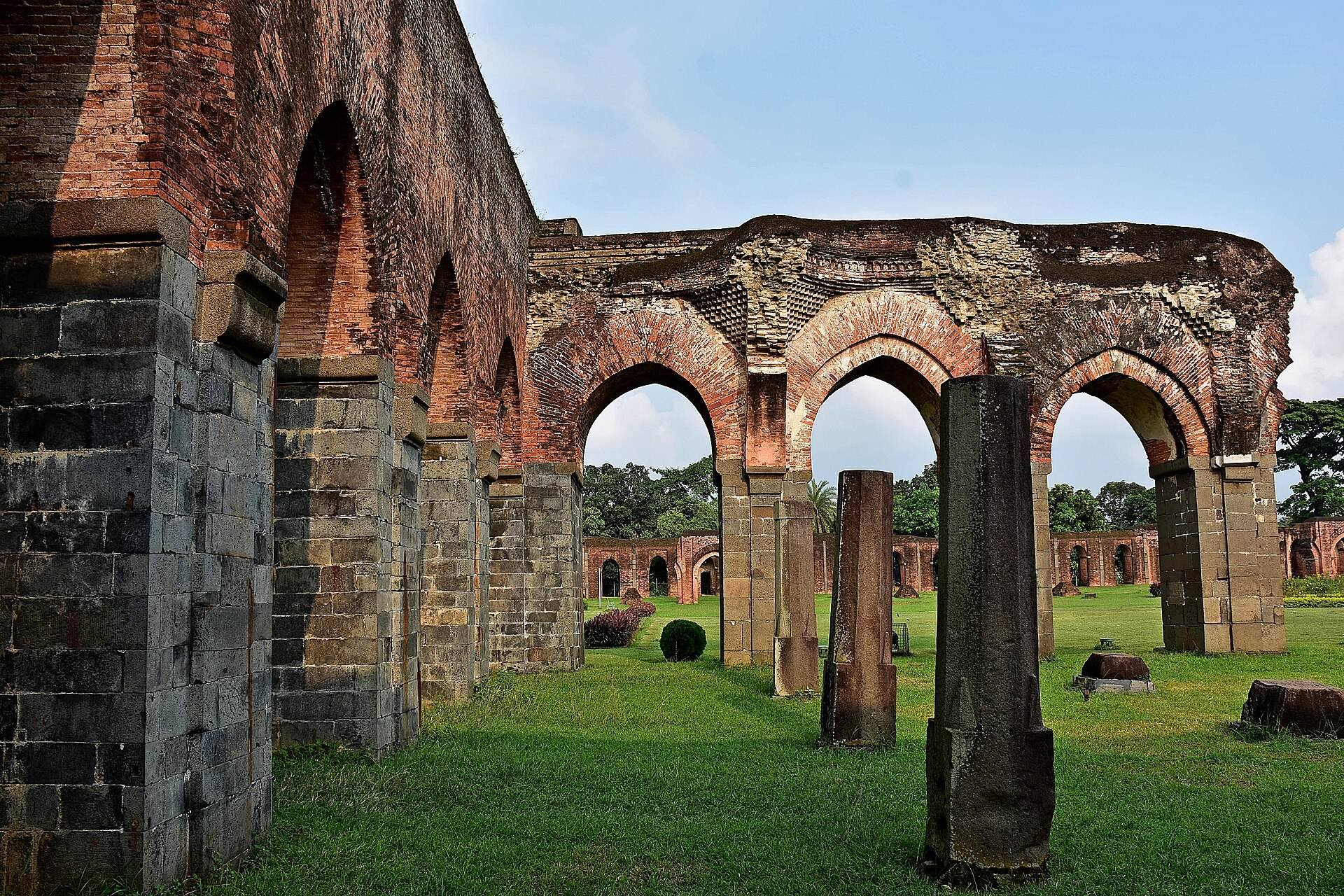
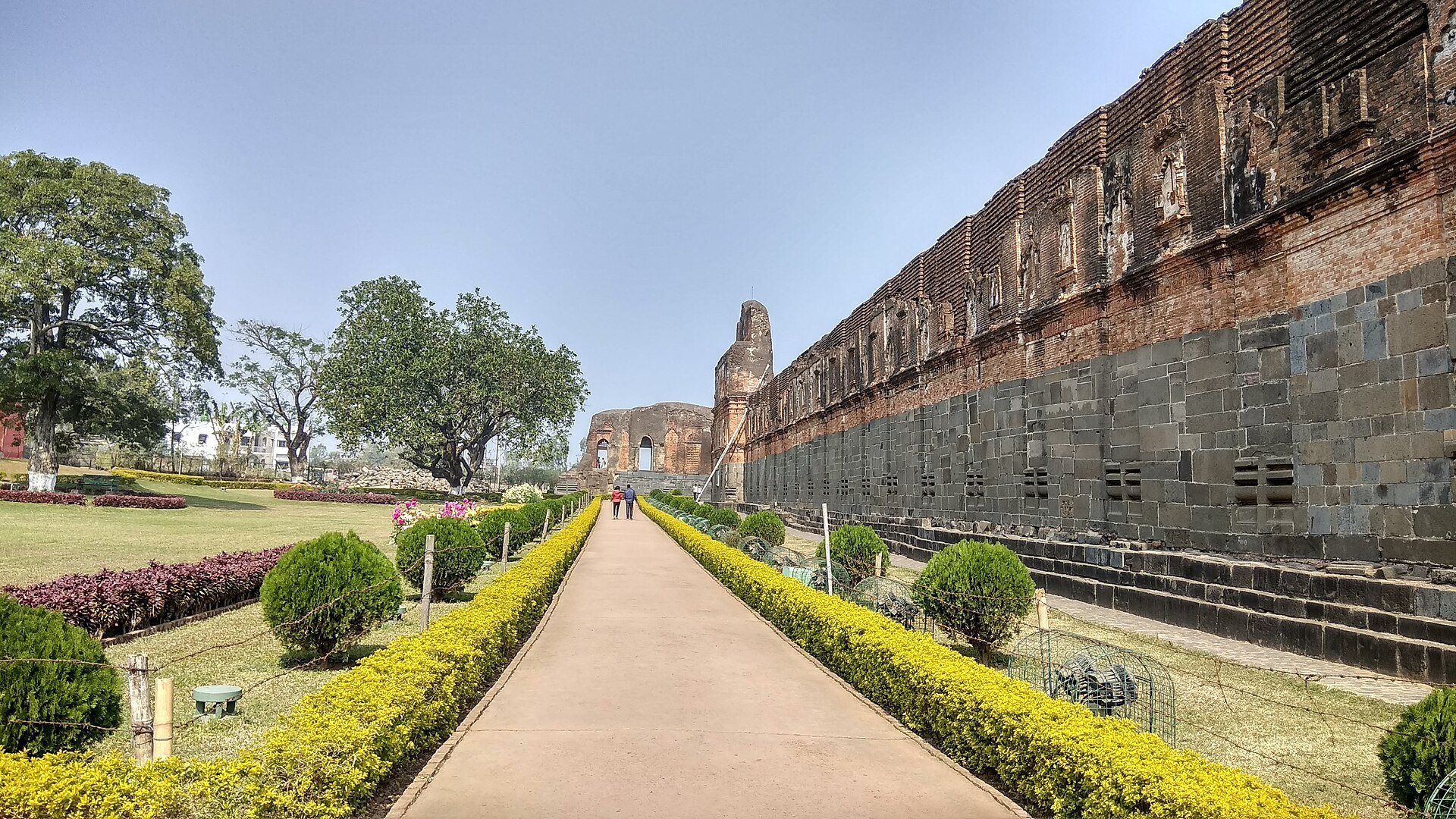
Adina Mosque survives as a large rectangular hypostyle complex organized around an open courtyard. It measures approximately 172 by 97 metres, or 564 by 318 feet. The prayer hall is five aisles deep, while the north, south, and east cloisters around the courtyard are each three aisles deep. Together, the aisles contain 260 pillars and 387 domed bays. A continuous interior facade of 92 arches, topped by a parapet, encloses the courtyard, and an elevated platform for the sultan and his officials remains in place.
Vaulted prayer hall
Central nave
A monumental ribbed barrel vault spans the central nave. It was the first very large vault of this type built in the Indian subcontinent and is associated with the vaulted forms of Sasanian architecture, the imperial tradition of pre-Islamic Persia. The western wall likewise evokes the royal architectural language of Sasanian Persia. The building combines Bengali, Arab, Persian, Byzantine, Central Asian, and local traditions, with the central mihrab, the prayer niche indicating the direction of Mecca, forming the focus of the western wall.
Minbar
North of the central mihrab, a carved stone minbar survives in the nave. A minbar is the raised pulpit from which the sermon is delivered. Stairs lead to the pulpit, whose decoration includes a kirtimukha motif transformed within the mosque’s Islamic architectural setting.
Materials and decoration
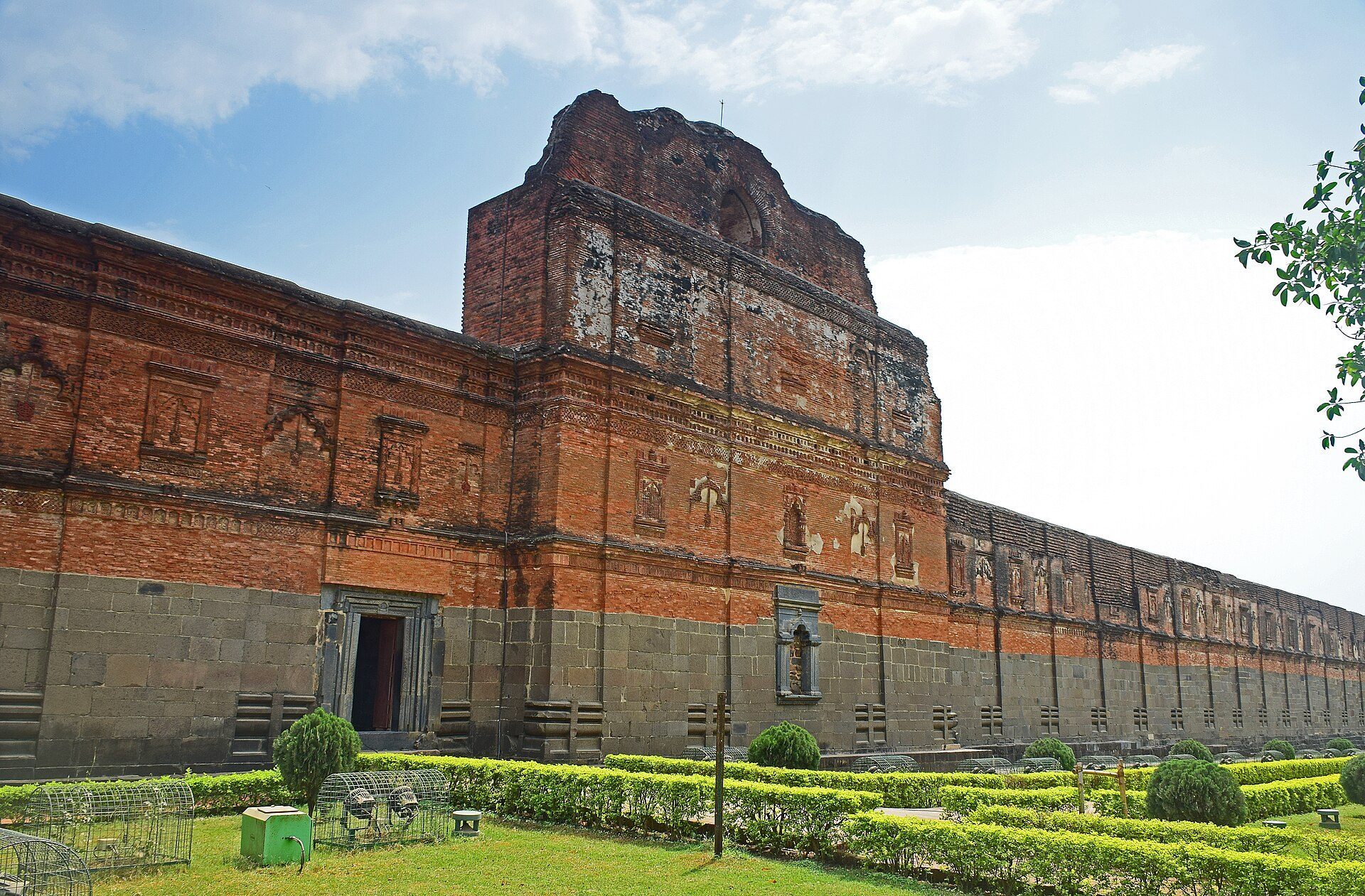
The mosque was built mainly from baked clay bricks set in lime and brick-dust mortar. Its masonry also incorporates stone, stucco, plaster, concrete, glazing, and lime finishing. Some stone was taken from dismantled Hindu temples. Stone flowers appear in arches across the interior and exterior, while sections of the outer walls retain carvings of elephants and dancing figures that reflect the reuse of earlier sculptural material.
Terracotta ornament
Adina Mosque is regarded as the first Islamic monument in Bengal to incorporate terracotta decoration. Its fired-clay ornament combines Islamic motifs with designs derived from Buddhist and Hindu sculpture of the Pala-Sena period, the medieval artistic traditions associated with Bengal’s Buddhist Pala and Hindu Sena dynasties. The patterns include rose petals, geometric forms, hanging lamps, flutes, plants, fruits, flowers, lotuses, tassels, multi-foil arches, beaded or tessellated necklaces, and chain-and-pendant designs.
Inherited artistic forms
Other motifs derive from Pala-Sena art, including caitya windows, rows of chains, cloth-and-bell patterns, and lotus petals. One panel showing a tall tree with spreading branches has been associated with the Buddhist Kalpataru, the wish-fulfilling tree of Indian religious and artistic traditions. Earlier Hindu forms were adapted into new ornament: a beaded necklace once containing divine figures became rosette or lotus patterns, while the kirtimukha was reshaped into stylized vegetal designs. Traces of coloured tiles and painted plaster remain on parts of the walls.
Royal tomb chamber
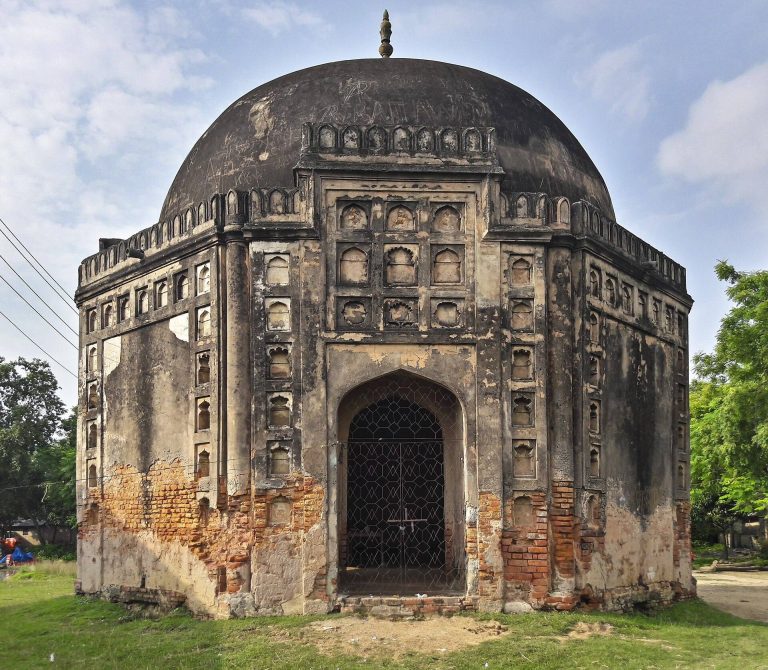
The tomb chamber of Sikandar Shah is attached to the western wall. Its position within the mosque preserves the connection between the ruler’s burial place and the royal congregation for which the building was created.