Acqua Vergine: Rome’s Aqueduct and Water Supply
Site at a Glance
- Popularity
- High
- Country
- Italy
- Primary era
- Classical
- Eras represented
- Classical, Medieval, Early Modern, Modern
- Civilizations
- Italian, Papal States, Roman
- Site type
- Infrastructure
- Remains
- Aqueduct
On this page17 sections
History
Acqua Vergine is a water-supply aqueduct in Rome, Italy, developed from the Aqua Virgo, completed in 19 BC by Marcus Vipsanius Agrippa during the reign of Augustus, Rome’s first emperor. It chiefly supplied the Baths of Agrippa and also served the Campus Martius, an ancient district, through its conduits. The Aqua Virgo was one of eleven aqueducts that brought fresh water to Rome.
Ancient origins and continued use
The name Virgo has several proposed origins. The Roman water official Sextus Iulius Frontinus associated it with a young woman who found the spring and led Agrippa to it. Another explanation links the name to a statue of a water goddess near the spring. The most likely derivation given is the water’s clarity and freshness.
From the fifth century, invasions by Goths and Huns, along with internal political struggles, contributed to Rome’s population decline. As residents shifted toward the plains beside the Tiber, higher districts such as the Quirinal and many aqueducts deteriorated. The Aqua Virgo remained in service because it supplied the area around Porta del Popolo and the ancient Forum, and repairs were made when needed.
Renaissance renewal
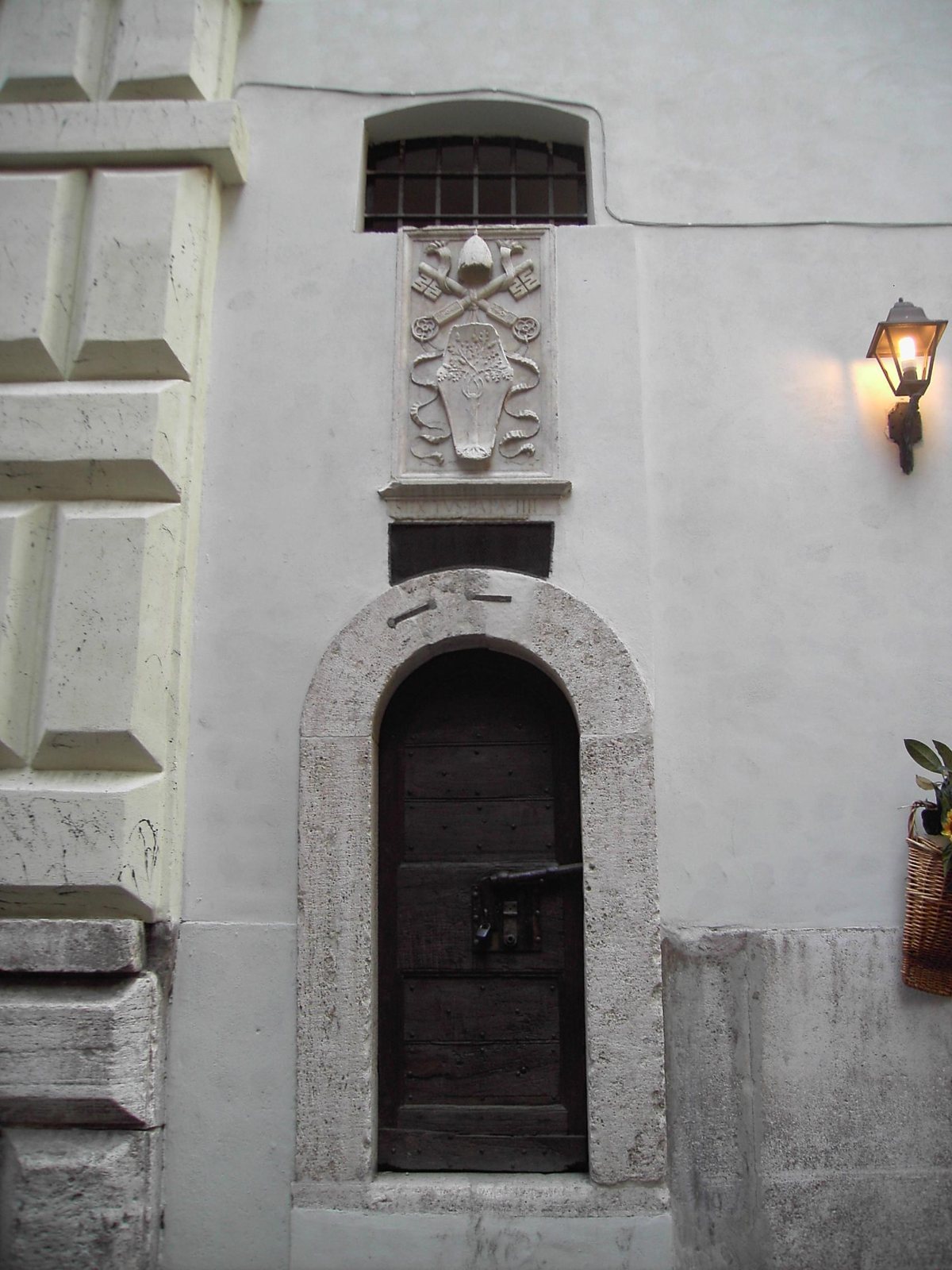
In the fifteenth century, population growth associated with new flows of pilgrims increased demand for water. The resulting improvements to Rome’s supply gave the renewed Aqua Virgo the name Acqua Vergine. In 1453, Pope Nicholas V advanced the work by restoring the terminal display fountain and adding a façade with an inscription and papal arms, with support from the Renaissance architect and theorist Leon Battista Alberti. Pope Sixtus IV later arranged another repair.
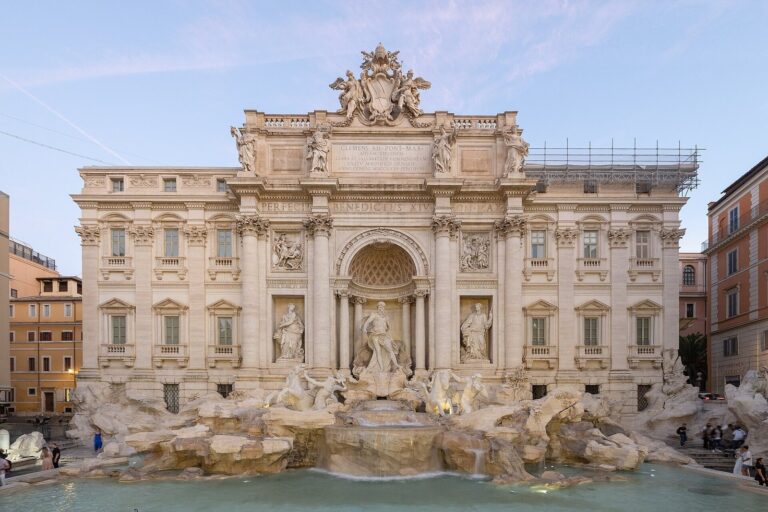
From 1561 to 1570, Popes Pius IV and Pius V oversaw a major reconstruction of the aqueduct, from its spring to the city. The ceremonial reopening took place at Piazza di Trevi on 16 August 1570. Rome’s municipal government then planned underground distribution to supply eighteen new public fountains, many built under Pope Gregory XIII. Pope Clement XII commissioned architect Nicola Salvi to design the Trevi Fountain in its present form.
Modern development
After a newer aqueduct was built, the older line became known as Acqua Vergine Antica and the newer as Acqua Vergine Nuova. The new line was developed in the 1930s because the older supply could no longer be assured free from surface-water infiltration. Construction of the new aqueduct took place from 1932 to 1936, drawing on the same spring area. Further alterations and additions followed during the twentieth century.
In June 2007, garage construction damaged the water line, and a faulty repair interrupted the supply. Repairs took several months. Since the Trevi Fountain’s 2015 renovation, Acqua Vergine has supplied only its large basin; a recirculation pump operates the water displays, and a water-softening system was installed.
Remains
The aqueduct system combines underground watercourses with visible structures and display fountains. Its older route includes channels built by Agrippa’s engineers, while the newer line uses a cast-iron main and separate branches. Both draw on the spring area at Salone and carry water to outlets across Rome.
Watercourses and urban routes
Acqua Vergine Antica
The older line begins at the Salone springs and passes underground beneath Via di Pietralata. It crosses Via Nomentana, travels west toward and through Villa Ada, and runs beneath the western edge of Villa Borghese. From there it crosses the gardens of Villa Medici, descends the Pincio to Piazza di Spagna, and continues beneath Renaissance Rome toward the Trevi Fountain on the Quirinal Hill. Some of its channels were built by Agrippa’s engineers.
Acqua Vergine Nuova
The newer line enters Rome from the northeast beneath Via Tiburtina, passes under the Pincio, and reaches Porta Pinciana, where it divides. One branch joins the older aqueduct just beyond Piazza di Spagna without mixing its water, then descends the Pincio to the lion fountains in Piazza del Popolo. The other passes beneath the Galoppatoio, curves through the Borghese Gardens, turns south toward Piazzale Flaminio, and supplies a three-arched display fountain cascading down the Pincio’s western slopes above Piazza del Popolo.
Springs and engineering works
Salone springs
The water rises from marshland at Salone, about eight miles east of Rome, off Via Collatina. Rainwater from the Alban Hills percolates through volcanic tuff before emerging at the springs. The spring area is protected as Parco dell’Acqua Vergine.
Pressure and storage works
The newer system includes a pumping station at the Salone springs, a 50-metre pressure tower, a 12.7-kilometre cast-iron main, an underground reservoir in Villa Borghese, and a display fountain on the Pincio terrace designed by Raffaele De Vico. The tower separates supply from distribution to keep the flow steady. The main is 1,000 millimetres in diameter and has a capacity of 1,100 litres per second. A cylindrical metal tank with a capacity of 25,000 cubic metres was added near the upper collection basin in 1978.
Outlets and archaeological remains
Ancient distribution point
The ancient line ended at a water-distribution structure at the Baths of Agrippa. Its daily flow was about 100,000 cubic metres.
Renaissance display fountain
At Piazza dei Crociferi, the Renaissance terminal fountain had a substantial wall façade bearing an inscription and papal arms. Three spouts poured water into a rectangular basin.
Trevi and Pincio displays
Since 1936, the parallel watercourses have supplied separate terminal displays: the Trevi Fountain and the Nuovo Acquedotto Vergine Elevato on the Pincio. The newer line also feeds the two Piazza del Popolo displays, including the Pincio cascade and the central fountain’s lions.
Urban exposures and excavations
A section of the aqueduct can be seen above ground on Via del Nazareno. At Vicolo del Putarello, excavation during construction of a cinema revealed part of the water line and remains of imperial-era houses. The remains form part of the archaeological complex accessible as Città dell’Acqua.
Fountains supplied in Rome
Acqua Vergine supplies fountains in Campo Marzio, Colonna, Trevi, Pigna, Sant’Eustachio, Parione, Ponte, and Regola. Among them are the Pantheon Fountain in Piazza della Rotonda, the Colonna Fountain, the Turtle Fountain in Piazza Mattei, and the fountain in Campo de’ Fiori. Its other supplied fountains include the north and south displays in Piazza Navona, among them the Neptune and Moor fountains; the fountains of Piazza Venezia; Il Facchino in Via Lata; the Barcaccia Fountain in Piazza di Spagna; and Il Babuino in Via del Babuino.