Černá Château: A Renaissance Residence and Estate Center
Site at a Glance
- Popularity
- Medium
- Country
- Czechia
- Primary era
- Early Modern
- Eras represented
- Early Modern, Modern
- Civilizations
- Habsburg, Holy Roman Empire, Margraviate of Moravia
- Site type
- Domestic
- Remains
- Manor House
On this page9 sections
History
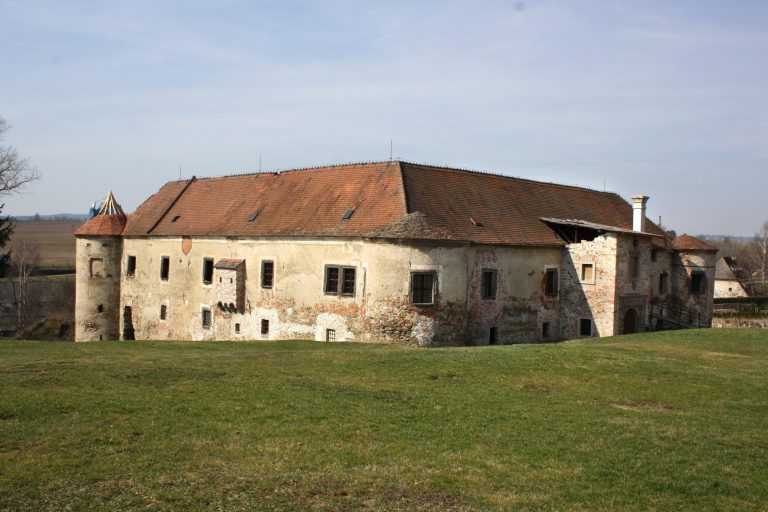
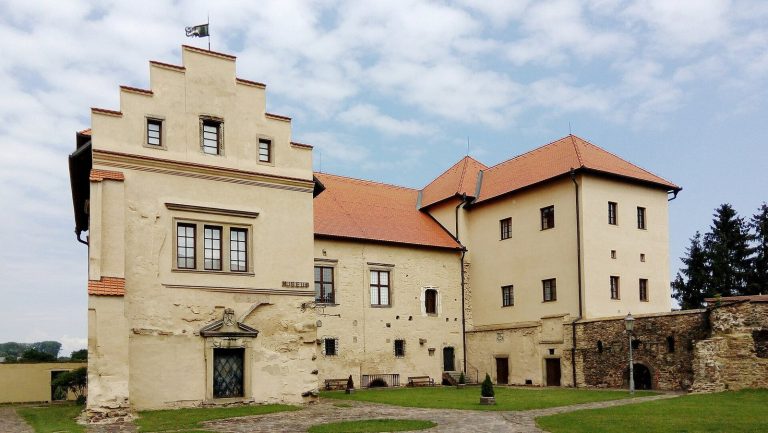
Černá Château is a Renaissance country residence in Černá, Czechia, built in the late sixteenth century for Jan Rafael Chroustenský of Malovar. After the Battle of White Mountain in 1620, a decisive Habsburg victory in the Bohemian Revolt that brought major changes to noble property ownership, the Chroustenský family lost its holdings. In 1624, the château, then described as a fortified manor, passed to the Collalto family. They moved the administrative center of the Rudolec estate to Černá.
Estate administration and eighteenth-century changes
The entailed Černá–Německý Rudolec estate, property legally bound to pass through a designated line of inheritance, extended across Arnolec, Blízkov, Bohdalov, Černá, Dědkov, Chlumek, Chroustov, Jersín, Kyjov, Měřín, Milíkov, Nadějov, Rudolec, Stáj, and Zhoř. Its demesne, or land held directly by the estate, was organized into six farms and four forest districts. The estate covered 16,882 jitros, a historical Central European measure of land: 4,637 jitros were demesne land and 12,245 were held by peasants. Forest covered 3,310 jitros, divided between 1,851 demesne and 1,459 peasant jitros.
In the eighteenth century, work at the château focused mainly on its interiors, and its chapel was dedicated to Saint Anthony of Padua, a Franciscan preacher later venerated as a Catholic saint.
Land reform and interwar ownership
In 1921, the State Land Office, the government agency responsible for land reform, placed Count Emanuel Collalto et San Salvatore’s property in the republic’s first reform phase. The holdings included the Černá–Německý Rudolec, Brtnice–Okříšky–Pokojovice, and Uherčice estates, including Písečná and Slavětín. The Černá–Rudolec estate covered 2,010.55 hectares. The Černá farm was operated directly, while the Německý Rudolec farm and land at four other farms were leased.
Registration proceedings for Černá–Německý Rudolec began in January 1923. The property under consideration included the châteaux and farm buildings at Černá and Německý Rudolec, an inn at Černá, and 281.1502 hectares spread across seven localities. Of the estate’s seven farms, five were divided into parcels and two became residual estates, reduced holdings left after redistribution. At Černá, the 204-hectare estate included a 102-hectare residual holding formed for Ladislav Růžička, while a further 86 hectares were parceled out. In 1923, Růžička also obtained 145 hectares and the châteaux at Černá and Rudolec, then began selling the property.
Prince Manfréd Collalto received 960 hectares through the land seizure, including 23.3 hectares of forest and 119.3 hectares of ponds. Only the forestry estate remained in his ownership. Because the redistributed holdings were difficult to manage, he sold land at Stáj, Arnolec, and Zhoř, as well as the Pouště forest near Měřín. Ownership of the Černá residual estate changed in the following years. Eduard Pavlíček of Tasov acquired it in 1931.
Nationalization and changing uses
In 1949, the state nationalized Pavlíček’s estate and assigned the château to the municipality. The municipality used the building for local-government offices, a cultural center, a cinema, and clubrooms. It also created a football field in the garden and a wine cellar. The agricultural cooperative took over the château’s farm buildings.
After 1989, the last owner’s heirs recovered the château through restitution and sold it to a company from Zlín in 1992. The new owner undertook a major renovation and deconsecrated the chapel. The château has been protected as a cultural monument since 1970.
The Other World Kingdom
From 1996, the château and its grounds operated as The Other World Kingdom, a venue for sadomasochistic activities centered on female dominance. Until 2008, access was limited to paying customers seeking sexual services in that setting. The organization used its own coat of arms, showing handcuffs and a whip, and had rituals, a hymn, and a currency called the DOM, valued at roughly one US dollar. The château was put up for sale in 2008, but ownership did not change.
Remains
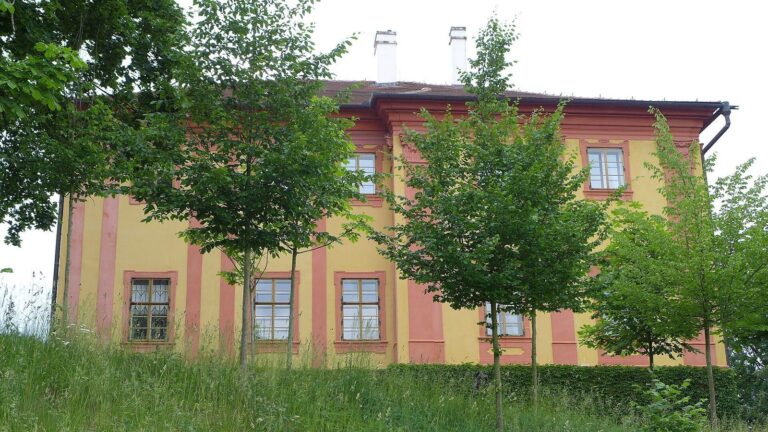
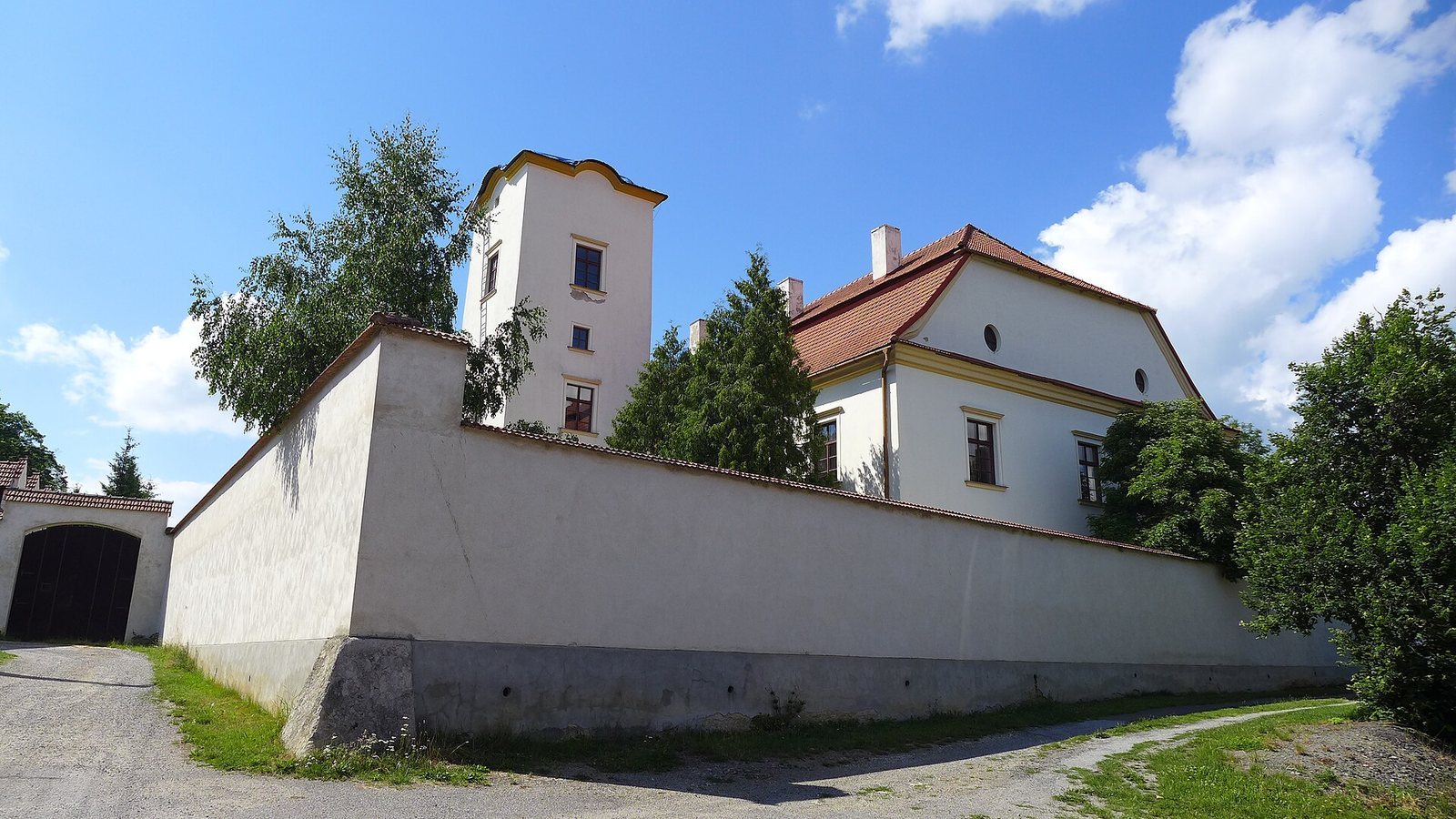
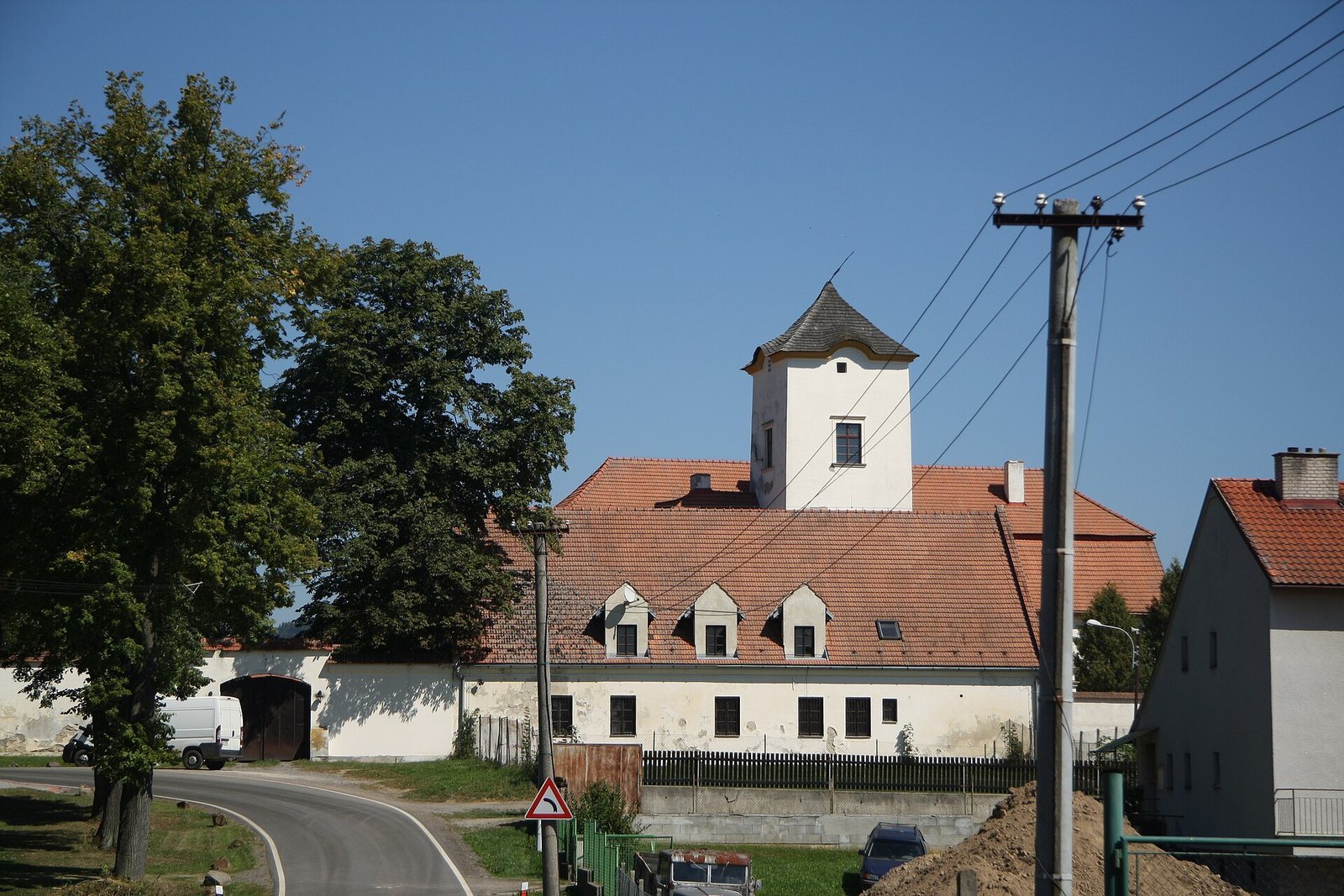
The château stands near the center of Černá. Its grounds are enclosed by a substantial wall, while the building includes a chapel in its north corner.
Building and grounds
Château and enclosing wall
A wall five metres high was built around the château during the major renovation following its sale in the early 1990s. The residence began with a Renaissance design, later altered chiefly through Baroque work on the interiors.
Chapel
A chapel was established in the château’s north corner during the interwar period. Its frescoes later suffered severe damage.