Abdeen Palace: Egypt’s Royal Government Palace in Cairo
Site at a Glance
- Rating
- 4.6
- Popularity
- High
- Country
- Egypt
- Primary era
- Modern
- External website
- Open
- Eras represented
- Modern
- Civilizations
- Ottoman
- Site type
- Civic
- Remains
- Palace
On this page16 sections
History
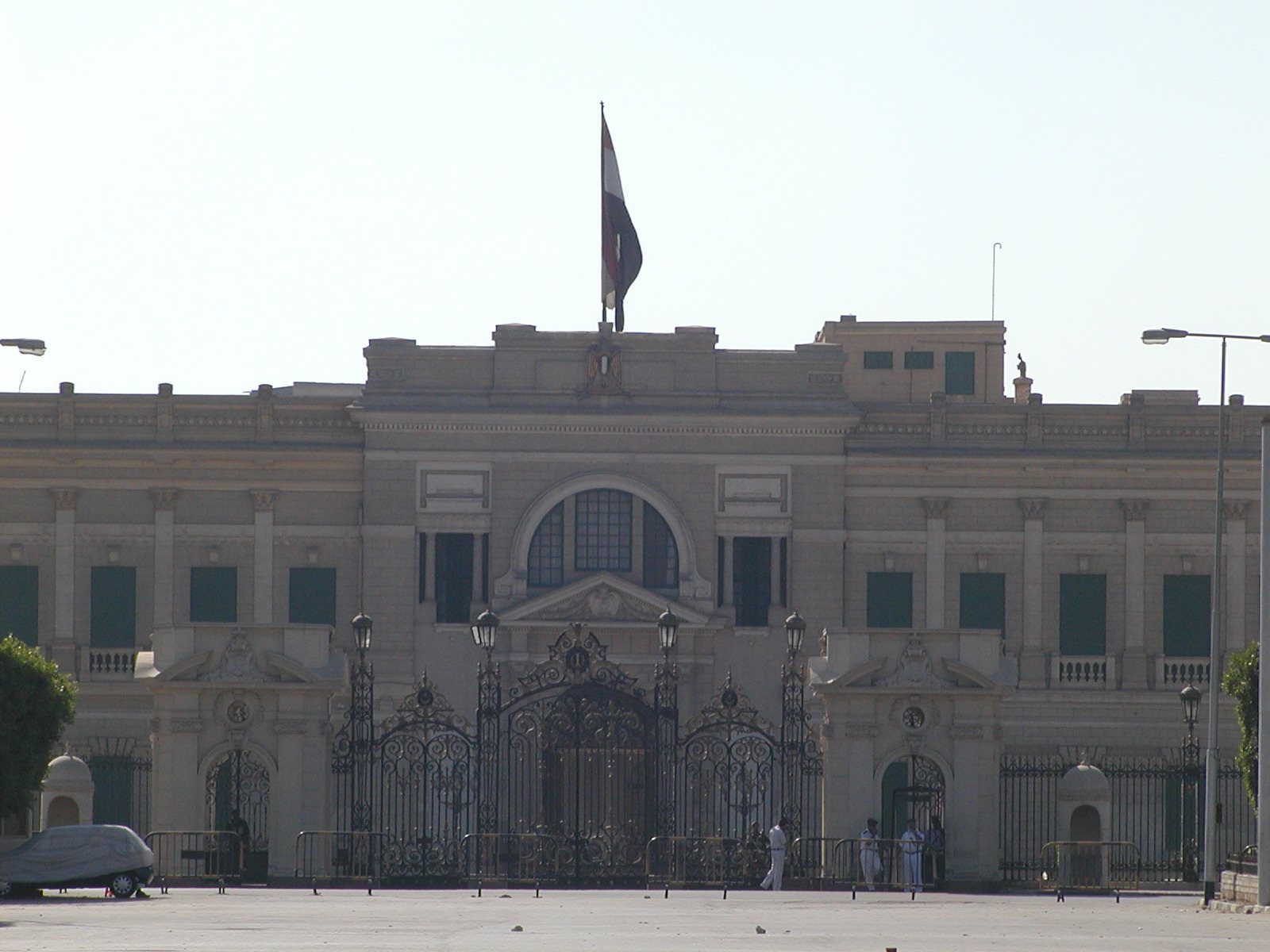
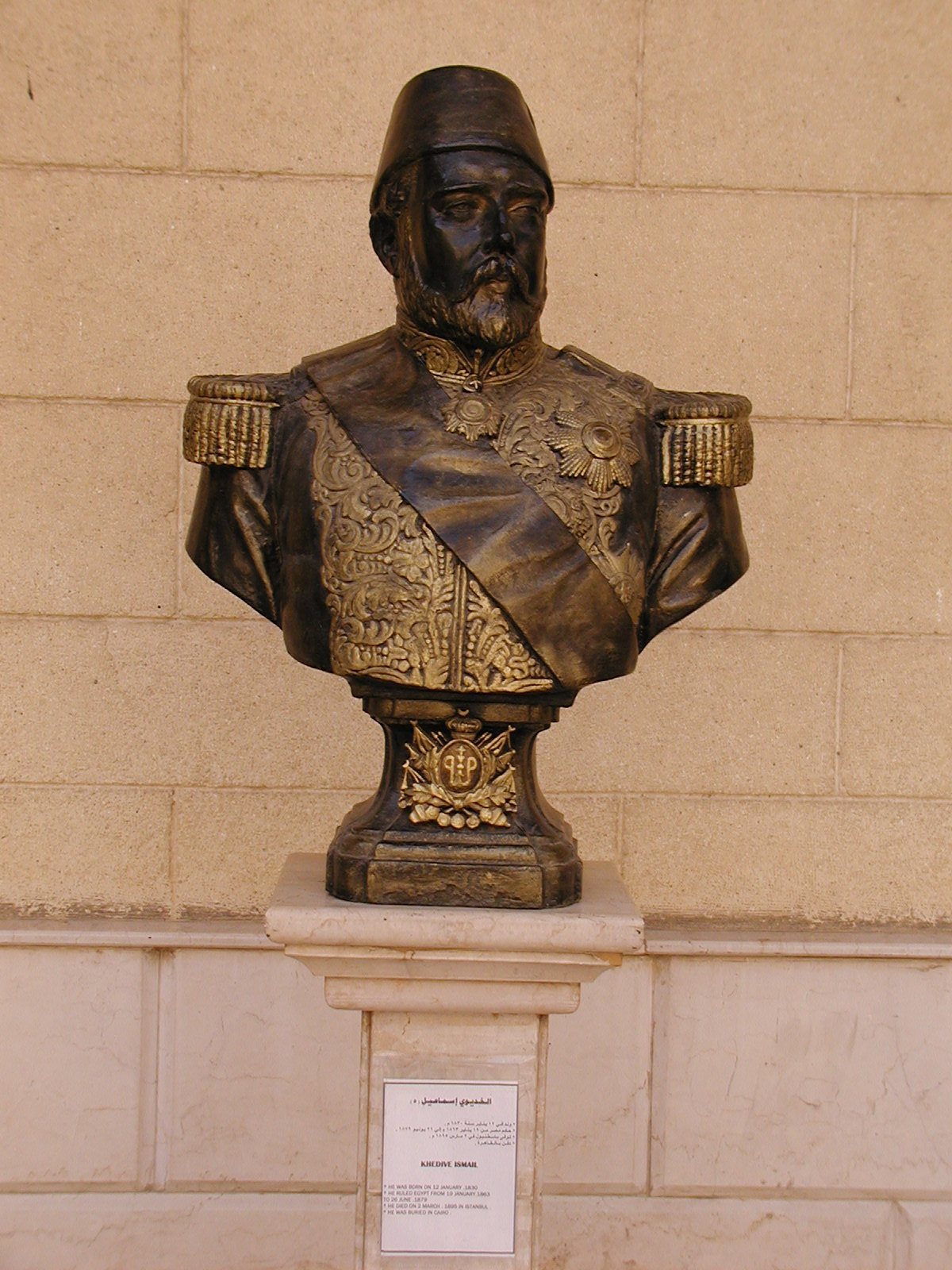
Abdeen Palace is a French-inspired neoclassical royal palace in Cairo, Egypt, commissioned by Khedive Ismail Pasha in 1863 as part of his program to modernize the city and establish a new government palace. Built on the property of Abdeen Bey, a military officer who had owned a small palace there, it became a major center of Egyptian government and royal ceremony.
Construction and the khedival court
Ismail acquired and demolished the earlier buildings on the site, which covered 24 feddans, approximately 10 hectares. Construction lasted about ten years. The palace was occupied in 1873 and officially inaugurated in 1874. Its initial design was prepared by the French architect Léon Rousseau, while Egyptian, Italian, French, and Turkish decorators and craftsmen contributed to the work.
The palace and the surrounding district took their name from Abdeen Bey. In 1881, Khedive Tawfiq Pasha nationalized Abdeen Palace and two other Cairo residences, transferring them from the personal property of the ruling family to state ownership. Part of the eastern wing, formerly used by the retinue, was later demolished to enlarge the rear garden.
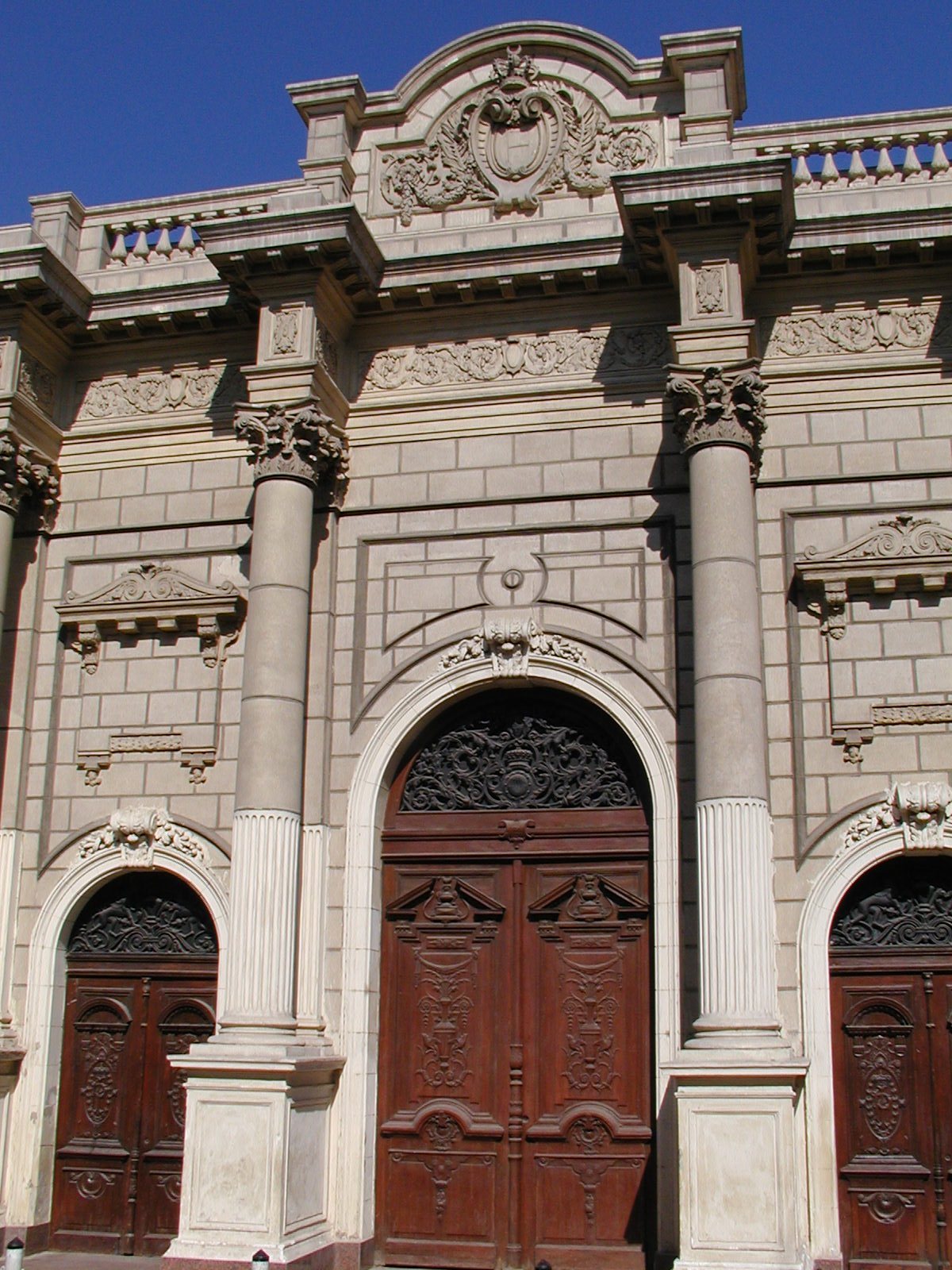
A major fire in 1891 destroyed much of the Haramlek wing and the quarters of the royal guards. Abbas Hilmi II supervised the furnishing and renovation of the reconstructed palace, including the introduction of electricity into its interiors. After Antonio Lasciac became chief architect of the royal palaces in 1907, modernization work began in 1909 and continued until 1911. Wooden roofs and ceilings were removed, and the principal facade was remodeled in a more monumental academic style. The Salamlek was enlarged with a ballroom, a banquet hall, and two vestibules.
The royal government center
Abdeen Palace replaced the Citadel of Cairo, a fortified medieval complex that had served for centuries as the seat of Egypt’s rulers and government, as the center of the royal court. It functioned as Egypt’s government seat from approximately 1872 until the end of the monarchy in 1952. Under King Fuad I, who ruled from 1917 to 1936, it became the setting for state ceremonies and official government activity.
During restoration, the lower rooms were converted into palace museums. In 1921, Fuad I added a garden of about 20 feddans, approximately 8.4 hectares. Ernesto Verrucci later created new royal spaces and extended the wings toward the garden, including royal apartments completed in 1929. Other architects and designers associated with the palace included Joseph Urban, Dimitri Fabricius, Carlo Prampolini, and Georges Parcq.
Abdeen Palace hosted the 1938 wedding of King Farouk I and Nariman Sadiq, and that same year hosted the wedding of Princess Fausia of Egypt and Crown Prince Mohammad Reza Pahlavi of Iran. In February 1942, British ambassador Miles Lampson surrounded the palace with troops and tanks in the Abdeen Palace incident, seeking to compel Farouk to abdicate unless he appointed a pro-Allied government.
The end of the monarchy and later use
On 23 July 1952, the Egyptian army besieged the palace during the Egyptian Revolution. Farouk, who was then in Alexandria, abdicated and went into exile. The end of the monarchy also ended Abdeen Palace’s function as Egypt’s government seat.
The palace later deteriorated. President Anwar Sadat ordered restoration and renovation, and President Hosni Mubarak subsequently ordered its modernization. Damage caused by the 1992 earthquake delayed that work. Abdeen Palace remains one of the official residences and workplaces of the President of Egypt. Its lower floors contain museums, while the former royal residential floors are reserved for foreign dignitaries and are not generally open to visitors.
A historical-documents museum opened in January 2005. Its holdings include an Ottoman firman, a formal decree issued by the Ottoman ruler or government, concerning the establishment of Muhammad Ali Pasha’s rule and the succession of his family in Egypt. The collection also includes a certificate of the Order of the Iron Crown and written materials concerning the short-lived South American kingdom of Araucania and Patagonia.
Remains
Layout and residential divisions
Abdeen Palace occupies a large site in central Cairo and contains two principal floors with approximately 500 rooms. It was built in a French-inspired neoclassical style, while its internal arrangement retained the traditional distinction between public male reception areas and private family quarters. The Salamlek, the public or male reception division of an elite residence, and the Haramlek, the private family division, form major parts of the same structure rather than separate buildings.
The original property included residences, gardens, farms, and mosques. A lake beside the palace was later filled to create a square. A large ceremonial forecourt lay to the west, while the garden extended toward the rear and east. The ground floor formerly contained service rooms, guard quarters, storerooms, and related facilities, and now accommodates museum galleries.
Salamlek
The upper-floor Salamlek contains reception and representational rooms. Its Throne Hall is described as the largest and most richly decorated part of the palace. An adjoining conference hall served for council consultations and official meetings and contains a large oval table with seating for approximately twenty people.
The salons use different color schemes and contain marble fireplaces. The Green Salon follows the Louis XVI style, while the Blue Salon and the Green Salon were formerly hung with green, red, and blue wall fabrics.
Haramlek
The Haramlek contains the royal family’s private quarters, including the royal apartment and the King’s Suite designed by Ernesto Verrucci and furnished in 1929. The apartment includes an entrance area, office, bedroom, bathroom, and boudoir. A small vestibule connects the suite to the monarch’s office, which is centered on an early twentieth-century desk.
The Queen’s Suite consists of a small lobby, a square salon with a central Neo-Baroque dome, a marble fireplace placed on the main axis, a small office, and a bedroom with a central four-poster bed. The bedroom follows the Louis XVI style and was occupied by Queen Farida and later by Queen Nariman, Farouk’s second wife.
The Byzantine Chamber serves as the Haramlek’s reception area. Two adjoining spaces are divided by a triple colonnade decorated with marble. Their decoration combines Byzantine elements with Neo-Islamic, Neo-Gothic, and Art Deco features. Mosaics depict celebrations, and a cascade fountain is flanked by oriental dancers.
Reception, performance, and guest spaces
Named reception rooms
The Muhammad Ali Salon is a ceremonial reception hall whose decoration recalls the Serail of Istanbul. The White Salon was intended for official receptions for honored guests and dignitaries. Its central wall carries an eighteenth-century tapestry, while its side walls contain copies of nineteenth-century commodes originally designed for Versailles.
The Suez Canal Room began as an official salon, later became a second throne room under Khedive Abbas Hilmi, and was subsequently converted into the president’s office. Three large oil paintings commemorating the opening of the Suez Canal gave the room its commonly used name.
Theater, library, and Belgian Suite
The palace theater contains hundreds of gilded seats and curtained seating areas segregated for women. The library holds approximately 55,000 books.
The Belgian Suite was designed for important foreign guests and was named after the King of Belgium, the first person to stay there. Its furnishings include a bed decorated with hand-painted designs and ornament.
Museum collections
Silver and royal household collections
The Silver Museum contains royal silverware, porcelain, crystal, colored glass, vases, and other tableware. Some pieces bear royal crowns, owners’ names, or initials. The collections of the Muhammad Ali royal family include further silver, porcelain, crystal, colored glass, rare vases, and objects used for eating and drinking. They also contain Chinese vessels, crystal collections, and bottles, vases, and perfume bottles made by Émile Gallé.
Weapons Museum
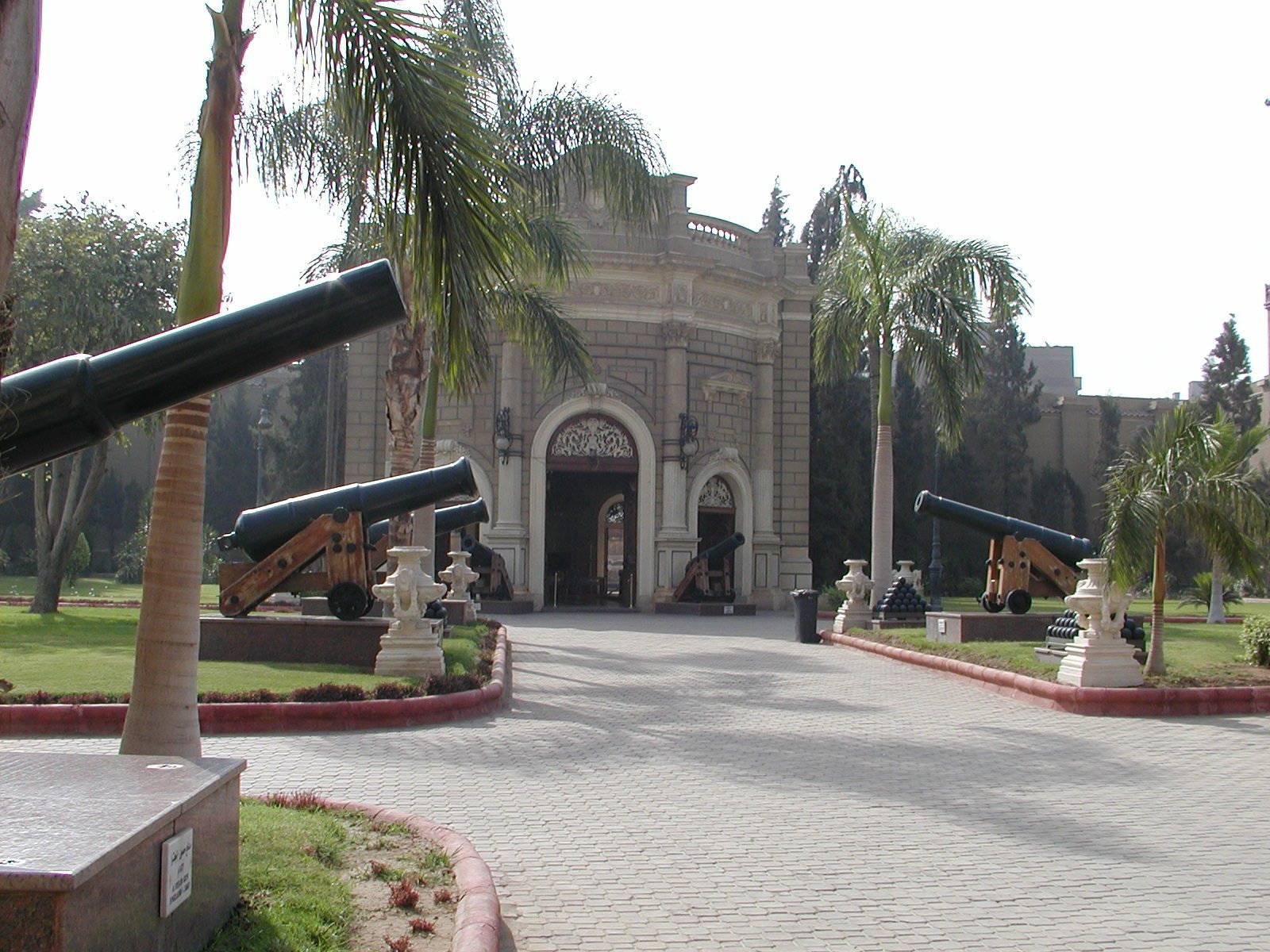
The Weapons Museum contains edged weapons and firearms from different periods and regions. Its displays include Mamluk hand weapons, Ottoman and Iranian weapons, a sword identified with Ottoman Sultan Selim I, weapons associated with Napoleon Bonaparte, and cannon made in Egypt, the United States, and Europe.
Other objects include axes, hammers, swords, daggers, yataghans, knives, hunting equipment, shields, armor, helmets, gauntlets, and leg defenses. The collection includes examples from the sixteenth century, and some objects are gilded or decorated with precious and semiprecious stones.
Hunting Museum
Opened as a museum in 1963, the hunting collection was assembled from objects gathered from the royal palaces and retreats of King Farouk and Prince Yusuf Kamal. It contains stuffed birds, animals, and reptiles; antlers and horns of deer, gazelles, and buffalo; a crocodile hunted in southern Aswan; rare butterflies; migratory birds such as eagles and falcons; and valuable hunting weapons.
The collection also includes a necklace belonging to Queen Farida. It is made of gold and decorated with actual bird heads fitted with gold beaks.
Orders, presidential materials, and furnishings
Other collections contain royal orders, decorations, and medals from Europe, Asia, Africa, the United States, and other regions. A presidential museum displays letters sent to Hosni Mubarak by citizens, organizations, and government bodies, together with possessions and weapons associated with Mubarak and his wife.
Paintings, elaborate furnishings, and numerous clocks decorate the rooms and wings. Most of the clocks are decorated with pure gold.