Abbey of Santa Giustina: A Benedictine Monastery in Italy
Site at a Glance
- Popularity
- Medium
- Country
- Italy
- Primary era
- Medieval
- Eras represented
- Medieval
- Civilizations
- Holy Roman Empire
- Site type
- Religious
- Remains
- Church
On this page10 sections
History
Foundation and refoundation
The Abbey of Santa Giustina is a former Benedictine monastery in Italy, dedicated to Justina of Padua and belonging to the Diocese of Acqui. Its foundation is traditionally attributed to Liutprand, a Lombard king who ruled during the early Middle Ages, in 722. Construction of the first church is placed in the eighth or ninth century.
A legend tells that Aleramo was born at the abbey while his German noble parents were making a pilgrimage. Orphaned, he supposedly joined the imperial army and later entered the household and governing circle of Otto I, a tenth-century ruler who became emperor. Aleramo was a marquis traditionally regarded as the founder of the Aleramici, a northern Italian noble family. The story was transmitted by the Dominican writer Iacopo da Acqui, retold by Matteo Bandello in the 27th novella of the second volume of Novelle, and later popularized by Giosuè Carducci in Cavalleria e Umanesimo.
In the early eleventh century, Oberto, a marquis and high-ranking noble, rebuilt the church from its foundations and established a Benedictine community following the Rule of Saint Benedict. With his sons Guido and Anselmo, he formally refounded the abbey in 1030. Oberto died in 1047 and was buried in the church, which therefore existed by that time.
Medieval fortunes
A twelfth-century papal bull, a formal decree issued by a pope, placed the abbey under the protection of the Holy See, the Roman Catholic Church’s central governing authority, and made it dependent on that authority alone. The document listed the monastery, village, parish church, lands and castle among its holdings. The Sezzadio estate included Carpeneto, Montaldo Bormida, Mobio between Carpeneto and Rocca Grimalda, Castelnuovo Bormida, Cassine, Fontaniale, Retorto, Danavete and Perti, as well as the estates of Orba and Gamondio.
The bull also named dependencies including the churches of Santo Stefano delle Beccarie and San Michele di Marengo in Alessandria; San Salvatore at Retorto, in Predosa; Santa Maria di Fontaniale at Gavonata, in Cassine; Santa Maria di Bolico at Cascina Borio, in Sezzadio; San Nicola di Cannova; Nostra Signora delle Ghiare at Pozzolo; and the monastery of San Benedetto di Colonega at Albissola Marina. It further listed San Giacomo at Castelnuovo Bormida, Santa Giustina near Stella, and another church dedicated to Santa Giustina at Perti.
Donations from the Aleramici supported a period of prosperity in the twelfth and thirteenth centuries. The abbey entered a decline in the fourteenth century.
Changes in administration
In 1434, Abbot Antonio Lanzavecchia received permission from the Holy See to transfer the monastery’s management to the Congregation of St Jerome of Cervara, a Benedictine reform group. The arrangement ended in 1460. Changes made during those years diminished the complex’s original early-medieval, Ottonian character, referring to traditions associated with the tenth- and early eleventh-century German kings and emperors of the Ottonian dynasty.
After the last regular abbot died in 1478, the monastery was administered in commendam, meaning its revenues and administration went to a commendatory abbot rather than a resident monastic leader. About a century later, after the last commendatory abbot died, management passed to the abbots of Sant’Ambrogio in Milan, who formed a community of oblates, people affiliated with a religious community who offer service without necessarily becoming monks.
Suppression and restoration
A decree by Napoleon Bonaparte, the French emperor, suppressed religious orders and ended the monastic foundation in 1810. Its lands were granted to Napoleon’s veterans. Less than five years later, the returning House of Savoy, a European ruling dynasty, annulled the decree. By then the complex had suffered serious damage, and the church had been divided for use as a stable and warehouse.
Senator Angelo Frascara bought the abbey at public auction in 1863. His descendants carried out extensive restoration, removing the internal divisions and recovering part of the abbey’s former appearance. The church remains privately owned and is used for worship on special occasions, especially weddings.
Remains
The surviving church
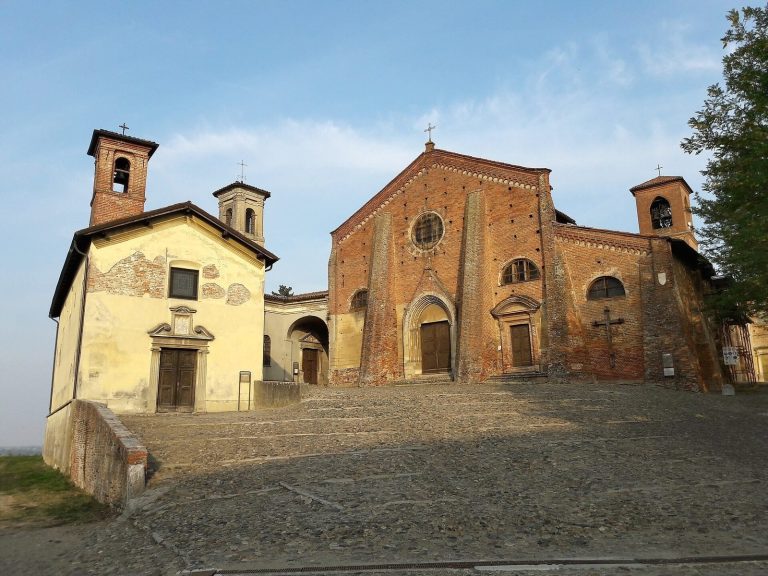
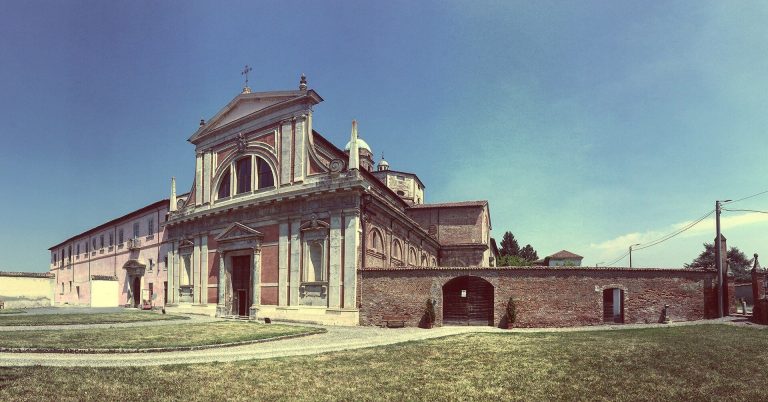
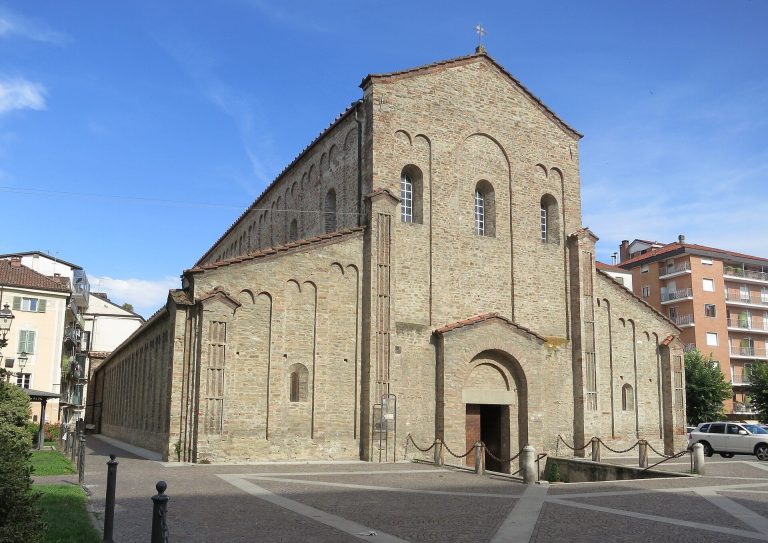
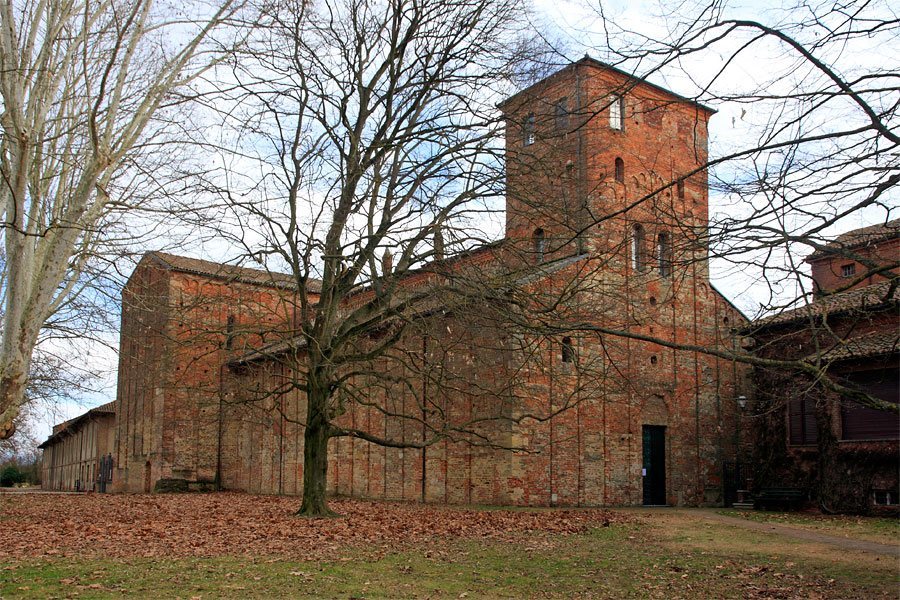
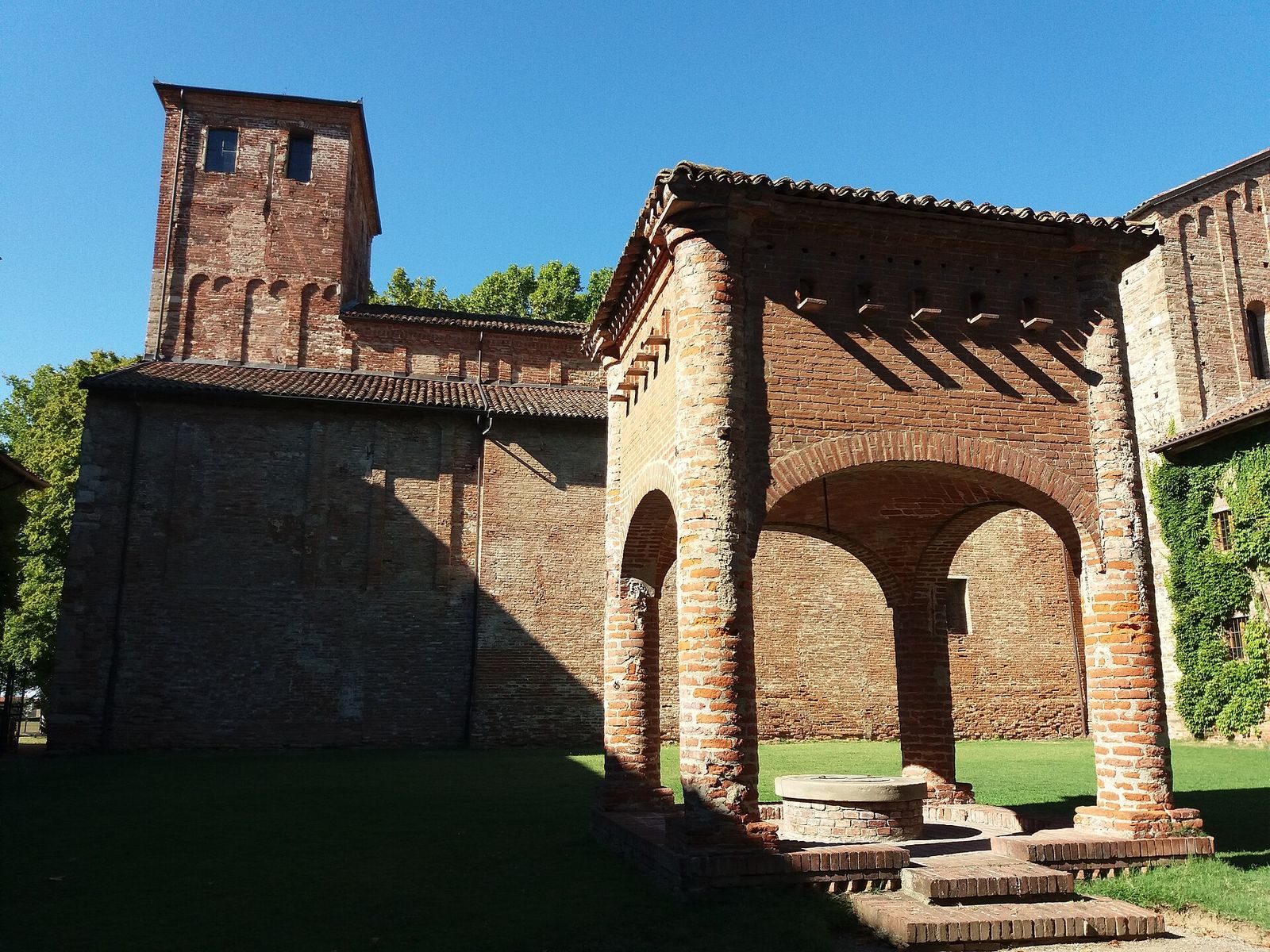
The church is the only building left from the original complex. Built mainly of brick with occasional stone inserts, it is an eleventh-century Romanesque structure, a medieval style characterized by robust forms, with Gothic features associated with a later tradition of pointed arches and more complex vaulting. Its three aisles end in apses, projecting altar ends, that meet the transept, the crosswise part of a church, directly. This arrangement gives the building a T-shaped plan rather than a Latin-cross plan.
Exterior
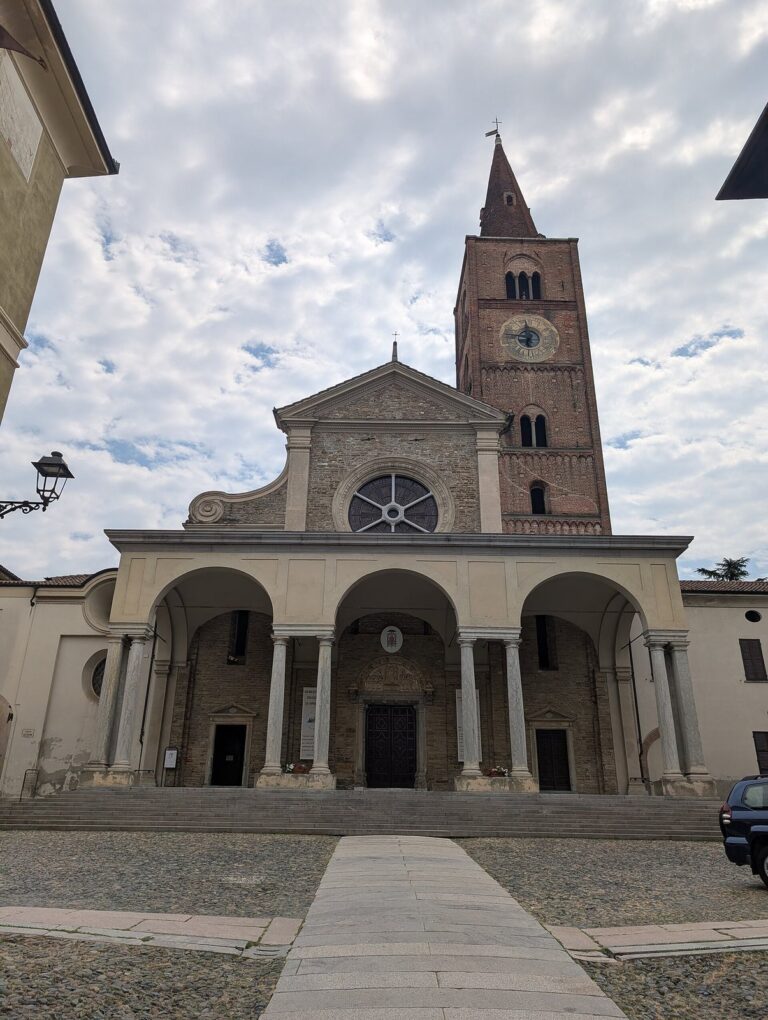
The brick façade is divided by pilasters, shallow wall projections resembling columns, and finished with two bands of small hanging arches. The exterior has a plain entrance portal and a tower added in the fifteenth century. The church’s side walls have few openings.
Interior and apses
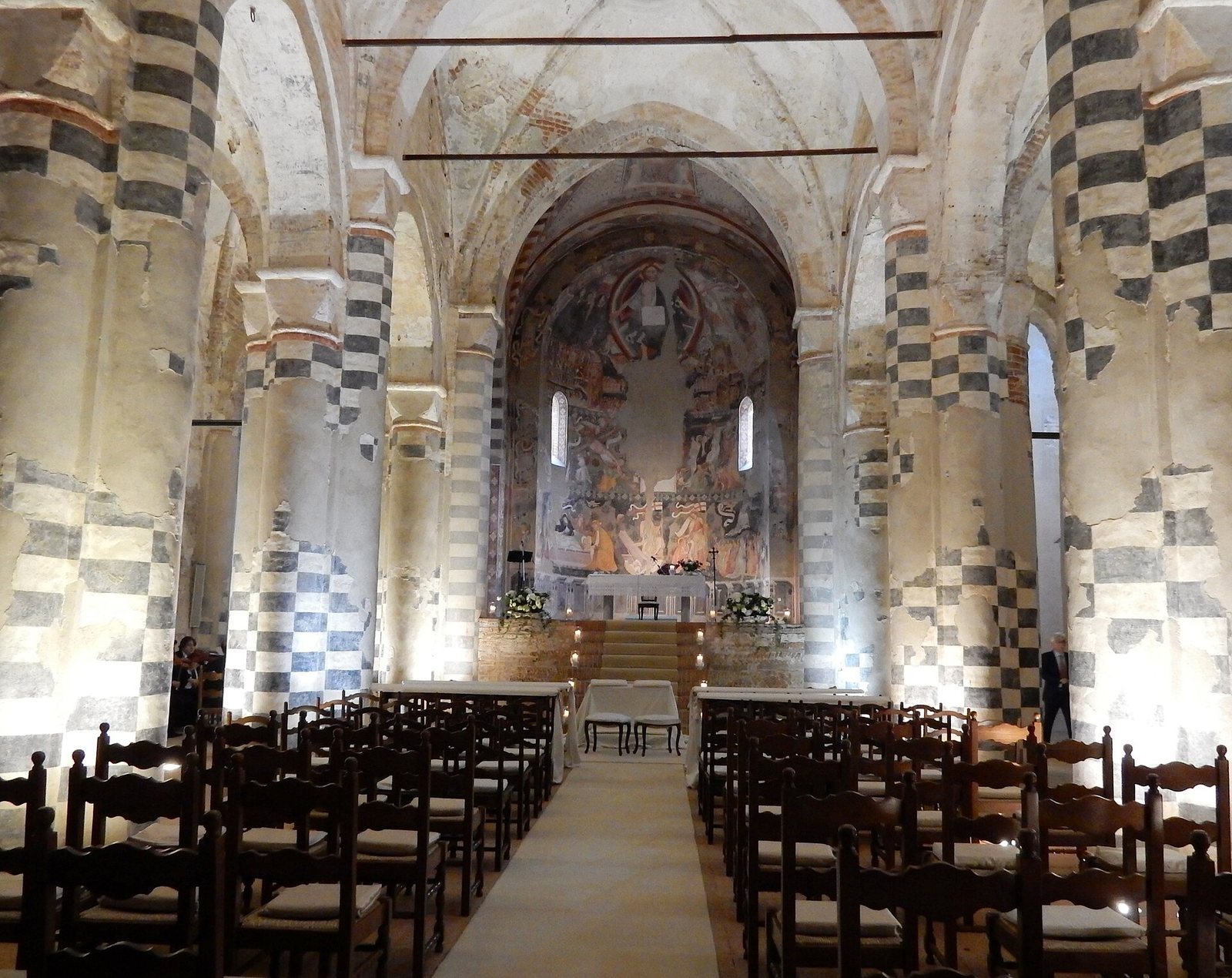
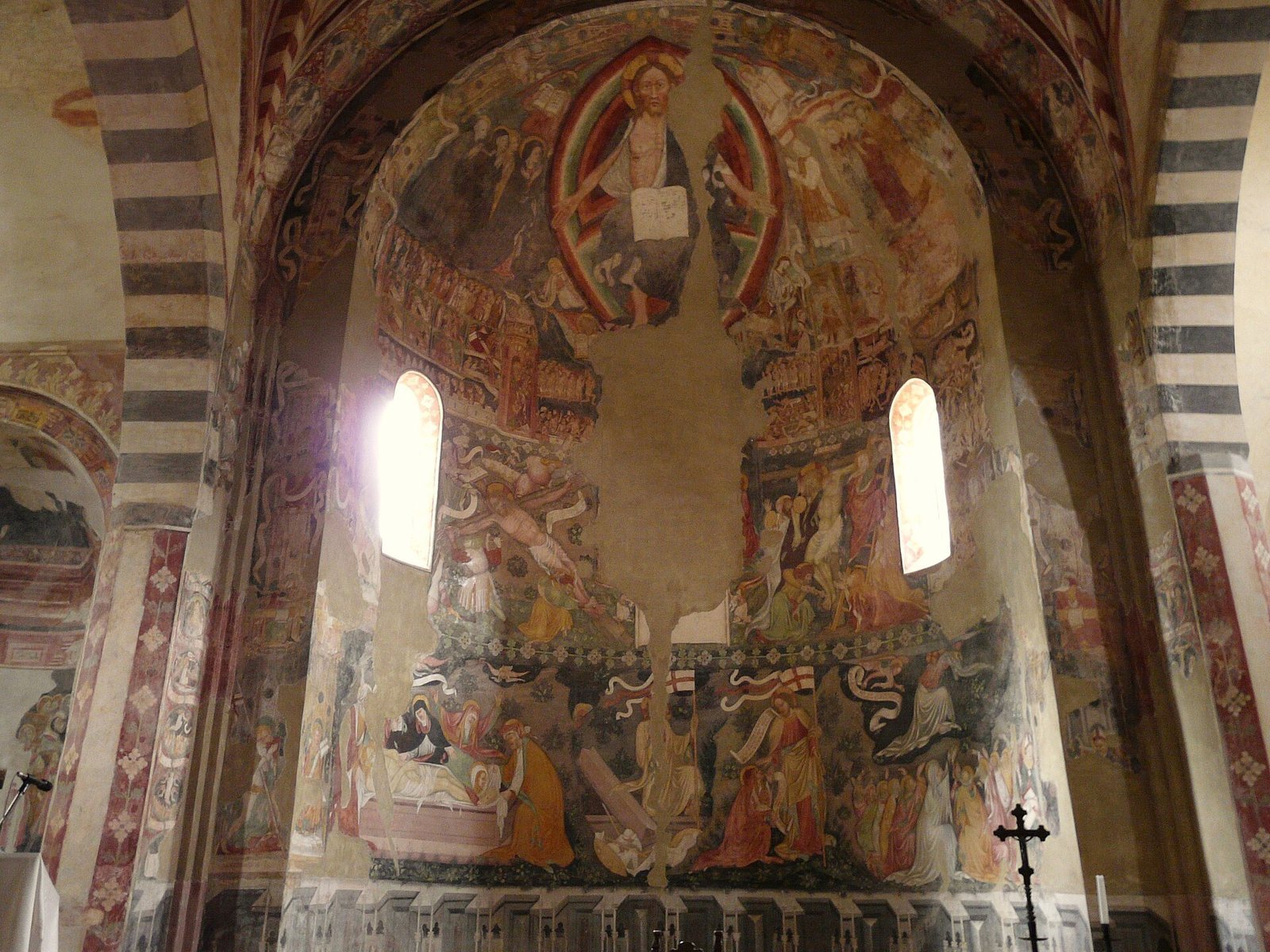
Fifteenth-century cross vaults, formed by intersecting barrel vaults, partly replaced the original roof supported by a timber truss, a framework of joined beams. The central apse has a double sawtooth frieze, while the side apses have simpler treatment. A staircase of nine steps leads to the raised presbytery, the area around the main altar. Frescoes from the fourteenth and fifteenth centuries cover the semi-dome of the central apse.
Crypt and mosaic
A square crypt lies beneath the presbytery. Its cross vaults rest on plain columns, and an eleventh-century floor mosaic covers almost all of the crypt except the apse. Black tesserae, the small pieces used to form a mosaic, stand out against its white ground. An inscription credits Oberto as a marquis who restored and adorned the house of the Lord.