Castle of Trisobbio: A Medieval Fortress in Italy
Site at a Glance
- Rating
- 4.5
- Popularity
- Low
- Country
- Italy
- Primary era
- Medieval
- External website
- Open
- Eras represented
- Medieval, Early Modern, Modern
- Civilizations
- Italian
- Site type
- Military
- Remains
- Castle
On this page6 sections
History
The Castle of Trisobbio is a medieval castle in Italy, in the municipality of Trisobbio, whose origins reach back to the beginning of the thirteenth century. Built during the medieval period, it defended and controlled the surrounding territory from its position above the historic settlement.
Feudal disputes in the thirteenth century
In 1198, the Marquises of Occimiano reached an agreement with the municipality of Alessandria that transferred part of their marquisal rights over several territories, including Trisobbio. In 1217, Marquis Ottone del Bosco and his nephews donated lands and rights, including the castle and its castellany, a territorial jurisdiction administered from a castle, to the municipality of Genoa.
The arrangement created competing claims. Alessandria asserted marquisal rights through the Occimiano family, while Genoa acted as successor to the Del Bosco family. Their joint administration led to conflict in 1224, when Alessandrian forces occupied the castle. Peace negotiations returned it to the Del Bosco family.
In 1240, Frederick II of Swabia, the medieval Holy Roman Emperor and king of Sicily, enfeoffed the Marquis of Monferrato with Trisobbio while preserving the system of shared feudal authority. The dispute was resolved only after the Malaspina family succeeded to the fief and obtained recognition of its feudal rights from both Genoa and Monferrato.
Military occupations and later lordship
Milanese troops occupied Trisobbio in 1418 and 1419 during the war against Genoa. The territory was later assigned to Monferrato and then transferred to the Spinola family, an aristocratic house that retained rights over the castle and its territory until the Napoleonic era.
Between the late fifteenth century and the beginning of the early modern period, major modifications strengthened the castle’s defensive function. These changes followed the site’s continuing importance within the territorial rivalries of northwestern Italy.
Municipal use and twentieth-century restoration
During the nineteenth century, part of the castle served as the municipal seat until at least the 1840s. In 1862, the municipality decided to sell the property because its maintenance costs were high. By the end of the century, the castle had fallen into disrepair.
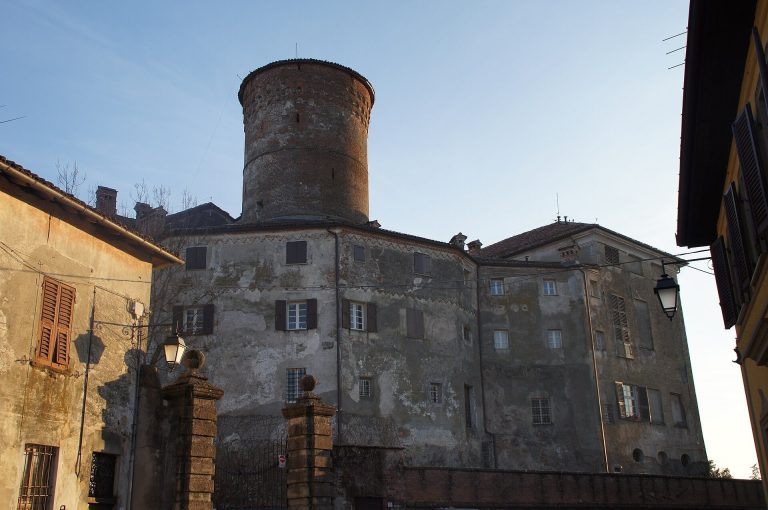
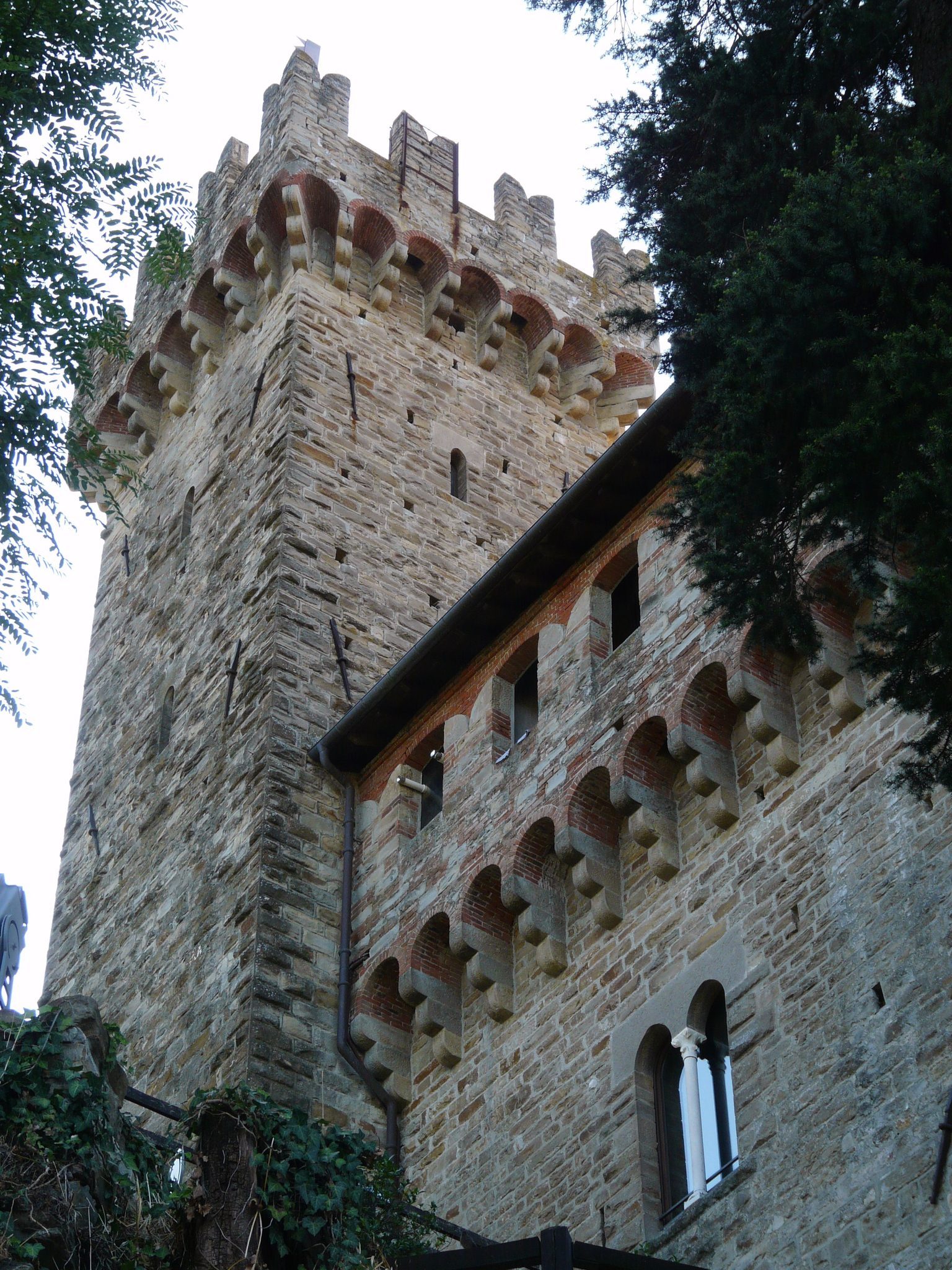
In 1913, Marquis Carpaneto Spinola began a major restoration directed by Alfredo d’Andrade, an architect and restorer known for historicist work on medieval and early-modern buildings in Italy. The intervention largely established the building’s present appearance and included the construction of the crenellated tower visible today.
In 1989, Elena Bianchi donated the castle and its adjoining park back to the municipality through an agreement with Marchioness Carolina Gavotti Finocchio. The building was subsequently renovated and converted into an accommodation facility containing a hotel and restaurant. The municipality of Trisobbio currently owns the castle.
Remains
Castle complex and park
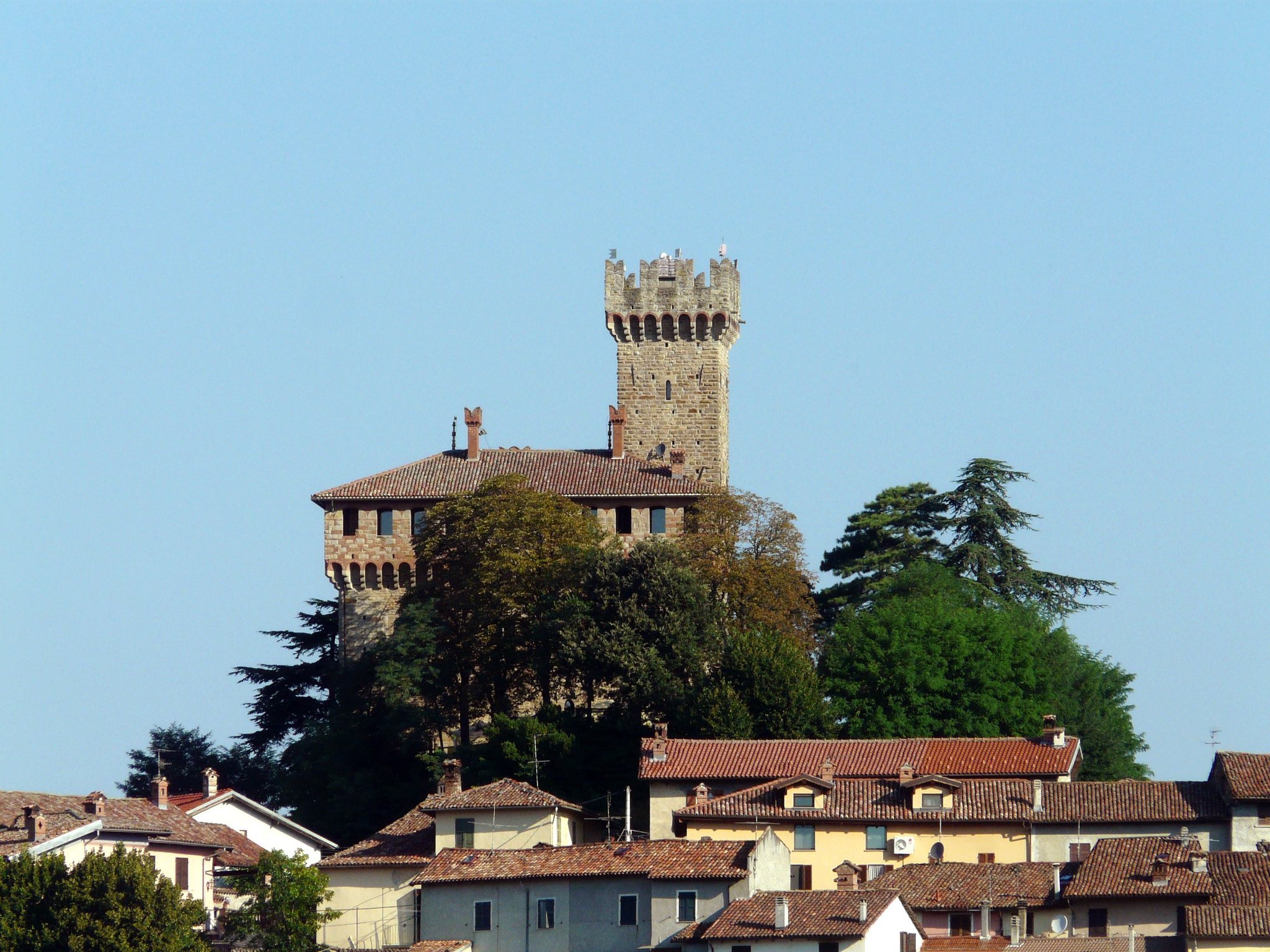
The castle occupies a dominant position on the hills of Upper Monferrato, above the historic settlement of Trisobbio. Its irregular plan preserves elements attributable to the medieval core despite numerous later interventions. The complex is built of stone and is enclosed by a brick curtain wall, a defensive wall surrounding the castle, with projecting defensive elements and crenellations at the corners.
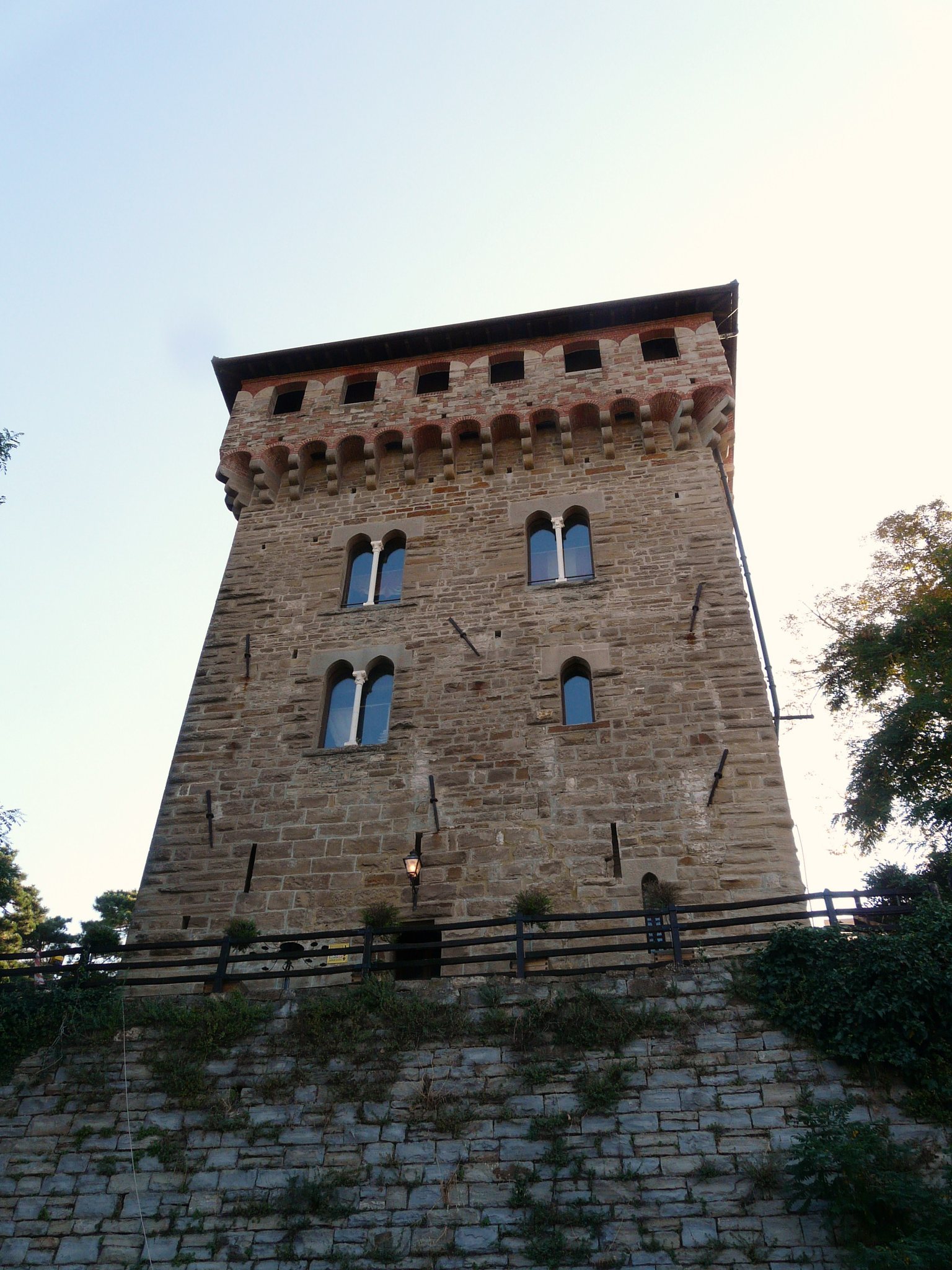
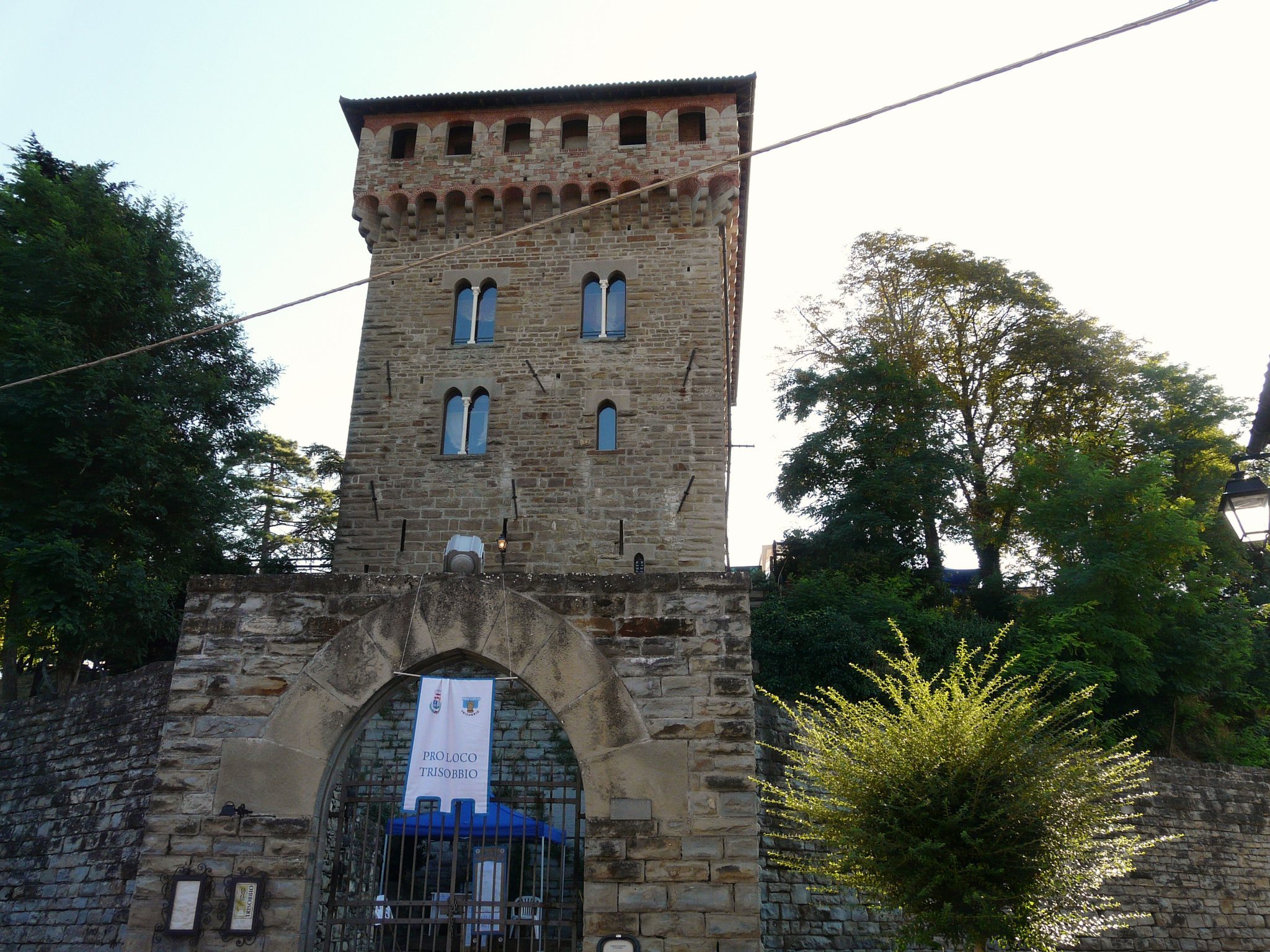
The crenellated corner tower is a defining feature of the present complex, but it belongs to the 1913 restoration rather than to the original medieval structure. The adjoining park forms part of the castle complex and is open to the public.