The Palace at 62-V Berehivska Street: A Site of Wartime Repression in Mukachevo
Site at a Glance
- Popularity
- Low
- Country
- Ukraine
- Primary era
- Modern
- Eras represented
- Modern
- Civilizations
- Austria-Hungary, Habsburg, Hungarian
- Site type
- Domestic
- Remains
- Elite Residence
On this page5 sections
History
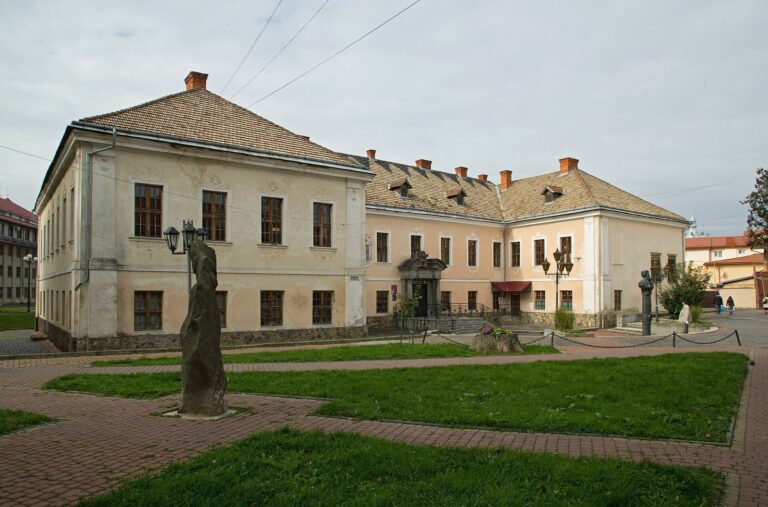
The palace at 62-V Berehivska Street is a late nineteenth-century classical-style building in Mukachevo, Ukraine, built by Hungarian Jewish baron, businessman, and landowner Adolf Kovner. He was one of the leaders of Hungary’s Jewish community. In December 1894, Kovner leased a large tract from the counts Schönborn-Buchheim within the Mukachevo-Chynadiieve estate in Bereg County, then began building on Mukachevo’s outskirts in a parkland area. His business affairs were mainly managed in what is now Hungary, and how often he stayed at the palace is unknown.
Construction and civic use
In 1914, Kovner transferred the palace to a local Jewish association intending to establish a hospital there. After the First World War, during the Czechoslovak period, county administration offices occupied the building.
Hungarian occupation and repression
Hungary occupied Mukachevo in November 1938, after which Hungarian counterintelligence used the palace. Its large, windowless basements served as a prison and torture chamber for opponents of the pro-German Horthyist regime, named for Miklós Horthy, Hungary’s regent and head of state from 1920 to 1944. Those detained included Ukrainian, communist, and other underground activists. The palace’s position on the town’s outskirts and its parkland setting helped conceal the abuse; cries from people being tortured could not be heard outside.
In July 1942, three trials of members of the Ukrainian nationalist underground in Transcarpathia took place in the palace. Known as the Kovner trials, they resulted in prison sentences of varying lengths for more than 120 people, as part of the Hungarian occupation authorities’ repression. In September 1944, Roma people from villages around Mukachevo were rounded up and brought to the building before being deported to concentration camps.
Postwar use and decline
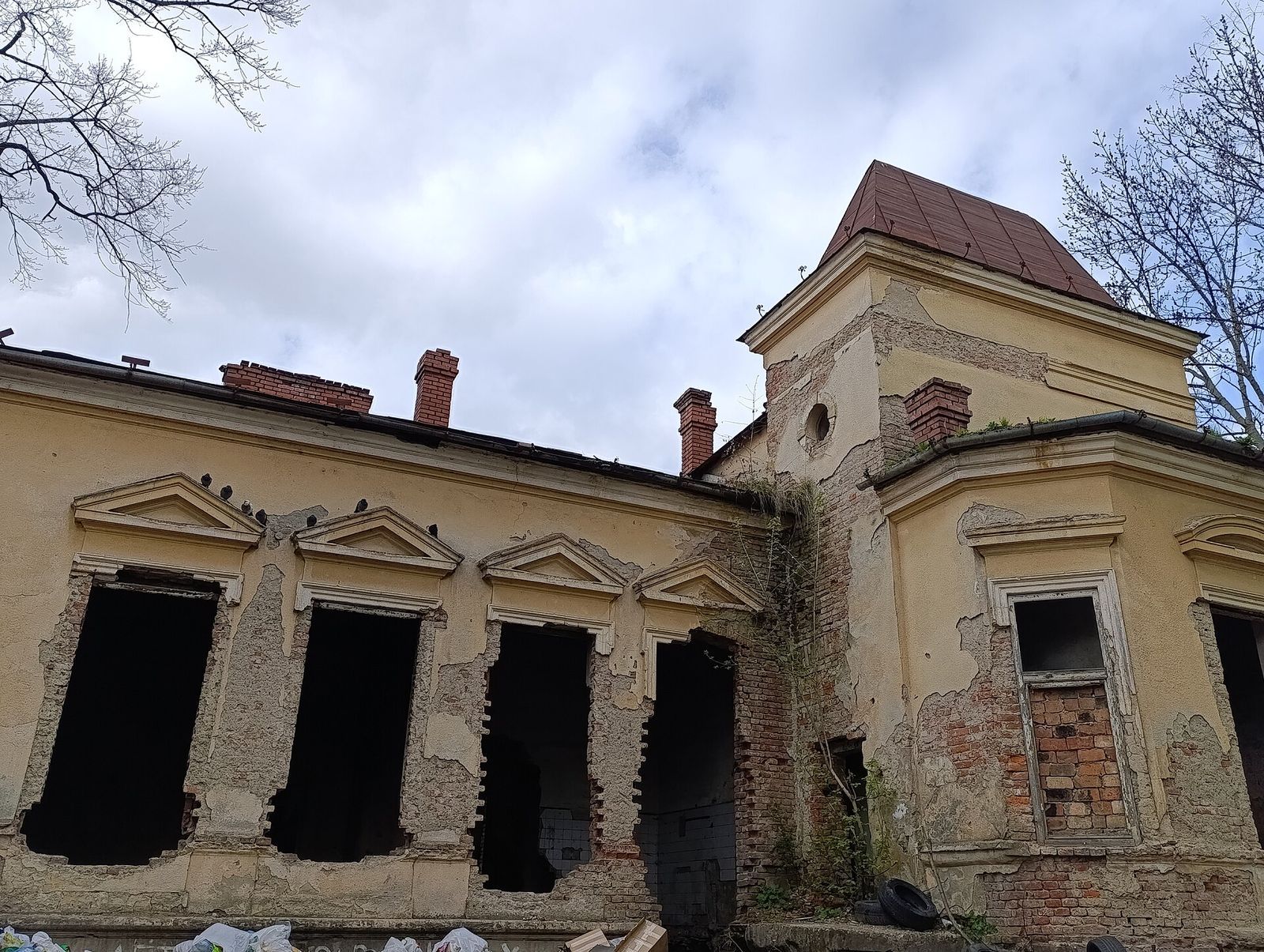
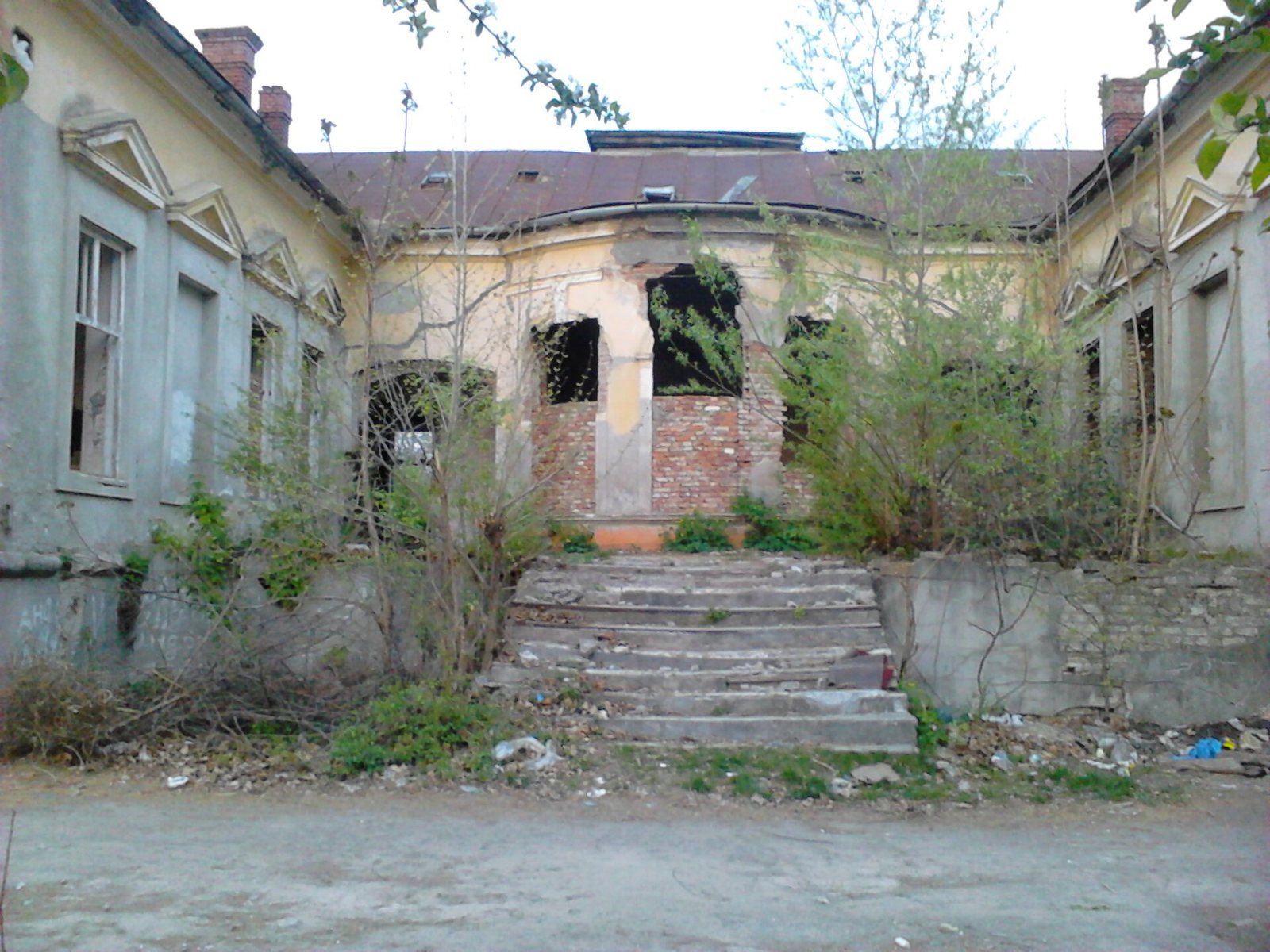
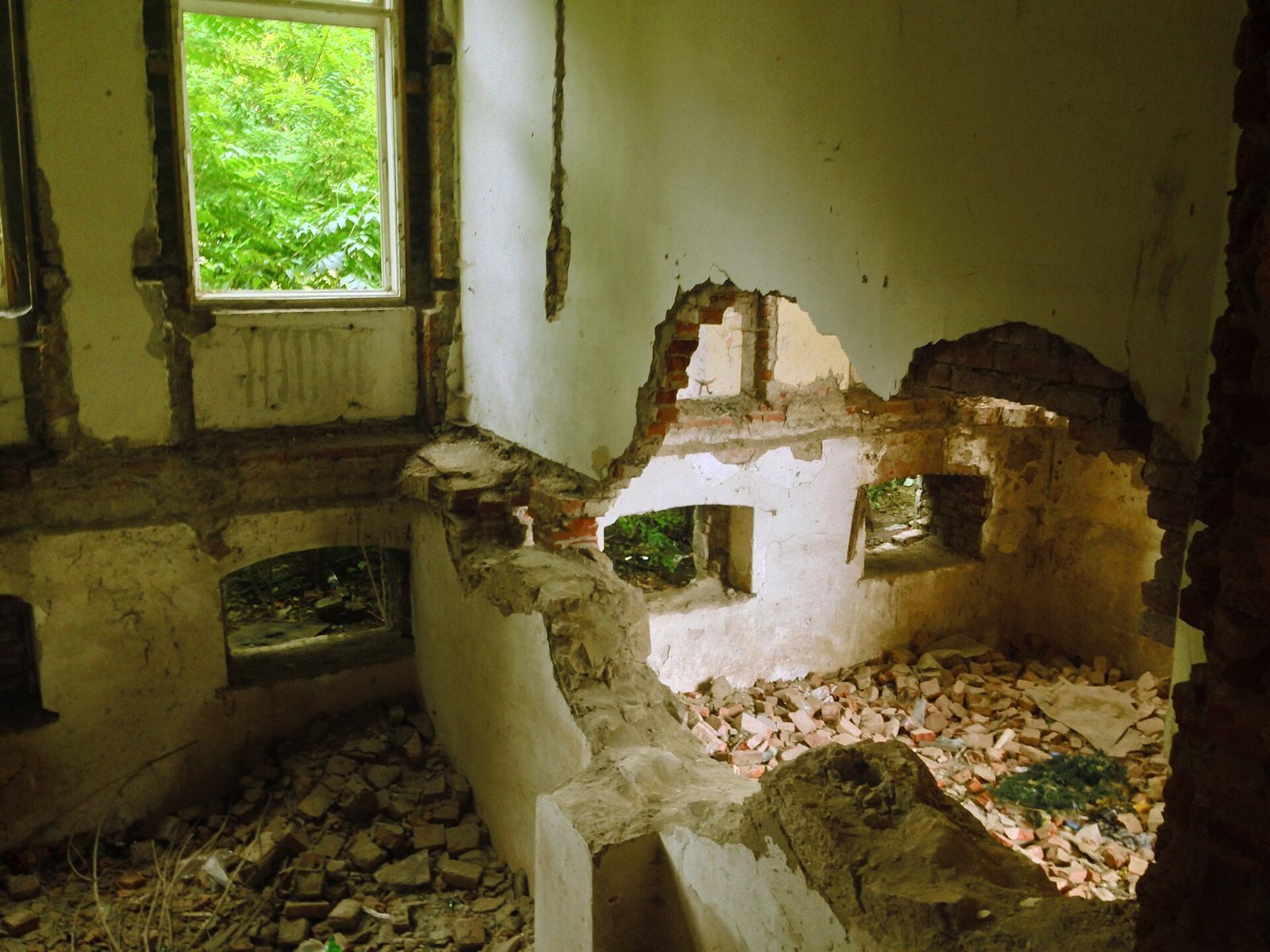
For a short period in the 1950s, the palace housed the Mukachevo District Council, its executive committee, and the district state administration. The district prosecutor’s office later occupied it. After law-enforcement agencies left in the 1990s, the building began to deteriorate. It passed into private ownership in 2015, and in 2023 a rubbish pile caught fire inside the building. The palace is now abandoned and in critical condition, while proposals have been made to establish a memorial museum there.
Remains
The single-storey palace occupies about 110 square metres and is built in the classical style. Its andesite foundation supports brick walls, and the roof is sheet metal. The plan is divided into two nearly symmetrical wings and contains 47 rooms.
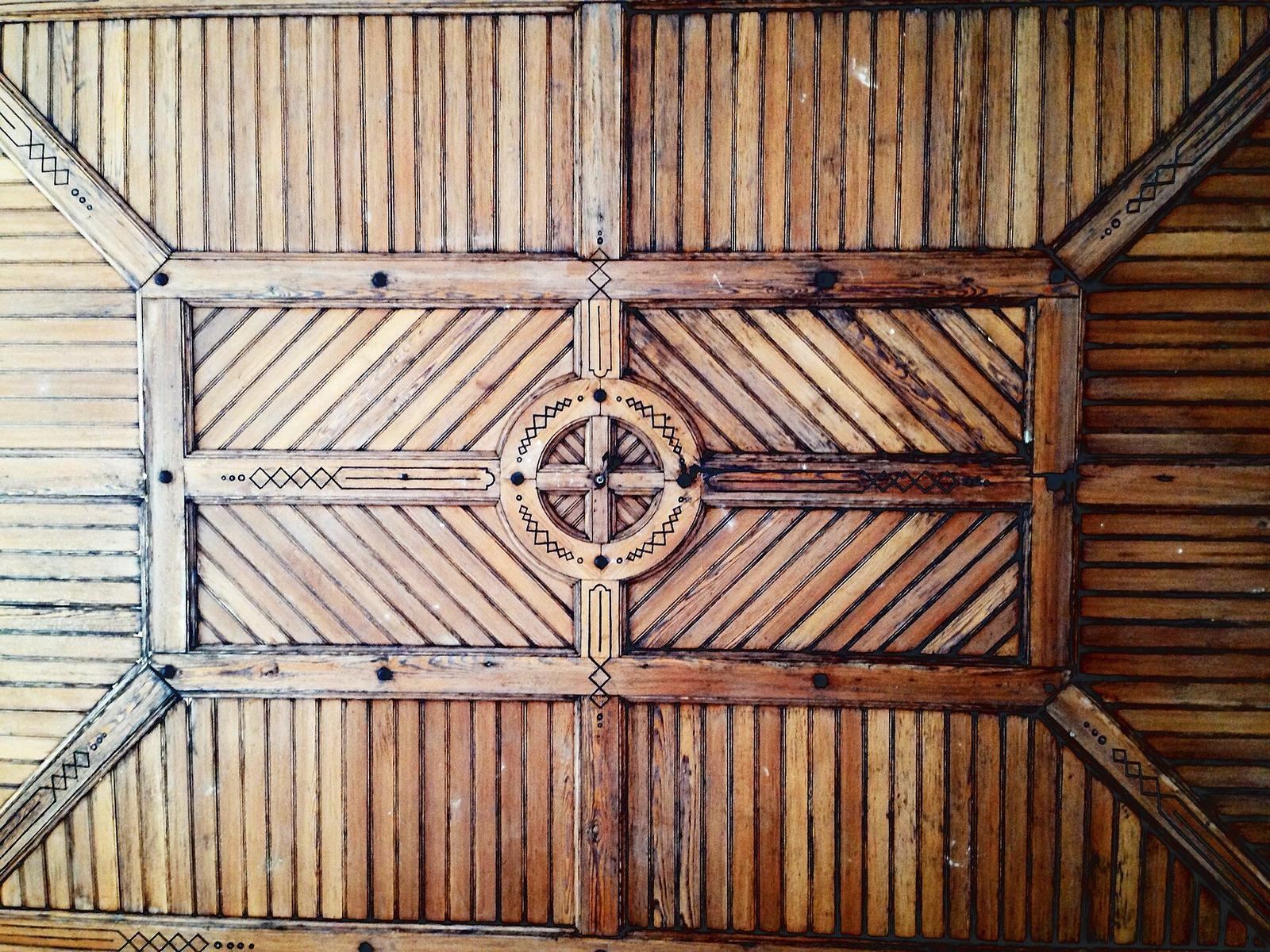
The main entrance leads to a central room, which also connects to corridors from both wings. Original stone floor tiles and a wooden ceiling survive in this room. Three semicircular windows, almost as tall as the building, face from it toward the rear courtyard. The large, windowless basement spaces also survive as part of the building.
Interior photographs taken before the First World War show paintings by Claude Monet, Eugène Boudin, Paul Gauguin, Vincent van Gogh, and Alfred Sisley hanging on the walls. A commemorative plaque installed on the building in 1992 marks the Kovner trials.