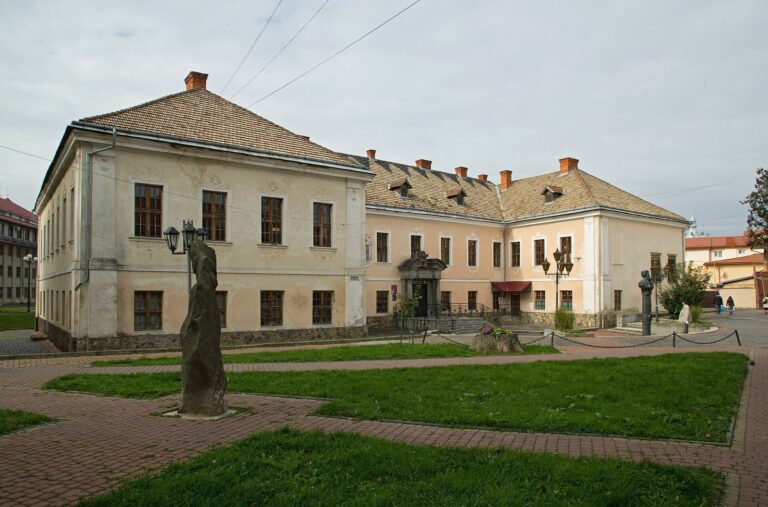
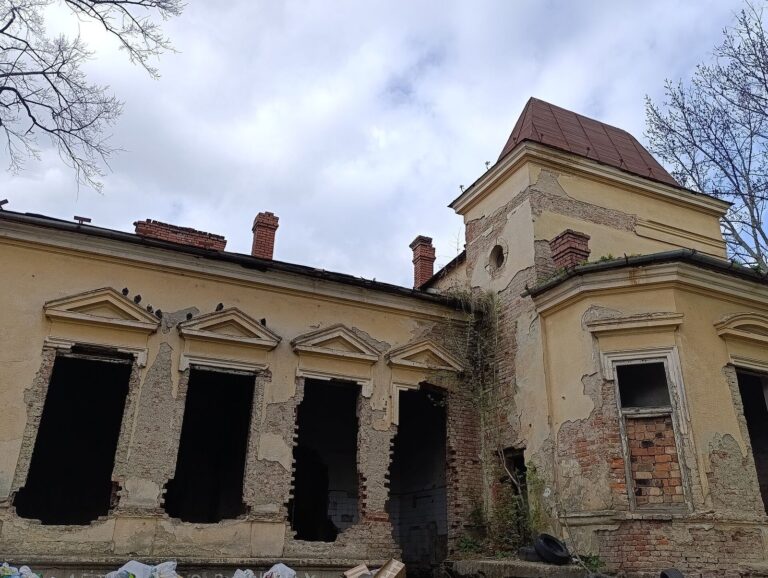
Chynadiiovo Castle: A Medieval Fortress and Later Residence in Ukraine
Site at a Glance
- Popularity
- High
- Country
- Ukraine
- Primary era
- Medieval
- Eras represented
- Medieval, Early Modern
- Civilizations
- Habsburg, Hungarian
- Site type
- Domestic
- Remains
- Castle
On this page8 sections
History
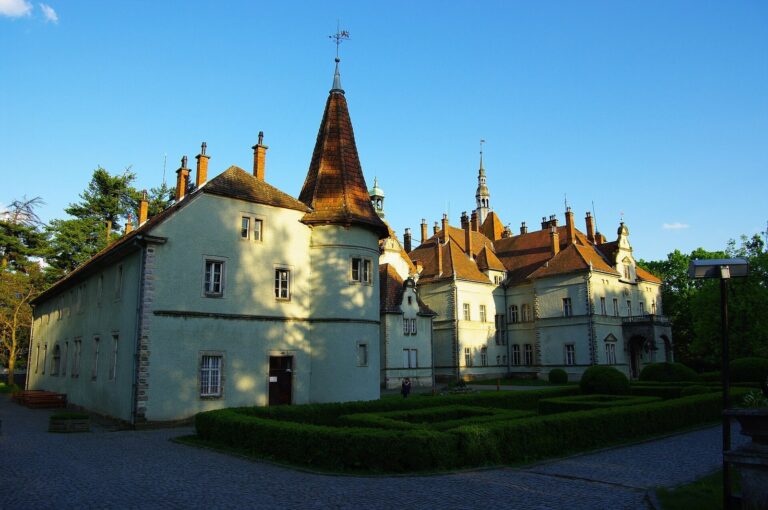
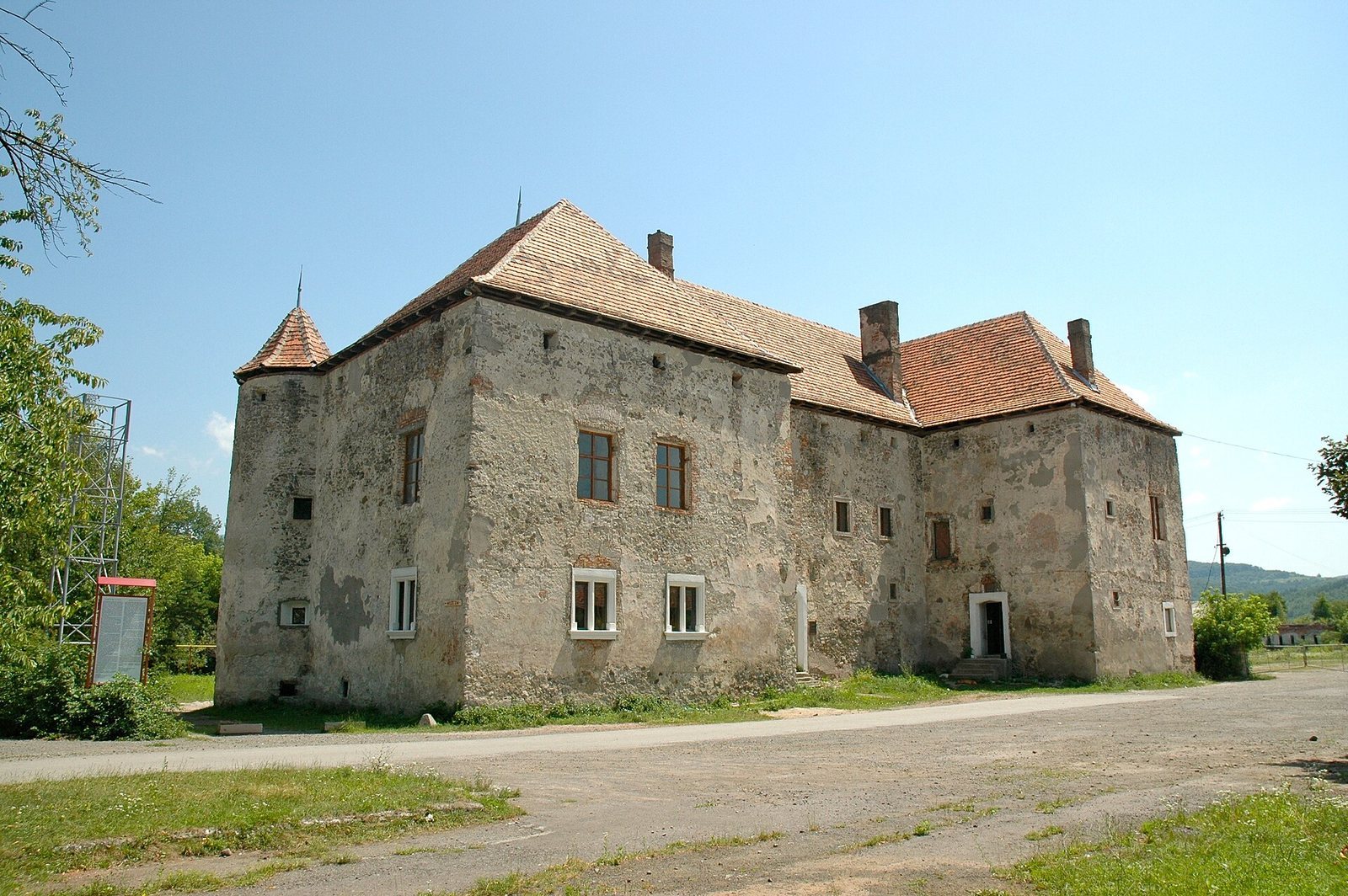
Chynadiiovo Castle, also known as Saint Miklos Castle, is a stone castle in Ukraine, built in the fourteenth century by Baron Perényi. It served as a defensive stronghold and noble residence, later providing refuge during Ferenc II Rákóczi’s uprising against Habsburg rule before becoming a prison and administrative site.
Settlement and castle-building
Artifacts discovered at the site date to the second millennium BC, and a settlement here is recorded from 1214. In 1264, King Stephen V of Hungary granted the estate to Aladar, a royal commissioner who dealt with Galician princes.
Perényi built the stone castle in the fourteenth century, and the counts Telegdi later enlarged it. Among its subsequent owners were Ilona Zrínyi, a Hungarian noblewoman, her son Ferenc II Rákóczi, and members of the Schönborn family.
War and the Rákóczi uprising
In 1657, Polish troops under Count Lubomirski badly damaged the castle in retaliation for Prince György II Rákóczi’s campaign in Poland. The castle was rebuilt soon afterward, but its defensive importance diminished.
At the end of June 1703, Ferenc II Rákóczi, a Hungarian noble leading an uprising against Habsburg rule, rested and regrouped his army at the castle after defeat at the Battle of Mukachevo. He returned several times before emigrating to Poland. In 1708, families of nobles who supported the uprising moved there from Khust Castle after learning that enemies were approaching.
Schönborn ownership and reconstruction
In the late 1720s, Emperor Charles VI, a Habsburg ruler and Holy Roman Emperor, granted the castle and extensive lands to Friedrich von Schönborn. A major rebuilding in 1734 gave the building a more palatial than defensive character. Further substantial rebuilding took place in 1839.
Political changes and modern use
After the Austro-Hungarian Empire dissolved in 1918, the castle passed first under Ruthenian control, a historical term associated with East Slavic peoples and regions in the Carpathians, and later under Czechoslovak control. It became Hungarian in 1939 following the Vienna Awards, international decisions that reassigned territory in Central Europe.
German forces used the castle as a prison during the Second World War. It entered Soviet use in the mid-1940s, and the Red Army looted it in 1945. During the early Soviet period, the NKVD, the agency responsible for internal security and state policing, operated a penitentiary there. Other uses included a village council, local forestry administration, a military unit, and a depot serving a nearby vehicle base. The castle was abandoned in the 1960s.
After Ukraine became independent in 1991, artists Tatiana and Józef Bartosz undertook restoration work. A concession in 2001 gave Józef Bartosz the right to manage the property without transferring its ownership. He, Tatiana, and other collaborators helped save the castle from ruin, and restoration continues. The castle is protected as a national architectural monument and is listed in Ukraine’s state register of national cultural heritage.
Remains
Setting and exterior
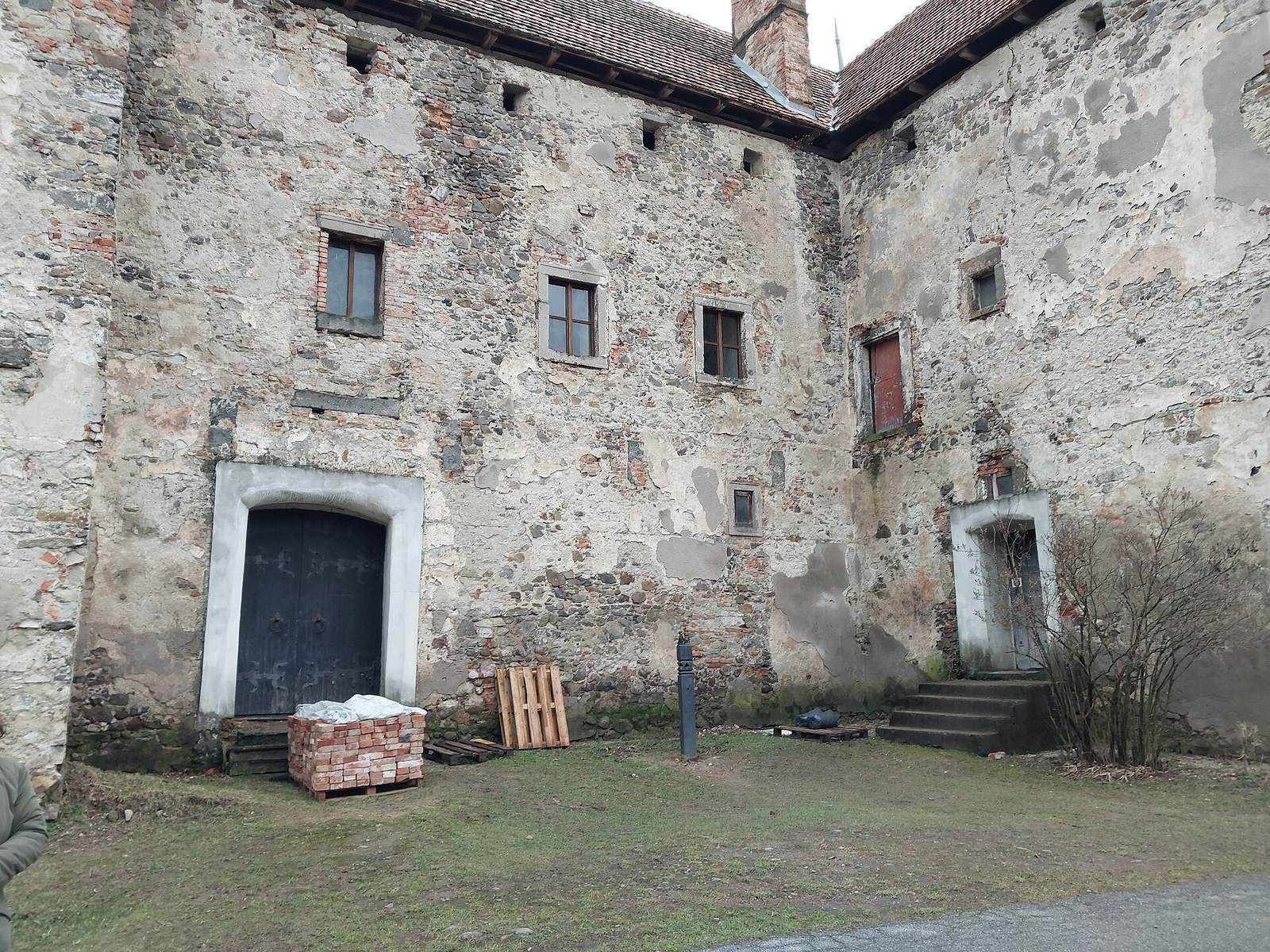
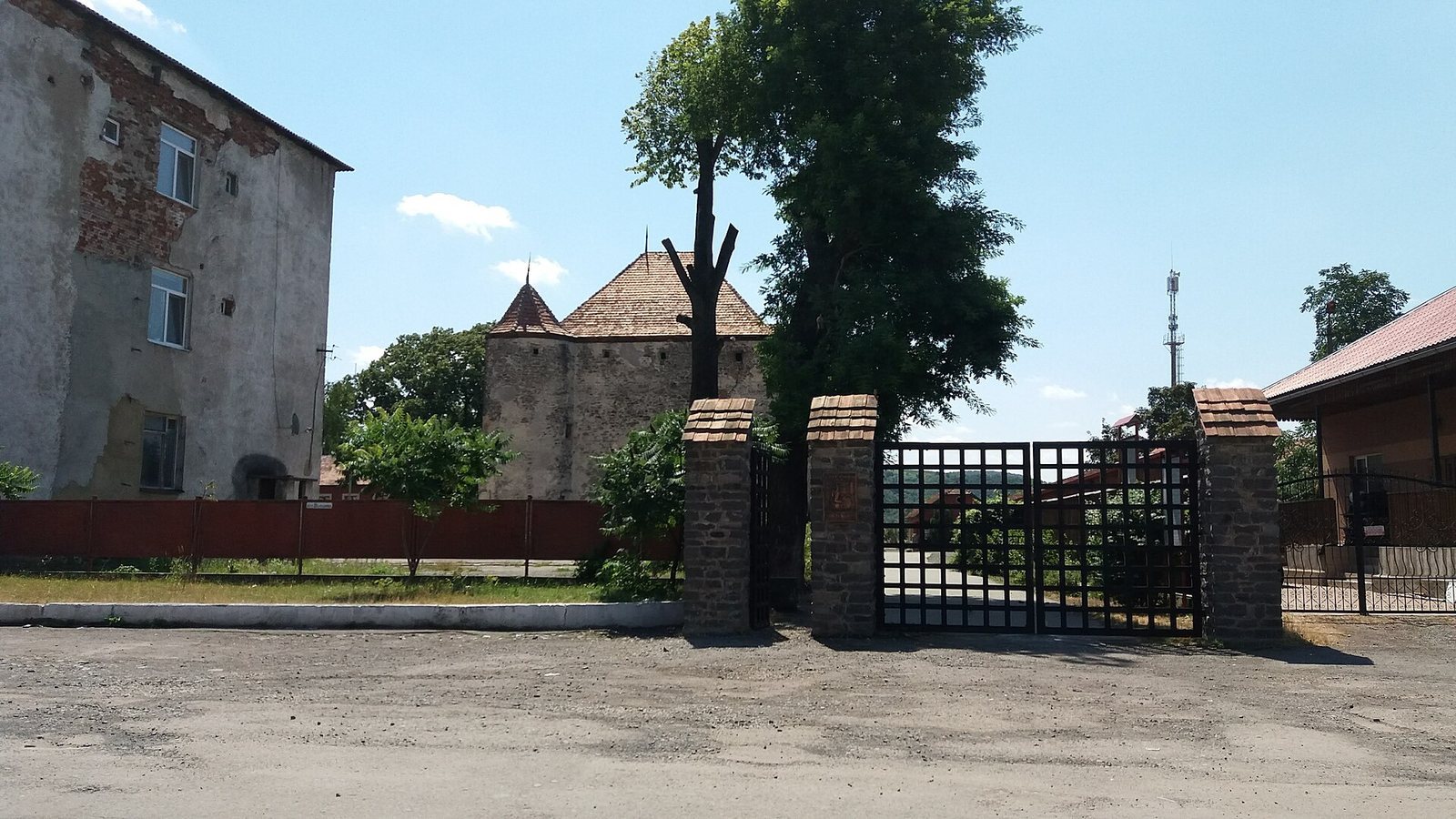
The castle stands where the Latorica River valley narrows and mountains close around the route. The Verecke Pass, also called the Russian Gates, is about 60 kilometres away; the route through it leads toward Galicia, a historical region in parts of present-day Ukraine and Poland. A road beside the castle runs parallel to the M06 highway. The stone building has two corner towers, and its walls are roughly a metre thick. Its main entrance is on the north side, with another entrance to the south.
Interior spaces
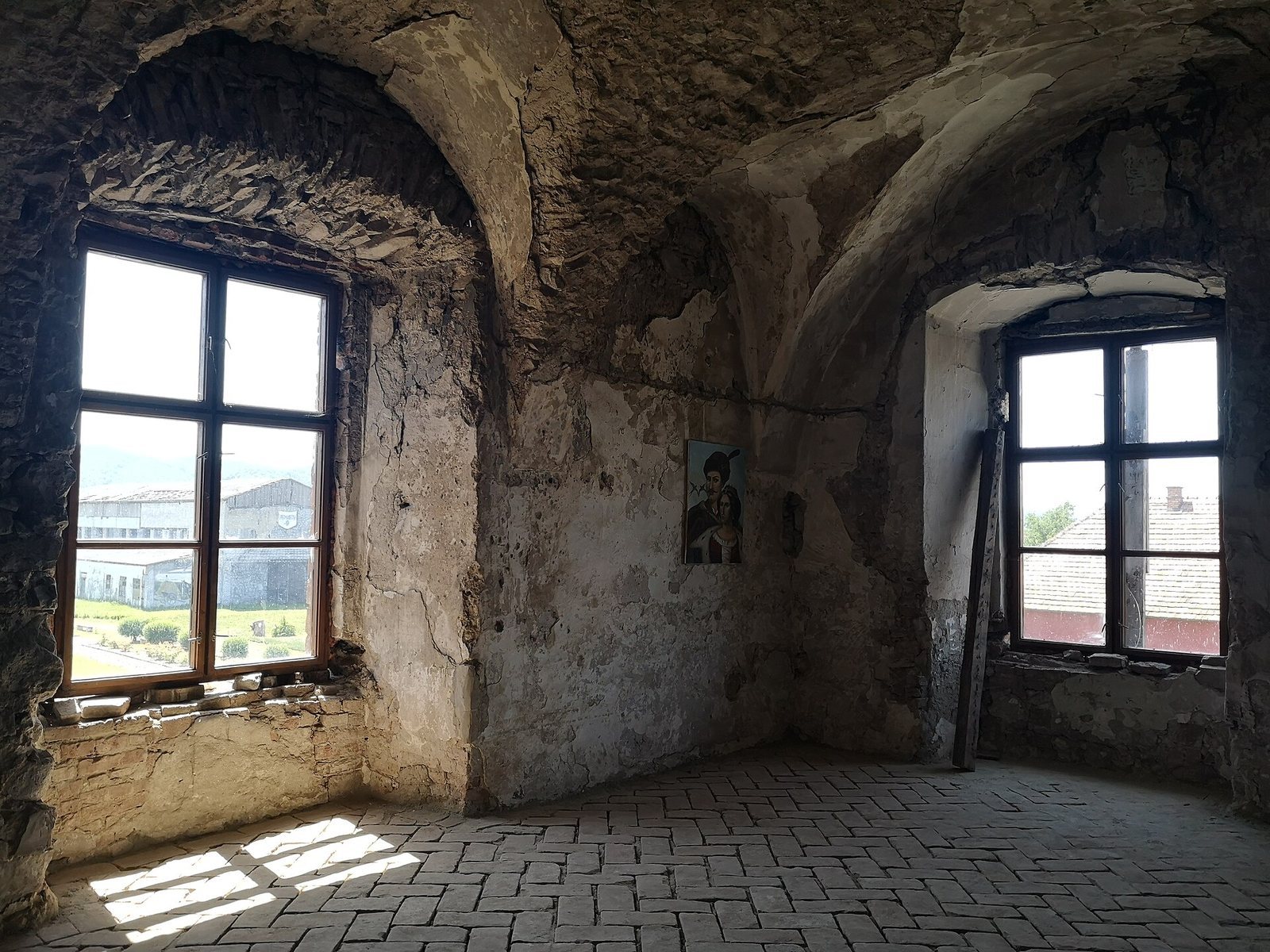
The restored first floor has six rooms and a hall with a large vestibule (entrance hall). Exhibitions there cover Celtic and Scythian cultures and include portraits of the castle’s owners. On the second floor are six small rooms, a large hall, and a long corridor. Double walls form several concealed passages. During restoration in 1839, a human skeleton was found sealed inside a wall. A local tradition held that a living person had been sealed into a fortress wall to strengthen its defenses.