Saint Nicholas Monastery: A Historic Monastic Center in Mukachevo, Ukraine


Site at a Glance
- Rating
- 4.8
- Popularity
- Low
- Country
- Ukraine
- Primary era
- Early Modern
- External website
- Open
- Eras represented
- Early Modern, Modern
- Civilizations
- Habsburg, Hungarian
- Site type
- Religious
- Remains
- Monastery
On this page13 sections
History
Saint Nicholas Monastery is an Eastern Orthodox women’s monastery in Mukachevo, Ukraine, on Chernecha Hora, or Monk’s Hill. Its foundation date is uncertain, with traditions placing it in the eleventh century or before the Mongol invasion of 1242, while documentary evidence begins in the fourteenth century.
Medieval foundation and episcopal center
Fedir Koriiatovych, a prince from Podolia who entered the service of the Hungarian king Charles I in 1339, received the Mukachevo domain and became the monastery’s patron. The Mukachevo Chronicle says that he established the monastery on Chernecha Hora, although the precise connection between his patronage and its foundation remains uncertain. A later Basilian tradition attributed his restoration of the monastery to the miraculous intervention of Saint Nicholas, the fourth-century Christian bishop of Myra who is venerated in Eastern Christianity and associated with charity and miraculous aid. In this account, the saint saved Fedir from a dragon and an angel led him to the future sanctuary.
On 8 March 1360, Fedir issued a charter granting the monastery the villages of Lavky and Bobovyshche, along with associated obligations, a tenth of the vineyards on the Ivan and Lemchovka hills, and certain dues from Oroszveg and Mukachevo Castle. Slavist A. L. Petrov regarded the charter as an old forgery. Luka is the first abbot named in historical documents.
In 1491 the monastery became the residence of the Orthodox bishops of Transcarpathia and the administrative center of the Mukachevo Eparchy. This Orthodox ecclesiastical jurisdiction was centered historically on Mukachevo and covered Transcarpathia. From the monastery, its bishops exercised regional authority. Monks translated liturgical books there, and a monastic school was established.
Destruction, reconstruction, and religious change
The monastery was destroyed in 1537 during the war between the Habsburgs and the princes of Transylvania. Much of its archive and documentation was lost. Reconstruction followed from 1538 to 1550 under Bishop Vasyl I, with assistance from Emperor Ferdinand I. Polish hetman Lubomirski destroyed the monastery again in 1657.
The Union of Uzhhorod, an agreement in 1646 through which part of the region’s Byzantine-rite clergy entered communion with the Roman Catholic Church while retaining the Byzantine rite, intensified the religious dispute surrounding the monastery. Although 63 priests took part in the meeting at Uzhhorod Castle, the Mukachevo Eparchy had about 600 clergy. The agreement sought to preserve the Byzantine rite and Orthodox traditions while the Reformation and other pressures encouraged changes in ecclesiastical practice.
During the controversy, Orthodox Bishop Ioanykii Zeikan repeatedly expelled supporters of the union from the monastery. In 1664, the Transylvanian princess Sophia Báthory expelled Zeikan permanently and transferred the monastery to the Greek Catholic Bishop Peter Parthenius. Zeikan then founded a new monastery at Imstychovo. From 1664 to 1946, Saint Nicholas Monastery was administered by the Order of Saint Basil the Great, or Basilians, a monastic order serving the Greek Catholic Church while retaining the Byzantine liturgical tradition.
Basilian administration and cultural life
In 1733 the monastery became the seat of the provincial proto-hegumen of the Saint Nicholas Province. Gedeon Pazin was the first holder of that office. Although the bishops’ residence moved away from Chernecha Hora in the eighteenth century, the monastery remained the Basilians’ administrative center in the region.
The monastery maintained a school and a library, copied chronicles as well as liturgical and instructional books, and sustained contacts with Orthodox churches in Eastern Europe and the Balkans. Its school educated regional religious teachers and scholars, including Joanikii Bazylovych, Anatol Kralytsky, and Arsenii Kotsak. Its library contained more than 6,000 rare books and manuscripts, accompanied by an archive.
Basilian monks from Galicia reorganized the monastery in the 1920s, making it a center for renewed Basilian monastic life in Transcarpathia. Its novitiate educated Pavlo Petro Gojdich, Josyf Roman Martenetz, Miklos Dudas, Pavlo Myskiv, Sebastian Sabol, and Josyf Zavadiak. On 14 March 1939, a platoon of the Czechoslovak State Defence Guard resisted the Hungarian army at the monastery during the occupation of Subcarpathian Rus.
Transfer to an Orthodox convent
After the Soviet occupation of Transcarpathia, the Ruthenian Greek Catholic Church was liquidated in 1946. The Basilian monks refused to convert, and the monastery passed to the Russian Orthodox Church, Moscow Patriarchate, in 1946–1947. It was converted into a women’s convent, while the monks were expelled or transferred to Imstychovo.
On 24 March 1947 the Basilian monastery was formally dissolved, and all 33 Basilian monks were transferred to Imstychovo. The monastery’s library and archive were dispersed among the state university library in Uzhhorod, the Zakarpattia regional archive, and local museums and archives. Sisters from the monastery at Lypcha moved to Mukachevo, particularly after that monastery closed in 1961. The first abbess was Paraskieva, who died in 1967 and later became known in the schema as Nina. Archimandrite Vasyl Pronin served as the monastery’s spiritual father for nearly fifty years.
In the 2000s, the convent housed approximately 80 nuns and was administered by Abbess Epistimiya Sherban. Feodor Mamasuyev served as spiritual father from 1997 and became Bishop of Mukachevo and Uzhhorod in 2007. Ilaria Sychka was elected abbess on 3 April 2019. The Saint Nicholas Church and monastic cells are protected as a monument of architecture of national significance under designation no. 171.
Remains
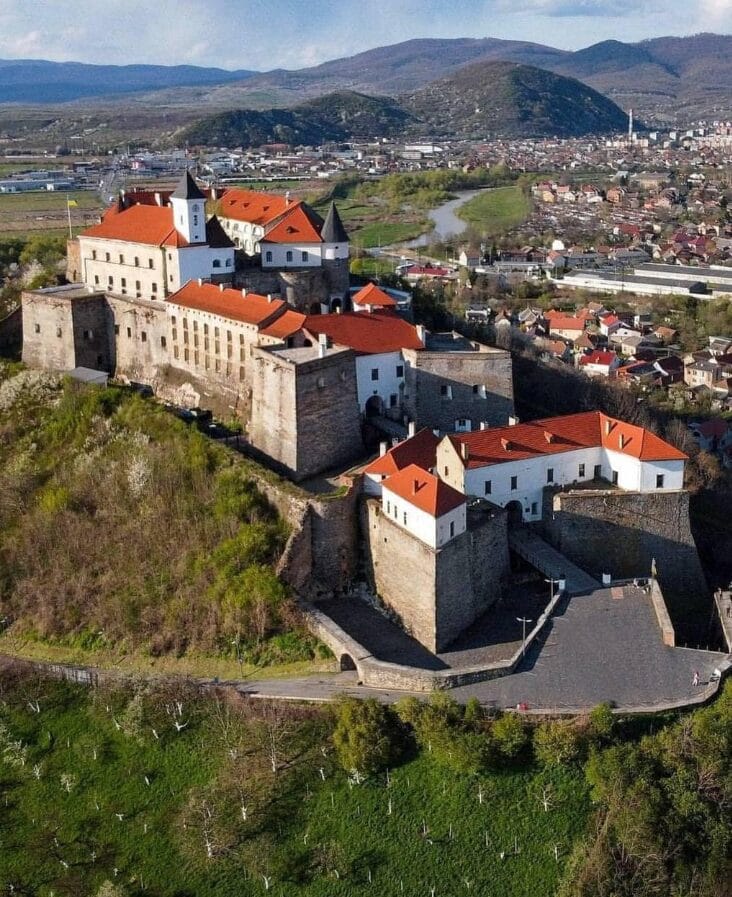
The monastery occupies the slope of Chernecha Hora in Mukachevo. Its early setting was described as being near the bank of the Latorica River. The complex developed from a wooden church and a small monastic building into a stone ensemble, with the present church and cells forming its principal surviving architectural elements.
Monastic buildings and churches
Early wooden complex
The earliest complex associated with Fedir Koriiatovych consisted of a wooden church and a small building for monks. This early arrangement established the monastery on Chernecha Hora before later stone construction transformed its physical form.
Stone rotunda
The first stone church was built in 1661 under Bishop Ioanykii Zeikan. It was a stone rotunda designed by S. Piamens and financed by the Moldavian voivode Constantine Basarab.
Present monastery and Saint Nicholas Church
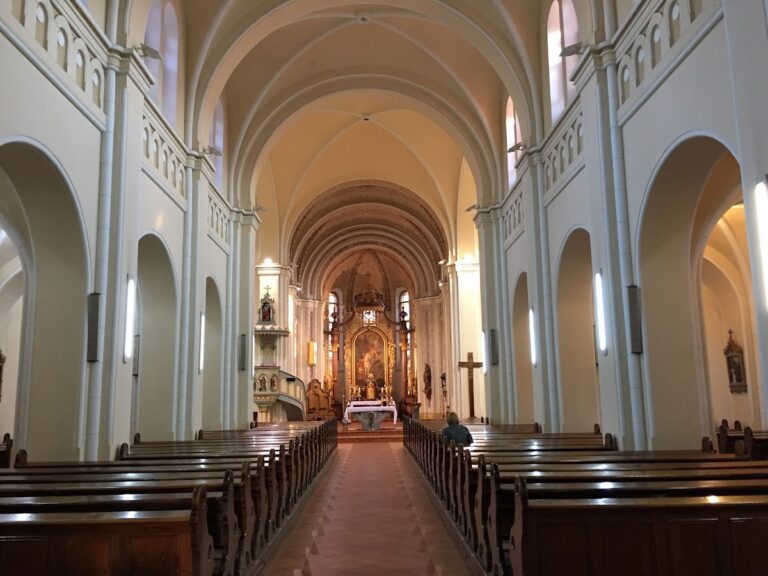
The present stone monastery complex was constructed from 1766 to 1772 under the architect Demeter Rats. The monumental Saint Nicholas Church followed in 1798–1804 and was built in the Classicist style. A major fire damaged much of the monastery in 1862, and reconstruction together with the removal of the fire damage was completed by 1865.
Icons and relics
Marian icons
The monastery preserves Marian icons, including the Quick to Hear icon and the Iveron icon brought from Mount Athos. In 1926, Pope Pius XI gave the Basilian monastery an old and venerated icon of the Virgin Mary dated to 1453, supporting the renewal of Marian devotion. A copy commissioned in 1936 replaced the original in 1947, while the original was placed in the care of Brother Julian Myhovych’s family.
Reliquary of Saint Moses the Hungarian
A reliquary, a container made to preserve and honor a saint’s relics, holds part of the relics of Saint Moses the Hungarian. The monastery also preserves numerous particles of relics associated with other saints. Marian festivals formerly included large indulgence observances, among them a particularly large celebration of the Dormition.
Nearby sites