Kievan Rus Sites
Medieval Rus survives in brick-and-stone churches, the excavated streets of timber towns and large burial mounds. The places in this collection follow its principalities across present-day Ukraine, Belarus and Russia, from Kyiv and Chernihiv to Polotsk and Novgorod. Most of the examples below belong to the centuries before the Mongol conquests of the thirteenth century; later rebuilding has also shaped several of the standing churches.
Primary Function: All
Type: All
Country: All
Popularity: All
Rating: All
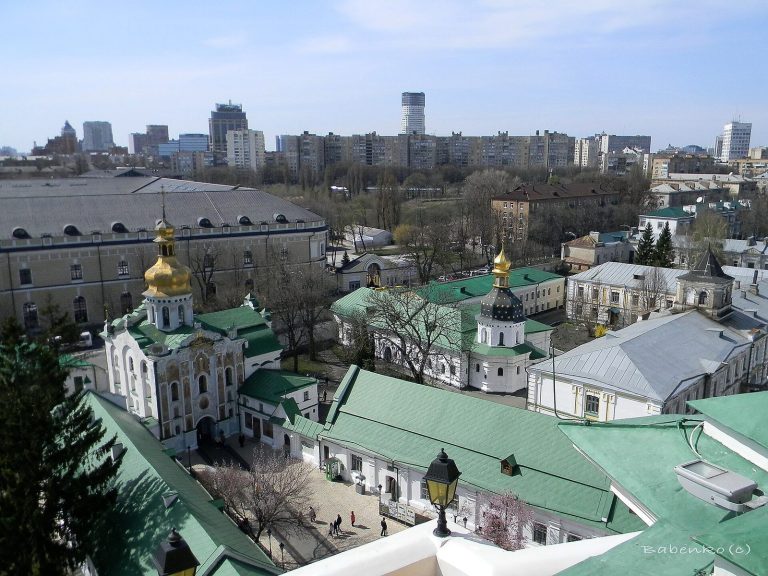
Built above the principal entrance to Kyiv Pechersk Lavra in 1106–1108, the Gate Church of the Trinity combines medieval Kievan Rus masonry with an…
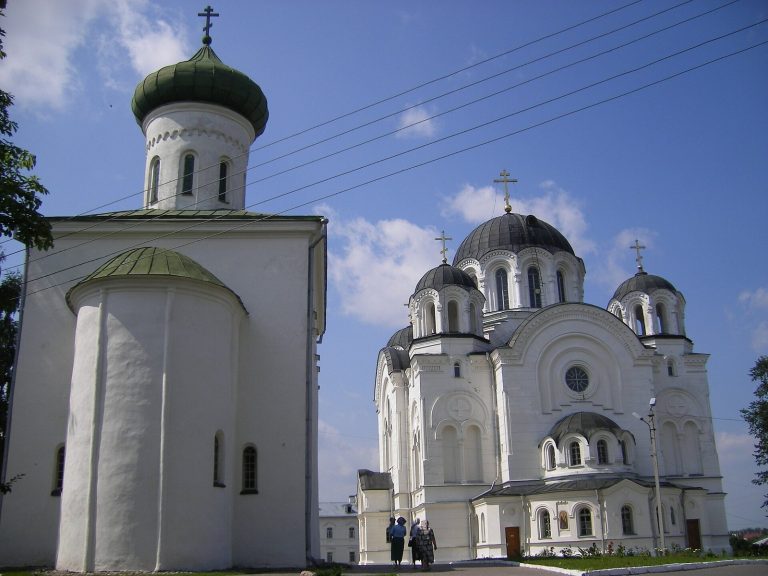
Transfiguration Church in Polack, founded by Euphrosyne of Polotsk in the mid-12th century, is a major surviving monument of ancient Polotsk…
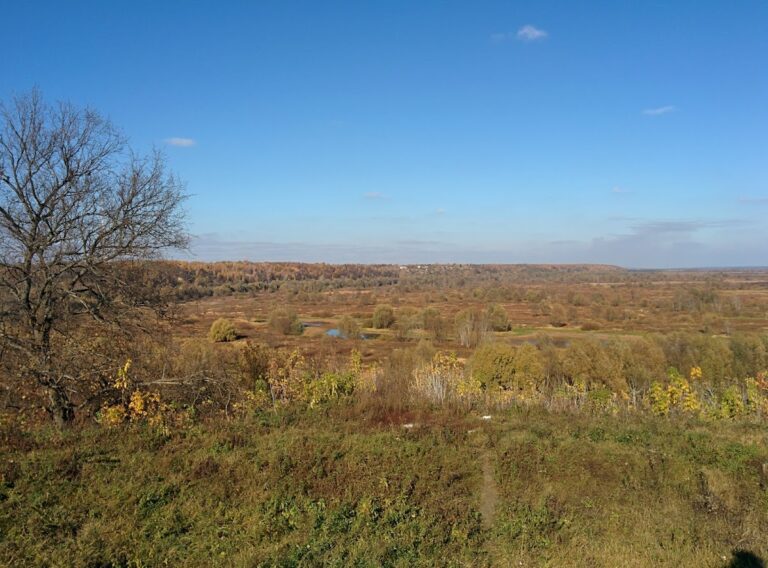
Novhorod-Siverskyi Fortress developed from a late tenth-century Kyivan Rus citadel into a major frontier stronghold above the Desna River. Its…
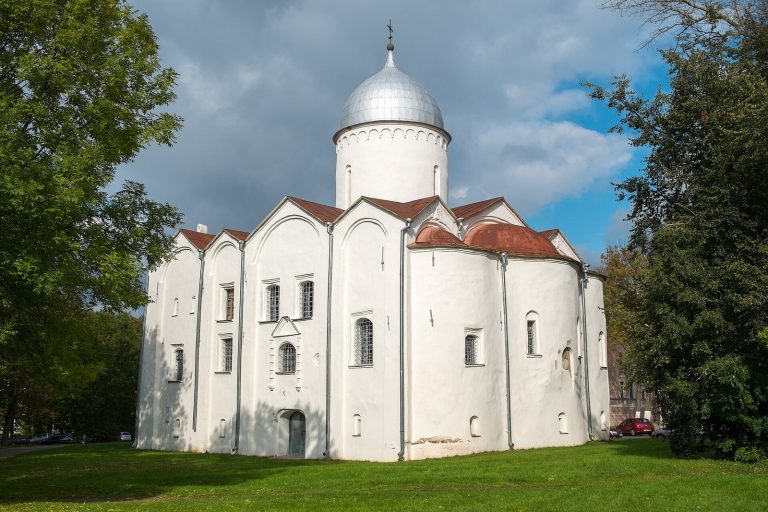
Saint John the Baptist Church at Opoki in Veliky Novgorod was founded in 1127 and became the institutional centre of the Ivanov Hundred, a powerful…
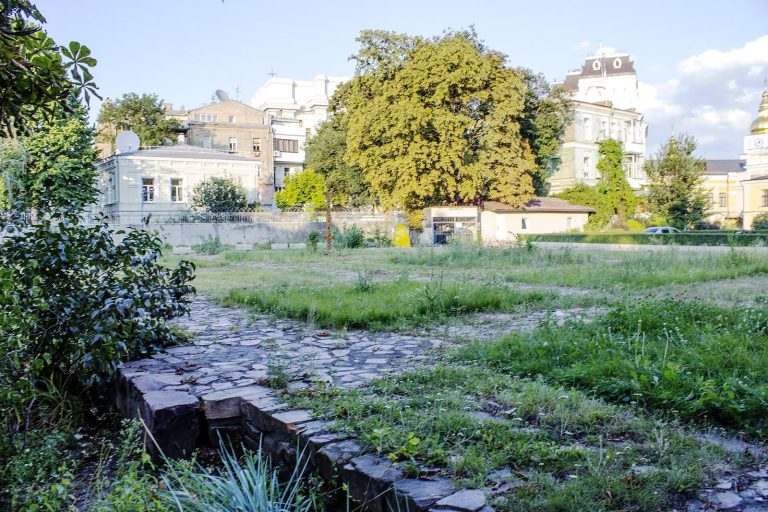
The remains of Fedorivsky Monastery preserve the site of a church founded in 1129 by Grand Prince Mstislav I Volodymyrovich, along with evidence of…
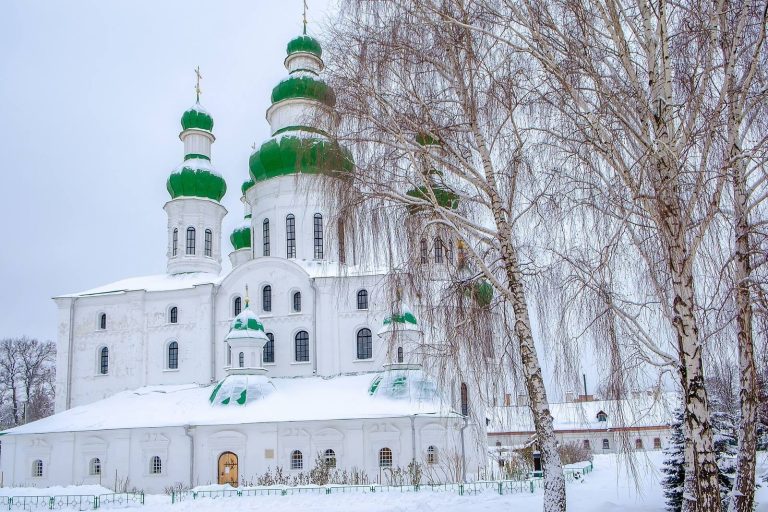
Dormition Cathedral in Chernihiv is a twelfth-century Old Rus church shaped by Mongol destruction, early modern rebuilding, Ukrainian Baroque…
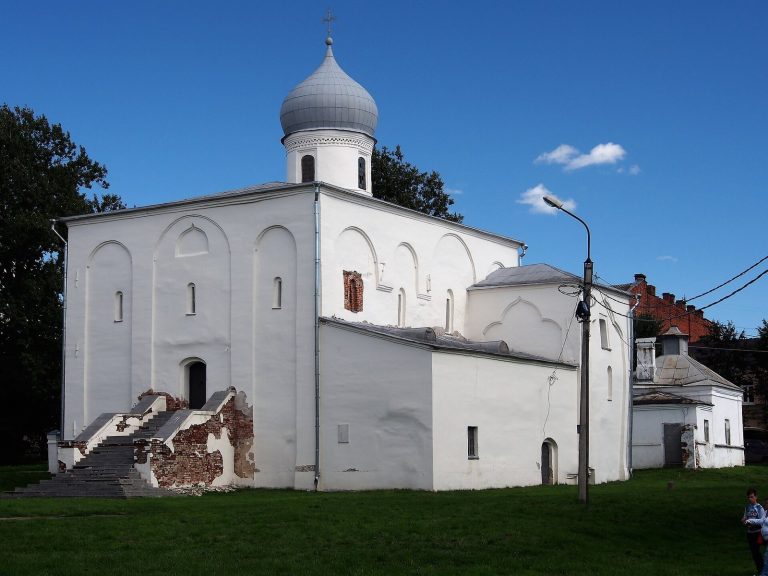
Founded in 1135 by Prince Vsevolod and Archbishop Nifont, the Church of the Assumption preserves the plan of a major medieval Novgorodian church…
For details on how to use the maps, which sites are included, how popularity and ratings are determined, and how sites are classified, see the help page.
On this page5 sections
Masonry churches
At Transfiguration Cathedral in Chernihiv, northern Ukraine, Prince Mstislav began a major church around 1030 within the princely centre. It also served as a burial church for the ruling dynasty. Its interior is divided into three long spaces ending in rounded eastern sanctuaries, while marble columns support arcades beneath the upper galleries. Fragments of medieval wall painting and carved slate decoration survive within a building whose towers and entrances were changed in later centuries.
In Saint Nicholas Cathedral at Novgorod, northwestern Russia, six substantial masonry supports carry the vaults and divide the interior into three aisles. Founded in 1113 on the trading side of the Volkhov River, the church belonged to an area of markets and princely activity across the water from the fortified centre. Small portions of its early wall paintings survive, including a Last Judgment scene.
Monasteries and wall paintings
The Transfiguration Church in Polotsk, Belarus, was commissioned by Euphrosyne of Polotsk in the middle of the twelfth century for her convent. Its tall central volume rises above narrower side spaces, concentrating attention on a single dome. The interior retains an extensive scheme of medieval frescoes, paintings applied to wall plaster. Biblical scenes and saints occupy the walls and vaults, while graffiti record later writing on the painted surfaces.
Kyiv’s Gate Church of the Trinity occupies an unusual position above the main entrance of the Pechersk monastery. Built in 1106-1108, it joined a small place of worship to a controlled entrance through the monastery’s defences. Four piers support its upper church, and pre-Mongol masonry remains visible on the southern facade. The elaborate exterior and much of the interior decoration belong to its later Ukrainian Baroque transformation, including work after a fire in 1718.
Timber towns
At Brest Detinets in Belarus, excavated wood preserves another side of medieval building. A detinets was a town’s fortified central area; this one belonged to Berestye, the predecessor of Brest. Waterlogged deposits protected rows of log-built homes and streets paved with split timber boards. Buildings contained wooden floors and clay ovens, with workshops and household objects among the finds.
The streets organised a closely packed settlement, with houses and working spaces arranged beside them. Some excavated walls survived for several courses of logs, and a few retained complete door openings. Marks cut into some frames indicate that builders assembled them elsewhere before moving them to their final positions. The conserved remains form the basis of the Berestye archaeological museum.
River settlements
Rurikovo Gorodishche, near Novgorod, occupied a position beside the river where the Volkhov flows out of Lake Ilmen. It developed as an early medieval centre of trade and princely rule. Excavations exposed ninth-century defences in which an earthen rampart was reinforced with an oak-log framework, together with the ditch that protected the enclosure.
Coins from the Islamic world, Byzantium and western Europe reached the settlement. Scales and weights accompanied finds from craft production, including casting tools and a mould for belt fittings.
Burial mounds
The Black Grave at Chernihiv is an earthen burial mound dating to around the turn of the tenth and eleventh centuries. It covered a large cremation pyre, with weapons, vessels and richly decorated drinking horns among the excavated objects. Silver mounts on the horns carry plant ornament and scenes with people and fantastic animals.
Some of the richest objects were deposited above the original pyre during a funeral feast, before the mound was completed. Excavators found armour, Byzantine coins and a cauldron containing animal bones in this higher deposit. The excavated furnishings are held in the State Historical Museum in Moscow.
Use the map markers or grid entries to open the individual site articles. Country and building-type choices help separate standing churches from fortified settlements and burial places; each article explains the relevant medieval remains and later alterations.