Byzantine Sites in North Macedonia: Explore Domed Churches and Painted Interiors
Byzantine sites in North Macedonia include churches with five-dome rooflines, extensive wall paintings and decorated stone-and-brick façades. Around Skopje and Lake Ohrid, surviving interiors preserve scenes of worship, royal donors, saints and episodes from the lives of Christ and the Virgin. Larger basilicas stand alongside compact churches whose domes rise above only a few supporting columns.
The collection covers foundations made under Byzantine rule as well as later buildings that continued Byzantine architectural and painting traditions under other patrons. Nerezi’s twelfth-century church, Ohrid’s medieval cathedral and the rebuilt Church of Saint George at Staro Nagoričane offer different combinations of structure and decoration.
Primary Function: All
Type: All
Popularity: All
Rating: All
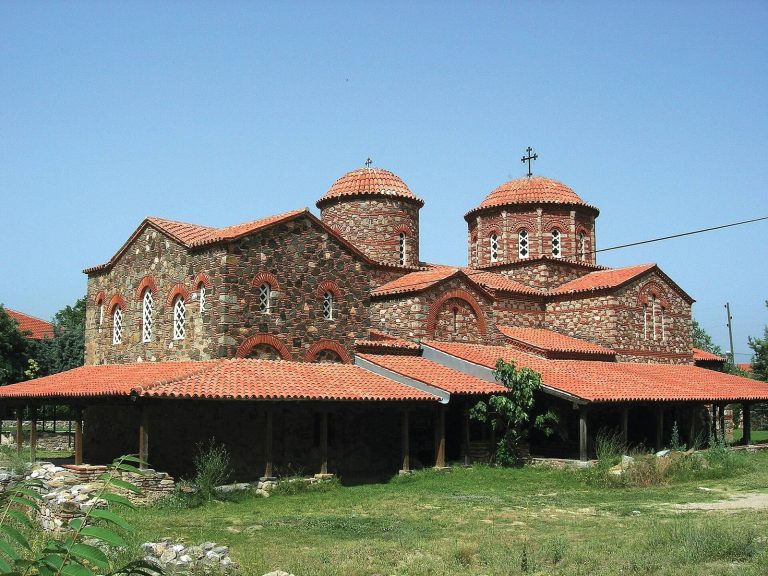
Saint Leonty in Vodocha developed from an Early Christian basilica into a medieval monastery church, preserving evidence of several construction…
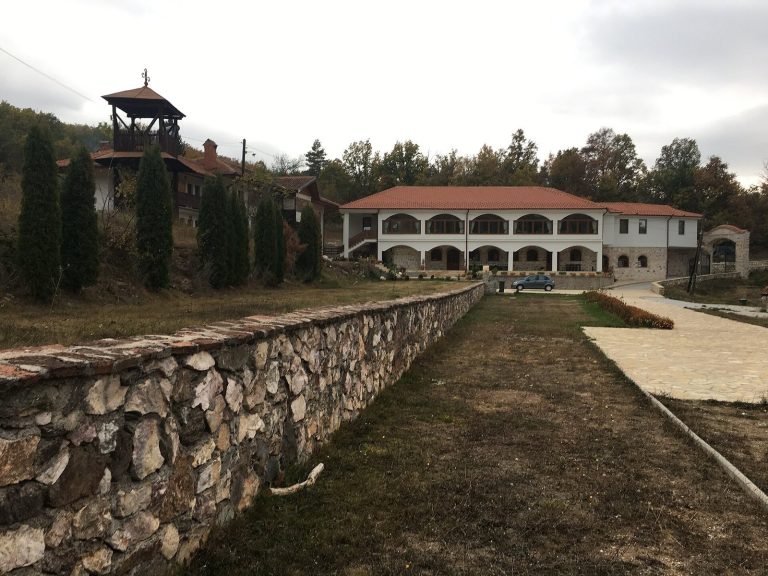
The Monastery of St. George near Knezino preserves evidence of early Christian, Byzantine, and later Orthodox activity, alongside a long-used…
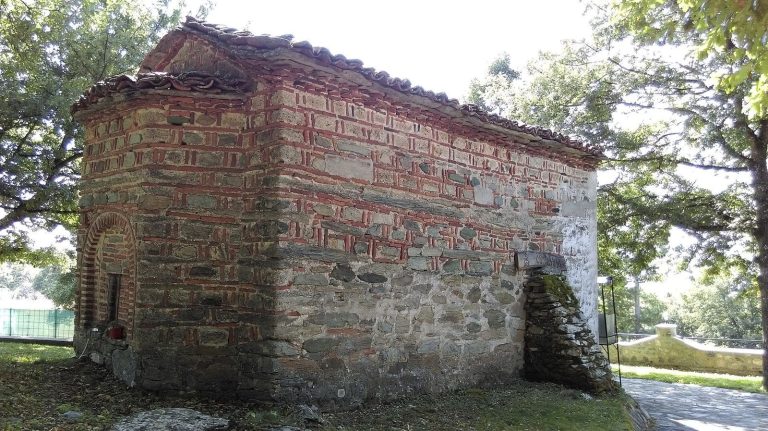
Saint Elijah Monastery near Grnčari is a medieval Orthodox monastic complex whose small church preserves thirteenth-century architecture, wall…
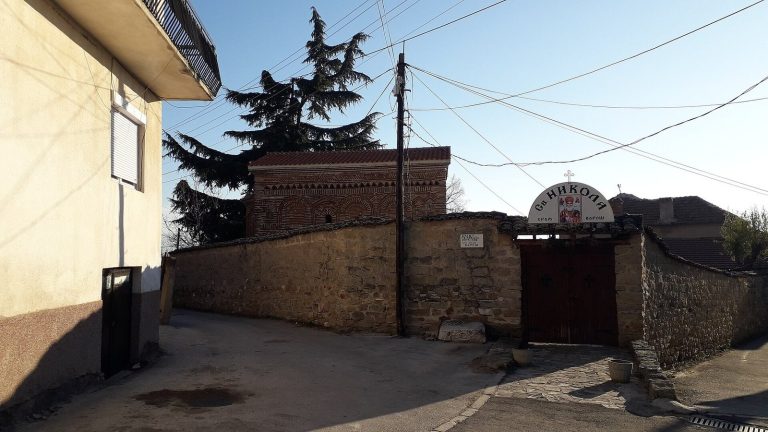
St. Nicholas Church (Varoš) is a medieval Orthodox church in Prilep, North Macedonia, completed in 1298. Its preserved frescoes, historic icons,…
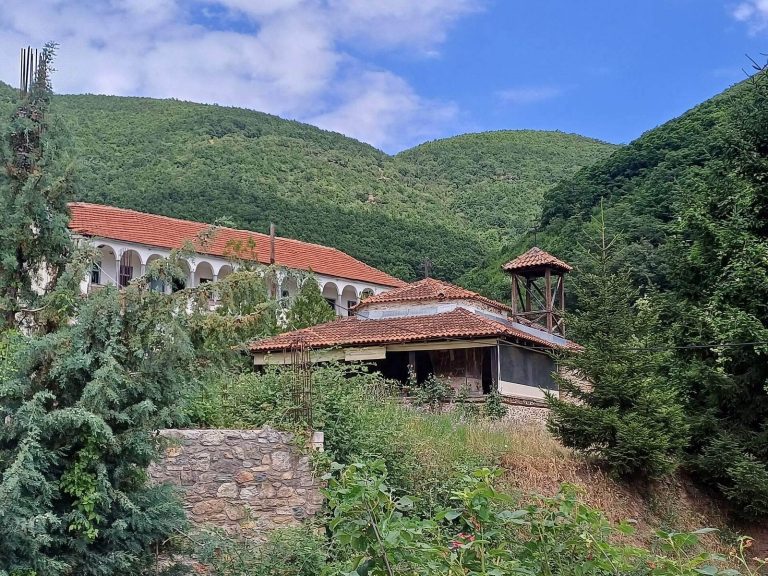
Žurče Monastery near Žurče preserves a medieval Orthodox tradition, a church painted in 1617, distinctive frescoes and porch architecture, and a…
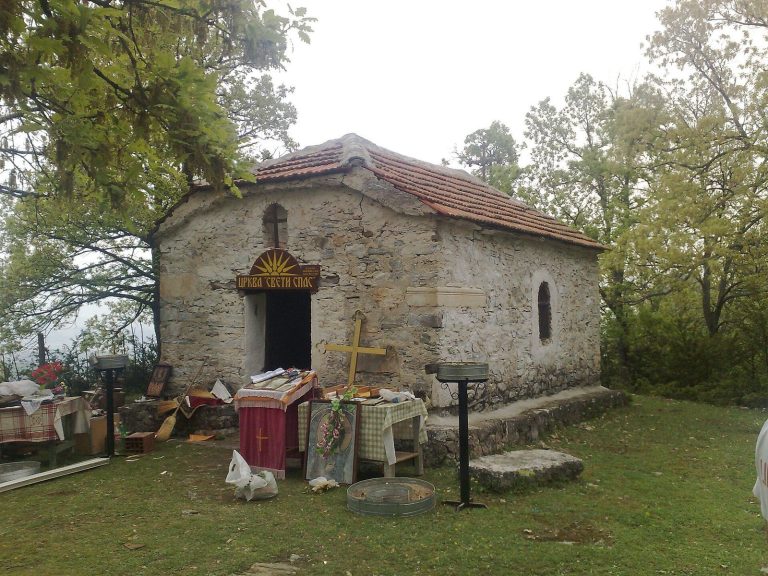
The Church of the Ascension of Jesus at Matka is a late fourteenth-century Orthodox church built over an older religious structure, surrounded by…
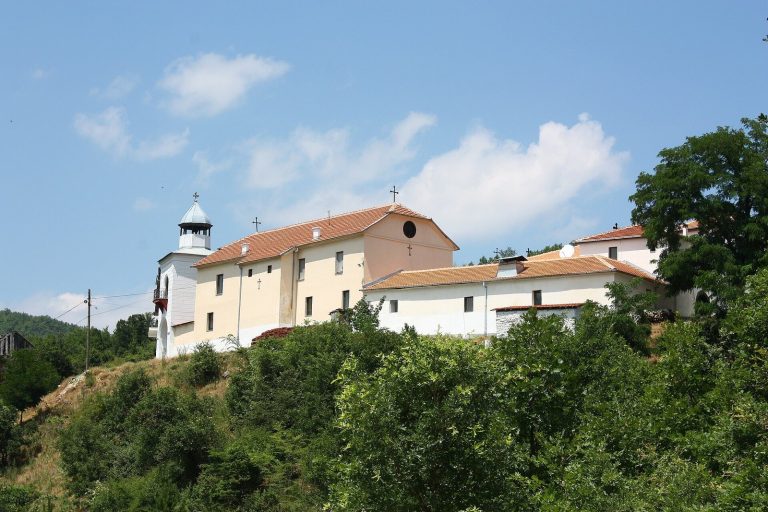
Poreče Monastery in North Macedonia developed from a medieval religious foundation into a regional center of worship, manuscript production,…
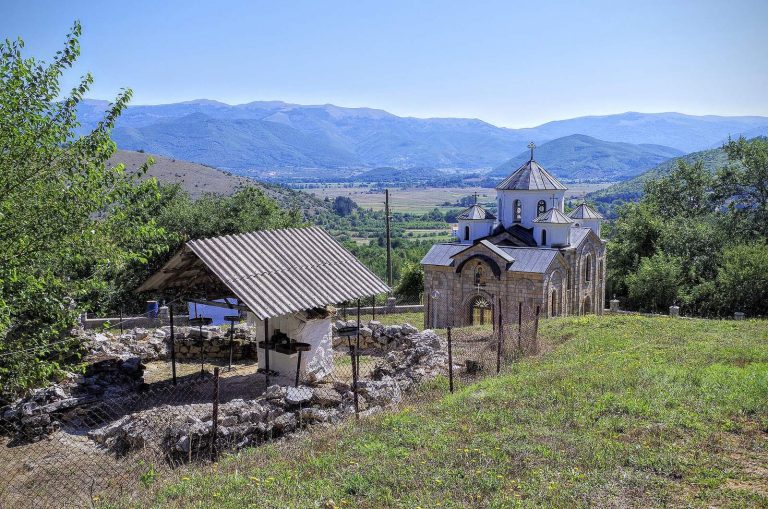
Zlesti Monastery is a modern Orthodox monastery in North Macedonia, built beside the Sveta Bogorodica Prechista archaeological site and its remains…
For details on how to use the maps, which sites are included, how popularity and ratings are determined, and how sites are classified, see the help page.
On this page6 sections
Saint Panteleimon at Nerezi: five domes and twelfth-century frescoes
The Church of Saint Panteleimon at Gorno Nerezi was founded in 1164 by Alexios Angelos Komnenos, a member of the Byzantine imperial family. A central dome rises above the cross-shaped worship space, with four smaller domes over corner rooms. The western corner chapels have their own entrances from the narthex, separating them from the main interior.
Much of the twelfth-century painting survives on the lower and middle walls. The Lamentation depicts grief through close groupings, bent bodies and expressive faces. Elsewhere, warrior saints wear armour, bishops carry liturgical scrolls and hymnographers hold texts connected with church services. Carved stone fragments of the sanctuary screen and elaborate stucco frames survive alongside the paintings.
The central dome and adjoining vaults were rebuilt after the earthquake of 1555. Their later paintings should be distinguished from the original frescoes below.
Saint Sophia in Ohrid: a basilica with upper galleries
Saint Sophia in Ohrid preserves a broad three-aisled interior and a major eleventh-century fresco cycle. Bishops, patriarchs and church teachers occupy the sanctuary paintings, linking the decoration to the cathedral’s role as an episcopal church. Further painted campaigns added to the interior over subsequent centuries.
At the western end, the outer narthex extends across the façade as an open ground-floor portico with an upper gallery. Small domed chapels occupy its ends. This two-level frontage introduces spaces different from the main basilica behind it, with stairs linking the galleries and entrance areas.
Conversion into a mosque altered the vaults and removed the earlier domed arrangement. The frescoes were covered, then exposed and conserved during twentieth-century work. The surviving church therefore retains several medieval building and painting phases within a structure also changed during Ottoman use.
The Virgin Perivleptos: brick patterns and signed paintings
The Church of the Virgin Perivleptos in Ohrid was founded in 1295 by the Byzantine official Progon Sgur and his wife Eudokia. Four freestanding columns carry the central dome. Outside, brick and stone form meanders, checkerboard patterns and herringbone ornament around the walls and openings.
The painters Michael Astrapas and Eutychios left signatures within the fresco decoration. Their work here belongs to the late Byzantine revival of elaborate narrative painting. Fourteenth-century chapels and an added porch expanded both the building and its painted surfaces. The freestanding bell tower is a twentieth-century addition.
Saint George at Staro Nagoričane: a royal rebuilding
At Saint George in Staro Nagoričane, the lower dressed-stone walls belong to an earlier church. Above them, alternating brick and stone mark the rebuilding commissioned by the Serbian king Milutin in 1312–1313. A large central dome and four smaller corner domes complete the roofline.
Michael Astrapas and Eutychios painted the interior in 1317–1318. Rows of scenes extend towards the vaults, including Saint George’s martyrdom, Christ’s miracles and the Passion. In the narthex, an illustrated calendar follows saints’ commemorations through the year. A donor portrait shows Milutin presenting a model of the church to Saint George. These paintings continue Byzantine artistic traditions within a Serbian royal foundation; the earlier church’s attribution to Emperor Romanos IV remains a tradition.
Saint John at Kaneo: a church above Lake Ohrid
Saint John at Kaneo stands on a cliff above the lake. Its compact cross-domed plan has three eastern apses and an octagonal drum with an unusual gabled finish. Stone forms the lower walls, while bands of brick and tuff and decorative brickwork articulate the upper parts.
The precise construction date is uncertain, generally placed in the late thirteenth or early fourteenth century. Surviving fresco fragments include Christ in the dome, prophets between its windows and the Communion of the Apostles near the altar. Nineteenth-century restoration introduced a wooden iconostasis and new painting, alongside the older work recovered during later conservation.
Explore the collection
Explore sites on the map or in the grid. Map icons reflect each site’s primary function, helping you identify different kinds of places at a glance. Narrow the results by primary function, site type or era, with additional filters for popularity and rating. Select a map marker to view the site’s details and open its article, or open the article from its grid entry.