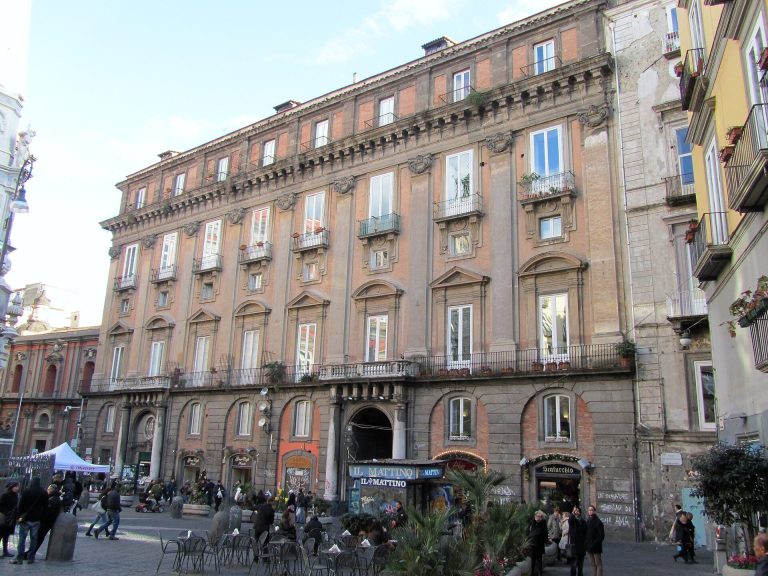
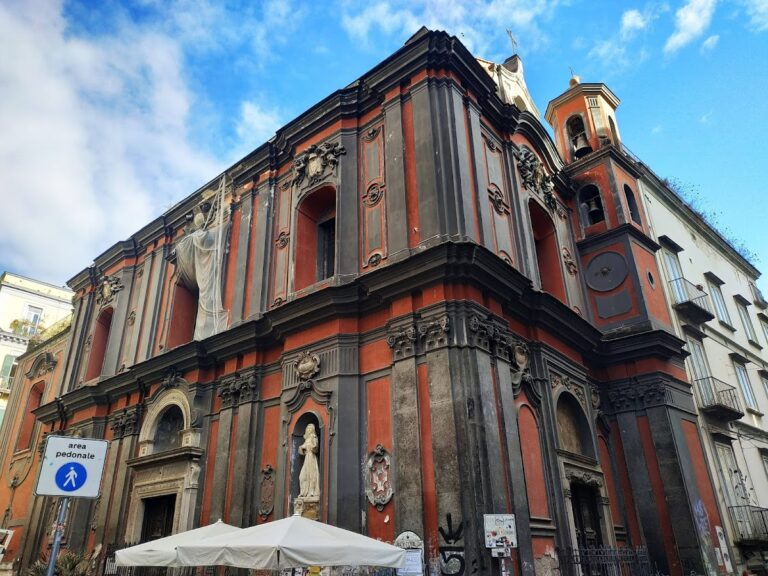
San Giovanni Maggiore: A Historic Roman Catholic Basilica in Naples


Site at a Glance
- Rating
- 4.6
- Popularity
- Low
- Country
- Italy
- Primary era
- Early Modern
- External website
- Open
- Eras represented
- Medieval, Early Modern, Modern
- Civilizations
- Byzantine, Italian, Kingdom of Naples, Norman, Spanish
- Site type
- Religious
- Remains
- Basilica
On this page26 sections
History
San Giovanni Maggiore is a Roman Catholic basilica in Naples, Italy, dedicated to John the Baptist. Traditionally founded around AD 324 after Constantine I legalized Christian worship in the Roman Empire, it was built over an earlier pagan temple, perhaps dedicated to Hercules or Antinous. A Greek inscription found on an architrave has been associated with this proposed foundation date. The church belongs to the Archdiocese of Naples and is recognized as a minor basilica.
A foundation legend connects the church with Constantine I and his daughter Costanza. According to the tradition, the emperor established it in thanksgiving after Costanza survived a shipwreck. The sixth century brought a major rebuilding under Bishop Vincent, who held office from 554 to 581. During his tenure, San Giovanni Maggiore became one of Naples’s four major churches, alongside San Giorgio Maggiore, the Church of the Holy Apostles, and Santa Maria Maggiore alla Pietrasanta.
Early Christian and medieval phases
The basilica probably acquired a Byzantine form during the period associated with Belisarius, the Byzantine general who led imperial campaigns under Emperor Justinian I. In this setting, Byzantine refers to the eastern Roman political and artistic tradition. Later changes took place under Norman and Angevin rule. During the Angevin period, the side aisles were enlarged and the transept, the crosswise arm of the church, was completely rebuilt.
The church continued to develop through repeated rebuilding. An ancient Neapolitan church calendar, written in 887, was found in two panels during the Baroque works. The panels are now preserved by the Archdiocese of Naples. Two commemorative slabs dated to 999–1003 are associated with the foundation and consecration of the basilica. An old tradition identifies the upper slab as the burial place of the siren Partenope, the legendary figure associated with Naples, although this interpretation does not rest on firm evidence.
Baroque transformation
The earthquake of 1635 led to a major transformation begun by Dionisio Lazzari in 1656. Completed in 1685, the intervention substantially altered the earlier church and included the design of the dome and the half-dome above the high altar. The two large chapels in the transept were completed in 1689. Lazzari’s unusual arrangement aligned the crossing dome with a second half-dome over the high altar, giving the interior a distinctive Baroque sequence of domed spaces.
Further earthquakes in 1732 and 1805 required additional restructuring. The high altar was made by Domenico Antonio Vaccaro in 1743. The church also continued to receive furnishings and works of art during the eighteenth century, including chapel altars, paintings, sculptures, and funerary monuments.
Earthquake damage and modern restoration
The earthquake of 1870 severely damaged San Giovanni Maggiore. The right aisle was nearly destroyed and the vault collapsed. A proposal to demolish the church and create a public square was resisted by Canon Giuseppe Perrella, whose efforts secured its preservation and reconstruction. A commemorative plaque to Perrella was later installed along the right aisle.
The late-nineteenth-century rebuilding was directed by engineer Giorgio Tomlison, with corrections or assistance from Errico Alvino and Federico Travaglini. Completed in 1888, the work gave the church a Neoclassical restoration. Another vault collapse in 1970 destroyed the nineteenth-century decorative scheme and caused the basilica to close for forty-two years. Restoration and archaeological investigations included urgent consolidation work and led to the discovery of the early Christian apse in 1978.
During the long closure, several works were stolen, including Domenico Antonio Vaccaro’s marble double balustrade and a medieval Romanesque wooden crucifix formerly associated with the Confraternity of the LXVI Priests. Other paintings were moved to secure conservation deposits or to museums, including the Diocesan Museum of Naples. The basilica reopened for worship in January 2012 after restoration and archaeological investigations, with assistance from the Order of Engineers of the Province of Naples. In 2020 it was returned to the parish community. San Giovanni Maggiore forms part of the Historic Centre of Naples, which is included on the UNESCO World Heritage List, and is also recognized within Italy’s cultural-heritage system.
Remains
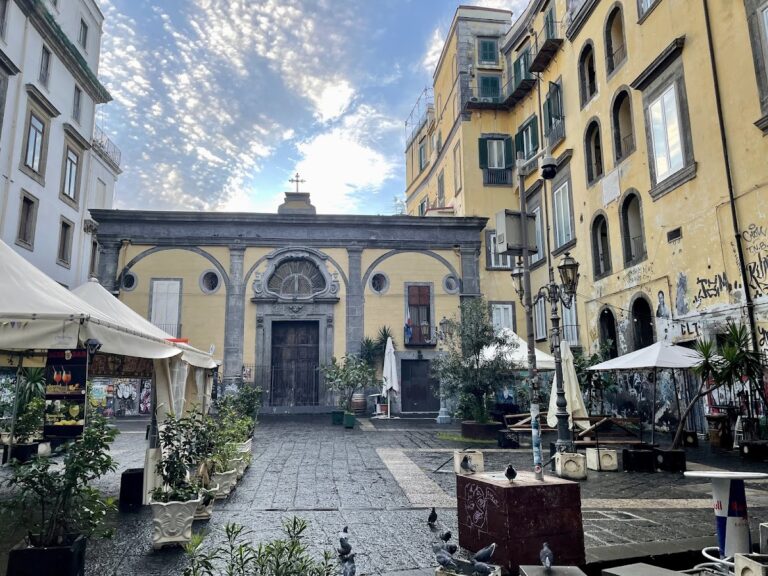
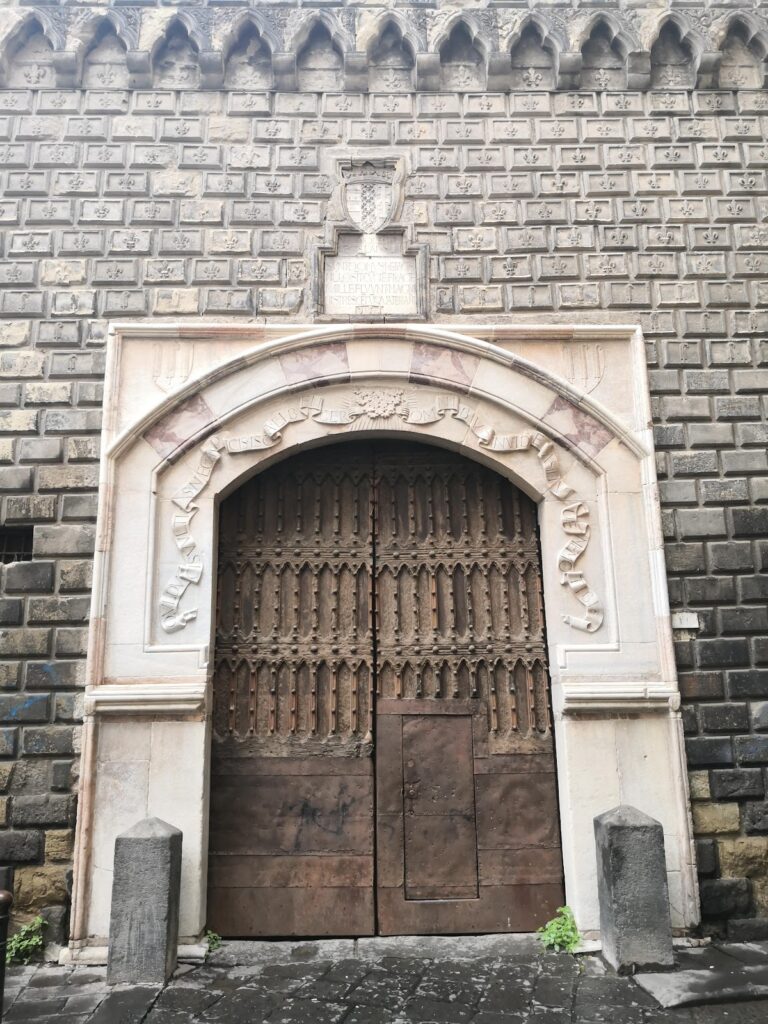
San Giovanni Maggiore has a Latin-cross plan, with a central nave, two lower side aisles, a transept, and nine side chapels. Five chapels line the left aisle and four line the right. Two domed elements are aligned over the crossing and the apse. The principal entrance rises above the San Giovanni steps behind Via Mezzocannone, while a secondary entrance, known as the small door, opens onto Largo San Giovanni between the Pappacoda Chapel and Palazzo Giusso.
Main church and early Christian fabric
Entrance and nave
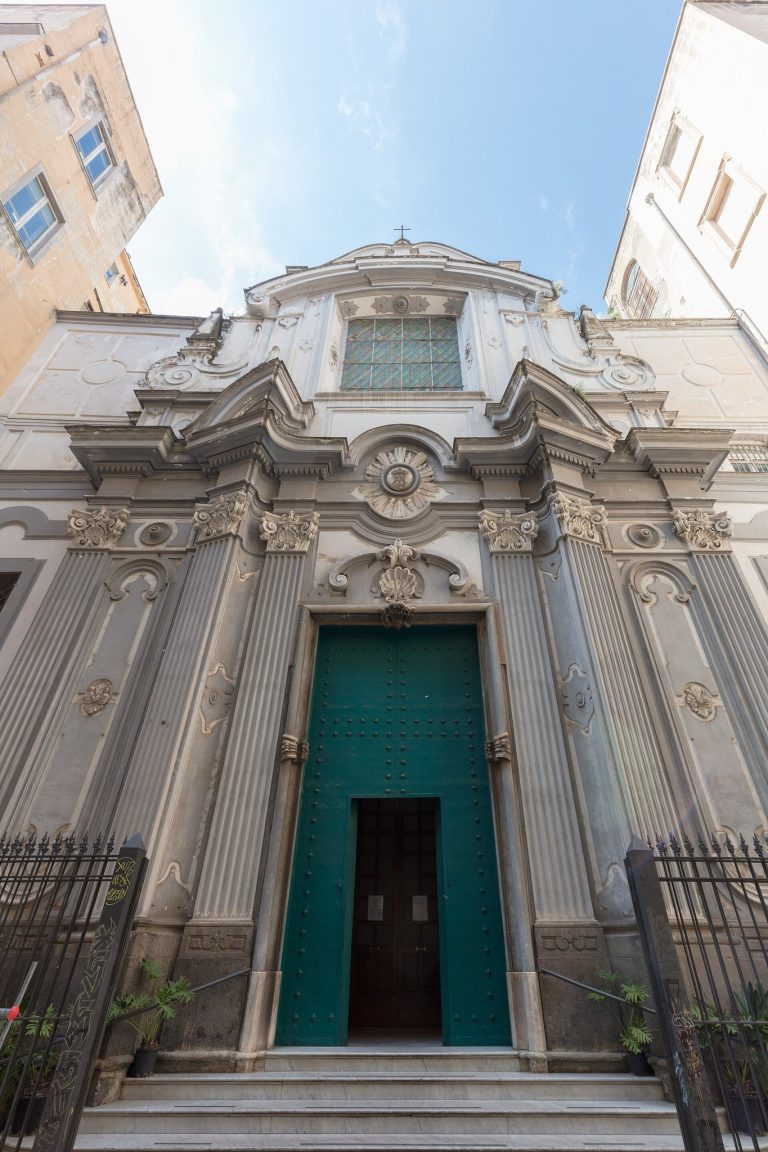
The reconstructed facade is plain in appearance. Inside, the counter-facade carries Giuseppe De Vivo’s large fresco of John the Baptist Preaching to the Disciples, dated 1730. The Archive Room occupies the left side of the entrance and contains a fragment of a seventeenth-century fresco depicting Christ. On the right, the entrance to the Confraternity of the Cooks has a seventeenth-century fresco of Rachel and Jacob, while the interior contains De Vivo’s fresco of the Washing of the Feet.
A seventeenth-century baptismal font stands beneath the first arch of the central nave. Its marble steps and wooden balustrade were added in the nineteenth century. A monumental pulpit is attached to the third pillar on the left. The present ceiling is a simple wooden structure installed after the collapse of 1970. The earlier nineteenth-century ceiling had three large painted scenes, with the Baptism of Jesus at the center and the birth and death of John the Baptist at the sides. A tempera design for that ceiling survives in the Chapel of Saint Raphael. Nicola Montagono prepared the figurative scheme and Domenico Leggieri the ornamental design.
Apse and presbytery
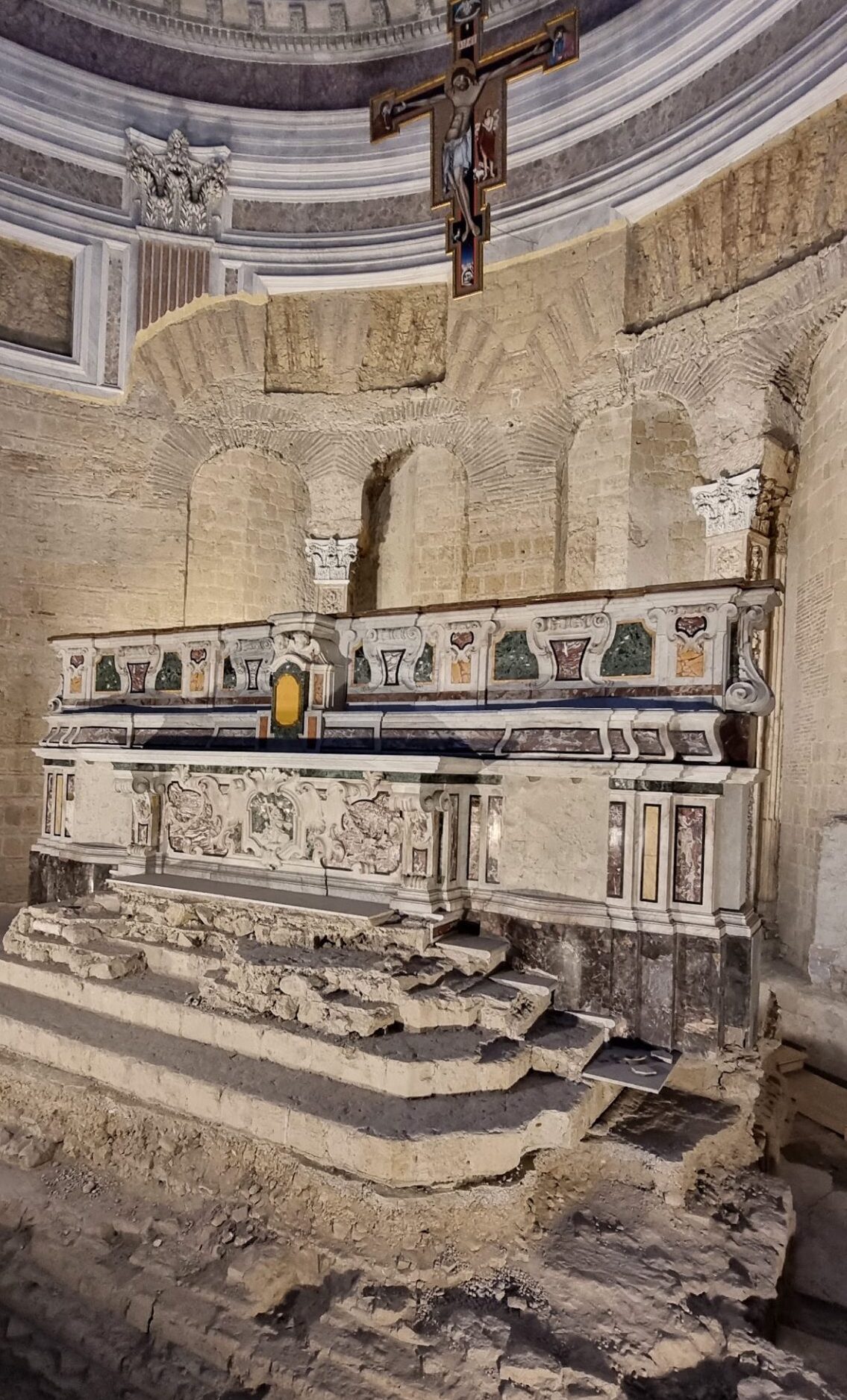
Behind the high altar stands the most visible surviving element of the early Christian church, a sixth-century semicircular apse. Four arcades rest on pillars and open onto an ambulatory, a passage running around or behind the apse, which continues the lines of the side aisles. The former wooden choir of the seventeenth-century church stood above this apse and was moved to the Oratory of the Confraternity of the LXVI Priests after the early Christian structure was uncovered.
Two sixth-century columns of Roman cipollino marble stand against the presbytery piers. This veined marble was traditionally quarried in the Mediterranean region, and the columns retain Corinthian capitals. The high altar, made by Domenico Antonio Vaccaro in 1743, has suffered damage from theft and deterioration. Lazzari’s crossing dome and the half-dome over the high altar form the principal upper elements of the Baroque interior.
Crypt
A staircase to the left of the main entrance leads to the seventeenth-century crypt, which occupies almost the entire area beneath the upper church. It has three aisles covered by sail vaults. Its eighteenth-century high altar is decorated with a painting of the Madonna of the Rosary with Saint Roch and Saint John.
Left aisle chapels
Chapel of Saint Raphael the Archangel
The first chapel on the left, dedicated in 1844, contains Giuseppe Scala’s 1722 painting of Our Lady of Sorrows with Saints Lucy and Nicholas. It also preserves the tempera study for the nineteenth-century ceiling and Didacus Sessa P.’s 1737 painting of the Adoration of the Blessed Sacrament.
Chapel of Saint Mary of Constantinople
The Chapel of Saint Mary of Constantinople, also called the Paleologi Chapel, belongs to the Paleologi family. Its front wall contains a sixteenth-century fresco of the Madonna and Child with Saint Peter, transferred from the Chapel of Saint Lucy in 1678. The fresco is set within a carved Renaissance tabernacle containing a wooden image of Saint John giving a blessing, made during the first half of the fourteenth century.
The chapel also contains sixteenth-century funerary slabs for the priest Raffaele Guarracino, the poet Gianfrancesco Giano Anisio, and the abbot Giovan Leonardo Basso. A commemorative slab names Tommaso Demetrio Paleologo as the chapel’s founder in 1523.
Ravaschieri Chapel
The Ravaschieri Chapel belonged to the Ravaschieri family of Genoa and is dedicated to John the Baptist. Its principal work is Giovanni da Nola’s marble retable of 1534. The composition shows the Baptism of Jesus, Saint Francis of Paola, and Saint James of the Marches, with a Crucifixion above and a medallion of the Risen Christ in the upper section. A seventeenth-century painting of the Preaching of Saint Anthony of Padua and Francesco De Mura’s 1732 Baptism of Christ are also preserved in the chapel.
Chapel of Saint Anne
Created during the restoration of 1742, the Chapel of Saint Anne contains a polychrome wooden statue of the saint from 1740, attributed to Gennaro Vassallo. Its other works include a fifteenth-century high relief of the Madonna and Child reading a book, fragments of painted figures of a bishop and a female martyr, and a seventeenth-century Immaculate Conception. The chapel also holds Adamo Fortunato Spasiano’s funerary monument, made by Salvatore Franco in 1776.
Chapel of Saint Adrian
The Chapel of Saint Adrian contains a marble altarpiece of uncertain attribution, possibly made by Giovanni da Nola or by his pupils Annibale Caccavello and Girolamo D’Auria. It depicts the Beheading of Saint Adrian, with a Pietà and Saints Philip and James above. Giovanni Bernardo Lama’s sixteenth-century Deposition of Christ and a seventeenth-century Saint Jerome by an unidentified southern Italian artist are also in the chapel.
Transept and confraternity spaces
Great Chapel of the Crucifix
The Great Chapel of the Crucifix in the left transept contains a stucco composition with statues of Constantine and his daughter Costanza by Lorenzo Vaccaro. The work was completed in 1689 after an earlier start by Giovan Domenico Vinaccia. An eighteenth-century Crucifix occupies the center of the composition.
Confraternity of the LXVI Priests
Two slabs dated to 999–1003 stand near the entrance to the Oratory of the Confraternity of the LXVI Priests. The confraternity, a religious association organized for worship and mutual support, was founded in 1619 by the priest Ottavio Acquaviva. Its complex consists of an oratory and a sacristy, with seventeenth-century stucco and paintings.
Late-seventeenth-century vault frescoes by Baldassarre Farina and Marcantonio Coda depict the Eternal, the Vision of the Cross, and angels bearing the symbols of the Cross. A seventeenth-century wooden choir runs along three walls. Nineteenth-century statues represent Faith, Hope, Charity, and Religion, while a painted wooden Immaculate Conception dates from before 1630. Four silver busts of Neapolitan saints, Charles, Benedict, Januarius, and Eusebius, stand before the altar. The sacristy contains a wall-mounted marble fountain and gilded stucco framing frescoes of angels bearing the symbols of the Cross.
Confraternity of the Whites of the Blessed Sacrament
The rectangular building of the Confraternity of the Whites of the Blessed Sacrament was constructed in the sixteenth century and completed during the seventeenth. Its interior contains a mid-seventeenth-century high altar, a wooden choir and organ from approximately the same period, a maiolica floor made from decorated glazed ceramic tiles, a Roman-period column, and Baroque-inspired stucco decoration on the vault. The confraternity’s charitable work included moral support for sick and infirm people.
Great Chapel of Saint Lucy
The Great Chapel of Saint Lucy in the right transept was completed in 1689 with rich Baroque decoration. The earthquake of 1870 destroyed the chapel, and the late-nineteenth-century rebuilding gave it its present Neoclassical appearance. Its altarpiece is Corrado Giaquinto’s Trinity with Saints Helena and Lucy, painted during the first half of the eighteenth century.
Right aisle chapels
Chapel of the Madonna delle Grazie
The first chapel on the right is also called the Chapel of the Nativity. The Mascaro family acquired it and dedicated it to the Madonna in 1871. It contains an eighteenth-century Madonna and Child and seventeenth-century paintings of Saint Anthony of Padua and the Virgin by unidentified artists. An eighteenth-century terracotta Nativity scene formerly associated with the chapel was stolen.
Chapel of the Heart of Mary
The Chapel of the Heart of Mary contains a seventeenth-century marble altar and an eighteenth-century funerary monument to the noble Domenico Badolato. An ebdomadary, a cleric assigned to liturgical duties on a weekly rotation, is also represented among the chapel’s furnishings. Paintings of Saint Januarius and Saint Christopher were made by an unidentified eighteenth-century artist.
Chapel of the Heart of Jesus
Founded by a Spanish community and formerly dedicated to Our Lady of Compassion, the Chapel of the Heart of Jesus retains a front-wall fresco restored in 1712. Other paintings include an early-eighteenth-century Vision of Saint Bruno and a seventeenth-century Saint Dorothy, both by unidentified Neapolitan artists.
Borgia Chapel
The Borgia Chapel contains seventeenth-century paintings of Saint Cajetan Thiene and the Sacrifice of Isaac by unidentified artists. Its front wall has a painting of the Eternal, probably a fragment of a larger eighteenth-century composition. An Adoration of the Magi from the workshop of Andrea Sabatini, formerly associated with the chapel, is held in a cultural-heritage conservation deposit.
Other surviving artworks and furnishings
Four large seventeenth-century vertical canvases by an unidentified Neapolitan artist, the Marriage of the Virgin, the Circumcision, Saint Thomas, and a Bishop Saint, were formerly associated with the Confraternity of the Blessed Sacrament and were transferred to secure storage under the cultural-heritage authorities. Two paintings attributed to Diana De Rosa, the Marriage of the Virgin and Jesus in the Workshop of Saint Joseph, are held in the collections of the Diocesan Museum of Naples.