Historic Sites in Bosnia and Herzegovina: Explore Castles, Mosques and Ottoman Markets
Explore historic sites in Bosnia and Herzegovina, including medieval citadels, Ottoman fortresses, domed mosques, covered markets and stone bridges. Religious buildings and fortifications form the largest groups in the collection. Examples from Jajce, Banja Luka, the Una valley and Sarajevo show surviving walls, prayer halls, vaulted shops and river crossings, often with additions from successive periods of use.
Primary Function: All
Type: All
Civilization: All
Popularity: All
Rating: All
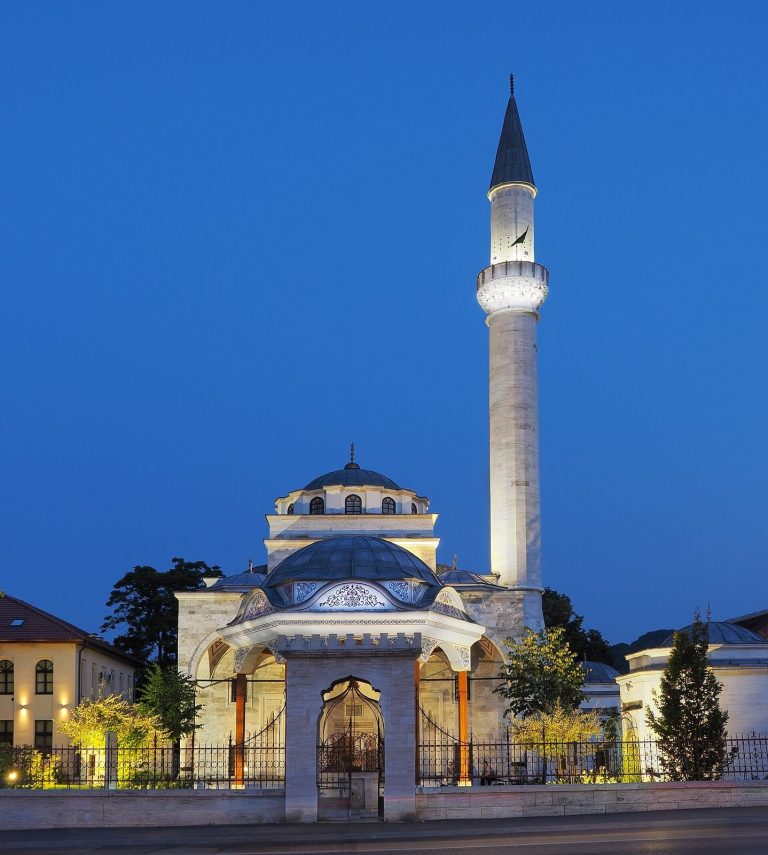
Built in 1579, Ferhat Pasha Mosque was a major work of Ottoman Islamic architecture in Bosnia and Herzegovina. Destroyed in 1993, it was…
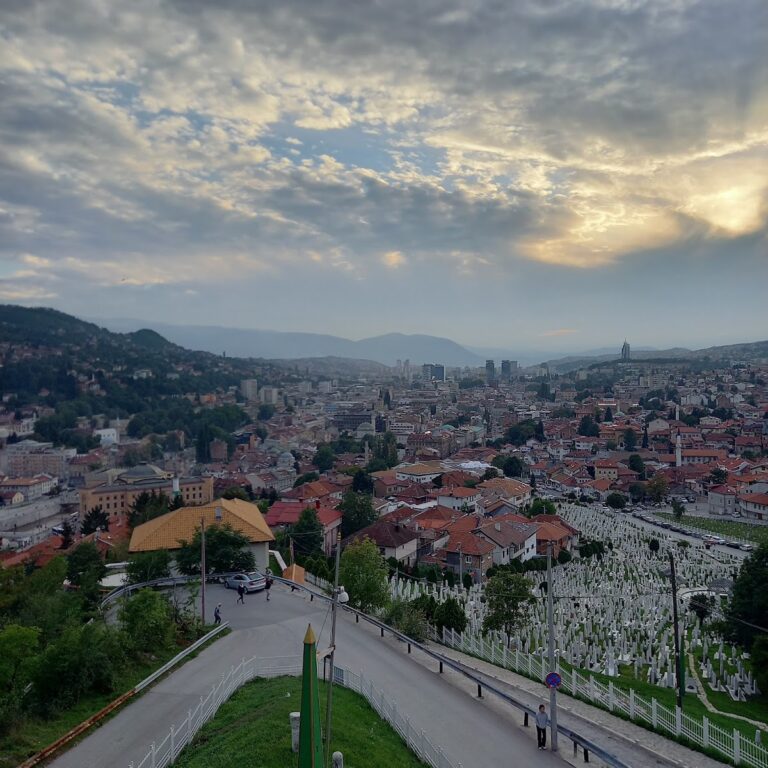
Žuta Tabija is an Ottoman cannon fortress built between 1727 and 1739 as part of the defensive walls of Vratnik above Sarajevo’s historic center. Its…

Gazi Husrev-beg Mosque, completed in 1531, is an Ottoman Sunni mosque in Sarajevo and the central building of Gazi Husrev-beg’s charitable endowment.…
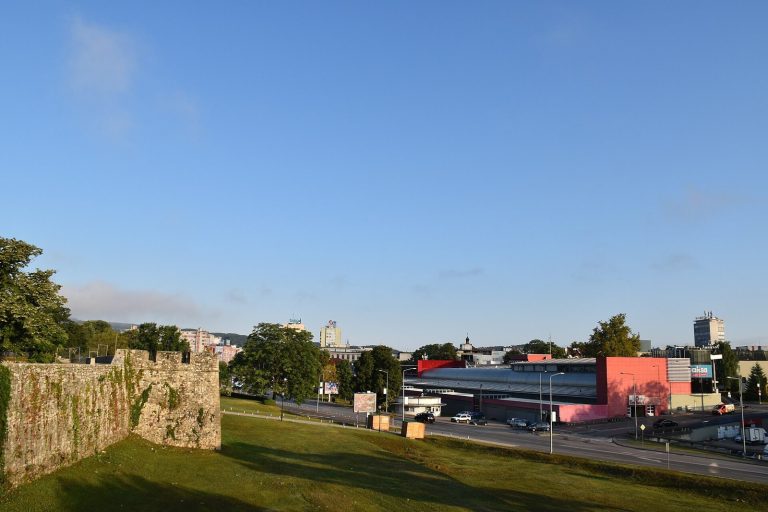
Kastel Fortress in Banja Luka developed on a site occupied from the Upper Paleolithic through the Roman, medieval, Ottoman, Austro-Hungarian, and…
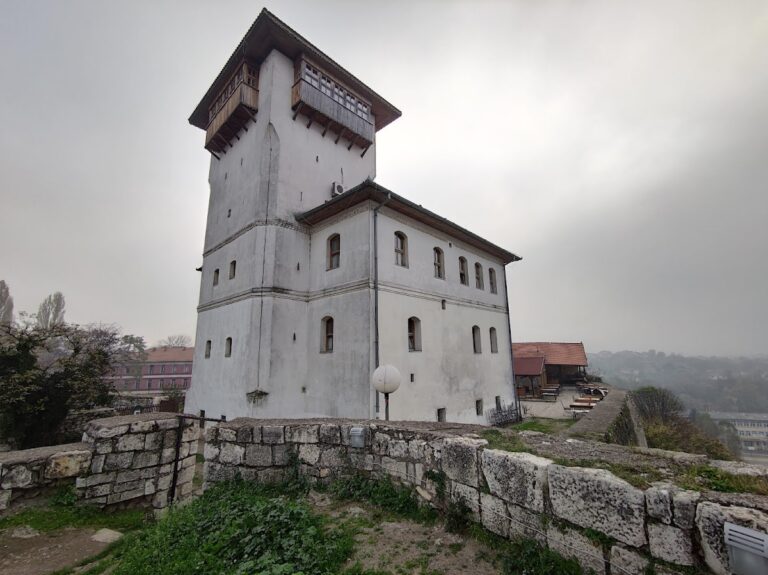
Gradačac Castle developed from an Ottoman military district in the early eighteenth century and reached its present form through successive works by…

Ostrožac Castle developed from a thirteenth-century noble stronghold into an Ottoman fortress and later a Romantic-style residence. Its protected…
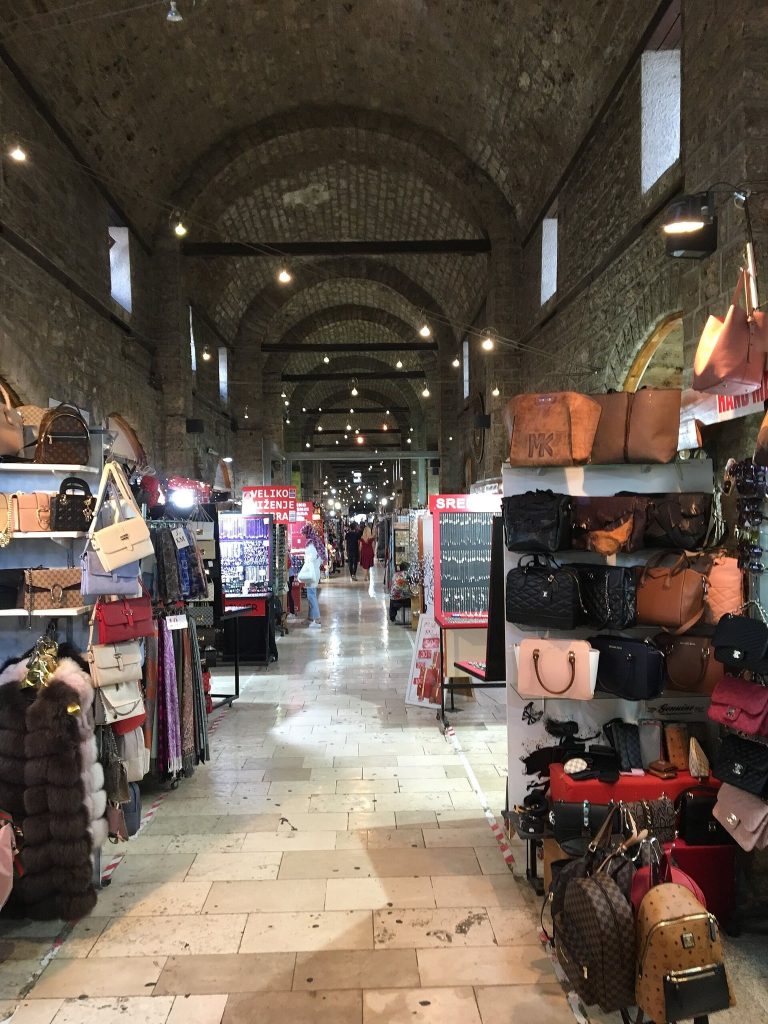
Gazi Husrev-beg Bezistan is a sixteenth-century Ottoman covered market hall in Sarajevo, established as part of Gazi Husrev-beg’s charitable…

Tešanj Castle developed from an early hilltop fortification into a medieval noble residence and an Ottoman frontier stronghold. Its surviving walls,…
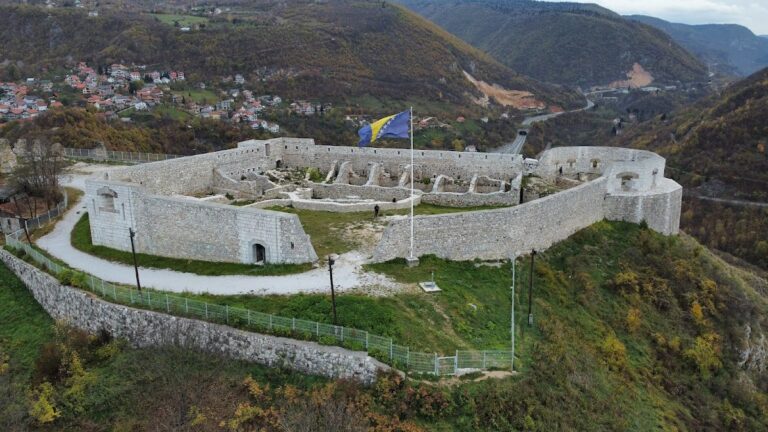
Bijela Tabija is a fortified artillery position forming part of the former Vratnik City walls above Sarajevo. Its uncertain medieval or Ottoman…
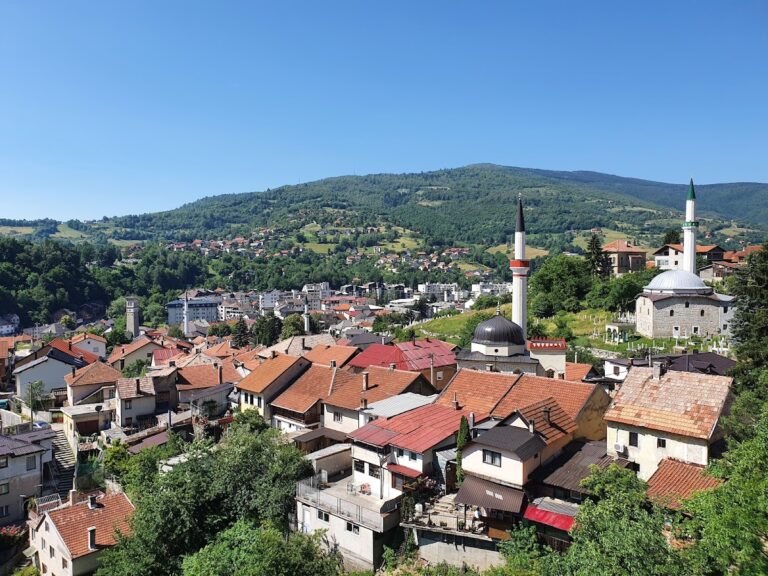
Travnik Castle is a medieval fortified-town complex whose history spans the Bosnian Kingdom, Ottoman rule, and Austro-Hungarian administration. Its…
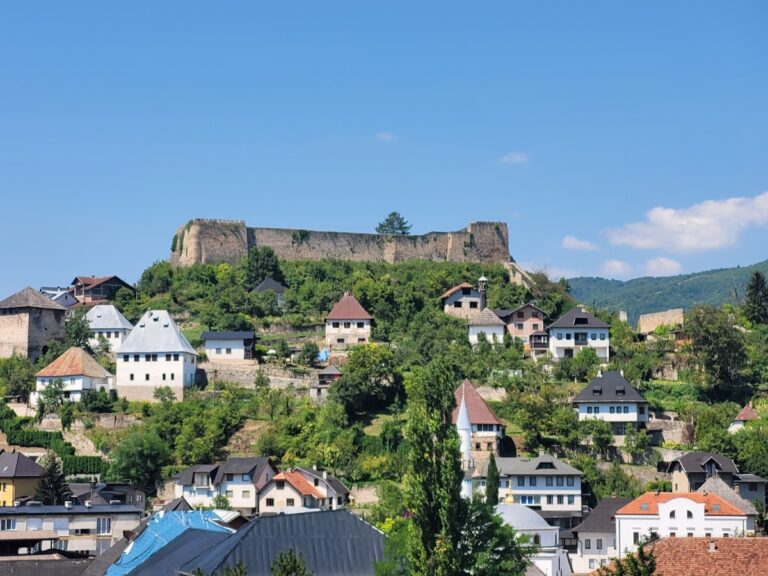
Jajce Citadel formed the fortified center of medieval Jajce, serving residential and defensive functions from its development on Hum hill through…
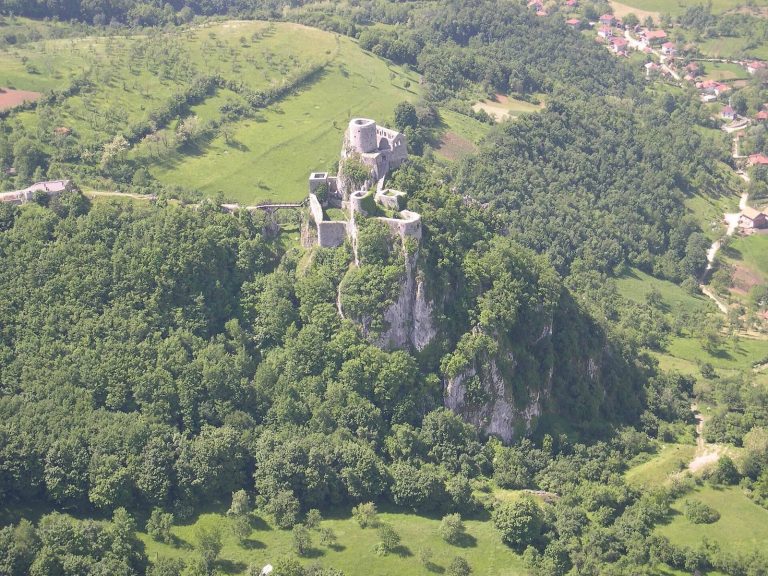
Srebrenik Fortress is a thirteenth-century medieval stronghold that controlled important routes in northeastern Bosnia and changed hands repeatedly…
For details on how to use the maps, which sites are included, how popularity and ratings are determined, and how sites are classified, see the help page.
On this page5 sections
Castles, citadels and fortresses
Jajce Citadel crowns Hum hill above the meeting of the Pliva and Vrbas rivers. Its main portal carries the coat of arms of the Kotromanić dynasty, linking the entrance with Bosnia’s medieval royal house. Large bastions occupy opposite corners, and a gunpowder tower stands inside. Walls descend from the citadel towards the town, where gatehouses controlled the principal approaches. The enclosure developed beyond the summit stronghold to protect the settlement on the slopes.
Kastel Fortress in Banja Luka spreads across comparatively level ground beside the Vrbas. Its principal form is an elongated polygon with bastions, towers and arsenals attached to the inside of the walls. Ottoman rebuilding in the early eighteenth century adapted the complex for artillery warfare. Protected chambers provided storage and military space, while concealed wells on the sandy riverbank supplied water. This is a broad garrison enclosure, with defensive works arranged along a river frontage.
Ostrožac Castle stands above the Una near Cazin. Its walls and towers enclose an irregular plan developed from a medieval fortress, with a southern section added under Ottoman rule around 1700. A rebuilding campaign in 1900–1906 introduced Romantic architectural forms, adding a much later residential phase to the fortified site.
The courtyard also contains monumental sculptures carved from local bihacite stone. These belong to the castle’s modern use as a sculpture park, distinct from its military and residential buildings.
Mosques and religious buildings
The Gazi Husrev-beg Mosque was completed in Sarajevo in 1531 as the centre of an Ottoman charitable endowment. A large central dome covers the principal prayer space, with smaller domed rooms at the sides and a semi-dome over the extension towards Mecca. The entrance portico has its own small domes, while the portal is decorated with tiers of carved, honeycomb-like ornament. Postwar work renewed the interior decoration; its painted surfaces should not all be read as sixteenth-century survivals.
Covered markets and shops
The associated Gazi Husrev-beg Bezistan is a long stone market hall. A central passage connects vaulted shops on both sides, with high windows admitting limited daylight. Merchants were historically grouped by trade, including textiles inside and metalworking businesses towards the street. Tall pointed portals mark entrances, and the floor lies below the surrounding street level. The building preserves the sheltered trading spaces that supported the same urban endowment as the mosque.
Stone bridges
The Šeher-Ćehaja Bridge crosses the Miljacka near Sarajevo’s city hall. Built in the Ottoman period, it uses tuff and limestone and occupies an early crossing within the historic centre. Its precise construction date is uncertain. Restoration between 1999 and 2001 recovered its earlier appearance, with stone bollards marking the entrances.
Explore the collection
Explore sites on the map or in the grid. Map icons indicate each site’s primary function, helping you identify different kinds of places at a glance. Narrow the results by primary function, site type, civilization or era, with additional filters for popularity and rating. Select a map marker to view the site’s details and open its article, or open the article from its grid entry.