Središte Monastery: A Serbian Orthodox Monastery in Serbia


Site at a Glance
- Rating
- 4.9
- Popularity
- Low
- Country
- Serbia
- Primary era
- Modern
- External website
- Open
- Eras represented
- Modern
- Civilizations
- Unclassified
- Site type
- Religious
- Remains
- Monastery
On this page14 sections
History
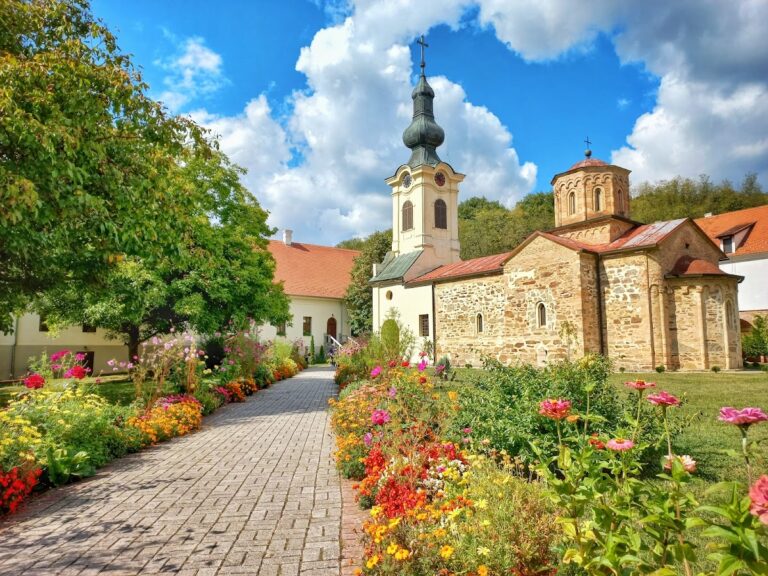
Središte Monastery is a Serbian Orthodox monastery in Serbia, near Vršac and the settlements of Malo Središte and Veliko Središte. Despot Jovan Branković, a late medieval Serbian ruler, founded it at the end of the fifteenth century and dedicated it to the Archangel Gabriel. Its foundation belonged to the same period as those of St. George Monastery and Mesić Monastery.
Foundation and early history
The monastery was probably restored by Jovan Branković on the foundations of an older monastery at the site of present-day Malo Središte. In earlier times, it was known as the Monastery of the Holy Archangels Michael and Gabriel. In 1666, monks from the Peć Patriarchate, the historical Serbian Orthodox patriarchate associated with Peć, visited Središte and recorded a single benefactor, the hieromonk Gavrilo. A hieromonk is a monk who has been ordained as a priest.
Središte was also mentioned in a report made in 1774 by Erler, an inspector of the Austrian imperial administration. During the eighteenth century, its religious life continued despite the destruction caused by war and the reduced size of its monastic community.
War, renewal, and suppression
Turkish forces burned the monastery in 1716. The fire destroyed the church, other buildings, books, and older manuscripts. The nearby village of Veliko Središte survived, with 72 registered households in 1717. The monastery’s frescoes and iconostasis, the screen separating the sanctuary from the main space of an Eastern Orthodox church, were probably renewed in the mid-eighteenth century, around the same time as those of Mesić Monastery.
By 1771, only two monks remained. The deputy abbot J. Dimitrijević had come from Vračevšnica Monastery in Serbia in 1747, while Mihail Vujanović had arrived from Drača Monastery in Serbia in 1766. Dimitrijević represented Središte at a church-national assembly in 1769. Nikodim Bogićević, superior of the Monastery of the Holy Trinity in Herzegovina, also visited periodically with the deacon Aleksije Savić.
The monastery remained a place of Serbian Orthodox prayer and assembly until 1777. It was then suppressed during the church reforms of Empress Maria Theresa, the eighteenth-century Habsburg ruler whose reforms changed the administration of monasteries in Habsburg-controlled territories. Ecclesiastical authorities appropriated the estate, and the monks were forced to leave.
Destruction and rebuilding
After the suppression, residents of the monastery settlement used the monastic church as a parish church until 1788. That year, a Turkish incursion looted and burned it. The village was subsequently moved to the site of the old monastery, and the ruins were dismantled, obscuring the traces of the earlier complex. A Romanian place of worship was built on the site of the former monastery church in 1887, using material from the abandoned monastery.
Rebuilding began in 1995 under Chrysostom Stolić, Bishop of the Banat Eparchy. The Banat Eparchy is a diocese of the Serbian Orthodox Church. A new site was selected approximately 500 metres from the old monastery. The rebuilt Središte is a male monastery, formally affiliated with the Serbian Orthodox Church through the Banat Eparchy. Its community consists of three hieromonks, two monks, and two novices, under the leadership of Archimandrite Nektarije Tatarin.
Remains
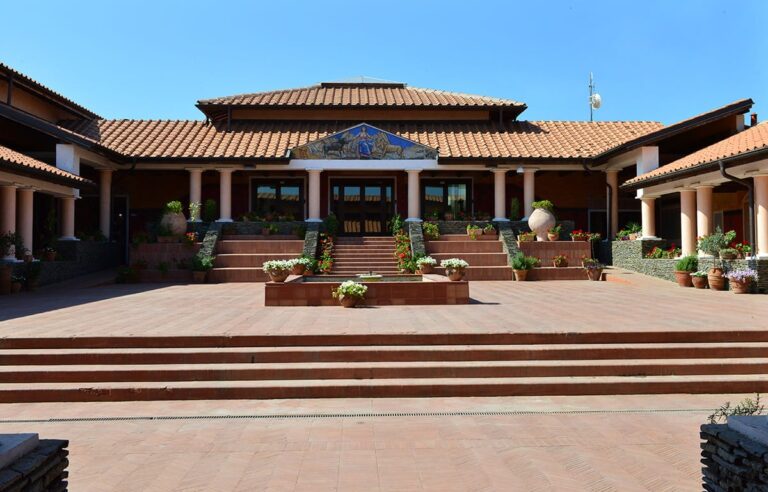
The present monastery occupies a slope near the road toward Gudurički Vrh, identified as the highest mountain in Vojvodina at 641 metres above sea level. Its first building was erected above the spring associated with the old monastery. The complex now includes chapels, a residential building, a bell tower, an entrance gate with gatekeeper’s and tower buildings, and a large guesthouse in the monastic courtyard.
Chapel and residential building
Chapel of Divine Wisdom and the Mid-Pentecost
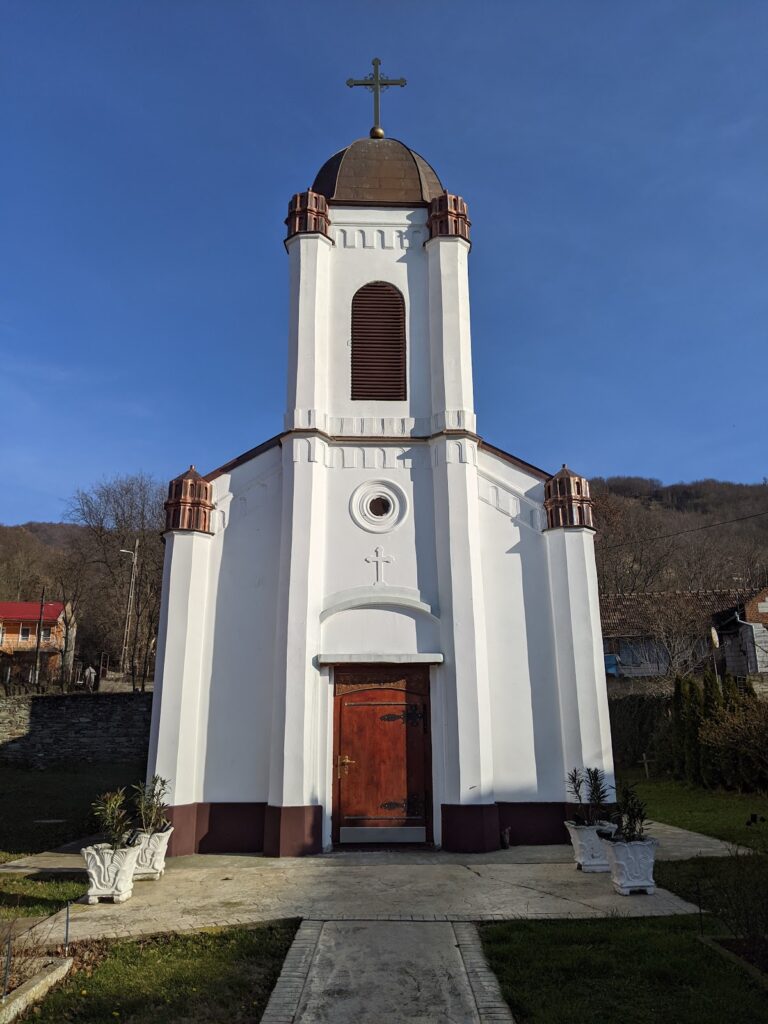
The first building of the rebuilt monastery is a chapel dedicated to Divine Wisdom and the Mid-Pentecost, a Christian feast observed midway between Easter and Pentecost. Architect Predrag Ristić designed the building. Its portal carries a mosaic of Christ Emmanuel as a child, while another mosaic shows the angel who troubles the water at the spring. Sculptor Milan Rakočević made both mosaics. The interior is decorated with frescoes by a painter from the Žiča school, a Serbian Orthodox tradition of fresco painting associated with Žiča Monastery, led by the deacon Miodrag Tomić.
Monastic residence
Construction of the monastery residence, or konak, began in 1998 to designs by architect Dimitrije Marinković. A chapel dedicated to the Archangel Michael and the Miracle at Chona occupies the top floor. Its sanctuary arrangement follows a pattern associated with Mount Athos monastic residences. The chapel contains a simple iconostasis with restrained woodcarving and was partly frescoed by Nenad Grastić in 2003, his first work in fresco painting. The upper zone was later painted with images of the monastery’s principal shrine, the wonder-working icon of the Virgin of the Three Hands, an Eastern Orthodox icon of the Virgin Mary identified by a third hand.
Bell tower and monastery grounds
Bell tower and church foundations
A bell tower was built in 2001, modelled on the Saint Sava tower at Hilandar. Foundations for a church dedicated to the icon of the Virgin of the Three Hands were laid beside it in 2002.
Entrance and courtyard buildings
The monastery grounds include an entrance gate with associated gatekeeper’s and tower buildings, together with a large guesthouse in the monastic courtyard. These structures form part of the present complex around the chapels and residential building.
Earlier monastery and surviving objects
Former buildings and watermill
The earlier monastery had a residence, refectory, and cellars built of solid materials. It also owned a mill on a stream that operated during rainy periods. The former monastery church contained an iconostasis with icons of Christ and the Virgin Mary. Those icons are now owned by the church in Malo Središte.
Books and manuscripts
Several religious books connected with the former monastery survive in nearby ecclesiastical institutions. The church at Veliko Središte holds an eighteenth-century Russian Psalter and a mid-sixteenth-century illuminated Gospel Book. Several liturgical books are kept in the church at Malo Žam, while another is held by the Vršac ecclesiastical municipality. The handwritten Vatin Gospel is preserved in the library of the bishop’s residence in Vršac.
Nearby sites