Mesić Monastery: A Serbian Orthodox Monastery in Serbia


Site at a Glance
- Rating
- 4.9
- Popularity
- Low
- Country
- Serbia
- Primary era
- Early Modern
- External website
- Open
- Eras represented
- Medieval, Early Modern, Modern
- Civilizations
- Serbian
- Site type
- Religious
- Remains
- Monastery
On this page17 sections
History
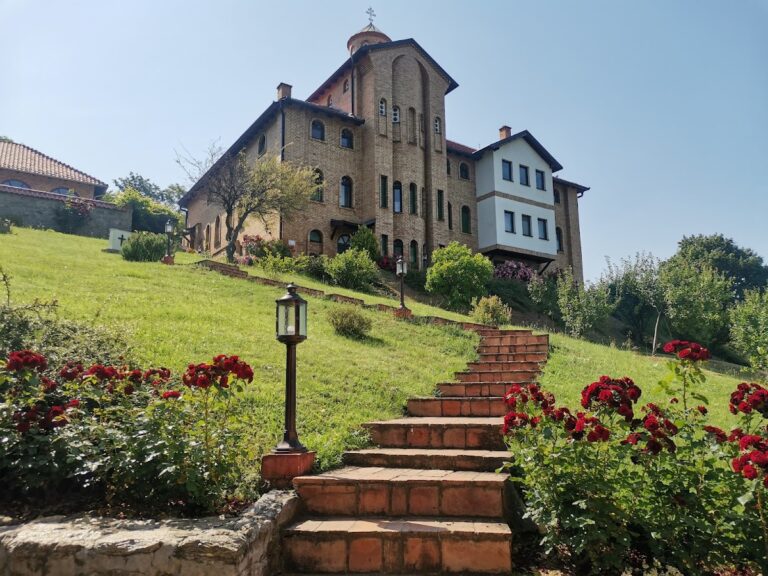
Mesić Monastery is a Serbian Orthodox monastery in Serbia, located in the village of Mesić east of Vršac, at the foot of Magareće Brdo. It most probably originated in the late fifteenth century within the Serbian medieval tradition associated with the Morava School, and it became one of the important monasteries of southeastern Banat. Today it is a women’s monastery of the Serbian Orthodox Church and belongs to the Banat Eparchy, the Orthodox equivalent of a diocese.
Foundation traditions and early records
The most widely supported foundation tradition connects the monastery with Despot Jovan Branković, the last ruler of the Branković dynasty, and his brother Maksim, also known as Đorđe. Their foundation is placed between 1493 and 1502. A local tradition says that the brothers endowed the monastery with landed property, and an official report from 1751 names them as its founders.
Other traditions place the monastery’s beginnings much earlier. One dates its foundation to 1030 or 1033, when it was supposedly established by disciples of Cyril and Methodius, the ninth-century Byzantine missionaries whose work helped develop Slavic Christian worship and writing. Another tradition assigns the date 1225 to a foundation or renewal by Arsenije Bogdanović-Sremac, a Hilandar monk whom Saint Sava, founder and first archbishop of the independent Serbian Orthodox Church, supposedly appointed abbot. These accounts remain separate from the more probable late-fifteenth-century attribution.
The monastery took its name from the Mesić stream, which rises beneath the Black Peak in the surrounding forest. A watermill described as standing below the monastery was mentioned in 1797. The first written references to Mesić and its church appear in the katastich, an ecclesiastical register, of the Peć Patriarchate. The entry for 1660 names a church dedicated to Saint John the Forerunner and lists two abbots, five hieromonks, and two monks. The entry from 1666 records Abbot Siloan, four hieromonks, and the teacher Nikifor.
Episcopal residence and monastic administration
After the Great Migration of 1690, when many Serbs moved into Habsburg territories during the Ottoman-Habsburg wars, Mesić served for a time as the residence of the Vršac bishop. Bishop Spiridon Stibica was confirmed in office through the privileges of Emperor Leopold I, and a later record places the Vršac episcopal residence at the monastery between 1690 and 1712.
Mesić functioned as a coenobitic monastery, meaning that its monks lived under a common rule and shared their resources. The brotherhood served the Orthodox population of Mesić and the nearby villages of Sočica and Jablanika. It numbered eight monks in 1768, nine in 1784, and six in 1848.
A proposal to reduce the monastery’s status was made in 1774. Hieromonk Joanikije Maksimović arrived from Šemljug Monastery that year and became an archimandrite, a senior Orthodox monastic rank, in 1776. In 1777, movable property from the suppressed monasteries of Šemljug and Središte was transferred to Mesić. Jovan Feldvari-Jovanović then became its first archimandrite, serving from 1777 to 1785.
Ottoman destruction and eighteenth-century rebuilding
Ottoman forces destroyed or severely damaged Mesić in 1716 and again during the Austro-Ottoman War of 1788, a conflict between the Habsburg monarchy and the Ottoman Empire. After the earlier destruction, the Krušedol hieromonk Mojsije Stefanović arrived with several monks and helped restore the community. In 1743 he travelled to Russia and returned with books, icons, a silver chalice, church banners, and an imperial diploma from Empress Elizabeth Petrovna. The diploma granted the monastery an annual subsidy of 300 rubles.
On 3 December 1792, the monks and Archimandrite Mojsije Vasilijević decided to rebuild the monastery after the damage of 1788. Work on the church and the construction of a new residential building took place from 1793 to 1798, financed by Orthodox believers and Bishop Josif Jovanović Šakabenta. During this rebuilding, medieval wall paintings associated with Jovan Branković were covered with plaster and coloured lime.
The monastery also had connections with the disciplinary and burial practices of the Vršac church administration. In 1782 it served as a one-year place of confinement for the Kovilj hieromonk Partenije Popović after ecclesiastical proceedings. In 1785, Vršac and Karansebeš Bishop Vicentije Popović was buried in a newly built tomb in the monastery cemetery. The will of Vršac Bishop Maksim Nestorović assigned 100 florins to Mesić.
Nineteenth-century pressures
Archimandrite Vikentije Ljuština, who led Mesić from 1796 to 1805, defended the monastery’s property and wrote a short history of the institution as well as a grammar of the Italian language. During the nineteenth century, Mesić remained under Serbian ecclesiastical control after Romanian Orthodox communities separated from the Serbian church in 1868. Romanian claims to Mesić and two other monasteries were rejected by the Serbian National Church Assembly in 1879. A lawsuit later brought by the Sibiu Romanian Metropolitanate was lost in 1906.
The monastery’s economic position deteriorated toward the end of the century. The phylloxera outbreak of 1889 and 1890 destroyed 200 yugera of vineyard, which had previously been its main source of income. A major earthquake on Holy Saturday in 1892 damaged the church and monastic cells, cracking the vault along its entire length. By 1898, the woodland and land had been depleted and the monastery was heavily indebted.
Mesić was required to contribute 200 florins each year to the monastic school at Hopovo from 1893. In 1900, it lost a legal claim brought by the hieromonk Dr Emilijan Radić over unpaid wages and other allowances. Its formal status was recorded as an archimandry in 1905, although the Vršac consistory no longer appointed an abbot and administered the property directly.
A property report from 1905 placed Mesić in the Vršac district of Tamiš County, within the Romanian Orthodox Diocese of Karansebeš but under the direct jurisdiction and administration of the Serbian Orthodox Diocese of Vršac. The estate included 1,416 yugera and 1,240 square fathoms of land. Its net cadastral income was 2,920 crowns, while the land was valued at 58,418 crowns. The buildings, securities, valuables, equipment, and other movable property brought the recorded total estate value to 271,733 crowns and 26 para.
War, violence, and twentieth-century transformation
During the First World War, the church tower burned on 24 April 1916 and its bells fell. On 4 November 1918, Romanian inhabitants of Mesić and neighbouring villages looted the monastery. Furnishings were damaged or destroyed, and portraits of Serbian church dignitaries were cut from the walls. The caretaker Vicentije Vukosavljević began repairs and maintenance. Protosyncellus Vladimir Dimitrijević, a senior clerical assistant to a bishop, directed the monastery from 1907 to 1923 and helped return it to a more orderly condition.
A large fire near Vršac destroyed extensive parts of the monastery forest and stacked timber in August 1927. On 12 April 1929, a Romanian band led by Lazar Stoiku, known as Laja, attacked the elderly monk Kostić in the monastery forest, robbed and killed him, and beat the cook who summoned help. By 1937, the monastery remained isolated and faced debts exceeding 150,000 dinars despite holding about 2,000 yugera of forest.
Mesić became a women’s monastery in 1952, with Abbess Teodora Milošević as its first female head. After her death, the nun Paraskeva Mitrić assumed leadership with the blessing of Bishop Amfilohije Radović. The community grew while he was Bishop of Banat, although several sisters later became abbesses of restored monasteries in Montenegro.
Recent restoration and protection
Restoration of the church and monastery complex began in autumn 2008 with the blessing of Bishop Nikanor of Banat. After Abbess Paraskeva Mitrić died on 24 October 2017, Nun Ekatarina Knežević became head of the monastery. The community consists of five nuns and one novice.
Mesić is protected as an immovable cultural monument of exceptional importance in the Republic of Serbia under national designation SK 1020. The Institute for the Protection of Cultural Monuments administers its conservation.
Remains
The surviving complex combines a single-nave Orthodox church with a dome, a rectangular choir area, a western entrance space, a tower and bell tower, a nineteenth-century residential building, a chapel, a cemetery, and material preserved in the monastery treasury. Its buildings reflect successive medieval, Baroque, Moldavian, and Neoclassical phases of construction and alteration.
Church and paintings
Church building
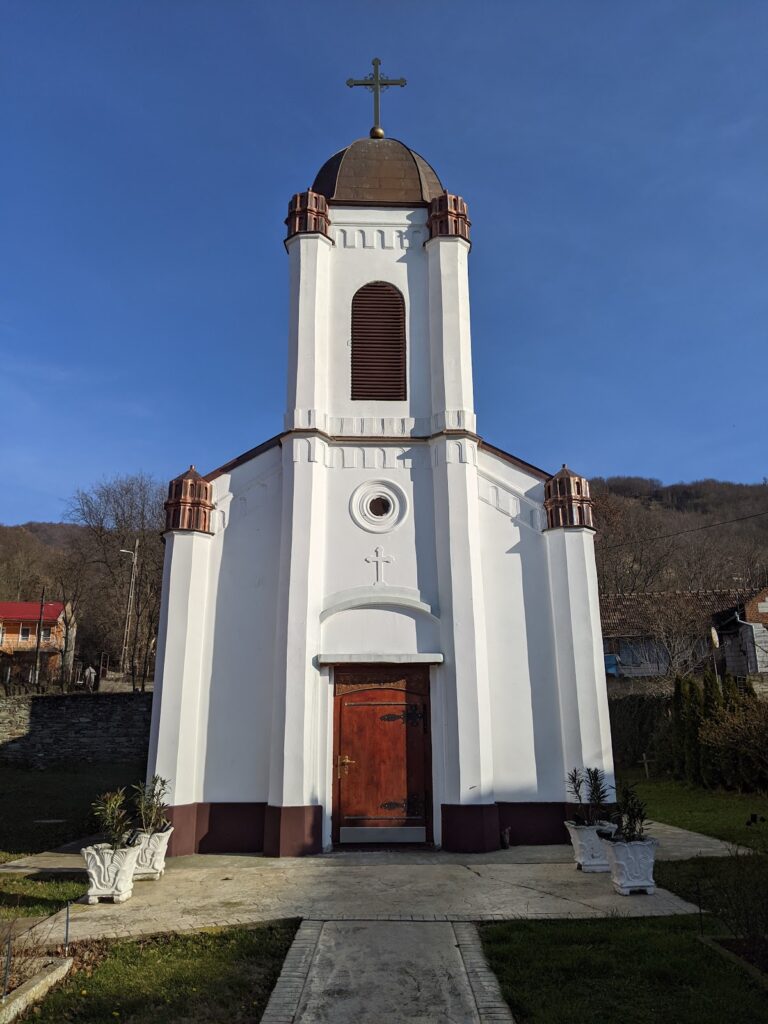
The church is dedicated to Saint John the Baptist, also called Saint John the Forerunner. Its single nave is surmounted by a dome, and the rectangular choir area follows the tradition of the Morava School, a late-medieval Serbian architectural and artistic tradition known for distinctive church plans and richly articulated stone decoration. The damaged church was substantially altered during the eighteenth-century rebuilding. A western narthex, an entrance space between the exterior and the main church interior, was added together with a Baroque tower and bell tower inspired by the work of the Bohemian architect Anton Bloberg.
During the restoration of 1793 to 1798, the dome and roof structure were rebuilt in a Moldavian style. This work replaced or obscured parts of the church’s earlier Serbian-Byzantine appearance, and the bell tower later underwent further changes. The church was damaged by the 1892 earthquake, which cracked the vault along its length, and the tower burned during the First World War.
Wall paintings
The church contains three layers of wall paintings dating from the sixteenth to the nineteenth centuries. Earlier seventeenth-century paintings survive in parts of the naos, the main worship space of an Orthodox church. Eighteenth-century frescoes retain conservative features derived from medieval practice and resist the emerging Baroque style.
A fresco in the area for the monastery’s benefactors depicts Jovan Branković. Wall painting associated with the monastery’s founder was covered by layers of plaster and coloured lime during the late-eighteenth-century restoration, linking the church’s present interior to the rebuilding that followed the destruction of 1788.
Residential buildings and treasury
Monastery residence
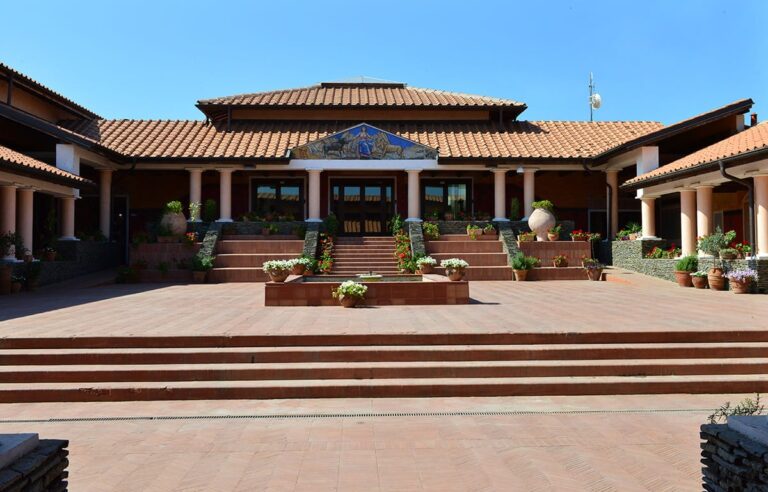
The present konak, the monastery’s residential building, was constructed in the Neoclassical style between 1840 and 1846. The date appears on the front of its porch. Inside the building, a winter chapel is dedicated to the Feast of the Three Holy Hierarchs. Its iconostasis, the screen of icons separating the sanctuary from the main worship space, contains icons dated 1841.
Treasury and sacred objects
The monastery treasury preserves valuable handwritten and printed books as well as paintings by Jovan Popović of Opovo, Arsenije Petrović, Pavel Đurković, and other artists. One identified work is Jovan Popović’s portrait of Bishop Josif Jovanović Šakabenta.
The treasury also preserves the miraculous icon of the Virgin Mary known as “Dostojno jest,” a title meaning “It is truly meet.” The icon came from Mount Athos and was brought to Mesić in 1803. Books, icons, a silver chalice, and church banners brought from Russia in 1743 form part of the monastery’s material connection with that earlier period of recovery.
Cemetery and watercourse
Bishop Vicentije Popović’s tomb
The monastery cemetery contains the tomb built in 1785 for Vicentije Popović, Bishop of Vršac and Karansebeš. His burial place forms part of the surviving complex and reflects Mesić’s continuing connection with the ecclesiastical administration of the Vršac region.
Mesić stream and mill area
The Mesić stream rises in the monastery forest beneath the Black Peak and passes the area historically associated with the monastery watermill. The mill was described in 1797 as standing below the monastery, connecting the watercourse with the economic landscape of the complex.
Nearby sites