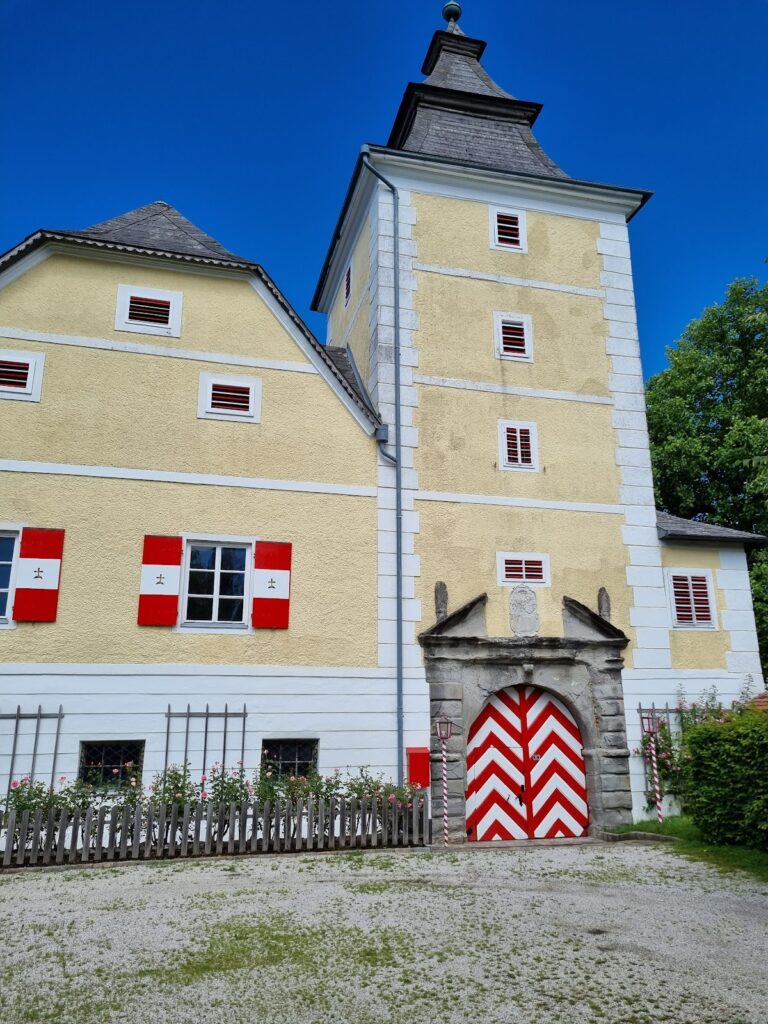
Schloss Klaus: A Fortress and Christian Educational Centre in Austria


Site at a Glance
- Rating
- 4.8
- Popularity
- Low
- Country
- Austria
- Primary era
- Early Modern
- External website
- Open
- Eras represented
- Medieval, Early Modern
- Civilizations
- Habsburg, Holy Roman Empire
- Site type
- Military
- Remains
- Castle
On this page9 sections
History
Schloss Klaus is a historic castle complex in Austria, at Klaus an der Pyhrnbahn, whose origins lie in a fortress controlling the road through the valley narrows. The earliest documentary reference dates to 1175. A later castle, built in 1578 and remodeled in Baroque style in 1758, now forms part of a complex that operates as a Christian youth recreation and educational centre.
Medieval fortress and the Storch family
In 1282, Albrecht von Habsburg, a member of the Austrian branch of the Habsburg ruling dynasty, granted Albero de Buchheim the “strong fortress of Klaus” as a reward for loyal military service. The lordship was pledged to Spital Monastery in 1477 and entered the possession of the Storch family in 1512.
Ulrich von Storch built the castle below the older fortress in 1578. The family also shaped the religious landscape around the complex. Between 1616 and 1618, Ludwig von Storch established an Evangelical mountain church above the castle, together with a cemetery and a preacher’s residence. The Storch family left Austria for religious reasons in 1632 and moved to Vach near Fürth in Franconia. After the Counter-Reformation, the Catholic Church’s effort to restore and consolidate Catholic institutions in Protestant regions, the mountain church complex was taken over by the Catholic parish of Klaus in 1674.
Military conflicts and changing ownership
Klaus retained a military role during the conflict of 1610, when subjects of the lordship led by Ludwig and Christoph Storch prevented approximately 8,000 soldiers of the Passau forces from passing through the valley narrows. In 1742, Bavarian and French troops invaded Upper Austria and captured the fortress. Baron von Trenck, serving Archduchess Maria Theresa, retook the castle and fortress in the early hours of 2 January after surprising the occupying troops following a drinking celebration. A brief engagement ended with 130 men captured.
The Storch property passed to Baron Georg Siegmund von Salburg, who received the title of count in 1665, and then to Count Franz Ludwig von Salburg in 1708. Count Norbert Anton Oswald Salburg sold the estate to Spital Monastery in 1760. In 1809, the castle and fortress became property of the Upper Austrian Religious Fund, a state-administered fund associated with the Habsburg monarchy and religious institutions. The roof of the uninhabited old fortress section was removed in 1828 to avoid a roof tax. In 1889, the lordship was separated from the Imperial and Royal Religious Fund and sold to the Prince of Schaumburg-Lippe.
Twentieth-century decline and renewal
The entire estate, including 574 hectares of forest, was sold to the Berlin landowner Sigismund von Treskow on 13 December 1940. He bequeathed it to his niece Ursula von Sydow in 1945. The final owners could not live in the old castle, and the building’s condition deteriorated. Immediately after the Second World War, it provided accommodation for refugees. From 1948 to 1950, it served as a convalescent home for children from the Diocese of Vienna under the care of Caritas, a Catholic charitable organization.
The remaining walls of the fortress ruin later threatened to collapse, leaving the property effectively unusable. In 1963, Baroness Ursula von Sydow and her son Wilhelm von Sydow leased the complex to the evangelical church association Missionsgemeinschaft der Fackelträger, led by Peter Wiegand. Renovation began, and an evangelical youth recreation and educational centre opened in the castle a few months later. Growing demand led to the rebuilding of the fortress ruin in 1983. Schloss Klaus now functions as a Christian youth recreation and educational centre. Under the name Diakonie in der Gemeinde, it also operates diaconal facilities for people with disabilities in the region and administers mission and development-aid projects.
Remains
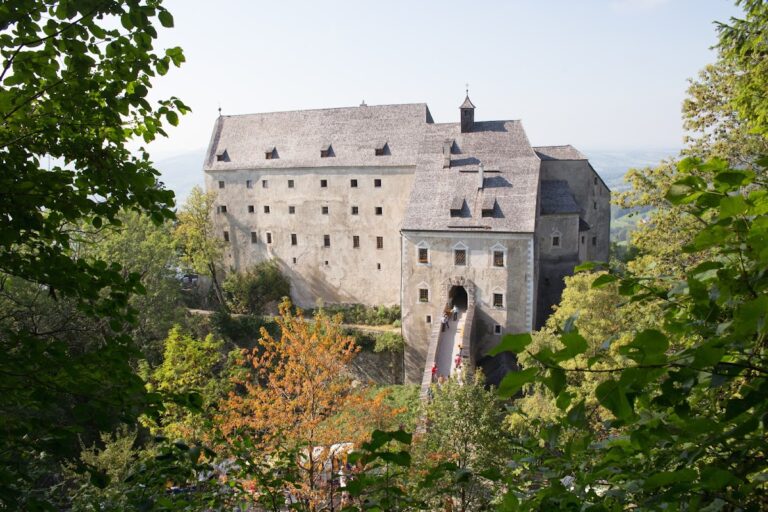
Schloss Klaus stands on a rocky spur in the Steyr Valley, at the foot of Mount Brennet, the southernmost extension of the Kremsmauer. The complex is arranged vertically, with the older fortress above the later castle. The former mountain church occupied a further elevated position above the castle, with its cemetery and preacher’s residence forming an associated religious complex.
Fortress and castle
Older fortress
The older fortress occupied the upper position on the rocky spur and controlled the road through the valley narrows. Its roof was removed in 1828, and the old structure remained as a fortress ruin. The surviving walls deteriorated before the ruin was rebuilt in 1983, when their threatened collapse had made the property unusable.
Castle of 1578
Ulrich von Storch’s castle lies directly below the older fortress. Built in 1578, it was remodeled in Baroque style in 1758. Together with the rebuilt fortress, the castle now contains two large assembly halls and 150 guest beds, supporting its continuing use as a youth and educational centre.
Former mountain church complex
The Evangelical mountain church was built above the castle between 1616 and 1618. Its associated cemetery and preacher’s residence formed part of the same complex. Following its transfer to the Catholic parish of Klaus in 1674, the church complex continued under Catholic administration.
Nearby sites