Palazzo Doria Spinola: A Genoese Mannerist Palace and Rolli Residence


Site at a Glance
- Rating
- 4.7
- Popularity
- Very Low
- Country
- Italy
- Primary era
- Early Modern
- Eras represented
- Early Modern, Modern
- Civilizations
- Genoese, Italian
- Site type
- Domestic
- Remains
- Elite Residence
On this page8 sections
History
Construction for Antonio Doria
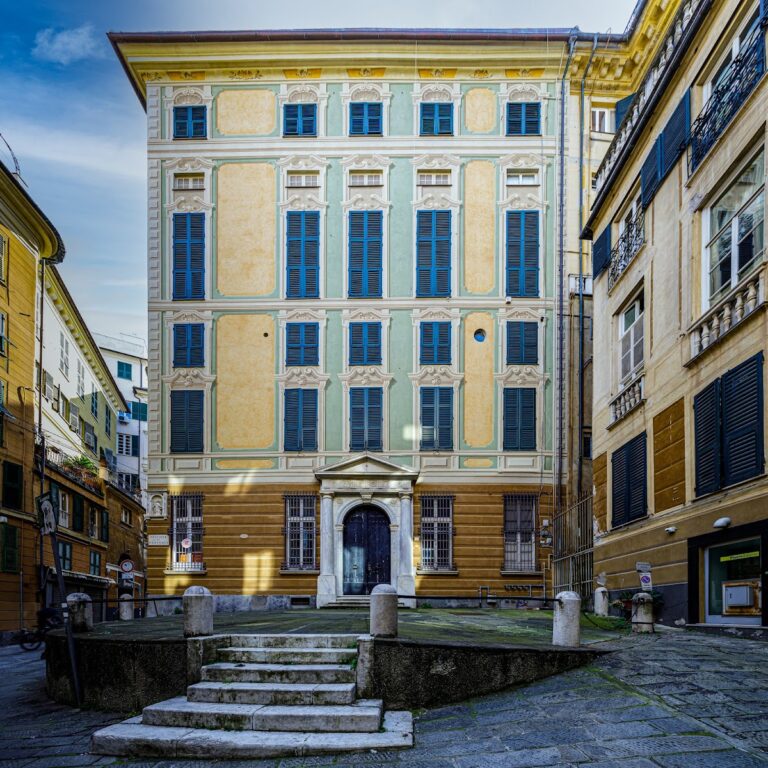
Palazzo Doria Spinola, also known as Palazzo Antonio Doria, is a historic palace in Genoa, Italy, built by Genoese patrons in 1541–1543 in the Mannerist style. It was commissioned for the admiral Antonio Doria, Marquis of Santo Stefano d’Aveto and a relative of Andrea Doria, the prominent Genoese admiral and statesman. Antonio Doria’s earlier residence had been demolished to make way for new city walls, so the new palace was erected in an isolated area near the Acquasola Gate, which the walls had made redundant.
The design is attributed to Bernardino Cantone, possibly working with Giovan Battista Castello. The building formed part of Genoa’s Palazzi dei Rolli, official lists of private residences owned by leading families. Palaces selected by public lottery were required to accommodate distinguished visitors during state visits to the Republic of Genoa. Palazzo Doria Spinola belonged to the group of 42 Rolli palaces inscribed in 2006 within the UNESCO World Heritage Site “Genoa: Le Strade Nuove and the system of the Palazzi dei Rolli.”
Spinola ownership and later alterations
In 1624 the palace passed to the Spinola family, who retained it until the nineteenth century. During the seventeenth century, a gallery was added on the eastern side, and marble balustrades were installed on the principal facade. Between 1791 and 1797, the building was raised by one storey.
The palace was sold to the Municipality of Genoa in 1876 and later transferred to the Province of Genoa. The opening of Via Roma in 1877 brought major changes to the building and its surroundings. The eastern gallery was demolished, the right-hand corner was cut back, the street level along the facade was lowered, and the garden was removed. Peter Paul Rubens’s Palazzi di Genova, a published collection of views by the Flemish Baroque painter, thereafter provided an important record of the palace’s earlier configuration.
Institutional use
Since 1877, Palazzo Doria Spinola has served institutional functions, including as the seat of the Province of Genoa and the Prefecture. The building currently houses the Prefecture, the local office representing Italy’s central government, and the Metropolitan City of Genoa, the local-government authority serving the urban area and its surrounding territory.
Remains
Facade, portal, and courtyard
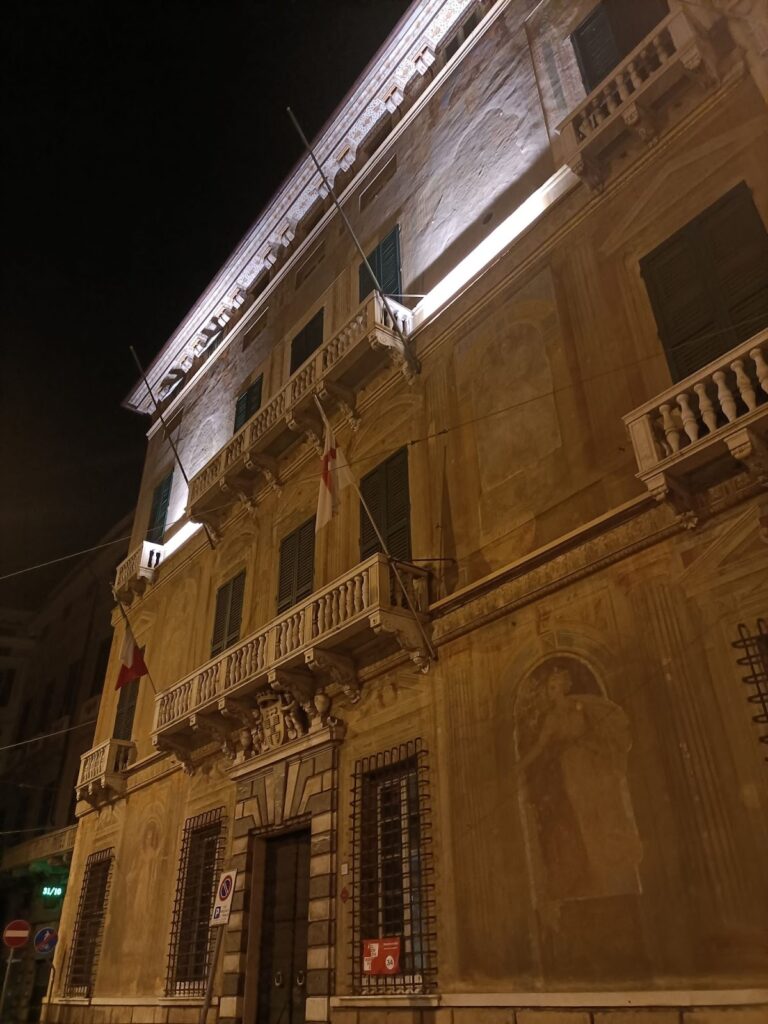
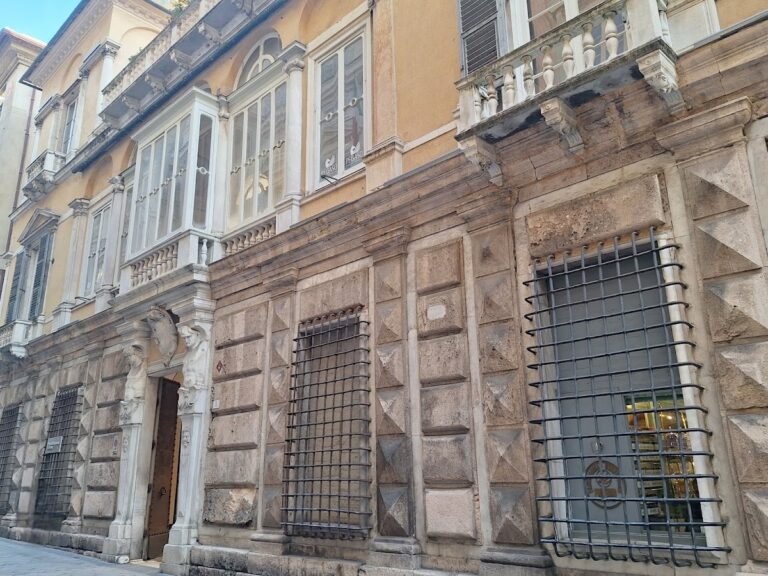
Palazzo Doria Spinola stands as a freestanding historic building in Genoa’s historic center. Its original setting included the Acquasola Gate, natural areas, and a garden. The principal facade retains sixteenth-century frescoes painted by Lazzaro and Pantaleo Calvi in 1541–1543, which were restored in 2001.
The late-sixteenth-century main portal is made of marble and has paired columns. Figures of armoured warriors occupy the attic, and the portal was executed by Taddeo Carlone. Inside, the Renaissance courtyard has a square plan and two superimposed orders of loggias. Its stucco decoration, made from a mouldable plaster-based material, combines alternating telamons, or sculpted male figures used as architectural supports, with female masks.
Loggias and decorative interiors
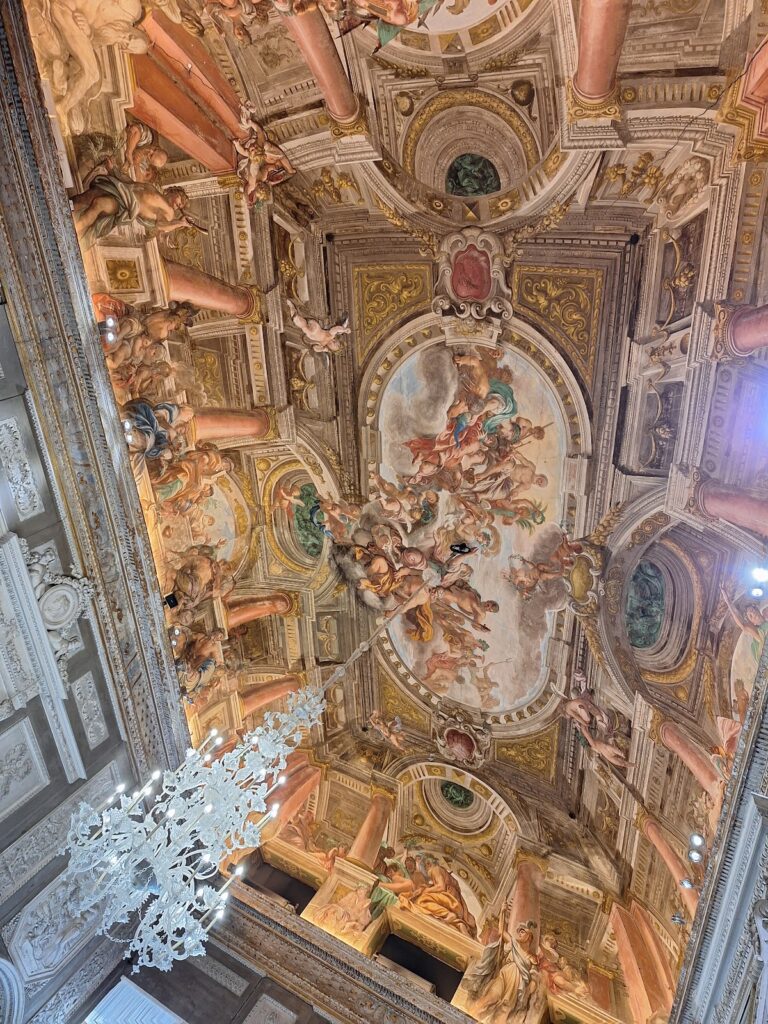
The upper loggia contains repeatedly restored frescoes by Aurelio and Felice Calvi. Among them are city views derived largely from the atlas Civitates orbis terrarum, published in Cologne in 1576. Another room was inspired by the Vatican Gallery of Maps and presents imagery connected with the achievements of the Doria family, particularly those of Antonio Doria.
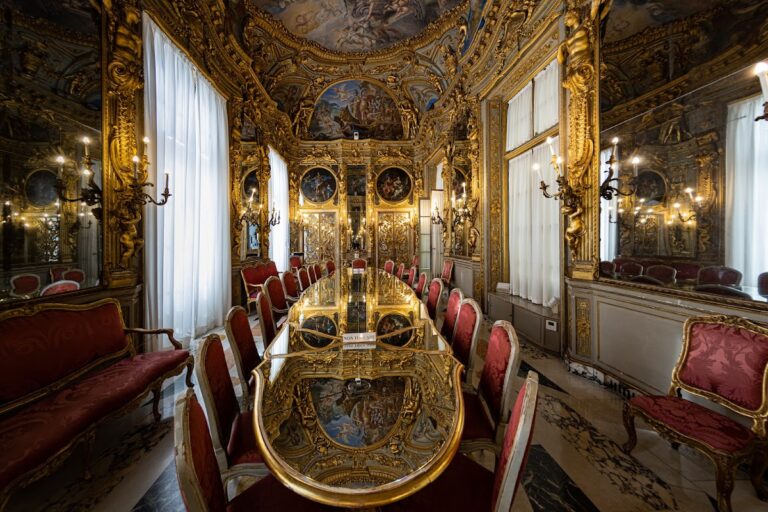
The atrium’s original decoration is attributed to Marcantonio Calvi and includes emblems associated with Antonio Doria. Filippo Alessio and Michele Canzio altered this decoration in the mid-nineteenth century, after which it was restored. The palace’s wider decorative program combines painted architectural and cartographic imagery with marble elements, stucco figures and masks, frescoed city views, mythological scenes, and Doria emblems.
Frescoed reception rooms
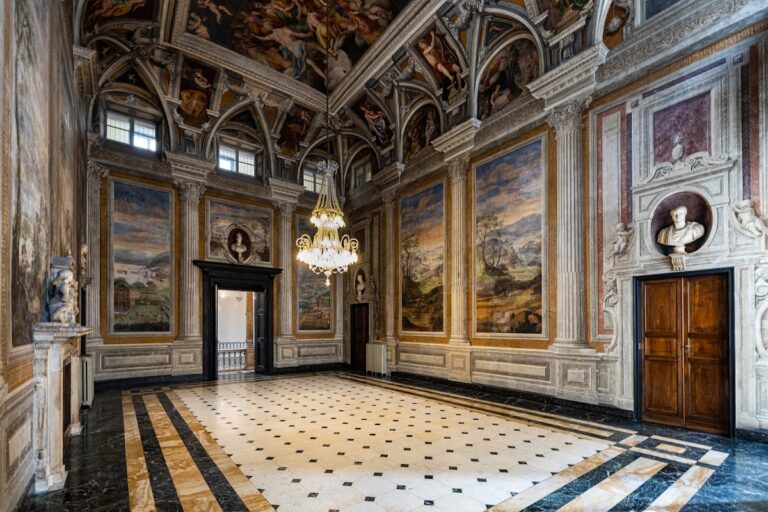
The interior reception rooms contain frescoes depicting mythological and military subjects. One room shows Apollo shooting at the Greeks at the gates of Troy, while another presents Hercules fighting the Amazons. These works were assigned to the workshop of Giovanni Cambiaso, a Genoese painter and the father of Luca Cambiaso. They include an important early contribution by Luca, possibly made when he was about seventeen.
Other principal rooms contain scenes from the Trojan War and battles between sea monsters. The fresco cycle also includes an Apollo scene dated 1544 and attributed to Giovanni and Luca Cambiaso. The eastern gallery, added in the seventeenth century, was richly frescoed by Andrea Ansaldo before nineteenth-century alterations associated with the opening of Via Roma led to its demolition.
Nearby sites