Fort of Olheiros: A Peninsular War Defence in Portugal


Site at a Glance
- Rating
- 4.1
- Popularity
- Very Low
- Country
- Portugal
- Primary era
- Modern
- External website
- Open
- Eras represented
- Modern
- Civilizations
- British, Portuguese
- Site type
- Military
- Remains
- Fort
On this page5 sections
History
Fort of Olheiros, also known as the Fort of Canudo, is a Peninsular War fortification in Portugal, near Torres Vedras, built in 1809–1810 under the orders of the Duke of Wellington. The Peninsular War was the conflict in the Iberian Peninsula from 1807 to 1814 between French forces and opposing Spanish, Portuguese, and British forces. The fort formed part of the Lines of Torres Vedras, a defensive system built to protect Lisbon and support Portugal against French invasion.
The Lines of Torres Vedras
The Lines of Torres Vedras comprised 152 forts, redoubts, and other defensive works arranged in three lines across approximately 80 kilometres. They strengthened natural obstacles by using the existing topography. Fort of Olheiros was designated site No. 23 and occupied the most northerly position among the forts and other military facilities constructed for the Lines.
Its position allowed it to support three forts in the Varatojo Mountains and the Fort of Grillo by covering the River Sizandro valley. It also helped defend the western side of the much larger Fort of São Vicente. The garrison is believed to have numbered 180 soldiers. The fort has survived with preservation and restoration work maintaining its historic form.
Remains
Fortification Layout
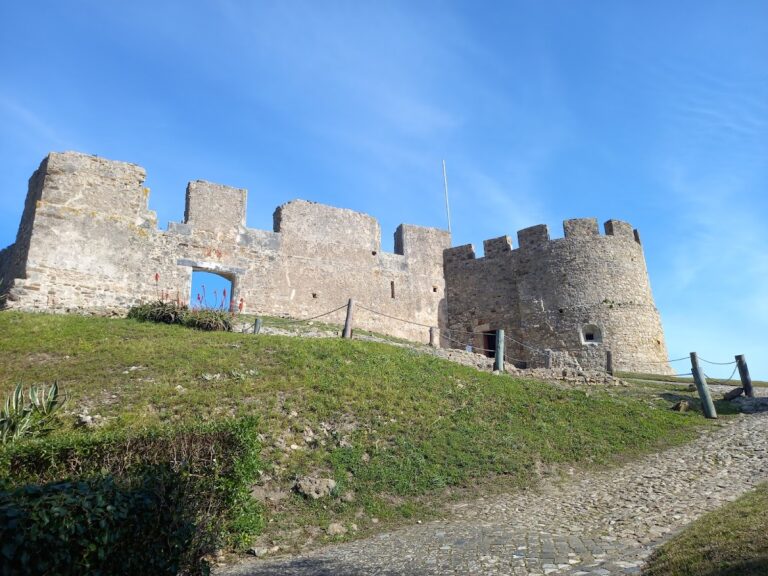
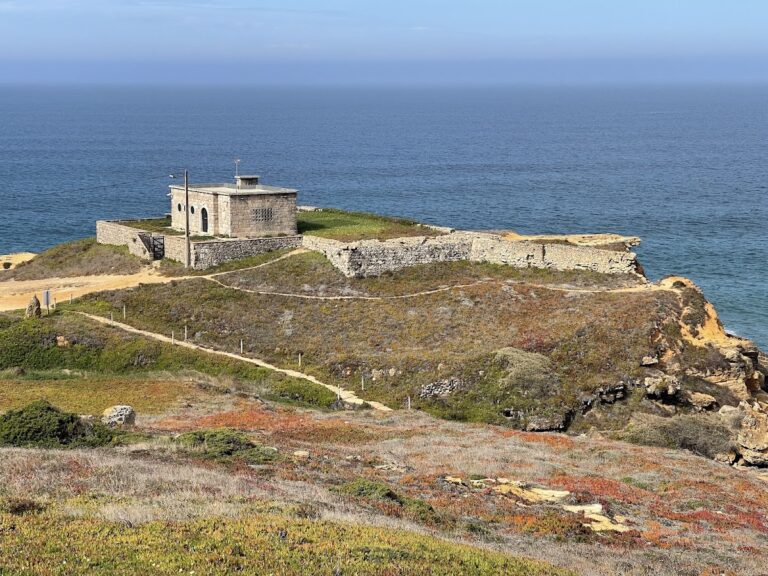
Fort of Olheiros is a small fortification situated at 105 metres above sea level, a few hundred metres northwest of Fort of São Vicente. Its irregular plan forms a seven-sided polygon measuring approximately 45 metres in length and 19 metres in width. A pronounced dry moat lined with stone forms part of the defences, and the moat was originally crossed by a drawbridge.
The fort contained eleven gun emplacements and a munitions store. These elements formed the defensive and logistical core of the position, which covered the River Sizandro valley and supported the surrounding forts.
Incorporated Windmill
A windmill that existed before the fort was built was incorporated into the military installation. Its inclusion reflects the adaptation of an existing structure within the fort’s defensive layout.