Fort of Archeira: A Defensive Work of the Lines of Torres Vedras

Site at a Glance
- Rating
- 4.4
- Popularity
- Very Low
- Country
- Portugal
- Primary era
- Modern
- External website
- Open
- Eras represented
- Modern
- Civilizations
- British, Portuguese
- Site type
- Military
- Remains
- Fort
On this page6 sections
History
The Fort of Archeira, in Portugal, was a defensive work of the first Lines of Torres Vedras, constructed during the Peninsular War between France and the allied forces of Britain, Portugal, and Spain. Construction began in 1810, when the site was known as “Cheira,” and the fort is now also called the Furadouro Redoubt. It formed part of a military system intended to protect Lisbon from French invasion or, if necessary, secure the retreat and embarkation of the British Army.
Creation of the defensive lines
On October 20, 1809, Arthur Wellesley, 1st Duke of Wellington, ordered three defensive lines to be built north of Lisbon, between the Atlantic Ocean and the River Tagus. The Royal Engineers, the British military corps responsible for fortification, surveying, and related technical works, carried out the construction under the overall supervision of Colonel Richard Fletcher. The system eventually comprised 152 forts, redoubts, and other military works, built rapidly and in great secrecy.
Archeira was classified as Military Work No. 128. It belonged to the first line and helped defend the Runa and Ribaldeira river valleys alongside Feiteira, Military Work No. 129, and the Fort of Catefica, Military Work No. 130. This group was commanded by Baron Christian Adolph Friedrich von Eben and General Brent Spencer.
The French advance and withdrawal
After the Anglo-Portuguese Army withdrew to the first line following the Battle of Buçaco on September 27, 1810, French forces reached the defensive system on October 11 and occupied Sobral de Monte Agraço the following day. Their advance was repelled at the Battle of Sobral on October 14 by fire from forts on the first line.
The French began withdrawing northward during the night of November 14–15, 1810, because of shortages of food and fodder. They did not return, although work continued in later years on some forts that were still unfinished, including Archeira. The fort itself was not used in battle.
Communications and later history
Archeira also served as one of the signal stations of the Lines of Torres Vedras. Its optical telegraph, a visual system for transmitting messages between distant stations, communicated with the Fort of Alqueidão to the southeast, the Fort of São Vicente north of Torres Vedras, and the Atlantic coast.
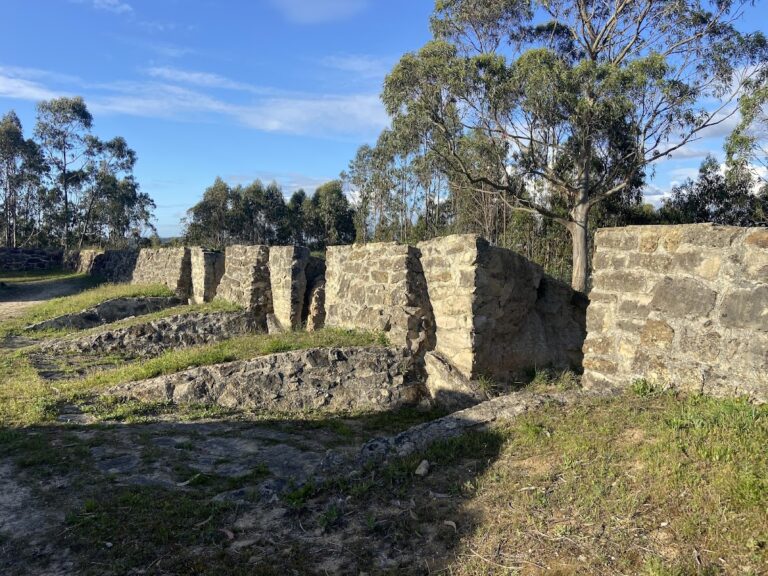
Limited restoration took place around the bicentenary commemorations of the Lines of Torres Vedras. Most of the original structure remains concealed or no longer survives above ground, leaving the visible entrance to a small storeroom as the clearest surviving element.
Remains
Layout and surviving features
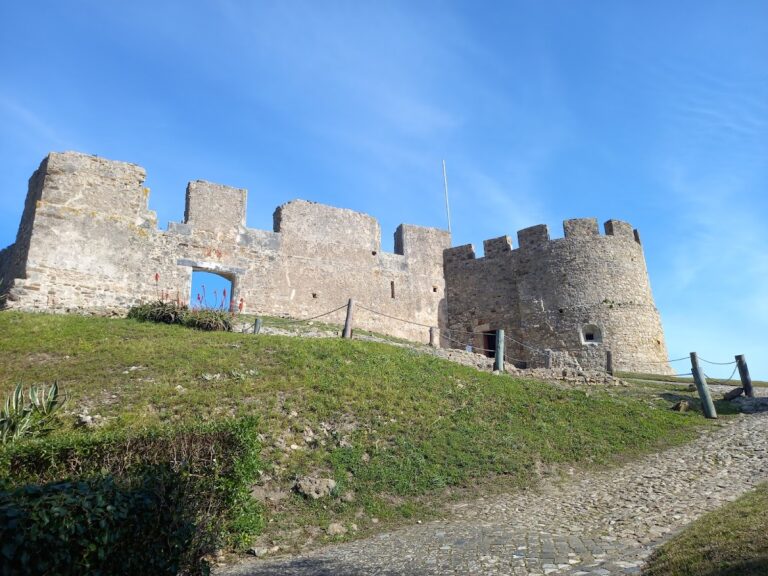
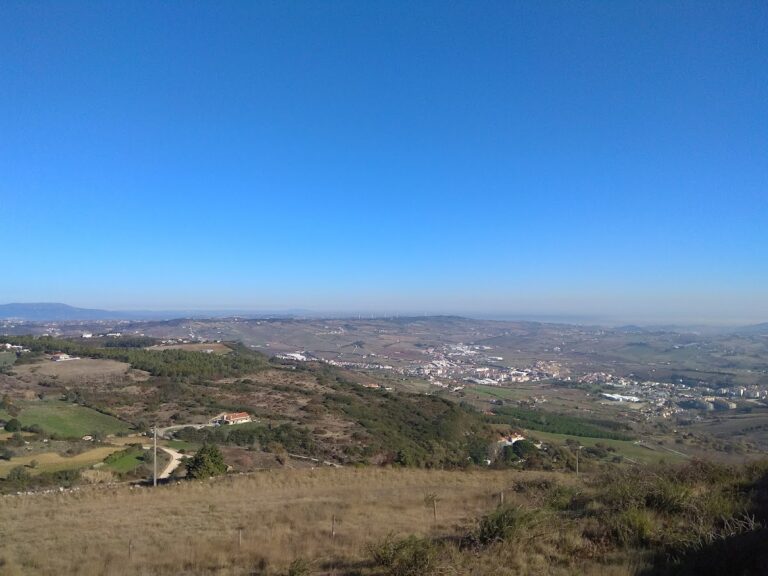
The fort stands at an altitude of 345 metres in the Serra da Caduceira, a mountainous area southeast of Torres Vedras and northeast of Monte Agraço, in the municipality of Torres Vedras. It had an irregular polygonal plan and was the largest fortification in the Serra da Caduceira. Built from local stone, it was designed for a garrison of 500 soldiers and carried six 12-calibre guns. Like the other forts in the defensive system, it was enclosed by a ditch, or dry moat. The entrance to a small storeroom remains visible, while most of the fort’s original fabric is no longer exposed.