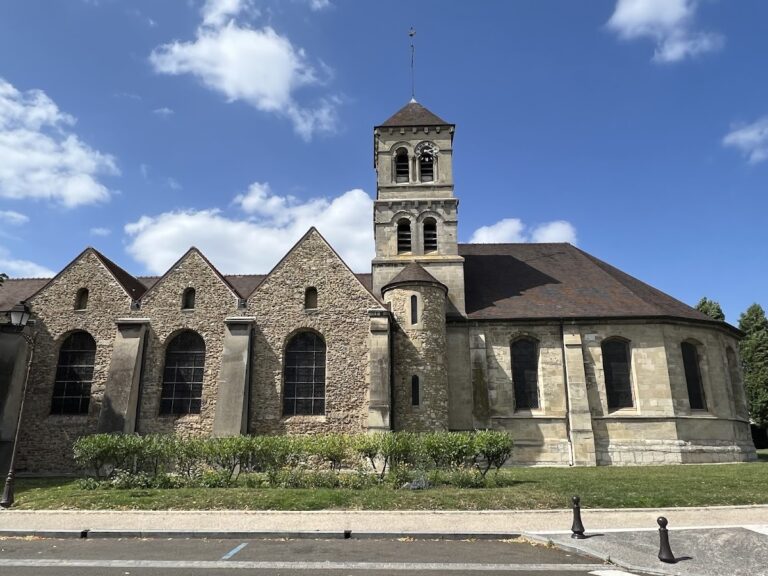
Fort de Domont: A Séré de Rivières Fortification in France


Site at a Glance
- Rating
- 4.3
- Popularity
- Very Low
- Country
- France
- Primary era
- Modern
- Eras represented
- Modern
- Civilizations
- French
- Site type
- Military
- Remains
- Fort
On this page7 sections
History
Fort de Domont is a French military fortification in Domont, France, built between 1874 and 1878 in the late nineteenth-century Séré de Rivières style to defend Paris after the Franco-Prussian War. It formed part of an outer ring of defenses created as advances in artillery made the earlier Thiers fortifications of the 1840s less adequate.
Construction and defensive role
The fort was built according to the Séré de Rivières system, a French network of forts, batteries, and defensive works developed after France’s defeat in the Franco-Prussian War. Covering 12 hectares, it accommodated a garrison of 1,175 men and officers. Its guns supported the neighboring Fort de Montmorency and Fort de Montlignon, extending the defensive network north of the capital.
World wars and later uses
On 3 and 4 September 1914, during World War I, Fort de Domont fired on German reconnaissance parties near Luzarches. It was the only Parisian fortification to fire on German forces during that war.
German forces occupied the fort during World War II. Before evacuating on 26 August 1944, they destroyed its ammunition stockpile in an explosion. During the 1950s, the French Post used the site as an ionospheric research station. The Ministry of Agriculture later occupied it, followed briefly by a private company conducting radiography work in the 1990s. In 1993, the former fort became a fire-services training center. It is now known as the Fort Domont Training Center and provides comprehensive training, including live-fire exercises. Fort de Domont forms part of the Fortifications of Paris and the Séré de Rivières system.
Remains
Fort de Domont survives as a pentagonal stone-and-brick fort occupying a 12-hectare site. Its entrance lies on the southern side, facing Paris. The defensive layout incorporated projecting structures around the outer edge, while the elevated firing terrace placed artillery above the lower defensive works.
Defensive layout
A double caponier, a projecting fortified structure designed to fire along the ditch or outer face, occupied the outward-facing point of the fort. Two flanking caponiers protected the eastern and western sides. Together, these positions provided fire along the fort’s perimeter and formed part of its close defensive arrangement.
Artillery positions
The principal armament was a 155-millimetre Mougin turret, a rotating armored artillery turret developed for late nineteenth-century French fortifications. Added in 1884, it was supported by 120-millimetre and 95-millimetre guns placed on the firing terrace, or cavalier, an elevated artillery platform within the fort. The artillery commanded the plains to the north and the railway line leading to Pontoise.
Later physical use
The former fort contains the Fort Domont Training Center, whose facilities support fire-services instruction and live-fire exercises. This continuing institutional use has given the military structure a later practical function while retaining its original defensive layout and artillery positions.
Nearby sites