Beacon Hill Battery: A Coastal Defence Fortification at Harwich


Site at a Glance
- Rating
- 4.7
- Popularity
- Very Low
- Country
- United Kingdom
- Primary era
- Modern
- External website
- Open
- Eras represented
- Modern
- Civilizations
- British
- Site type
- Military
- Remains
- Fort
On this page12 sections
History
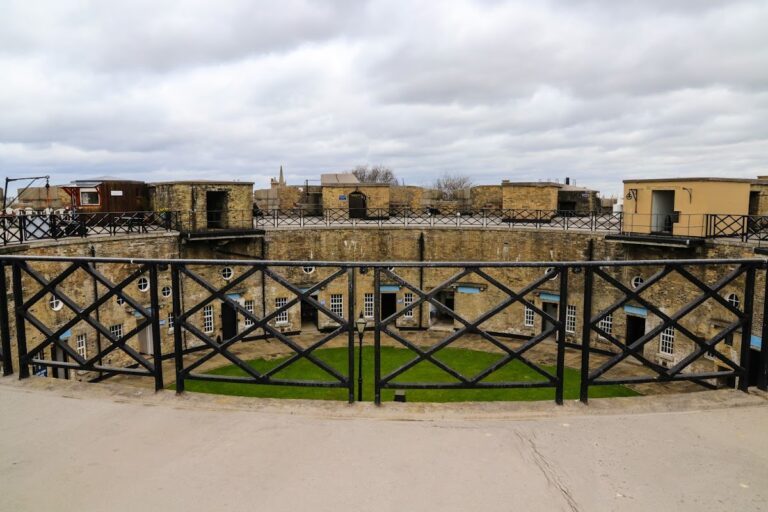
Beacon Hill Battery is a coastal fortification in the United Kingdom, located on a promontory about one kilometre south of Harwich and built to defend the port’s approach during the late nineteenth and twentieth centuries. Overlooking the Stour and Orwell estuaries, it guarded access to a harbour that had served as an important civil and naval port since the Middle Ages. The surviving fortification is also known as Beacon Hill Fort and is a scheduled ancient monument, although its privately owned condition is assessed as at risk.
Tudor and Napoleonic Defences
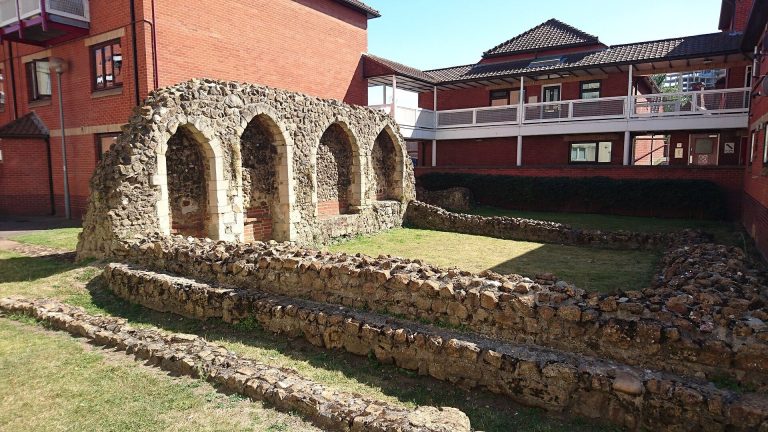
The first fortification on Beacon Hill was a Tudor blockhouse built during the reign of Henry VIII, the English king from 1509 to 1547. It formed one of three Device Forts at Harwich, a chain of coastal defences constructed in response to the threat of invasion. The other blockhouses stood at Tower House, Middle House, and House-upon-the-Hill. These installations were abandoned within ten years, but the danger posed by the Spanish Armada, the Spanish naval expedition sent against England in 1588, led to their temporary reactivation. They then fell into disrepair, and by 1625 Harwich was regarded as defenceless. Erosion later destroyed the Beacon Hill blockhouse itself.
Harwich Barracks were built nearby in 1803, initially accommodating the West Essex Regiment and the Royal Buckinghamshire Militia. A new earthen battery of five 24-pounder guns was added on the promontory in 1812 to support Harwich Redoubt, which had been completed 180 yards to the north in 1810 with ten 24-pounder guns. The battery was lost to coastal erosion by 1822. A replacement proposed in 1839 was never constructed.
Construction and Victorian Armament
Renewed concern about a French invasion prompted a committee on the fortifications and armaments of military and mercantile ports in 1887. Chaired by Edward Stanhope, the Secretary of State for War, the committee recommended new coastal artillery. An order for a battery at Beacon Hill followed in September 1888, and construction took place from 1889 to 1892. The work was complete by May 1892.
The new battery initially mounted one BL 10-inch gun and one BL 6-inch gun on hydro-pneumatic disappearing mountings. BL means breech-loading, while a disappearing mounting was designed to lower a gun behind protective cover after firing, using compressed air and liquid under pressure in the hydro-pneumatic mechanism. Two QF 4.7-inch guns were also installed. QF means quick-firing, a system intended to allow a faster rate of fire.
A former practice battery near the tip of the headland had been established in 1871. It was rebuilt in 1894 to carry four RML 64-pounder guns for close defence, using traversing carriages that allowed the guns to be aimed across a wider arc. Two QF 3-pounder Hotchkiss guns were added in 1898. The same year brought a depression range finder and a telephone system, improving the direction of fire and communication within the fort.
The battery was repeatedly adapted as British military planning shifted its main concern from France to Germany. A further BL 6-inch gun was installed north of the battery in 1901. In 1903, the original guns were replaced by three BL 6-inch Mk VII guns, while the two older 4.7-inch guns were retained.
World Wars and Decommissioning
During the First World War, Harwich became an important destroyer base, and the fort received two QF 1-pounder pom-pom anti-aircraft guns. It continued to operate during the period between the world wars, although the 4.7-inch guns were eventually retired.
Modernisation plans had not begun when the Second World War started. In 1940, Cornwallis Battery was built for two rapid-firing QF 6-pounder 10 cwt guns on a twin-barrelled mounting. These weapons were intended to counter fast attack craft. The new battery included a magazine, shelters, and a three-storey battery observation post. The 6-inch guns were partly enclosed by concrete casemates to protect their crews from air attack.
In April 1941, a hexagonal tower was constructed 100 yards north of Beacon Hill for a Type 287 radio direction-finding array. The installation, an RDF system used to determine the bearing of radio signals, monitored the observation minefield across the harbour entrance and remained in use until December 1943. Other wartime measures strengthened the ground defences with pillboxes, trenches, and searchlight emplacements. A concrete blockhouse overlooking the breakwater housed an Extended Defence Officer post, from which naval officers could electrically detonate sea mines in the estuary.
Beacon Hill Battery was finally decommissioned in 1956 after coast artillery was dissolved in the United Kingdom. Part of the battery was acquired by Paul Valentine and Barry Sharp in early 2018 as part of a restoration project.
Remains
The surviving fortification is formed mainly from earth and concrete. Its layout centres on an artificial mound covering underground magazines, shelters, and ancillary buildings. This earthwork gave the fort a lower, more natural-looking outline and helped conceal the lighter guns placed around its foot. At the rear, an earthen rampart and a glacis, a sloping defensive bank, descend towards a shallow ditch. The ditch concealed a steel palisade fence, creating the late nineteenth-century defensive arrangement known as the Twydall Profile.
Artillery Positions and Underground Works
Main Battery
The principal battery combined heavy artillery positions with protected spaces below the artificial mound. Its original heavy weapons stood on hydro-pneumatic disappearing mountings, allowing them to drop behind cover after firing. The later armament included three BL 6-inch Mk VII guns, two retained QF 4.7-inch guns, two QF 3-pounder Hotchkiss guns, and two QF 1-pounder pom-pom anti-aircraft guns. The magazines, shelters, and supporting rooms were integrated into the earth-and-concrete structure.
Former Practice Battery
Near the headland tip, the former practice battery was rebuilt in 1894 with four RML 64-pounder guns. The weapons were mounted on traversing carriages for close defence, giving this separate position a role distinct from the heavier artillery of the main battery. Two QF 3-pounder Hotchkiss guns were added there in 1898.
Second World War Installations
Cornwallis Battery
Cornwallis Battery contains a twin-barrelled mounting for two QF 6-pounder 10 cwt guns, together with a magazine and shelters. Its three-storey battery observation post formed a prominent part of the wartime arrangement. Concrete casemates partly enclosed the 6-inch guns elsewhere in the fort, providing protection for their crews against air attack.
Radio Direction-Finding Tower
The hexagonal radio direction-finding tower stands 100 yards north of Beacon Hill. It retains its original Type 287 array, although the original reflectors have been replaced by “pig trough” reflectors. The tower’s wartime function was to monitor the observation minefield laid across the harbour entrance.
Ground and Mine Defences
Second World War ground defences included pillboxes, trenches, and searchlight emplacements. A concrete blockhouse overlooking the breakwater contained the Extended Defence Officer post. From this position, naval officers could electrically detonate sea mines placed in the estuary.