Castel d’Appio: A Ruined Fortification at Ventimiglia, Italy


Site at a Glance
- Rating
- 3.5
- Popularity
- Very Low
- Country
- Italy
- Primary era
- Medieval
- Eras represented
- Classical, Medieval
- Civilizations
- Genoese, Roman
- Site type
- Military
- Remains
- Castle
On this page6 sections
History
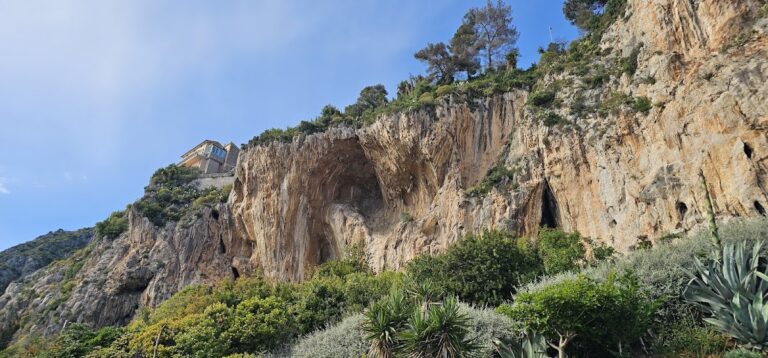
Castel d’Appio is a ruined fortification in Italy, above Ventimiglia and overlooking the Latte valley and the Roia River. The Republic of Genoa ordered its construction in 1140, shortly after Genoa first occupied Ventimiglia, making the castle part of the maritime state’s network of fortified positions along the Ligurian coast.
Origins and Genoese control
An older tradition connects the name Appio with the Roman consul Appius Claudius, who was supposedly responsible for subduing the Ligurian Intemeli in 185 BC and establishing a garrison in the conquered territory. The same tradition links the name to the Appian clan and the Via Appia. This account belongs to the site’s traditional history, while the first official documentation dates from the Genoese period.
Genoa was the castle’s first owner. Notarial deeds prepared by Amandolesio in 1200 mention payments to soldiers and list furnishings and materials kept inside the fortress. These records show the strongpoint as an active military establishment at the beginning of the thirteenth century.
Conflict and decline
In 1318, Robert of Anjou, the Angevin king of Naples, attacked the Ghibellines of the Intemelian city. The Ghibellines, who generally supported the Holy Roman Emperor in medieval Italy’s political struggles, sought refuge at Castel d’Appio. They soon surrendered as the opposing Guelph forces, generally aligned with the papacy, advanced to victory.
Between the sixteenth and seventeenth centuries, Castel d’Appio was abandoned in favor of Castelvecchio. The Republic of Genoa acquired Castelvecchio in 1562, and its more convenient position near Ventimiglia led to its selection over the older fortress. Castelvecchio is identified with the present Fort San Paolo.
The castle briefly returned to military use during the War of the Austrian Succession, an eighteenth-century European conflict involving Austria and its allies against powers including France and Spain. In 1746, Austrian-Sardinian forces fought Franco-Genoese troops in the area. The French, who were already defending Fort San Paolo in the valley, sent 4,500 soldiers to Castel d’Appio to protect the fort from the mountain side.
The deployment failed. General Balbiano, commander of the Austrian-Sardinian troops, quickly captured the strongpoint. Castel d’Appio then declined in importance and was almost completely dismantled soon afterward, ending its strategic role in the eighteenth century. It is now abandoned and survives as a ruin.
Remains
Defensive enclosure and tower
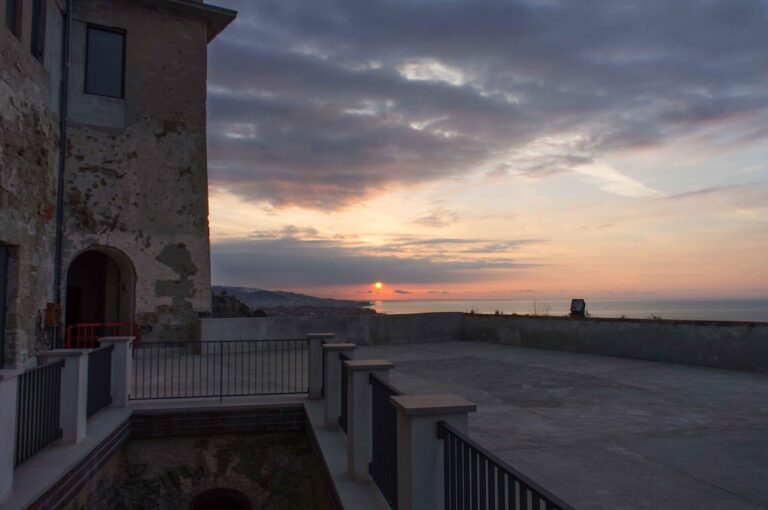
The surviving fortification is organized around an irregular defensive enclosure dating from the thirteenth century. On the south side, an angular fragment of wall probably marks part of the former outer boundary. Within the enclosure are the ruins of a polygonal keep, the principal defensive element of the castle, together with four visible sides of an originally pentagonal tower.
Cistern
The enclosure also contains the remains of a large cistern traditionally attributed to the Roman period. Its presence forms part of the physical evidence preserved within the later medieval fortress, alongside the surviving walls, tower, and keep.