Château de Pagax: A Medieval Fortress in France

Site at a Glance
- Rating
- 4.3
- Popularity
- Very Low
- Country
- France
- Primary era
- Medieval
- External website
- Open
- Eras represented
- Medieval, Early Modern
- Civilizations
- French
- Site type
- Military
- Remains
- Castle
On this page8 sections
History
Royal origins and medieval lords
Château de Pagax is a medieval fortress in France, above Flagnac in the historic province of Rouergue, overlooking the Lot valley near the former border with Quercy. First mentioned in 1259, it was associated with a royal official and helped establish the authority of the King of France in the region. The name was formerly written “Pagas” and is still pronounced “Pagasse.” It has been linked to the Latin pagus, in connection with a fiscal jurisdiction or payment and a point of passage.
During the Middle Ages, Pagax belonged to the powerful Montarnal family. This noble lineage held a barony and appears as early as 1096 in a charter of Conques Abbey. Members of the family took part in the Crusades and supported the Church. In the fifteenth century, Hugues de Montarnal arranged the marriage of his daughter Nine to Guillaume de Moret and directed the inheritance toward their male children. After Hugues died, his grandson Jean de Moret received the inheritance, transferring Pagax to the Moret family.
The Moret inheritance
The Morets became an important regional lineage through their extensive possessions, military service, public offices, and marriage alliances. Henri Victor de Moret (1642–1704), lord of Pagas, was described as having royal ancestry through his maternal grandmother, Madeleine de Bourbon Malauze. She was regarded as a direct descendant of the kings of France from Hugh Capet, founder of the Capetian dynasty, to Saint Louis, the thirteenth-century king Louis IX.
The Moret family lived at Pagas until 1773. Their lands and titles included the lordships of Montarnal, Pagas, Vieillevie, Anglars, Roqueprime, and Peyrou, together with the county of Peyre and the barony of Marchastel.
Revolutionary-era changes and modern ownership
In 1773, the castle was acquired by a man identified as Brunet or Le Brunet de Paillez. Jacques Le Brunet, who came from Conques, had made his fortune in Paris after marrying a wealthy heiress and became a major purchaser of noble property. In the years before the French Revolution, he burned the castle’s feudal titles and ordered its towers reduced in height. He took these measures after difficulties with peasants at his nearby Château de Privezac and sought to prevent the estate from being looted.
Little is recorded about the castle’s occupants after this period. It belonged to the Solanet family in the early twentieth century and passed by auction to the Campargue family around 1925. The Dessalles family acquired Château de Pagax in 2005 and began renovation work that year. The property is classified as ruins and remains in that family’s ownership. It was listed as a protected historic monument in 1978. In 2020, the Stéphane Bern heritage mission selected it for the French Heritage Lottery, and a television report about the castle was produced on that occasion.
Remains
Fortress core
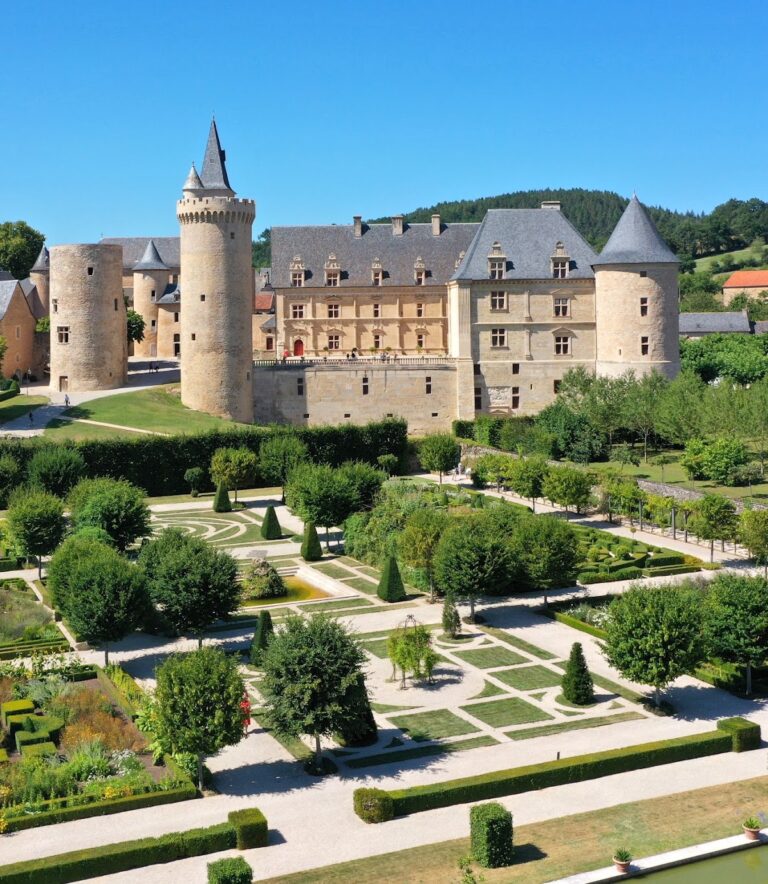
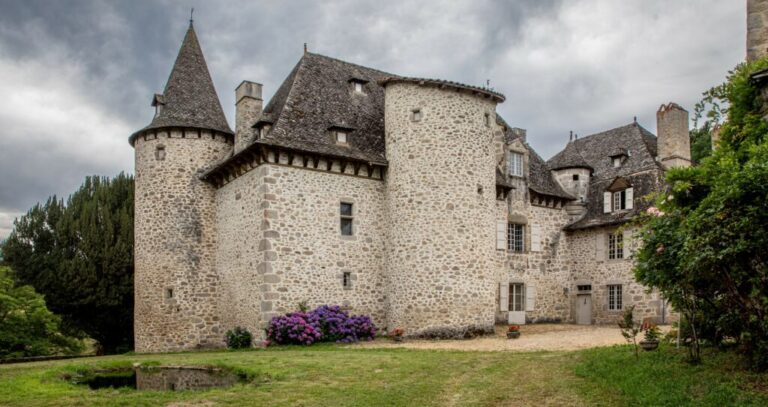
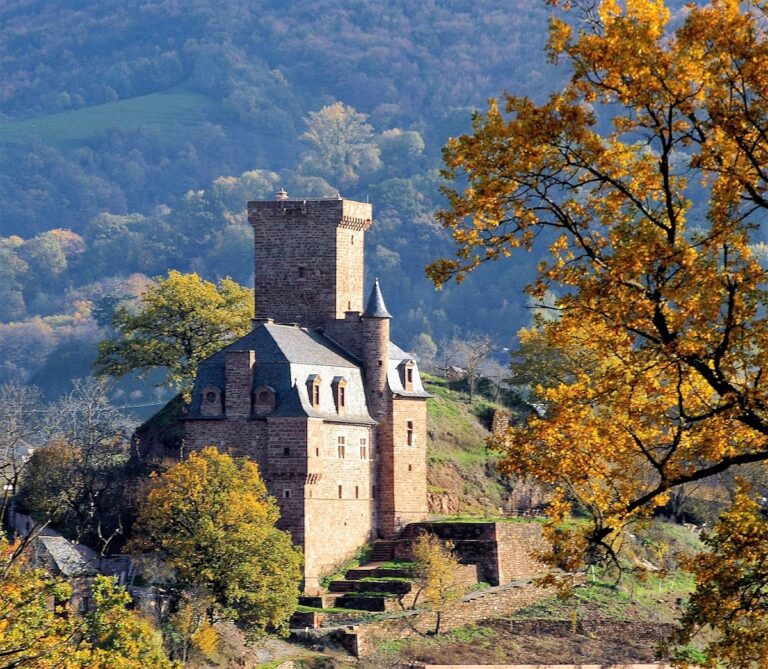
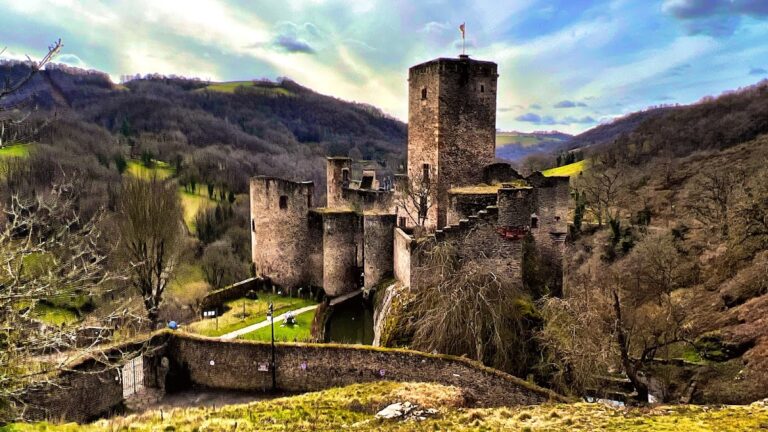
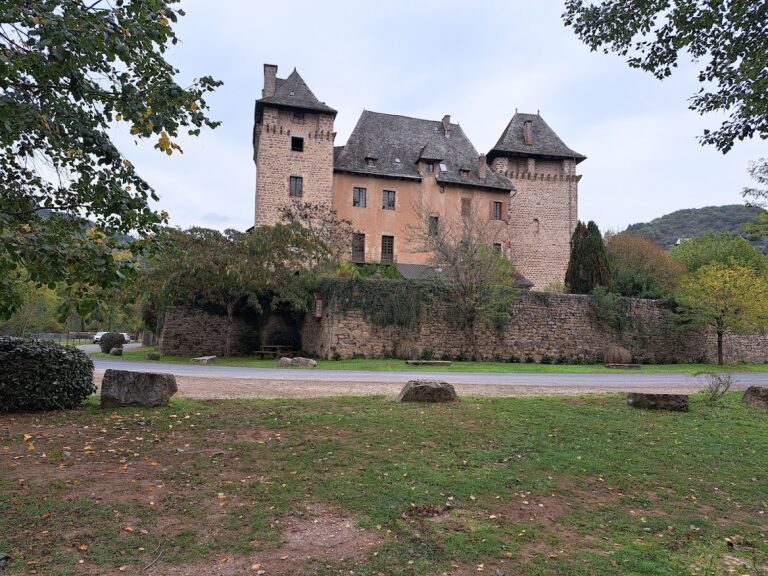
Château de Pagax is organized around a square main building, a form characteristic of fortresses of the twelfth and thirteenth centuries. The structure rises three storeys above a blind ground floor and is flanked by four massive corner towers. Machicolations, projecting defensive structures with openings for observing or attacking assailants below, connect the towers and reinforce the fortress’s defensive character.
The main building was remodelled during the Renaissance, the European period that followed the Middle Ages and revived classical artistic forms. Large mullioned windows were inserted into the walls. These windows are divided by vertical stone bars, and their later addition altered the appearance of the medieval fortress.
Defensive annex
A substantial adjoining building served a defensive purpose. It contained two opposing watchtowers and a wall-walk, a passage along the top of a defensive wall or building. The annex originally had one more storey than survives today, making its present form the reduced remains of a taller structure.
Chapel of Saint Peter
A chapel dedicated to Saint Peter stood against the defensive annex. Founded in 1327, it remained beside the castle until the 1960s.
Nearby sites