Château de Belcastel: A Medieval Fortress in France



Site at a Glance
- Rating
- 4.6
- Popularity
- Medium
- Country
- France
- Primary era
- Medieval
- Eras represented
- Medieval, Modern
- Civilizations
- French
- Site type
- Military
- Remains
- Castle
On this page13 sections
History
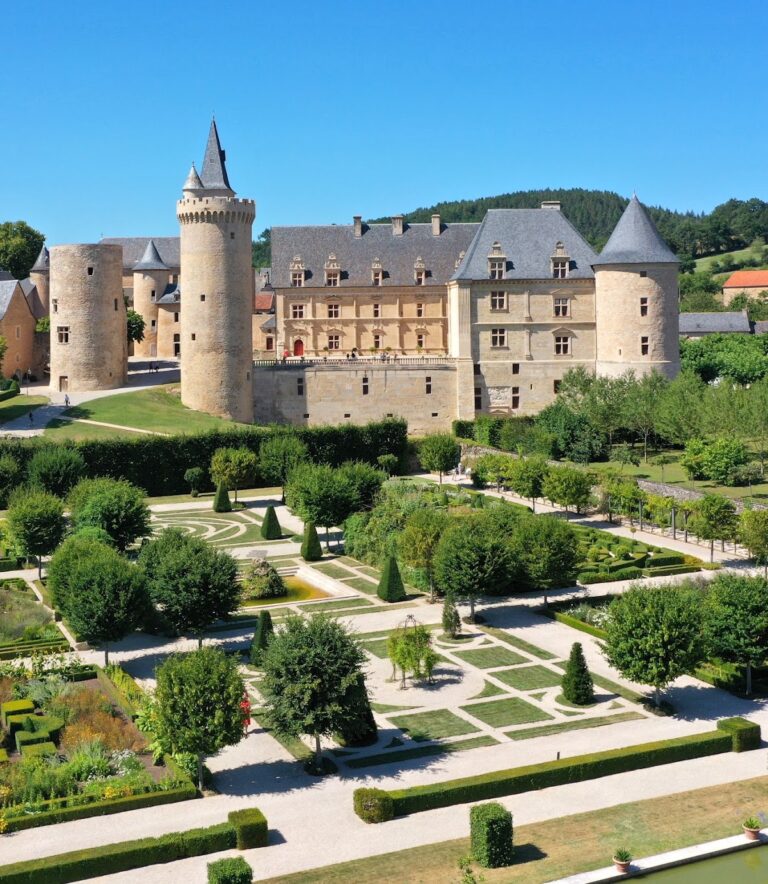
Château de Belcastel is a medieval military fortress in Belcastel, France, developed between the ninth and eleventh centuries on a rocky spur above the Aveyron. Its earliest known feature was an eighth-century pre-Romanesque chapel, an early medieval Christian building that predated Romanesque architecture. The fortress protected the valley, possibly countered invasions, and stood on one of the waypoints of the salt route.
Early fortress and medieval lordship
The site may have Roman origins, but its first known Christian building was probably a chapel dedicated to Saint Mary Magdalene. Tradition associates Mary Magdalene with the site after the death of Jesus Christ. A castle developed during the ninth or tenth century, followed by fortifications in the tenth and eleventh centuries and further alterations in the fourteenth century.
The foundation is attributed to Oldoric I of Panat of Rouergue of Bello Castello, who lived around 940 to 987. Gérard I Frotard de Belcastel is identified as the first lord to bear the designation “de Belcastel” if the castle developed in two or three phases. If it was built in a single phase, that designation is instead associated with Umbert or Humbert.
During the thirteenth century, crusading military campaigns devastated the Belcastel estate and severely reduced its population. The castle was then confiscated by the royal domain and used as a military fortress.
English possession and the Saunhac rebuilding
In 1368, Marceline de Belcastel sold the castle to the King of England. The agreements connected with the 1360 Treaty of Brétigny, which temporarily ended a major phase of the Hundred Years’ War between England and France, later brought it into the possessions of Charles V of France, jointly with Bonnecombe Abbey. Charles V, who ruled from 1364 to 1380, granted the castle to the Armagnac family at the end of the fourteenth century for services to the Crown. The Armagnacs subsequently transferred it to the Saunhac family.
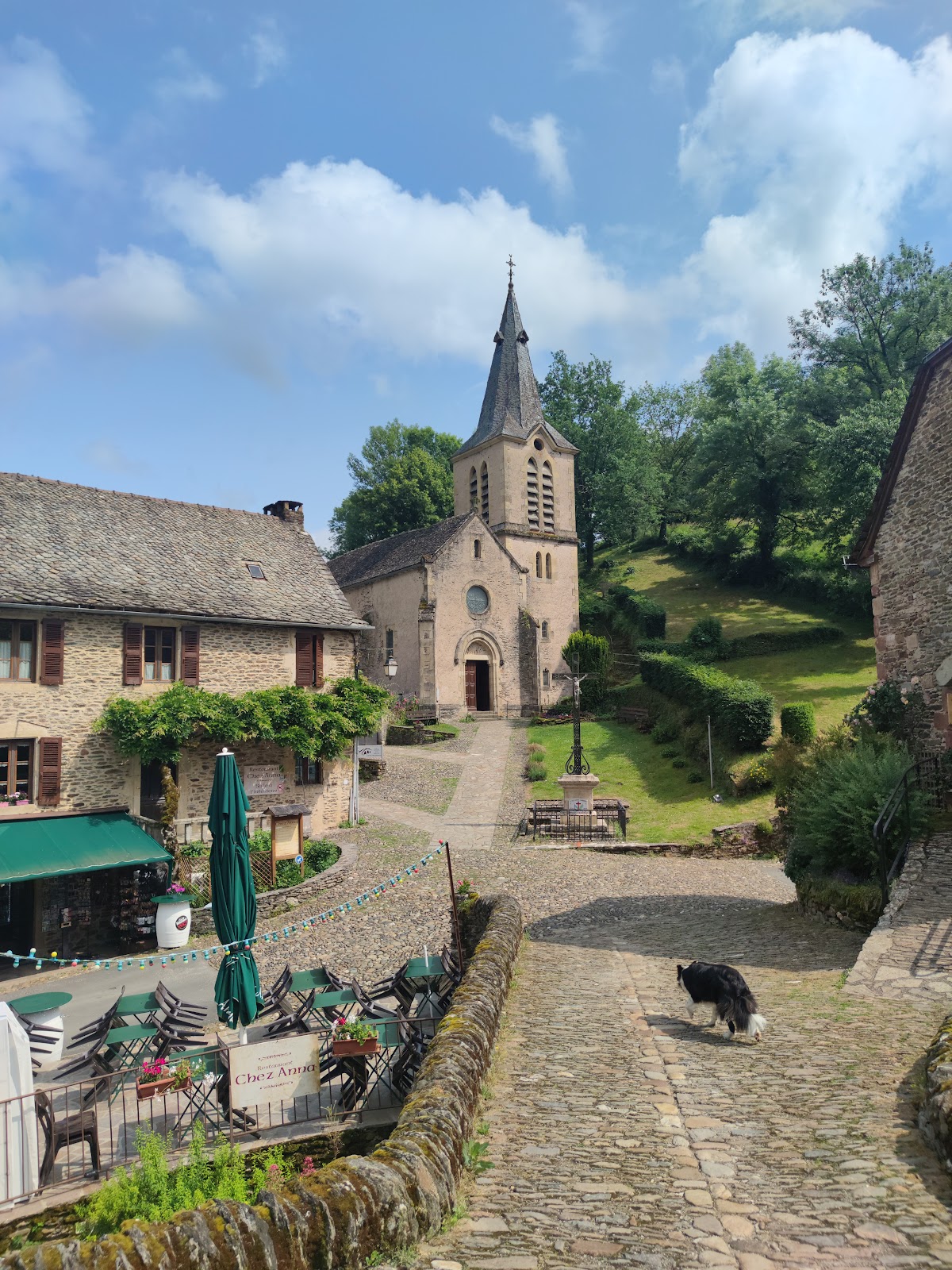
The Saunhacs completed changes begun under the Armagnacs, revived the village, and built the bridge and Church of Saint Mary Magdalene. After the Hundred Years’ War, they made the fortress more comfortable as a residence. The property later passed by marriage to Jean III de Morlhon, lord of Sanvensa and Castelmary and a seneschal, a senior royal official with administrative, judicial, and often military duties, in Quercy and Rouergue. It then passed to François I de Buisson de Bournazel, Marquis of Bournazel, governor and seneschal of Rouergue. François did not live there, and the castle fell into neglect.
Abandonment, damage, and protection
The castle had been abandoned by at least the seventeenth century. In the nineteenth century, Rose Acquier bought it from Marie-Agathe Dorothée de Comminges, the widowed heiress of Jean Buisson de Bournazel, for 750 livres. She intended to operate it as a stone quarry. The removal of its better stones caused extensive damage, and the western façade collapsed at the beginning of the twentieth century.
Dismantling continued until the castle entered the French register of historic monuments on 5 March 1928. This designation protected the site under French heritage law because of its historical and architectural value. Vegetation then overgrew the ruins for the following 46 years.
Fernand Pouillon and the modern castle
French architect Fernand Pouillon discovered the ruined fortress in the early 1970s, acquired it in 1972, and made it his principal residence. He directed an eight-year restoration with a team that included about a dozen stonemasons and ten stained-glass specialists. The official inauguration took place on 6 July 1984.
After Pouillon died at the castle on 24 July 1986, ownership remained in his family. His widow, Catherine Sayen, inherited the property and opened it to the public. Heidi Leigh and her husband, Nick Leone, bought it in 2005 and continued public access, organized contemporary-art exhibitions, partially adapted the castle for hotel use, and added a swimming pool in the moat. After their separation in 2023, the castle was placed on the market. Éric and Valérie Girard purchased it in 2025 for 3 million euros and decided to retain public access alongside its hotel activity.
The 1928 historic-monument protection remains in force, and Pouillon’s restoration was itself listed as a historic monument in 2022. In 2017, Heidi Leigh founded the Fernand Pouillon Heritage Association to promote projects combining art and architecture. That year, the French Ministry of Culture awarded her a medal and the rank of Chevalier des Arts et des Lettres, a cultural distinction for contributions to the arts and literature.
Restoration of the castle also helped revive Belcastel. Pouillon obtained permits to restore the village’s ruined houses, fully restored one house above the castle, and consolidated many others before their acquisition by the commune. Belcastel was recognized in 1992 as one of France’s “Most Beautiful Villages.”
Remains
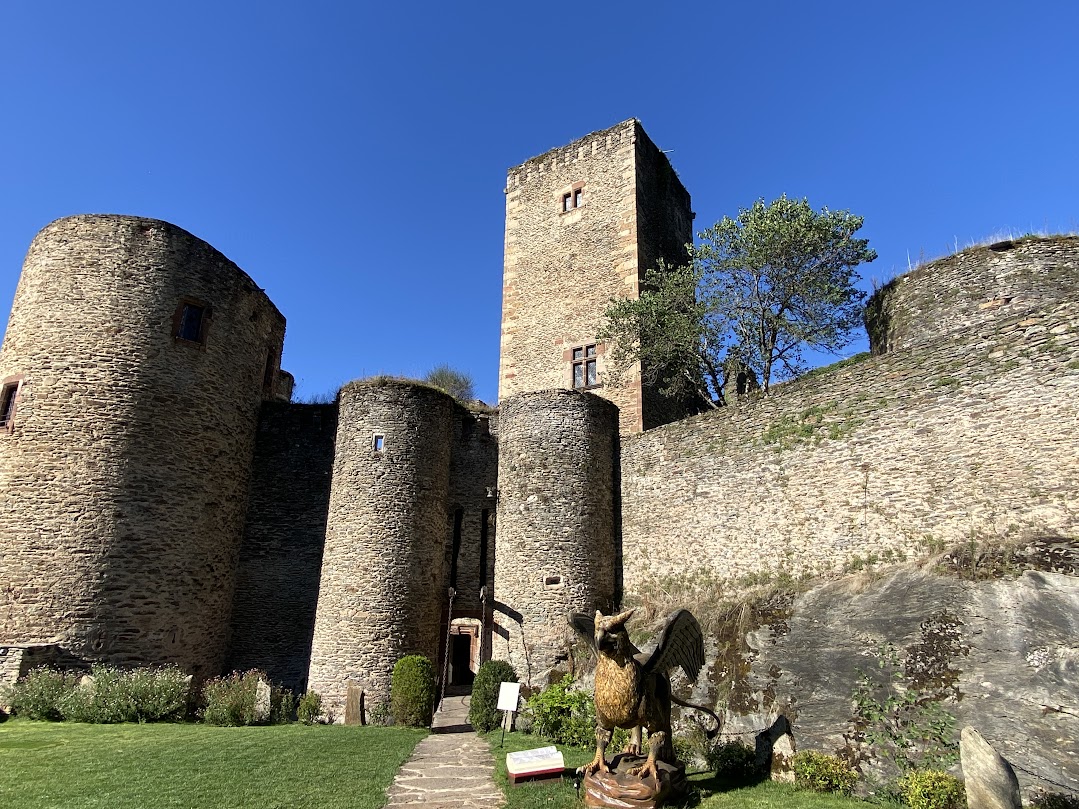
Château de Belcastel occupies a rocky spur above the north bank of the Aveyron. The northern side falls steeply for about 40 metres. Its medieval fabric grew from an eighth-century chapel into a fortified complex, with major defensive work dating from the tenth and eleventh centuries. The difficult lanes and approach around the site prevented construction machinery from reaching the castle during Pouillon’s restoration.
Medieval fabric
Chapels and fortifications
The earliest known building was an eighth-century chapel. A later chapel was built over it, before the complex developed into a castle. Fortifications from the tenth and eleventh centuries remain part of the structure, while later work altered the fortress during the fourteenth century.
Salle des Gardes
The tenth-century Salle des Gardes, or guards’ hall, is one of the castle’s named medieval spaces. During the restoration it served as Pouillon’s architectural office. His mausoleum in Belcastel’s small cemetery was later designed as a replica of the room.
Residential and restored features
Windows and stained glass
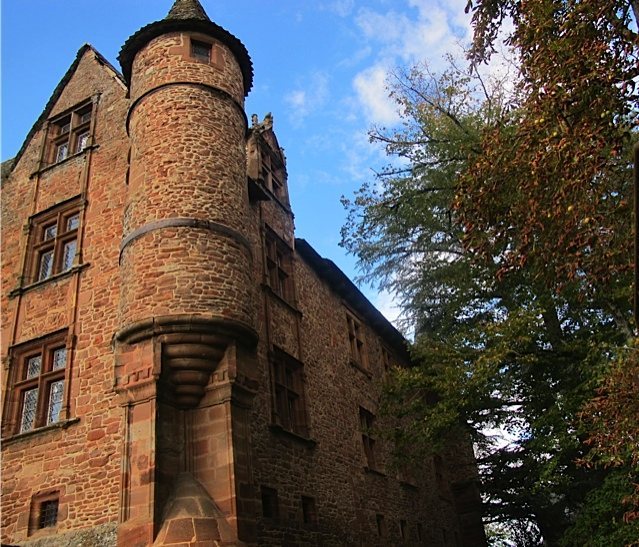
Changes made after the Hundred Years’ War included mullioned windows, which are divided vertically by stone bars, and stained glass that helped make the former fortress more comfortable as a residence. Pouillon restored 87 sixteenth-century stained-glass windows acquired from Orléans Cathedral. Illustrations showing the castle’s interiors before their decline guided the arrangement of most rooms.
Stonework and interior spaces
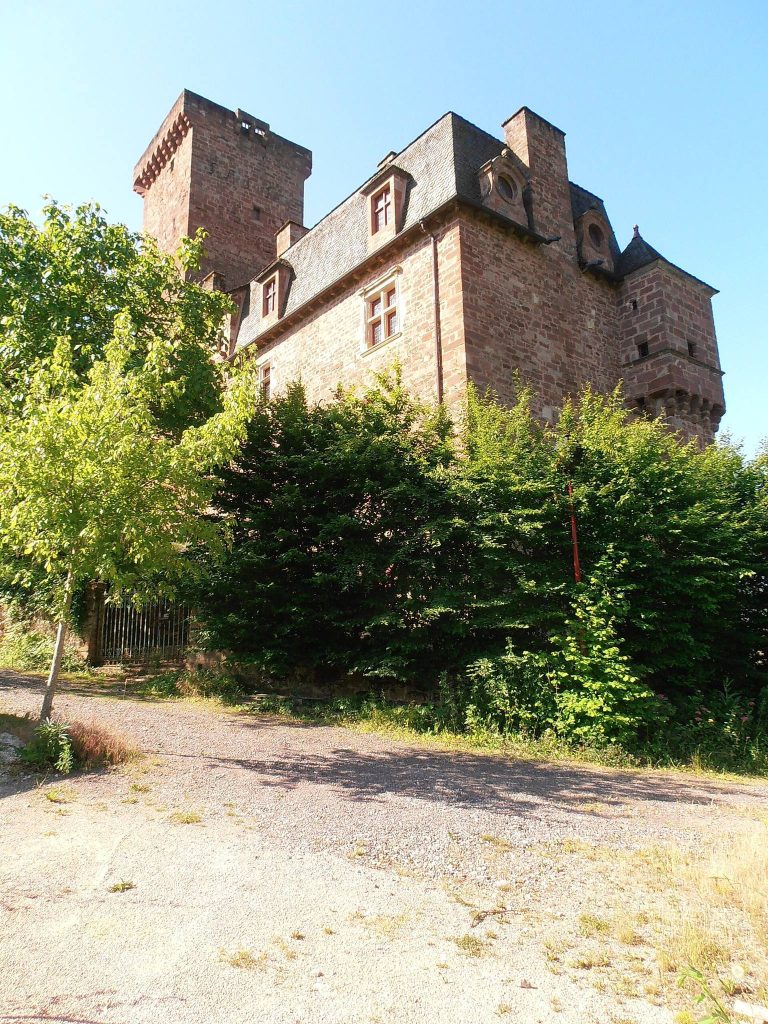
Pouillon reconstructed the castle stone by stone, restoring its roofs, walls, windows, large beams, arches, and chimneys. Stone came from a quarry above the castle. Modern materials were combined with older designs, while the work relied on manually executed construction techniques rather than cranes or other machinery. The restored interior contains art galleries and medieval artefacts while retaining the character of the medieval fortress.
Former moat
The former moat now contains a swimming pool added during the modern conversion that partially adapted the castle for hotel use.