Alt-Bechburg Ruin: A Medieval Hill Castle in Switzerland


Site at a Glance
- Rating
- 4.7
- Popularity
- Very Low
- Country
- Switzerland
- Primary era
- Medieval
- Eras represented
- Medieval
- Civilizations
- Holy Roman Empire
- Site type
- Military
- Remains
- Castle
On this page8 sections
History
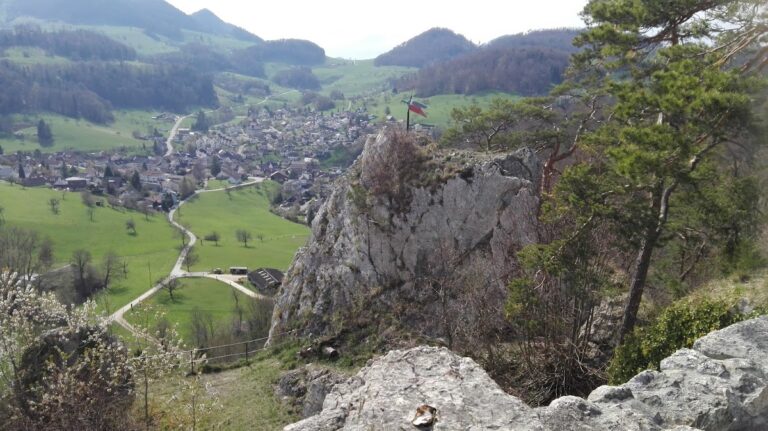
Alt-Bechburg ruin is the remains of an eleventh-century high-medieval hill castle in Holderbank, Switzerland, built by the Barons of Bechburg on a narrow rocky ridge above the pass route over the Buchsiterberg. This Jura crossing was an important medieval route, giving the castle a position connected with movement through the region. The site is recognized as a Swiss heritage site of national significance.
Division and reunification
Alt-Bechburg later became a joint-ownership castle, meaning that different owners held separate sections of the complex. The rear castle remained with the Bechburg family, while the front castle was held as a fief from the Bishop of Basel. A fief was property held from a superior lord in return for service or allegiance. The Counts of Frohburg, who held the front section from the bishop, granted it to the Counts of Falkenstein, a collateral branch of the Bechburg family.
The knight Heinrich von Ifenthal reunited the two sections by purchasing the front castle in 1325 and the rear castle in 1336. In 1416, his granddaughter Margreth von Ifenthal sold the reunited castle to the city of Solothurn. Solothurn then granted the castle and its associated Sennhof farm as a fief to private holders. A Sennhof was a farm linked to a castle or estate, traditionally associated with dairy or herding operations.
Neglect and ruin
The Bloch family of Klus held the hereditary fief from 1572 to 1668. Their main interest lay in the Sennhof, and they did not have the funds to maintain the castle. It consequently fell into neglect and was already described in the seventeenth century as a decaying castle. The deteriorating complex burned for unknown reasons in 1713 and became a ruin.
At the initiative of a historical association, the ruin was excavated and conserved in 1936 and 1937. A hoard found during the 1936 work was transferred to the Blumenstein Historical Museum, adding evidence of the castle’s medieval history.
Remains
Castle layout
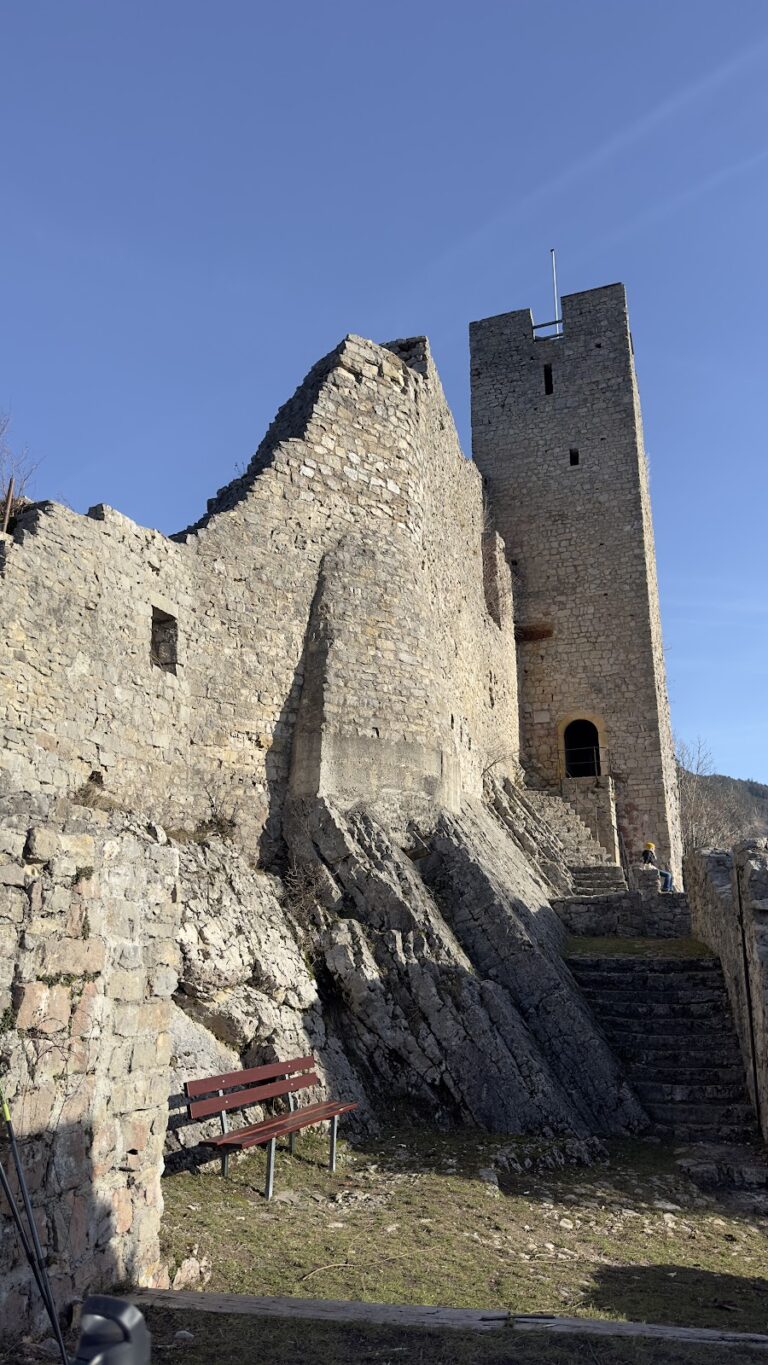
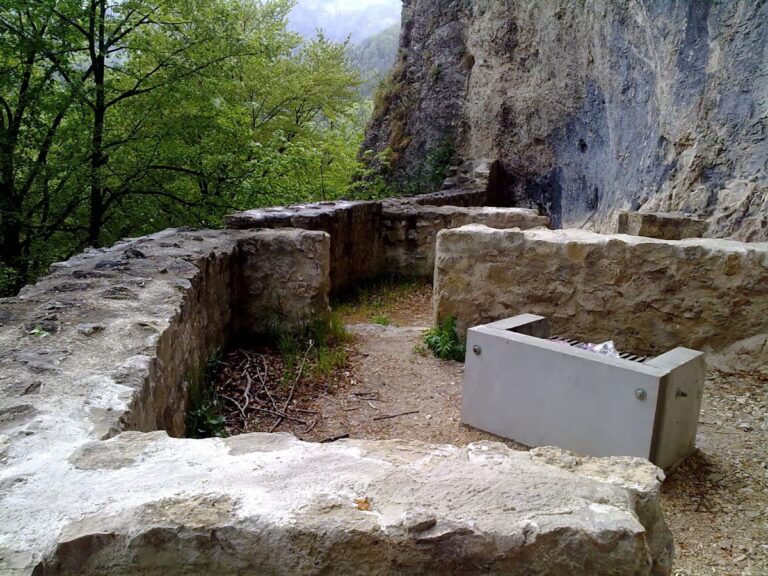
The surviving site occupies a narrow rocky ridge above the medieval pass route over the Buchsiterberg. It was arranged as a hill castle, a fortified residence or stronghold built on elevated ground for defense and visibility. The complex consisted of a front castle and a rear castle, the two sections forming the physical basis of the double-castle arrangement created by their separate ownership. Today the site survives as a ruin.
Front castle
The front castle formed one of the two sections of the complex. It was held as a fief from the Bishop of Basel and passed through the Counts of Frohburg to the Counts of Falkenstein before Heinrich von Ifenthal purchased it in 1325. Its surviving remains are part of the ruined castle complex conserved after the excavations of 1936 and 1937.
Rear castle
The rear castle was the section retained by the Bechburg family during the period of divided ownership. Heinrich von Ifenthal acquired it in 1336, completing the reunification of the two castle sections. The rear castle now survives within the same ruin on the rocky ridge.
Coin hoard
A broken jug discovered during the 1936 excavations contained more than 5,000 silver coins. All but eight were so-called mute coins, medieval pieces without readable written inscriptions. Instead, these coins carried either a double-knobbed cross or a wheel. They are believed to have been minted in Solothurn around 1180, placing the hoard within the castle’s medieval period.
Nearby sites