Fort Dugommier: A Nineteenth-Century Military Fortification at Collioure


Site at a Glance
- Rating
- 4.1
- Popularity
- Very Low
- Country
- France
- Primary era
- Modern
- External website
- Open
- Eras represented
- Modern
- Civilizations
- French
- Site type
- Military
- Remains
- Fort
On this page6 sections
History
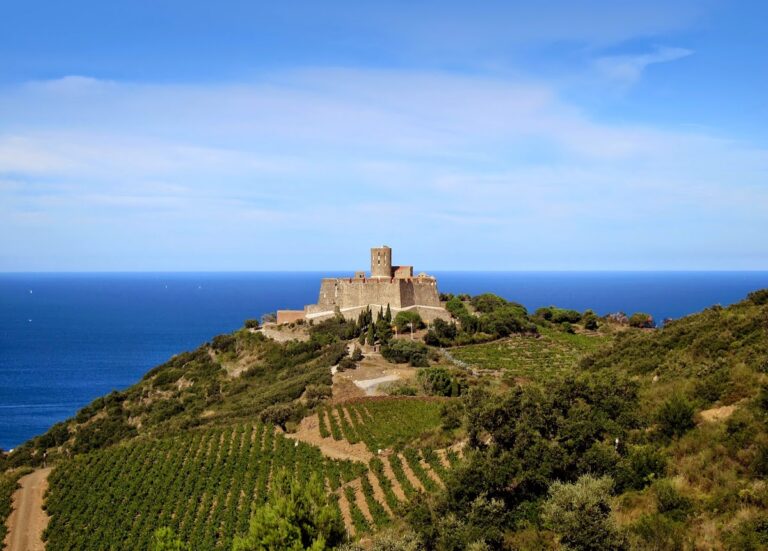
Fort Dugommier is a fortified military work at Collioure, France, constructed between 1844 and 1852 as a nineteenth-century defensive installation. It stands near the commune’s southern boundary and was named after Jacques François Dugommier, an eighteenth-century French general who served during the Revolutionary Wars.
Construction and military obsolescence
The fort replaced the Pallat redoubt, a small detached fortification built of dry stone to strengthen a defensive position. Soon after Fort Dugommier was completed, advances in artillery made its design technically obsolete. From the end of the nineteenth century, the fort was dismantled, including the destruction of the upper level of its barracks.
Dismantling and restoration
Material from the destroyed barracks level was reused during the dismantling. The rubble filled the fort’s cisterns, two rooms, and an internal ditch, leaving the complex in this altered state until an association began restoration work in 1997. Fort Dugommier was listed as a French historic monument in 2003.
Remains
Fort Dugommier is a military fortification positioned at an elevation of approximately 200 metres. Its surviving fabric includes a stone-paved glacis, a sloping area outside a fortification intended to expose attackers to defensive fire and restrict their cover. The fort’s present form also reflects the later dismantling of its upper barracks level and the reuse of its rubble within the interior.
Glacis and exterior works
The stone-paved glacis is the fort’s distinctive surviving feature. It forms part of the outer defensive arrangement and is associated with the fort’s elevated position near Collioure’s southern boundary.
Interior remains
The dismantling left the cisterns, two rooms, and the internal ditch filled with rubble from the upper barracks. These filled spaces preserve the physical consequences of the fort’s nineteenth-century destruction and later restoration.
Nearby sites