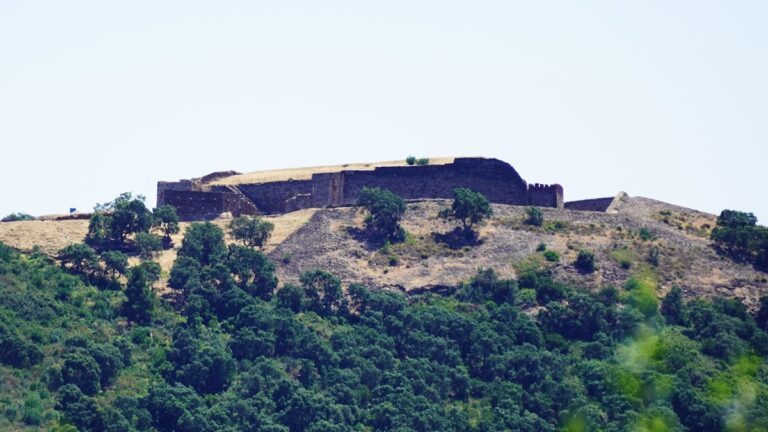
Château d’Ultrera: A Visigothic Fortress in France


Site at a Glance
- Rating
- 4.5
- Popularity
- Very Low
- Country
- France
- Primary era
- Medieval
- External website
- Open
- Eras represented
- Classical, Medieval
- Civilizations
- Roman, Visigothic
- Site type
- Military
- Remains
- Castle
On this page9 sections
History
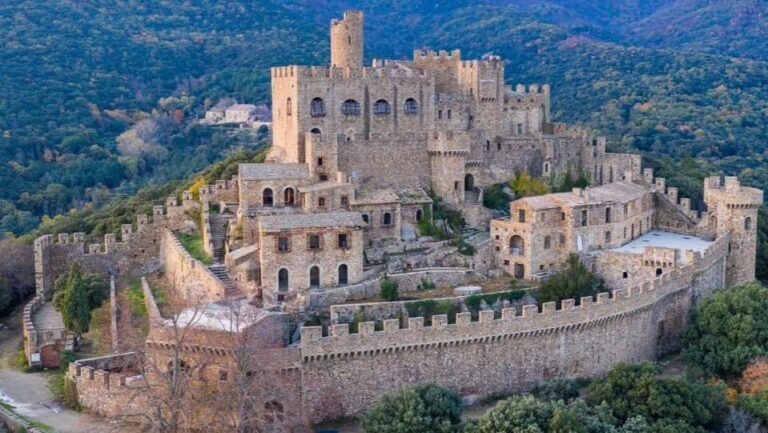
Château d’Ultrera is a ruined fortified complex in France, associated with Sorède although it lies within the commune of Argelès-sur-Mer. The site occupies a steep rocky spur in the Albères massif, and its surviving structure is attributed mainly to the Visigothic period of the sixth and seventh centuries. It formed part of a defensive and surveillance system guarding a natural passage between Roussillon and Catalonia.
Roman and Visigothic Origins
The name Ultrera, also found as Castell d’Ultrera and in French forms such as Ultrère and Oltrère, derives from the Latin Castrum Vulturarium, meaning “castle of the vulture.” The name refers to the site’s difficult access. The strategic spur was probably fortified by the Romans during their conquest of the Iberian Peninsula. The nineteenth-century scholar Alart proposed that construction belonged to the wars involving Sertorius, Pompey, and Julius Caesar between 82 and 47 BC, while other interpretations place the site’s origin in the Gothic period.
The Roman phase is represented by limited remains, whereas most of the castle structure belongs to the Visigoths, a Germanic people whose kingdom included parts of the former Western Roman Empire, the Iberian Peninsula, and Septimania during late antiquity. The castle enters written history in 673, when Julian of Toledo, a seventh-century archbishop and historian, recorded its capture by the Visigothic king Wamba. Wamba took the stronghold from supporters of Duke Paul, a regional leader who had rebelled and claimed the title of king in Septimania.
Medieval Lordship and Religious Use
During the Middle Ages, Ultrera belonged to the lordship of Sorède. Its lords used the titles Lords of Sorède and Ultrera and lived at the castle until a seigneurial residence was built in the village. Around the year 1000, a Romanesque chapel, using the medieval Christian architectural forms that developed in western Europe before Gothic architecture became widespread, was built within the fortress. Dedicated to the Virgin Mary, it became a pilgrimage site and later an hermitage.
A document from 1100 names Bernard as senior chaplain of the church of Ultrera. In 1296, the church was incorporated into the Archdeaconry of Vallespir, an ecclesiastical administrative district supervised by an archdeacon. By the fifteenth and sixteenth centuries, the hermit appears to have been the only occupant, after the garrison had left the site.
Wars, Destruction, and Relocation
Aragonese forces captured Ultrera in June 1344 during the loss of the Roussillon strongholds held by James of Majorca, the medieval king whose possessions in the region included the castle. Later wars between Francis I and Charles V disturbed Roussillon. The Peace of Vervins in 1598 brought calm to the region and contributed to the decline of its secondary fortresses.
Ultrera briefly regained a military role during the frequent Franco-Spanish wars of the seventeenth century. After the Treaty of the Pyrenees transferred Roussillon to France in 1659, Jeanne de Vilaplana, the wife of Gaston de Foix et Béarn and known as the “Lady of Béarn,” ordered the castle destroyed in 1675 to prevent pro-Spanish resistance. She also ordered the chapel demolished and its furnishings taken to her. Marshal de Schomberg, a Protestant commander leading a Swiss regiment, carried out the chapel’s destruction in return for eighteen doubloons, historical gold coins used in the Spanish world and elsewhere.
Shortly afterward, Jeanne’s brother François, a canon at Elne, built the hermitage of Notre-Dame-du-Château below the ruins. It reused most of the former chapel’s elements, including its marble portal, bells, and statue of the Virgin. The former sanctuary is often called Mare de Déu Vella, meaning “the old Mother of God,” while the hermitage below became its successor. The retable and the Virgin preserved at the hermitage are protected as Monuments historiques.
Remains
The ruins occupy the summit of a steep, arid rocky spur in the Albères massif, a mountain range forming part of the Pyrenees along the France-Spain border. At 571 metres above sea level, the position overlooks the Roussillon plain and the Lavail gorges. The castle’s remains are concentrated on the rocky summit, with views south toward the crest of the Albères massif and toward Sorède. Its setting helped it function within a wider defensive system that also included the Massane watchtower and the former castle of Montbram above the hamlet of Lavail.
Fortified Summit
The castle survives as a ruined fortified complex whose fabric belongs chiefly to the Visigothic period of the sixth and seventh centuries. Limited remains represent the earlier Roman phase. The elevated position controlled observation over the natural passage between Roussillon and Catalonia, linking the fortress to the wider defensive and surveillance network of the surrounding mountains.
Religious Buildings and Reused Elements
Chapel of Saint Mary
The Chapel of Saint Mary was a Romanesque chapel approximately 13.75 metres long, built within the castle around the year 1000 and dedicated to the Virgin Mary. Its white marble portal was veined with blue. The chapel’s bells and statue of the Virgin were also transferred after its destruction in 1675.
Hermitage of Notre-Dame-du-Château
The hermitage below the ruins incorporated the former chapel’s marble portal, bells, and statue, preserving elements of the earlier sanctuary in a new religious building. It also contains the retable, an ornamented panel or structure placed behind an altar, together with the statue associated with the castle chapel. The retable and statue remain protected as Monuments historiques, and the hermitage represents the continued religious setting of the former sanctuary below the ruined fortress.