Doubravice nad Svitavou Castle: A Medieval Gothic Stronghold in Czechia


Site at a Glance
- Rating
- 4.2
- Popularity
- Very Low
- Country
- Czechia
- Primary era
- Medieval
- Eras represented
- Medieval
- Civilizations
- Holy Roman Empire, Kingdom of Bohemia
- Site type
- Military
- Remains
- Castle
On this page5 sections
History
Doubravice nad Svitavou Castle is a medieval Gothic ruin in Czechia, probably built after 1293 by Protiva of Doubravice. The castle was first mentioned in 1255 in connection with Holáč, while its later history is linked to several noble lineages and the changing fortunes of a Moravian estate.
Origins and noble ownership
Protiva’s coat of arms suggests that he belonged to the Lords of Vildenberk, a medieval noble lineage. The castle apparently later escheated, meaning that its ownership passed to the crown when its holder died without an eligible heir. Before 1355, the king granted Doubravice to the sons of Zbyněk of Doubravice, who had fallen in the Battle of Treffen in 1331. The Doubravice family used a coiled arrow on its coat of arms and was related to the Benešovci, another medieval noble lineage.
Ješek of Doubravice was associated with the castle in 1335. In 1376, the brothers Ješek and Smil sold Doubravice and its estate to Oldřich of Boskovice. Oldřich transferred it to his son, Vaněk Černohorský of Boskovice, but the Boskovice family soon sold the property. In 1391, Ješek Puška of Kunštát and Otaslavice acquired the castle.
Ješek Puška’s son, Heralt Puška of Otaslavice and Doubravice, inherited the property and sold it in 1418 to Heralt of Sovinec. This transfer brought the castle into the hands of another noble family during a period of growing political and religious conflict in Bohemia and Moravia.
Hussite Wars and destruction
Heralt of Sovinec held Doubravice during the Hussite Wars, the religious and political conflicts associated with the reform movement linked to Jan Hus. The wars lasted chiefly from 1419 to 1434 and were accompanied by warfare and the plundering of property. Heralt appears in lists of Hussite nobles for 1428–1437 and died in 1446, leaving his widow, Ofka, and two minor children, Heralt and Půta. Štěpán of Zdounky and Cimburk became their guardian.
In 1447, the younger Heralt of Sovinec sued Štěpán, stating that Doubravice Castle had been burned along with its money, grain, flour, and weapons. The extent of the destruction is uncertain. The castle may have remained partly inhabited, and a more comfortable residence was probably built at Doubravice during this period.
During the same period, Půta of Sovinec and Doubravice bought Holštejn Castle, which he may have used as a temporary residence. Doubravice later passed to his son Jindřich and Jindřich’s brothers, all of whom died without children. Jindřich’s son Petr of Sovinec and Doubravice then inherited the estate.
Desertion and legal protection
Petr died in 1527. The Moravian land governor, a senior official who administered Moravia for its ruler, sold Petr’s property for the benefit of his dependent daughter, Juliána, to Jan Lhotský of Ptení. The transaction described Doubravice Castle as deserted, marking the end of its recorded use as a noble residence.
Doubravice nad Svitavou Castle has been protected as a cultural monument of the Czech Republic since 1964. This legal status preserves the site as part of the country’s medieval heritage.
Remains
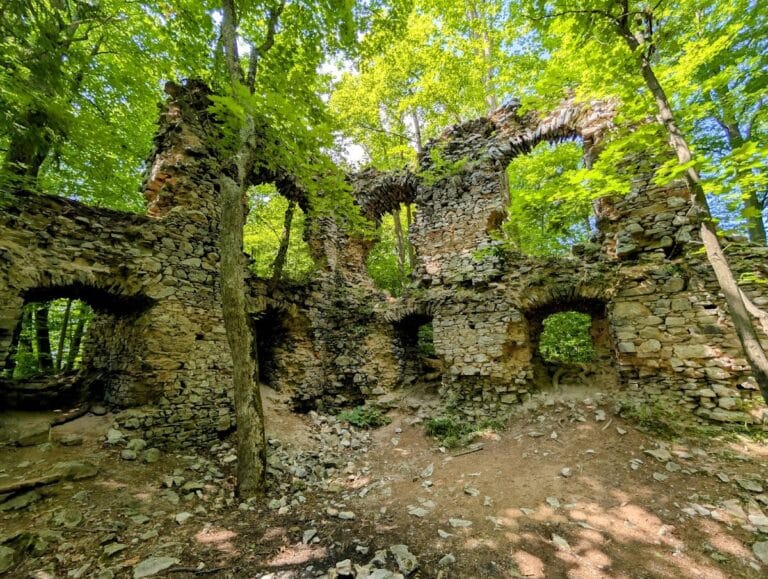
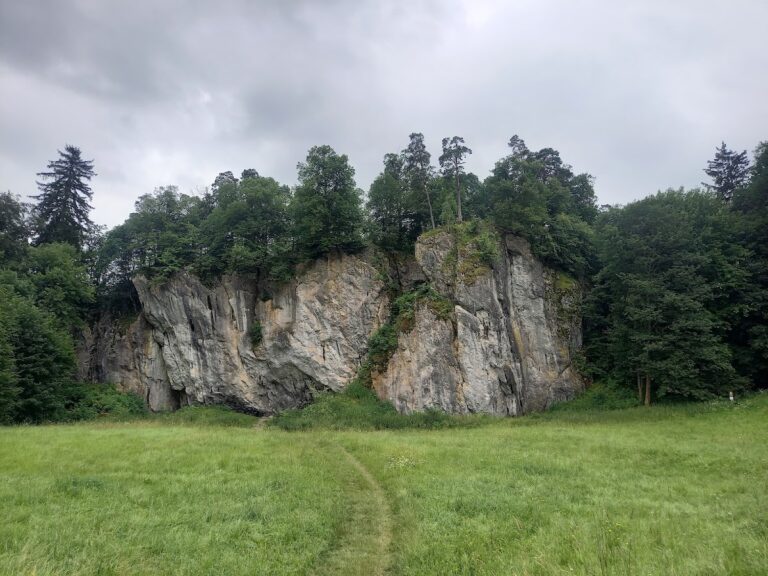
The castle ruin lies approximately 500 metres east of Doubravice nad Svitavou in the South Moravian Region. It occupies a medieval site whose surviving fabric consists of wall remains. The ruins are now heavily overgrown, while the castle’s Gothic character and its development after the late thirteenth century remain central to the interpretation of the site.
Nearby sites