Holštejn Castle: A Medieval Hilltop Castle in Czechia


Site at a Glance
- Rating
- 4.6
- Popularity
- Very Low
- Country
- Czechia
- Primary era
- Medieval
- Eras represented
- Medieval
- Civilizations
- Holy Roman Empire, Kingdom of Bohemia
- Site type
- Military
- Remains
- Castle
On this page7 sections
History
Holštejn Castle is a medieval castle in Czechia, built in 1278 by Hartmann von Holštejn of the Čeblovice lineage on a rock known as Hohlen Stein. Its original name, Hohlenstein, referred to the cave within the castle rock. The castle became the center of a lordship in the forested Drahany Highlands, where German settlers were brought under the Čeblovice lords.
The Čeblovice and early Holštejn lords
Hartmann’s only son, Crha, entered a monastery and died in 1308. Hartmann himself died in 1315, ending the Čeblovice lineage. The lordship then reverted to the Bohemian Crown, the medieval monarchy that governed the Kingdom of Bohemia and its associated lands, including Moravia.
Most of the former Holštejn possessions were later granted to Čeněk of Leipa. Before 1321, Čeněk sold the castle, the estate, and its associated villages to Wok of the Hrut lineage. The transaction established the independent lords of Holštejn, although the transfer was not entered in the land register, a formal record of noble estates and property rights, until 1349.
Inheritance, war, and repeated sales
Wok II of Holštejn held the estate in 1371. His son, Wok III, divided the properties during his lifetime with his own son, Wok IV, who lived at Lipovec and also used the title Wok of Lipovec. Wok IV died in the Battle of Vyšehrad in 1420. His death brought the estate to Wok V of Holštejn.
The Hussites, followers of a religious reform movement associated with Jan Hus, destroyed the castle during the conflicts that affected fifteenth-century Bohemia and Moravia. Holštejn was rebuilt soon afterward, although most of the surrounding villages were devastated. Wok V sold the estate to Hynek of Waldstein in 1437, but later recovered at least part of it.
In 1455, Wok V sold the northern part of the estate to Půta of Sovinec at Doubravice. The sale included Holštejn Castle, the small town of Holštejn, the villages of Ostrov and Lipovec, and the deserted village of Housko. In 1474, the property passed by inheritance to Jindřich, Zikmund, Jan, and Heralt of Sovinec and Doubravice. They sold it in 1483 to Dobeš Černohorský of Boskowitz.
Abandonment and incorporation into Rájec
Hynek of Popůvek acquired the castle in 1493. Because he lived at Pozořice, Holštejn Castle was allowed to decay. After his death in 1528, his daughter Margarethe inherited the property. Her marriage to Johann von Widbach in 1531 was followed by the castle being described as deserted.
Jan of Zdenín, the son of Jan Dubčanský of Zdenín, acquired the abandoned castle in 1550. In 1567, Bernard Drnovský of Drnovec purchased the Holštejn lordship, which then comprised the deserted castle, Ostrov and Lipovec, parts of Poidom and Šošůvka, and several deserted settlements. He incorporated it into the Rájec estate.
Modern historical research has questioned or rejected the traditional derivation of the lords of Holštejn from the lords of Sovinec. The castle remains a ruin near Holštejn in the northern Moravian Karst.
Remains
Hilltop castle and surviving walls
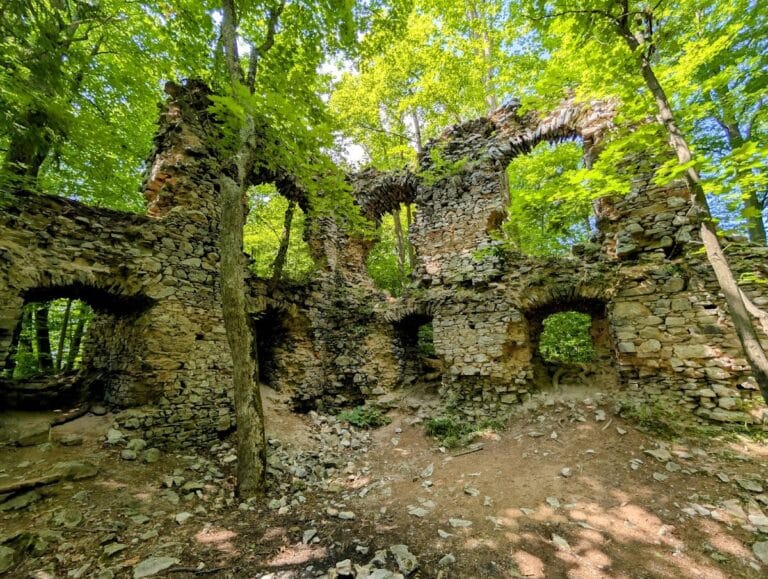
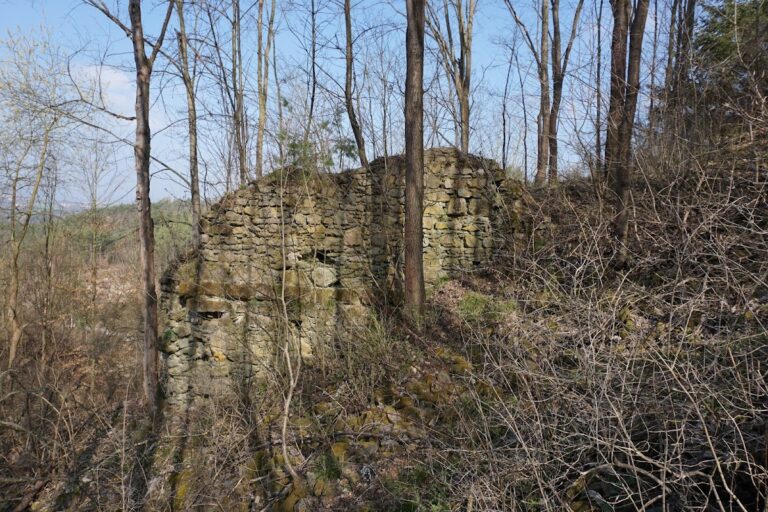
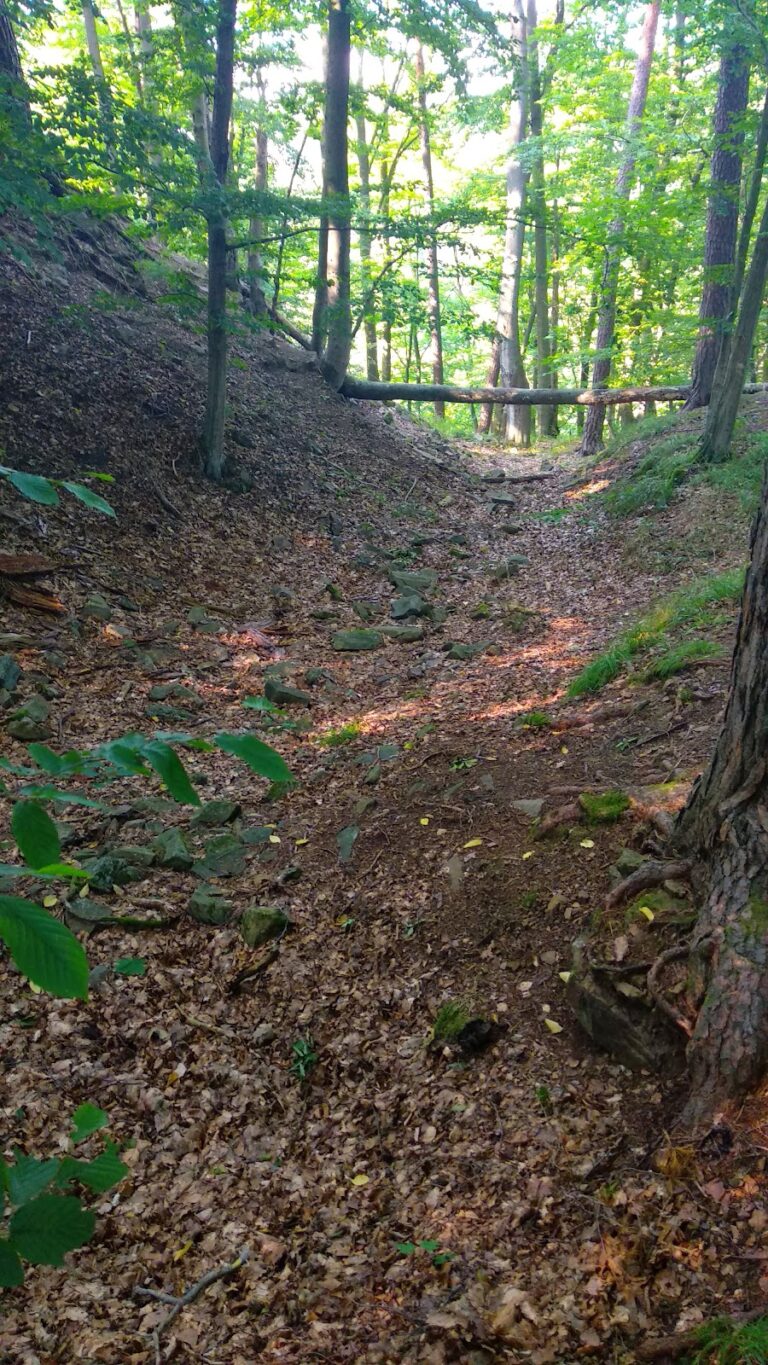
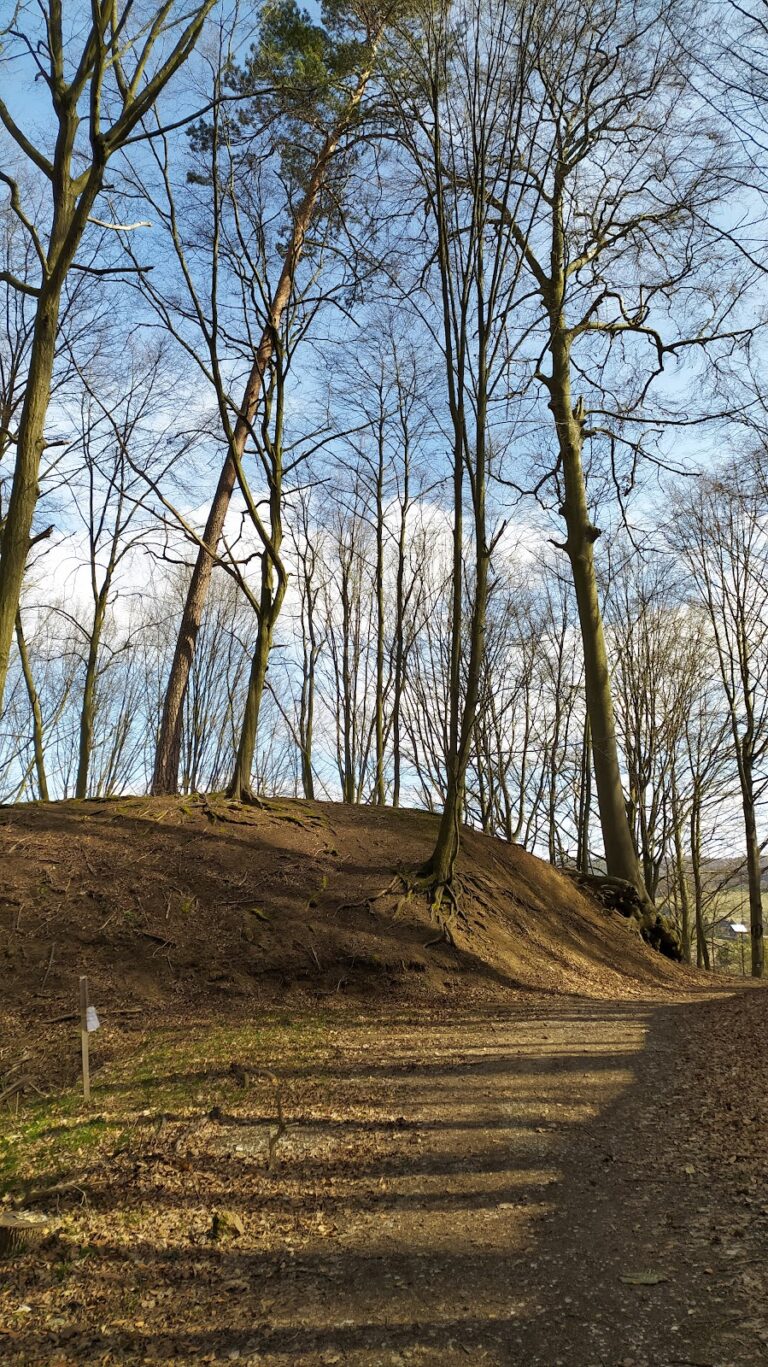
Holštejn is a hilltop rock castle situated at approximately 468 metres above sea level. Its surviving remains are in poor condition. Parts of the curtain wall, the enclosing defensive wall of the castle, still survive, along with sections of the palace’s outer wall and the outer wall of the keep, the principal fortified stronghold.
A sally port, a small gate used for controlled exits from a fortification, is identified among the remains. Together with the surviving wall sections, it indicates the castle’s defensive arrangement around the rock summit.
Hladomorna Cave
The cave Hladomorna lies beneath the castle rock. Its position within the rock explains the castle’s original name, Hohlenstein, which referred to the cave beneath the stronghold.
Nearby sites