Boskovice Castle: A Gothic Fortress and Renaissance Residence in Czechia
Site at a Glance
- Rating
- 4.6
- Popularity
- Medium
- Country
- Czechia
- Primary era
- Medieval
- External website
- Open
- Eras represented
- Medieval, Early Modern
- Civilizations
- Habsburg, Holy Roman Empire, Kingdom of Bohemia, Margraviate of Moravia
- Site type
- Military
- Remains
- Castle
On this page12 sections
History
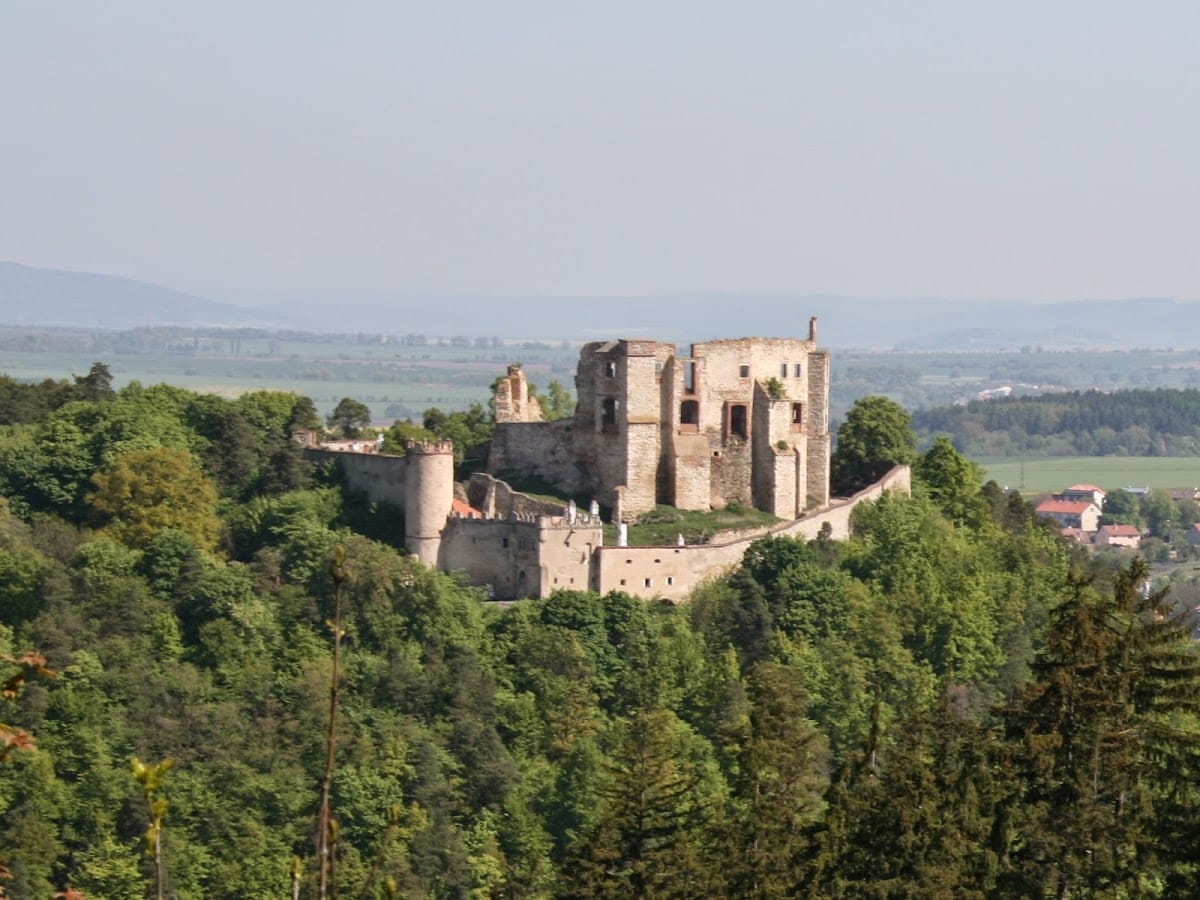
Boskovice Castle is a Gothic castle ruin above Boskovice in Czechia, probably founded during the first half of the thirteenth century. Its earliest surviving written reference dates from 1312. The castle became the centre of an estate held successively by the Lords of Boskovice, the Lords of Kunštát, the Lords of Zástřizl, the Dietrichstein family, and the Mensdorff-Pouilly family. It was extensively rebuilt in the Renaissance period, later abandoned, and eventually preserved as a historic ruin.
Origins and the Lords of Boskovice
A foundation tradition recorded by Bartoloměj Paprocký in 1593 attributes the castle to a bird-catcher named Velen. According to the story, a Moravian prince rewarded Velen’s hospitality with noble status, a large territory, and a coat of arms. Velen then began building a castle on one of the local hills. The same tradition explains the name Boskovice through an exclamation Velen supposedly made after injuring his toe.
The earliest documented member of the Lords of Boskovice was Jimram of Boskovice, mentioned in 1222. He may have occupied a fortified place at Bašta or elsewhere rather than at the site of the present castle. His son Lambert founded a Minorite monastery, a Franciscan religious house, in Brno in 1230. Lambert’s sons Velen and Jimram appear in records between 1250 and 1255.
Oldřich of Boskovice, recorded in 1297, served King Wenceslaus II as royal governor in Poland. In 1312, during King John of Luxembourg’s campaign against rebellious Moravian nobles, the probably original castle was captured from Arkleb of Boskovice. Arkleb was pardoned the following year after the intervention of other nobles, and his possessions were returned. He then built a new residence on the site of the present castle. He also rebuilt the burned Minorite monastery in Brno and obtained the office of chamberlain of Olomouc, a senior judicial and administrative position in the Moravian provincial system.
After Arkleb’s death in 1342, the estate passed to his son Ješek, an influential court figure under the Moravian margrave John Henry. A margrave was a territorial ruler. Ješek became chief chamberlain of the Moravian provincial court in 1353 and enlarged the family’s possessions by acquiring Černá Hora Castle. His son Oldřich inherited the Boskovice estate after Ješek’s death in 1363. Oldřich’s own death is placed variously in 1389, 1400, or 1407.
War, confiscation, and the Lords of Kunštát
During the Moravian Margrave Wars, late medieval conflicts among members of the Luxembourg dynasty over control of Moravia, Oldřich’s son Jan Ozor of Boskovice supported the younger margrave Prokop against his elder brother, Margrave Jobst. In 1389, Jobst sent a punitive expedition against Jan Ozor’s castles at Boskovice, Vraní Hora, and Vícov. All three were captured, and Jan Ozor died defending Boskovice Castle. His death is also dated to 1401.
Jobst confiscated the damaged castle and in 1398 granted it to his supporter and negotiator Erhart of Kunštát, authorizing its restoration. Erhart the Elder died in 1406, leaving extensive possessions to his son Erhart the Younger. When the younger Erhart died without issue in 1414, the Kunštát branch became extinct and its property passed to the Poděbrady branch.
At the beginning of the Hussite Wars, fifteenth-century religious and political conflicts associated with the reform movement initiated by Jan Hus, Boskovice was held by Viktorín Boček of Kunštát and Poděbrady. He was a prominent Hussite commander and the father of the future Bohemian king George of Poděbrady. Forces led by Bishop John the Iron, a major opponent of Hussite teaching, probably captured and occupied the castle early in the wars. Hussite forces recaptured it in 1424, after which it remained with the Lords of Kunštát. In 1437, the Boskovice estate and castle passed to George of Poděbrady.
Return to the Boskovice family
In 1458, George of Poděbrady returned the estate and castle to Vaněk Černohorský the Younger of Boskovice as repayment of debts. Vaněk served as chief chamberlain of the Moravian provincial court, was associated with King Ladislaus the Posthumous, accompanied Ladislaus’s sister Elisabeth to her marriage to King Casimir of Poland, and fought against the Turks. He died in 1465 or 1466, and his son Václav inherited the estate.
Václav of Boskovice served as chamberlain of the Olomouc court and as provincial governor, an official who administered Moravia for its ruler. After his death in 1482, his son Jaroslav inherited the family’s seats. Jaroslav became a privy councillor and chancellor of King Matthias Corvinus. After being accused of treason, however, he was tortured and executed in Vienna shortly after the cannonball incident at the siege of Ebersdorf in January 1485.
Jaroslav’s brother Ladislav Velen of Boskovice then took control of the family estate. Ladislav had been an Olomouc canon, a member of a cathedral or collegiate clergy, but left the clerical estate at his own request after his brother’s violent death. He administered the family possessions and gradually transferred his residence to Moravská Třebová, where he built a Renaissance château. He also supported building work in Moravská Třebová, Boskovice, and Chornice. Ladislav served as chief chamberlain from 1496 to 1506 and again from 1516 until his death in 1520.
Renaissance rebuilding
In 1527, Ladislav’s widow, Magdalena Berková of Dubá, sold a share in the administration of the Boskovice estate to their son Kryštof. Kryštof served as chief chamberlain and Moravian provincial governor and carried out extensive alterations at the castle. Repairs and the cost of a military expedition to Hungary against the Turkish threat weakened his finances. In 1547, he sold the estate and castle to the mining entrepreneur Šimon Eder of Štiavnica.
Under Eder, the castle began to be reconstructed in the Renaissance style, which revived classical architectural forms. Eder also attempted to mine ore on the hill opposite the castle, without success. Local tradition associated that hill with gold and explained the name Zlatník by claiming that the work produced enough gold for only one coin. After Eder’s death in 1567, his son Vít sold the estate to Jaroš of Zástřizl.
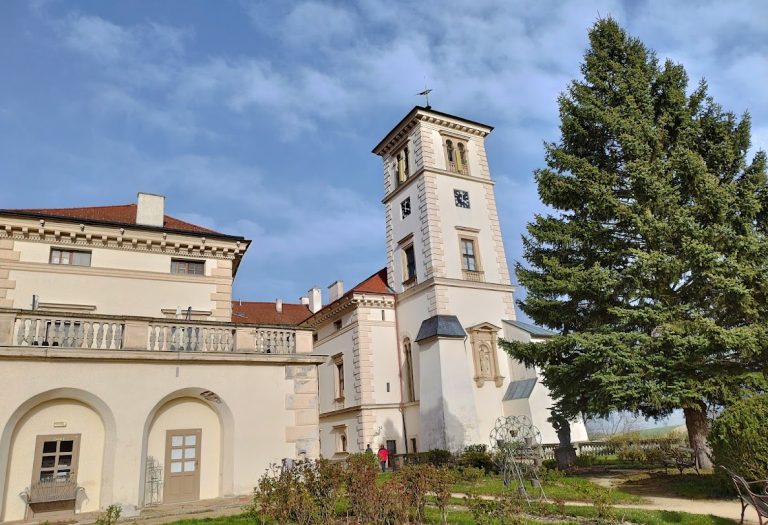
Jaroš continued the Renaissance reconstruction, adding a watchtower and a new main-gate portal with the carved coat of arms of the Zástřizl family. His son Václav the Elder Morkovský of Zástřizl completed the work, including a large armory. During the Zástřizl period, the castle’s large library also became renowned. After Václav died without children in 1600, the indebted estate passed through his widow, Kunka of Korotín, and then to Bohuš of Zástřizl in 1607.
Religious conflict and the end of residence
After Bohuš’s death in 1612, the estate passed to Václav the Younger Morkovský of Zástřizl, a provincial judge. He converted to Catholicism and invited the Catholic priest Jan Sarkander and Jesuits, members of the Society of Jesus, to Boskovice in 1613. They left two years later after making little headway. During the Estates’ Revolt, the Bohemian and Moravian Protestant uprising against the Habsburg monarchy that began in 1618, Václav temporarily supported the opposition. After its defeat, he changed allegiance to the imperial side.
Václav’s widow, Alžběta Pruskovská of Prusków, administered the estate from 1632. In 1647, after the Thirty Years’ War, Jan Bohuše of Zástřizl inherited the property in poor condition. He built a Dominican monastery, a religious house of the Order of Preachers, and a seigneurial brewery in the town. When he died without children in 1687, the male line of the Zástřizl family ended.
In 1690, Jan Bohuše’s widow, Zuzana Prakšická of Zástřizl, married Walter Xaver of Dietrichstein, bringing the Boskovice estate and castle into the Dietrichstein family. Walter Xaver was the last owner to live at the castle, remaining there until 1720. Because the medieval residence no longer met residential requirements, he built a Baroque residence on Hradní Street. Baroque architecture was a monumental European style of the seventeenth and eighteenth centuries, and the new residence was completed in 1728.
Afterward, the castle served economic purposes and housed offices. From 1733, only a forester lived there. Its roof was dismantled during the 1730s, and the deteriorating structure became a source of building stone for construction in Boskovice. The castle was completely abandoned in 1784.
Later ownership and preservation
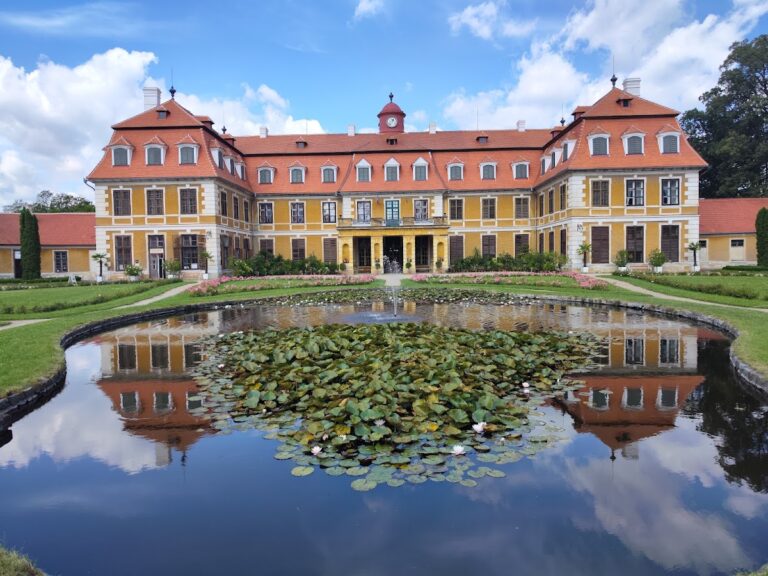
The Dietrichsteins later built other residences in Boskovice, including an Empire-style château, a greenhouse, and the Na Rovné summer house. The Boskovice branch of the family ended in the male line with the death of František Xaver of Dietrichstein in 1850. The estate then passed to his daughters Maria and Theresa. Theresa married Count Alfons Mensdorff-Pouilly in 1843. After her death in 1856, the Boskovice property, including the castle, remained with the Mensdorff-Pouilly family until communist authorities confiscated it in 1950. The family regained the property through restitution in 1991 and continues to own it.
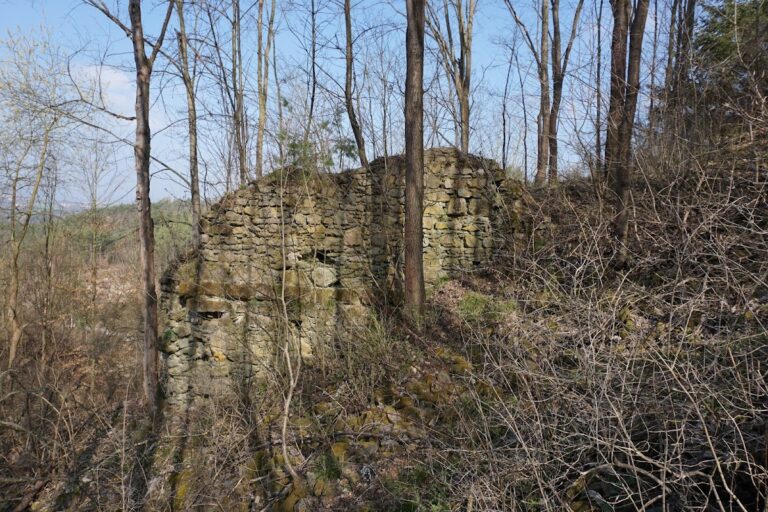
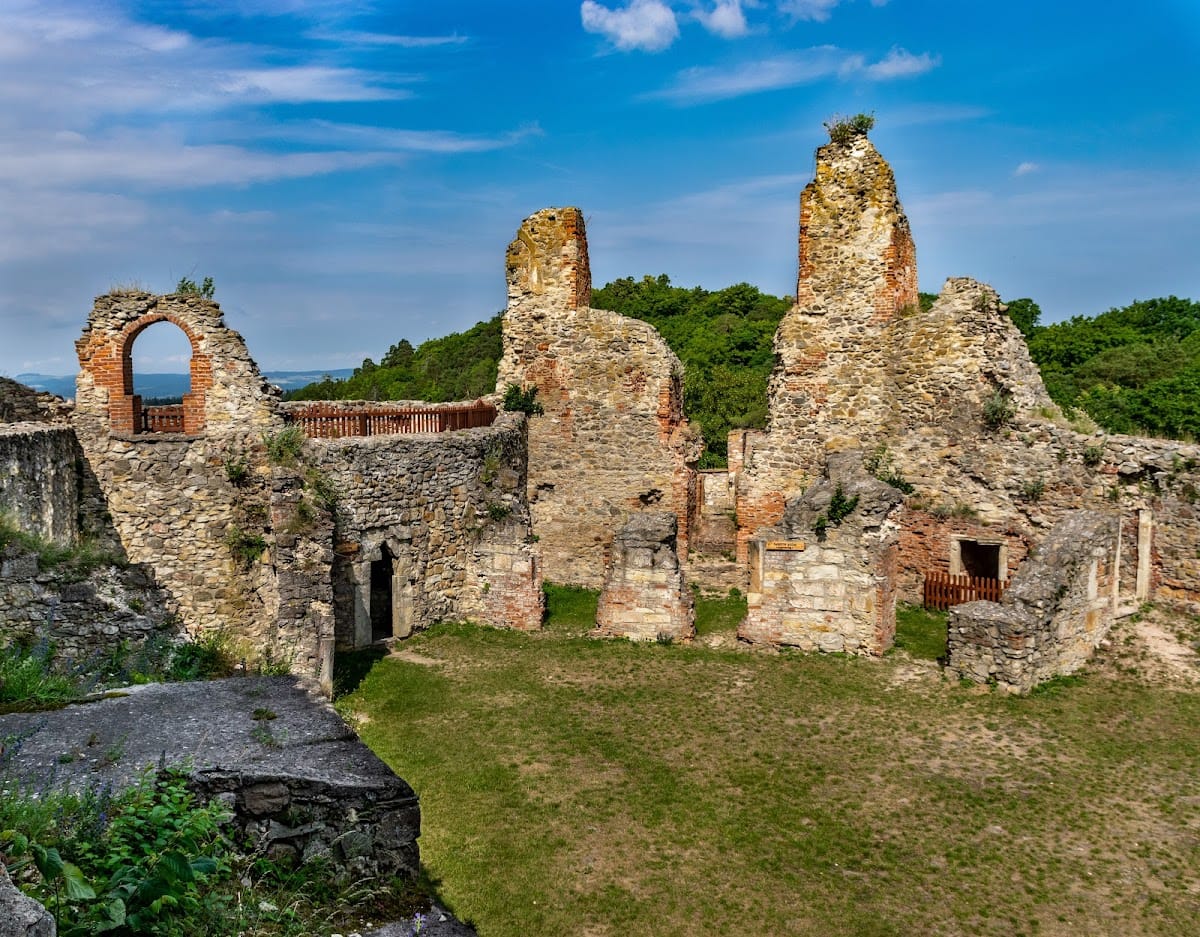
Boskovice Castle has been protected as a cultural monument since 1964. The ruin and its associated fortifications have undergone renewal and stabilization, including restoration of the outer wall circuit and measures intended to prevent masonry collapse.
Remains
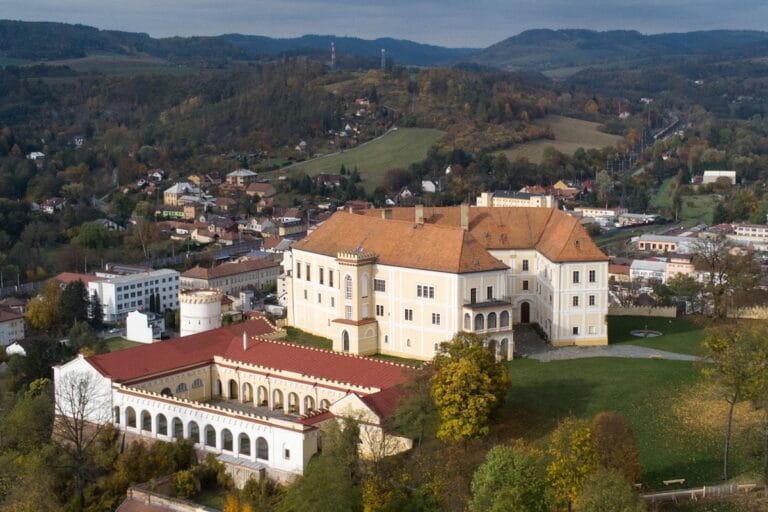
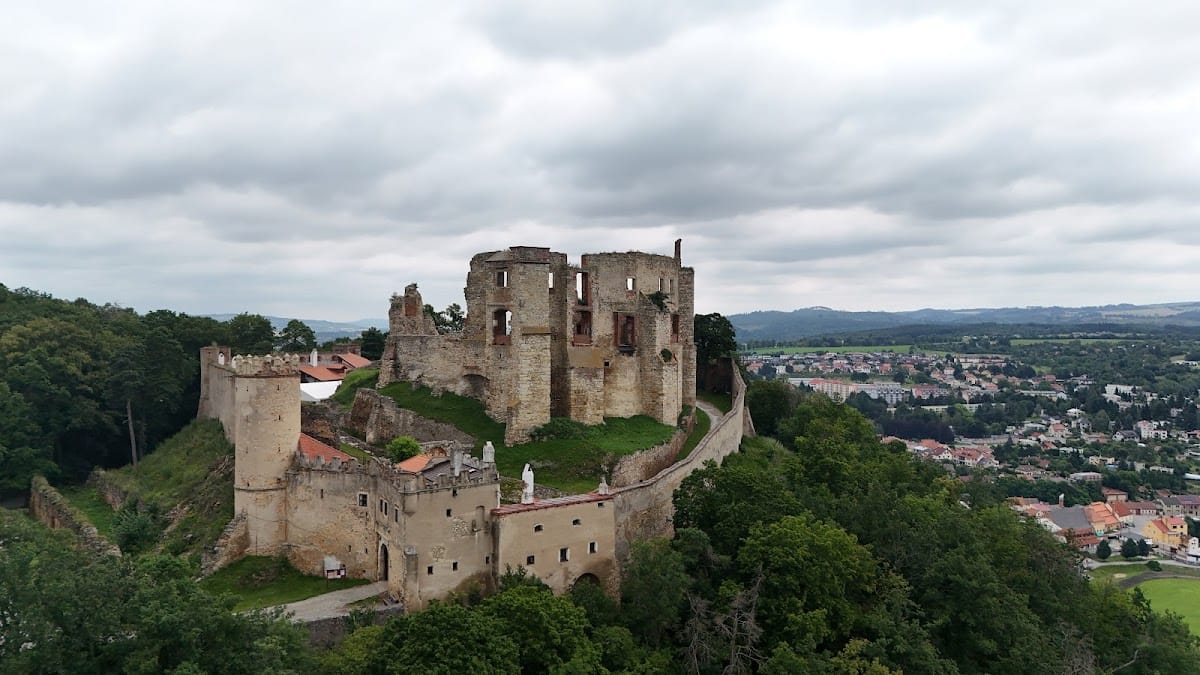
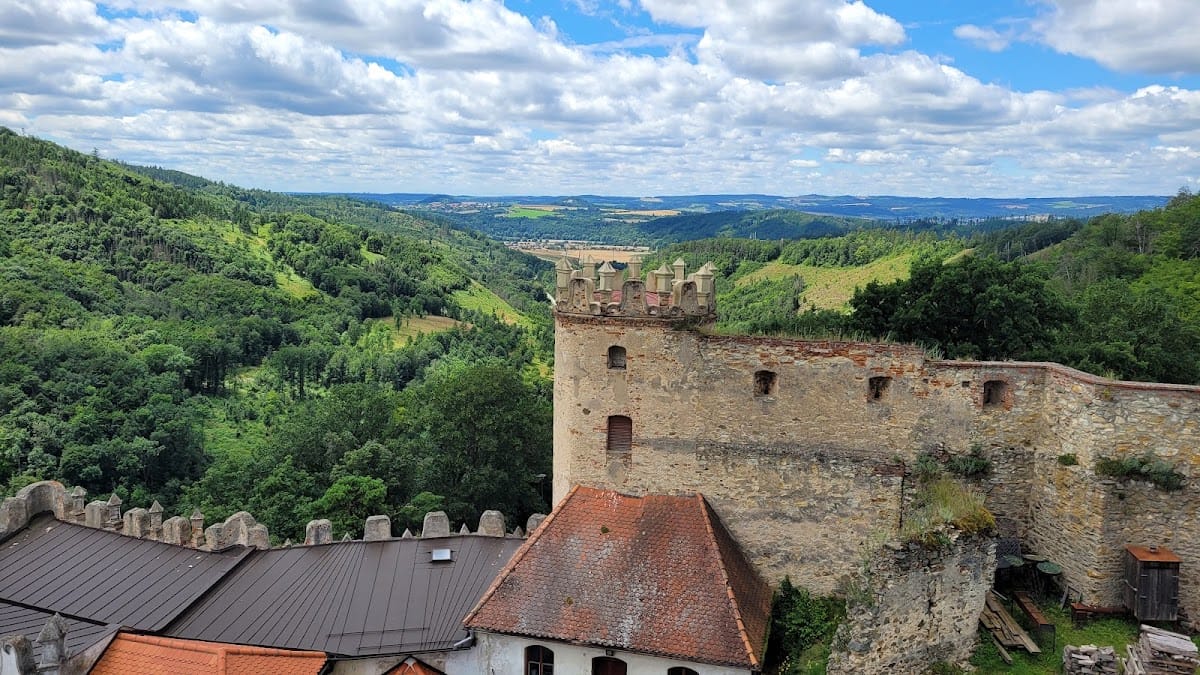
The ruin stands on Castle Hill at an elevation of 448 metres on the western edge of the Drahany Highlands. The hill and the surviving fortifications form a dominant feature of Boskovice. The castle began as a Gothic foundation and was later extensively rebuilt in the Renaissance style. Its remains include the main ruin, an outer circuit of walls, a deep well, and the nearby advanced fortification known as Bašta.
Castle structures and water supply
Well and treadwheel
The castle well reaches 26 metres below ground and contains a sixteenth-century treadwheel, a large wheel driven by people walking inside it to raise water or loads. The wheel has a diameter of 3.6 metres and operated with two counter-rotating buckets wound onto a shaft. It is described as the only functioning example of its kind in Czechia. A rock-cut passage connected the castle well with another well outside the fortification walls. The water supply was later disrupted, the outer well was filled in, and water no longer flows into the castle well.
Outer walls and Renaissance features
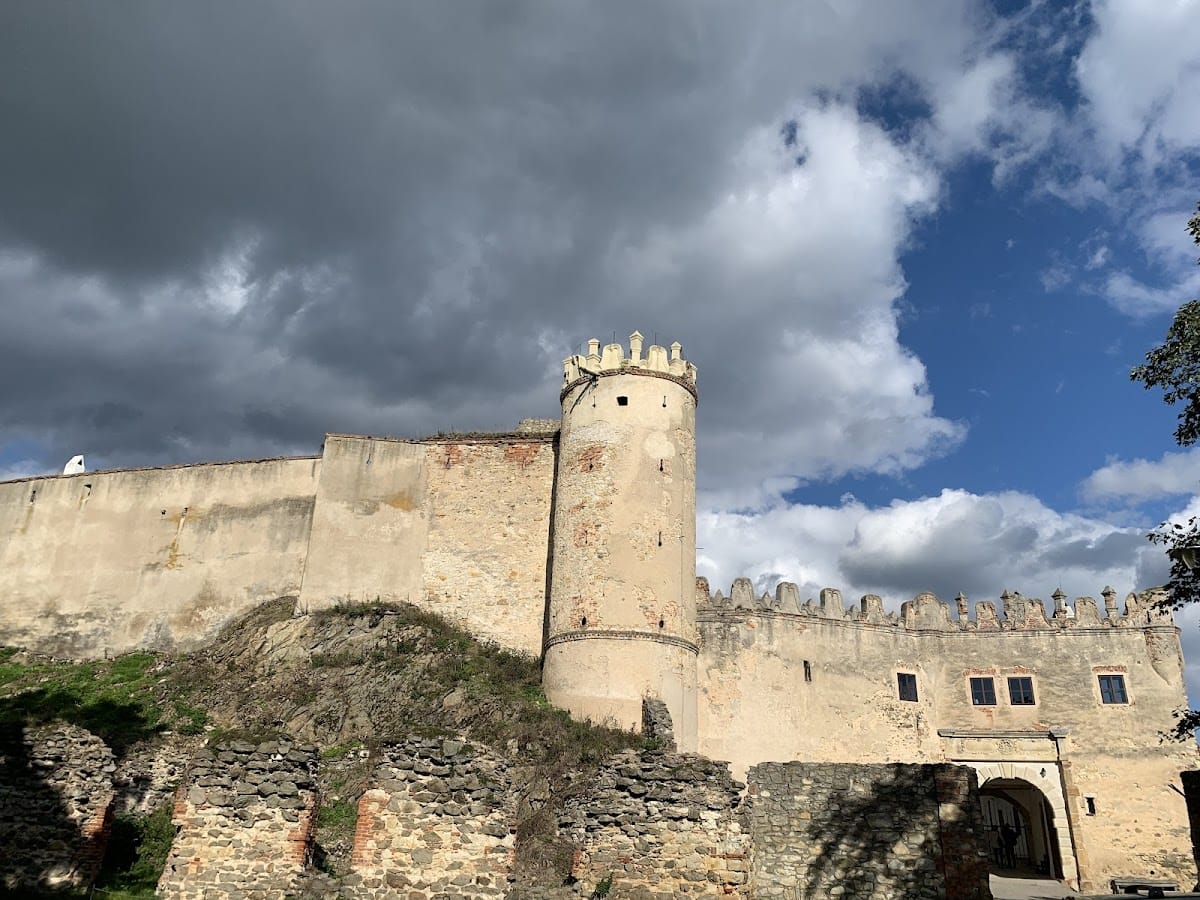
The castle’s outer wall circuit has been renewed, and its masonry has been stabilized against collapse. Renaissance alterations included a watchtower, a new main-gate portal bearing the carved Zástřizl coat of arms, and a large armory. These elements survive as part of the ruined complex, whose present form combines the earlier Gothic foundation with later Renaissance rebuilding.
Bašta advanced fortification
Bašta is a nearby fortified defensive work closely associated with Boskovice Castle. It was probably built as an advanced position during the fifteenth or sixteenth century, and its exceptionally large area was comparable to that of the castle itself. Earlier researchers identified it as the original castle of the Lords of Boskovice, but that interpretation remains unproven. Other proposed dates place its foundation in the thirteenth or even the eleventh century. References to the structure as a ruin appear in records from 1423 and 1567.
In 1703, Bašta was provisionally fortified because of the threat posed by Kuruc forces from Hungary. The Kurucs were armed anti-Habsburg insurgents and soldiers active mainly in the Kingdom of Hungary during the seventeenth and early eighteenth centuries. The fortification’s uncertain chronology and its relationship to the main castle preserve an important question about the early defensive organization of the Boskovice site.
Nearby sites