Fortress of Vardari: Ottoman Western Defense of Thessaloniki


Site at a Glance
- Rating
- 4.5
- Popularity
- Very Low
- Country
- Greece
- Primary era
- Early Modern
- External website
- Open
- Eras represented
- Medieval, Early Modern
- Civilizations
- Byzantine, Ottoman
- Site type
- Military
- Remains
- Fort
On this page5 sections
History
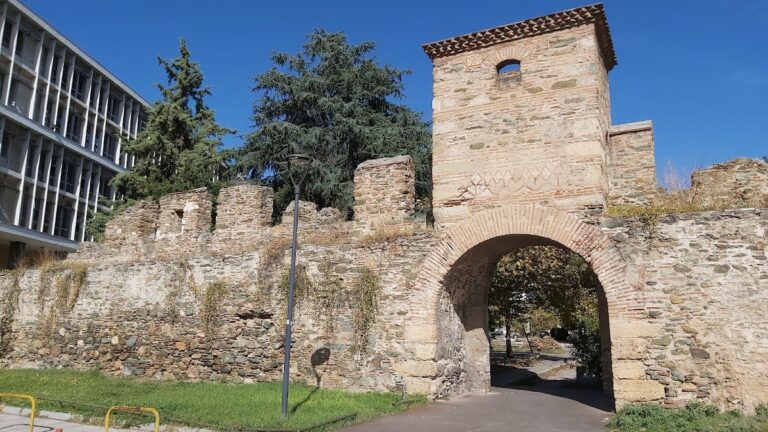
The Fortress of Vardari is an Ottoman fortress in Thessaloniki, Greece, built in the winter of 1546 by Sultan Suleiman I, also known as Suleiman the Magnificent, during a brief stay in the city. It formed part of Thessaloniki’s western defenses. The date and circumstances of its construction are associated with the travel narrative of Evliya Çelebi, a seventeenth-century Ottoman traveler and writer whose accounts describe cities and monuments.
Ottoman construction and earlier defenses
The fortress was also called Top-Hane, meaning “Artillery Arsenal Tower,” and Tabak-Hane, or “Tannery Tower.” The latter name referred to the tanneries established around it. The fortress incorporated the Relief Tower, which belonged to earlier early Christian and Byzantine fortifications. Its possible designer was Mimar Sinan, the chief Ottoman imperial architect of the sixteenth century, although this attribution remains uncertain.
Remains
Fortress layout and defensive structures
The fortress occupies the western section of Thessaloniki’s walls, in the area of the present-day courthouses. Its main gate is on the northern side, while three powder magazines stand within the southern enclosure. Inscriptions on the magazines are dated 1741. An octagonal tower marks the southwestern side of the fortress.
Relief Tower and later buildings
At the southeastern end stands the Relief Tower, named for a Hellenistic relief embedded in its masonry. The IKA building, formerly associated with Greece’s Social Insurance Institute, lies within the fortress. The Thessaloniki Courthouse occupies the western wall, which supports the building as part of the surviving architectural complex.
Nearby sites