Burg Reichenstein (Westerwald): Seat of a Medieval Lordship in Germany


Site at a Glance
- Rating
- 4.4
- Popularity
- Very Low
- Country
- Germany
- Primary era
- Medieval
- External website
- Open
- Eras represented
- Medieval
- Civilizations
- Holy Roman Empire
- Site type
- Military
- Remains
- Castle
On this page9 sections
History
Burg Reichenstein (Westerwald) is a ruined medieval slope castle in Reichenstein, Germany, built between 1310 and 1320 for the protection of the territory of Ludwig III of Reichenstein and possibly for use as a toll station. It became the seat of the Lordship of Reichenstein, one of the territories grouped within the Westphalian Imperial Circle of the Holy Roman Empire, a central European political order whose lands were organized into administrative circles.
Construction and feudal control
On 21 December 1331, Wilhelm I of Isenburg-Braunsberg compelled Ludwig III to place the newly built castle under his authority as a fief. A fief was land or another right held from a superior lord in return for obligations. The castle’s construction also prompted a rival response from Count Wilhelm I of Wied, who built Burg Grebeneck. That castle was mentioned in 1366, but after a settlement with Heinrich of Reichenstein it fell into oblivion. Its location is unknown, although wall remains on the Koppel near Seifen in the municipality of Dottesfeld may belong to it.
The conflict of 1408
Burg Reichenstein appears in an imperial document dated 5 June 1408. Wilhelm von Reichenstein stated that Eberhard von der Heyden and Sifrid the Bastard of Runkel had captured Frank of Cronberg on the Rhine between Andernach and Coblenz and brought him to the castle to be ransomed and forced into an agreement.
King Ruprecht, the German king from 1400 to 1410, and the Archbishops Friedrich of Cologne, Johann of Mainz, and Werner of Trier threatened to move against the castle. These archbishops were also prince-electors of the Holy Roman Empire. Wilhelm then released Frank of Cronberg after he swore an oath renouncing revenge or renewed hostility and appealed to the king against the three electors. Eberhard von der Heyden, Sifrid the Bastard of Runkel, Gerhard the Younger, Count of Sayn, Salentin of Isenburg, and Reinhard of Westerburg sealed the agreement with him.
Destruction and later care
By the sixteenth century, Burg Reichenstein was already regarded as a ruin. In 1618, its then owner, the Count of Wied, destroyed it when the Count of Sayn attempted to acquire the property. The remains continued to deteriorate and stayed in private ownership into the twentieth century.
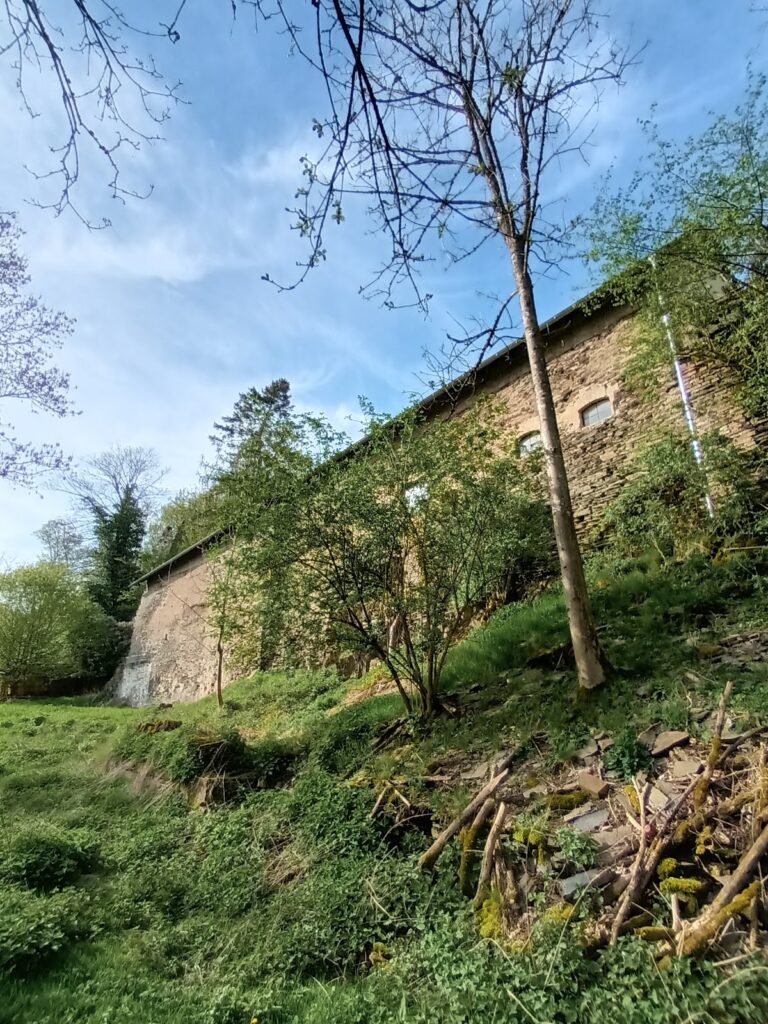
In recent years, a support association has cared for the ruins and undertaken extensive repairs, including the creation of the Walpodenstube, a traditional common room. Burg Reichenstein is recognized as a cultural monument.
Remains
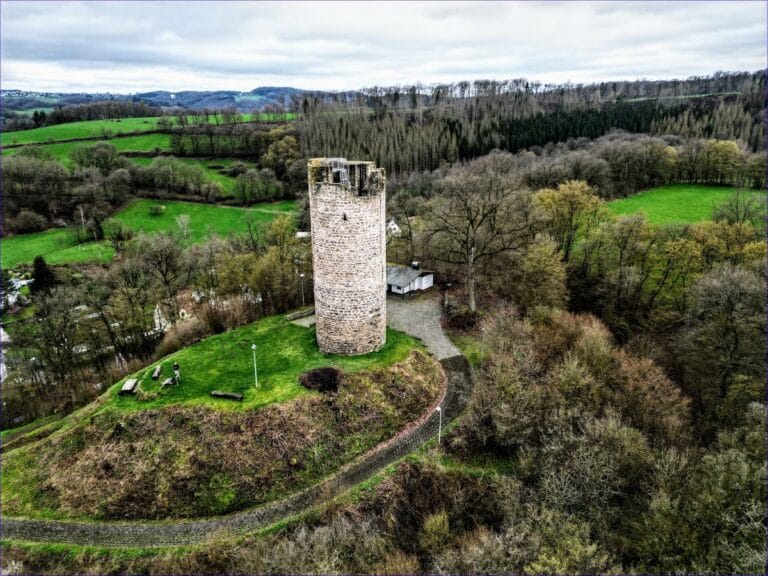
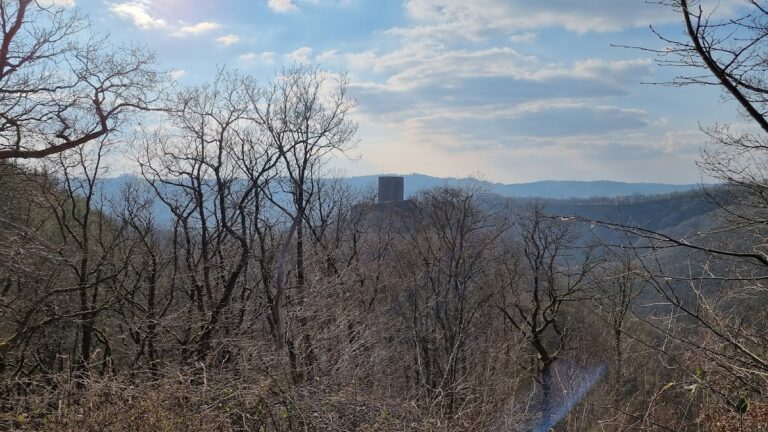
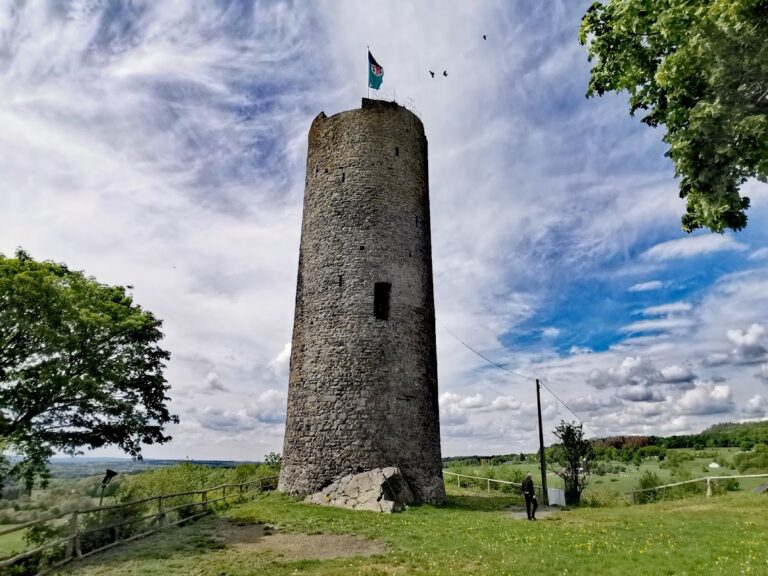
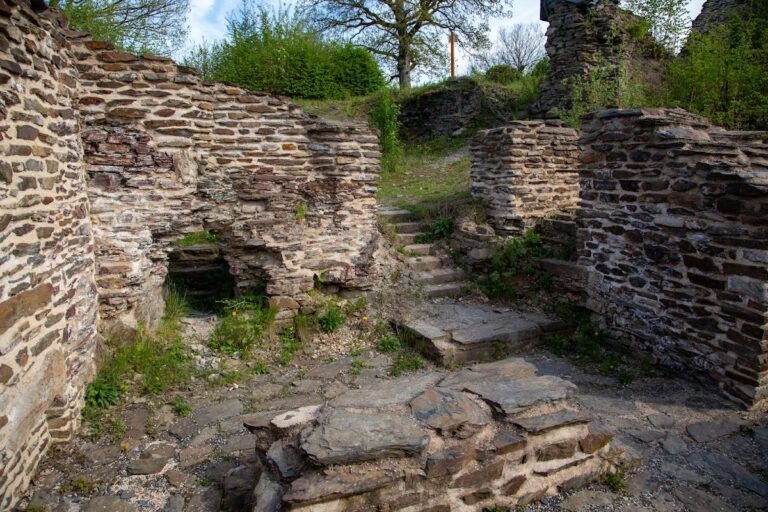
The castle occupies a slope at about 225 metres above sea level, above the Holzbach and opposite the village of Reichenstein, approximately 2 kilometres northwest of Puderbach. Its surviving layout includes the foundations of the other castle buildings, a partly filled former well, and the prominently standing remains of a four-storey residential tower.
Surviving structures
Residential tower
The four-storey residential tower is the most prominent surviving part of Burg Reichenstein. It stands among the foundations of the other castle buildings and preserves the principal vertical element of the ruined complex.
Foundations and well
Foundations mark the positions of additional castle buildings. A former well, now partly filled, reaches to a depth of about 40 metres and remains part of the castle’s physical evidence.
Modern rehabilitation
The modern repair work included the creation of the Walpodenstube, a room whose name combines Walpode, a medieval administrative title, with Stube, a traditional living or common room. It provides space for approximately 30 guests within the rehabilitated ruins.
Nearby sites