Fort Brockhurst: A Palmerston Fort Protecting Portsmouth Harbour


Site at a Glance
- Rating
- 4.4
- Popularity
- Low
- Country
- United Kingdom
- Primary era
- Modern
- External website
- Open
- Eras represented
- Modern
- Civilizations
- British
- Site type
- Military
- Remains
- Fort
On this page9 sections
History
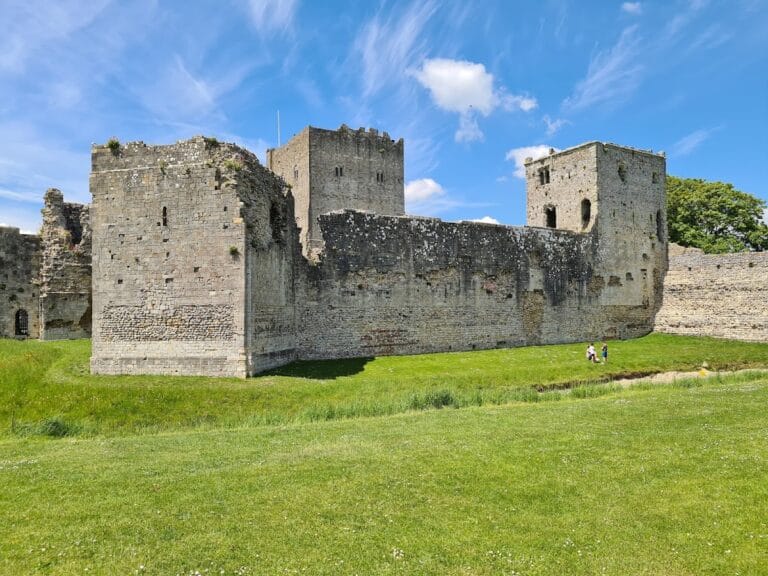
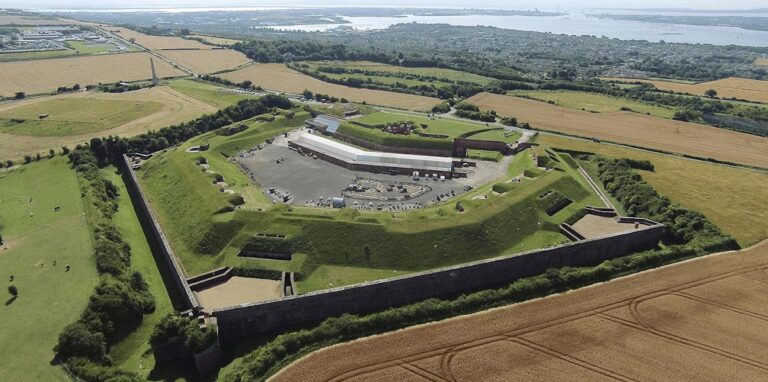
Fort Brockhurst is a Palmerston Fort in Gosport, United Kingdom, built between 1858 and 1862 to protect Portsmouth and its dockyards. Palmerston Forts were nineteenth-century British coastal defences commissioned amid fears of invasion during the period associated with Lord Palmerston. Designed by William Crossman, Fort Brockhurst formed part of the Gosport Advanced Line, a group of five related forts intended to guard the dockyards against forces landing elsewhere on the Hampshire coast.
Construction and changing defences
The other forts in the line were Fort Elson to the north and Fort Grange, Fort Rowner, and Fort Gomer to the south. Each stood within gunshot of the next, allowing their weapons to provide overlapping fields of fire and mutual support. The anticipated French invasion never took place, and advances in artillery made Fort Brockhurst obsolete before its construction was complete.
Its position was considered too close to the dockyard. An enemy force landing elsewhere on the coast could bombard Portsmouth Harbour without passing the fort. This weakness led to the construction of Fort Fareham farther from the harbour, which was completed in 1868.
Military and administrative use
From 18 September 1882, Fort Brockhurst became a depot for soldiers returning from India after completing their active service. In 1898, an average of 9,000 to 10,000 soldiers passed through the depot each year. During the 1880s, processing a large detachment could take a week. Later, soldiers generally remained for only several days before transferring to the Army Reserve and civilian life, then marched to Fort Brockhurst railway station to travel home.
In August 1914, the 9th (Heavy) Battery, Royal Garrison Artillery, was formed at the fort during the creation of Kitchener’s Army, the large volunteer force raised after Britain entered the First World War. Fort Brockhurst suffered minor bomb damage during the Second World War but never fought in its intended defensive role. It remained in commission until 1957 and served at different times as accommodation, storage, and a training facility.
Protection and present use
Fort Brockhurst is a scheduled monument under the official designation “Fort Brockhurst, Gosport,” assigned on 7 August 1967. It is now an English Heritage property used to store reserve collections. Its largely unaltered condition preserves evidence of both its original defensive purpose and its later military uses.
Remains
Polygonal fort and artillery positions
Fort Brockhurst has a polygonal plan, an arrangement that replaced the earlier system based on angular bastions. This form could be adapted more readily to the terrain and allowed more heavy guns to be placed on the ramparts, giving greater emphasis to offensive firepower. A moat surrounded the fort, while two ramps from the enclosed central parade ground led up to the ramparts.
Nineteen heavy guns made up the principal armament. A lower tier of eight guns on each flank supported cross-fire with Fort Elson and Fort Rowner. Four guns on each flank were placed in casemates, fortified enclosed chambers for guns. The surviving gun ramps and parade ground show how the artillery positions were arranged within the fort.
Keep and entrance
The south-eastern entrance was approached by a drawbridge and opened towards a circular keep with its own moat. The keep served as a local defensive position and carried twenty light guns. Its separate position within the wider fort formed an additional point of defence at the entrance.
Advanced and flanking defences
Beyond the northern moat stood a triangular redan, a projecting defensive work designed to protect a vulnerable approach. A covered way connected it with the fort, and riflemen stationed there could fire on troops attempting to bridge the moat. Caponiers, fortified structures projecting into or alongside a ditch, occupied the angles of the ramparts and enabled riflemen to cover the moat.
Surviving fabric
The parade ground, gun ramps, and moated keep remain viewable. Minor wartime damage at the north-eastern corner has not been repaired, leaving constructional details of the casemates exposed. These surviving elements preserve the relationships between the central parade ground, ramparts, moat, entrance defences, and outlying redan.