Fort IVa: A Detached Fort of the Poznań Fortress


Site at a Glance
- Rating
- 4.4
- Popularity
- Low
- Country
- Poland
- Primary era
- Modern
- External website
- Open
- Eras represented
- Modern
- Civilizations
- German, Kingdom of Prussia
- Site type
- Military
- Remains
- Fort
On this page8 sections
History
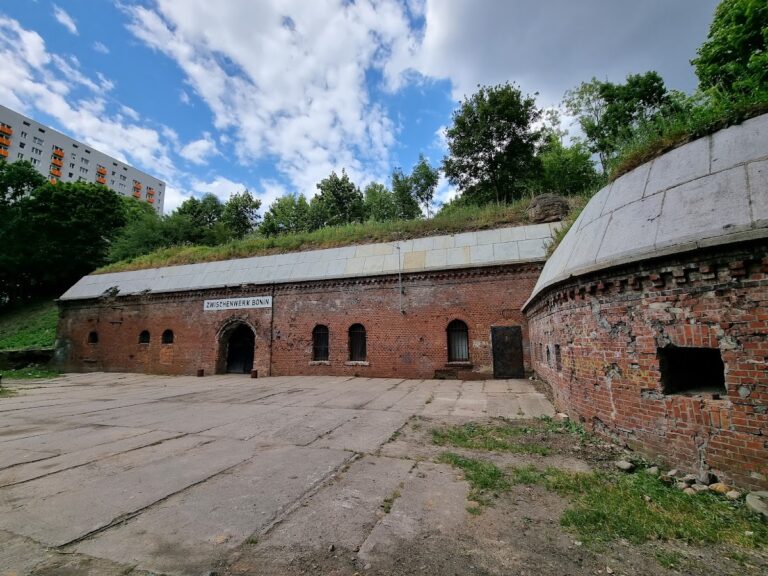
Fort IVa is a detached fort of the Poznań Fortress in Poznań, Poland. Built in 1878–1881 during the first stage of construction of the city’s fortified defensive system, it was one of 18 forts surrounding and defending Poznań. Its design was prepared by the Engineering Committee of the General Inspectorate of Fortresses.
Construction and changing names
The fort was originally named Waldersee II in honor of Alfred von Waldersee, a German field marshal and military commander. In 1931, its patron name was changed to Augustyn Brzeżański, commemorating the Polish colonel whose name the fort later carried.
In 1888, Fort IVa was modernized and strengthened to improve its resistance to artillery fire. The original front caponiers were demolished and replaced with reverse caponiers, fortified structures positioned at the rear side of a ditch to direct defensive fire along it.
Battle and postwar transformation
During the Battle of Poznań, on the night of 13–14 February 1945, units of the 246th Infantry Regiment attacked Forts IVa, V, and Va from the north with support from batteries of 203 mm howitzers. Fort IVa surrendered after two hours, while Forts V and Va continued to resist for 10 and 12 hours respectively. Fighting damaged the fort’s gorge barracks.
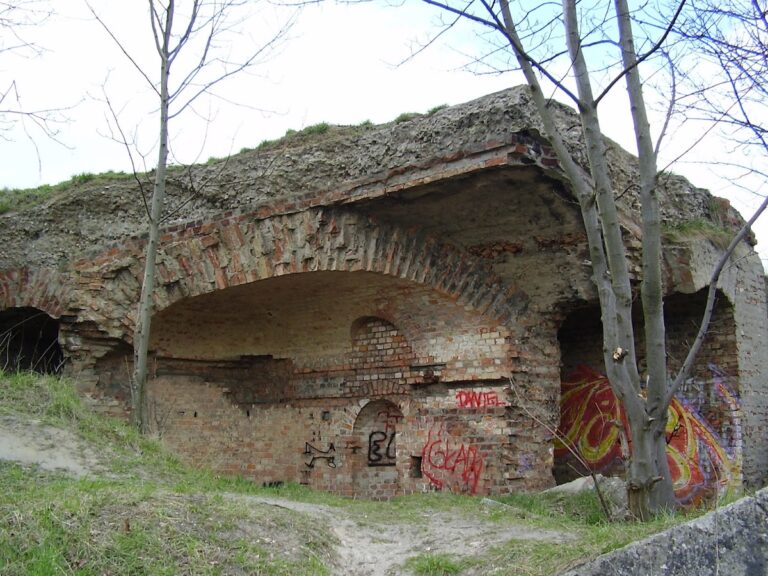
Between 1952 and 1965, Fort IVa was blown up and partly dismantled. The surviving section of the barracks was used for storage during the 1980s. Around 1990, rubbish and soil from construction work on a nearby housing estate were systematically deposited within the fort, even though it had already been entered in the heritage register. The site was listed under number A-245 on 25 May 1983. Since 1997, scouts from HOKTW and members of the Scout Circle of Fortress and Exploration Enthusiasts have cared for the fort. Its grounds also form part of the Natura 2000 protected area “Fortifications in Poznań” (PLH300005).
Remains
Fort plan and defensive works
Fort IVa stands at Wilczy Młyn. The Warta lies to the east, where the river formerly followed a bend closer to the fort, and a railway line runs north of the site. Its plan resembles that of Fort IXa, although the two forts differed in the positioning of their front caponiers. At Fort IVa, the original pair was removed in 1888 and replaced by reverse caponiers.
Reverse caponiers and underground passages
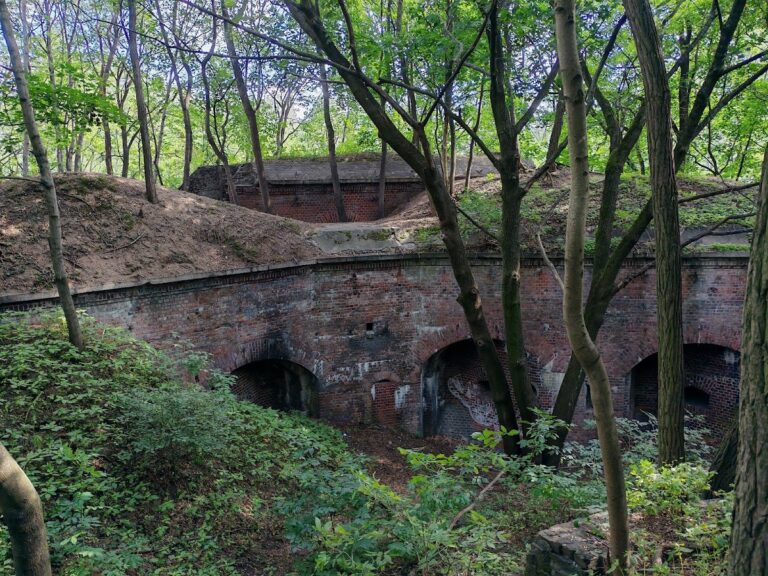
The reverse caponiers were linked to the interior by a postern, a protected passage beneath the ditch. Part of this route reused a corridor that had previously led to the demolished right-flank caponier. A corridor inside the counterscarp wall, the wall on the outer side of a defensive ditch, connected the right-flank reverse caponier with the left-flank position.
Barracks and protective barriers
Blast walls screened the main gate, the exits to the parade grounds, and the entrances to the posterns. Their passages followed labyrinthine routes intended to limit the effects of explosions. Every other barracks window was bricked up, while sand cushions and a gravel-concrete embankment reinforced the walls and ceilings. After the Second World War, the left-flank postern, the artillery sheds, and the Carnot wall, a defensive wall along the inner side of a ditch, were dismantled.
Surviving underground spaces
The underground parts of Fort IVa provide shelter for several dozen bats of several species each year. They include greater mouse-eared bats, Daubenton’s bats, Natterer’s bats, and brown long-eared bats. Their numbers have increased as the site has been secured.
Nearby sites