Fort Rowner: A Palmerston Fort Built to Defend Portsmouth
Site at a Glance
- Popularity
- Medium
- Country
- United Kingdom
- Primary era
- Modern
- Eras represented
- Modern
- Civilizations
- British
- Site type
- Military
- Remains
- Fort
On this page8 sections
History
Fort Rowner is a nineteenth-century coastal fort in the United Kingdom, built between 1858 and 1862 to help defend Portsmouth. It formed part of the Palmerston forts, a group of British coastal fortifications associated with Lord Palmerston’s mid-nineteenth-century defence programme. In Gosport’s outer defensive line, it was intended to protect against landings on the south Hampshire coast. Fort Rowner, Fort Brockhurst, and Fort Grange were planned to support one another.
Construction and defensive purpose
The three forts were estimated to cost £300,000. Their actual costs were £52,994 for Rowner, £51,514 for Brockhurst, and £60,676 for Grange. During construction in 1861, fractures were found in the fort’s left flank and keep. The Inspector of Works condemned the construction as faulty, and the contractor was dismissed in 1862. The Royal Engineers, the Army’s military engineering branch, took over and completed corrective work with military labour at a cost of £1,561.
Garrison and changing armament
Fort Rowner served as a barracks for companies of the Royal Garrison Artillery, the British Army branch responsible for heavy and garrison guns. In the 1880s it became the depot of the 2nd Brigade, Southern Division. Regiments of the Victorian period were also quartered there while transferring between postings in Britain and the colonies.
In 1902 the fort housed the No. 2 Depot, Southern Group, and the 35th Siege Train Company, an organized heavy-artillery unit. The 35th company, together with Companies 31 and 108, later formed the 1st Heavy Brigade, a Royal Artillery formation equipped with heavy guns. That year the Gosport Advanced Line forts were disarmed. In 1916 Fort Rowner was armed with a 6-pounder Hotchkiss anti-aircraft gun.
Naval use and later management
After the Royal Air Force moved out in 1945, Fort Rowner and Fort Grange became part of HMS Siskin, a Royal Navy shore establishment rather than a ship. It became HMS Sultan in 1956, and the forts remained under its jurisdiction. After April 1947, Fort Rowner briefly housed the Naval Air Medical School, which later moved to Seafield Park. A decompression chamber, which controls pressure for medical treatment, had been installed by October 1947; another arrived from Rosyth in July 1951.
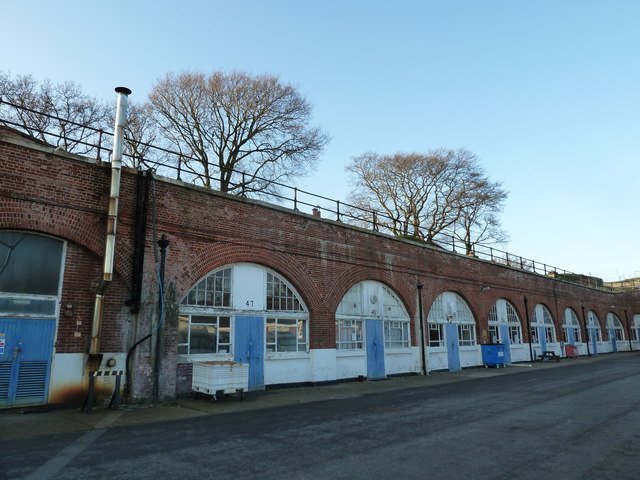
The Royal Navy’s Degaussing Establishment occupied the fort for more than twenty years, until 1991. Degaussing reduces a vessel’s magnetic signature to help protect it from magnetic mines. In 1994, after years of heavy overgrowth, the Navy cleared the ramparts and the keep roof. The Ministry of Defence owns the fort.
Remains
Defensive layout and earthworks
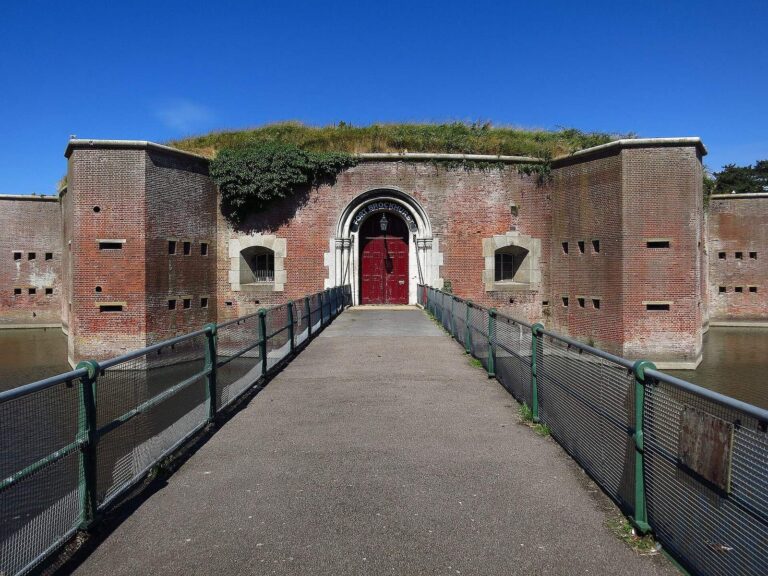
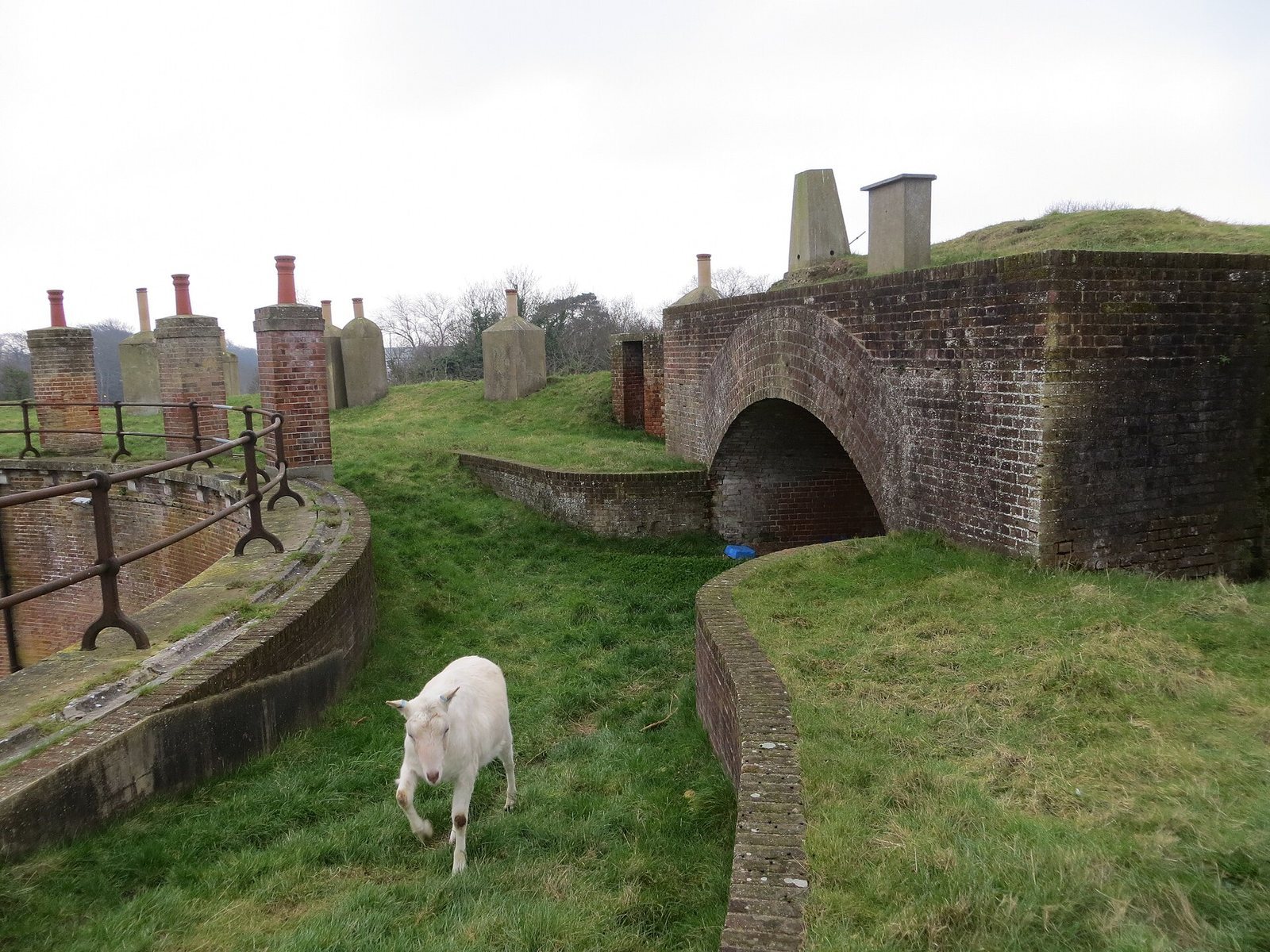
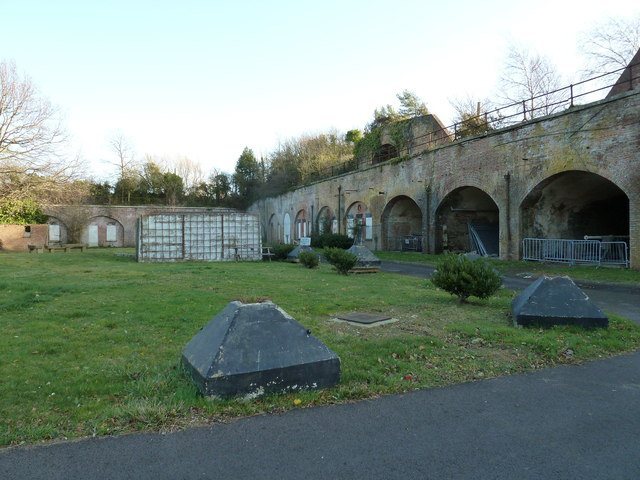
Fort Rowner has a detached-bastion plan, with separated projecting defensive works, and an obtuse salient, an outward-pointing angle greater than a right angle. It was excavated from level ground, and earth from the ditch was used to form the ramparts and a redan, a projecting, usually V-shaped defensive work. Rowner, Brockhurst, and Grange were positioned as nearly as possible in a straight line to prevent attackers from firing along the length of their fronts. Fort Brockhurst and Fort Elson lay to Rowner’s northeast, while Fort Grange and Fort Gomer lay to its southwest. Since neighbouring forts could not cover one another’s ditches, protected caponiers were required at the angles to fire along them.
Keep and moat
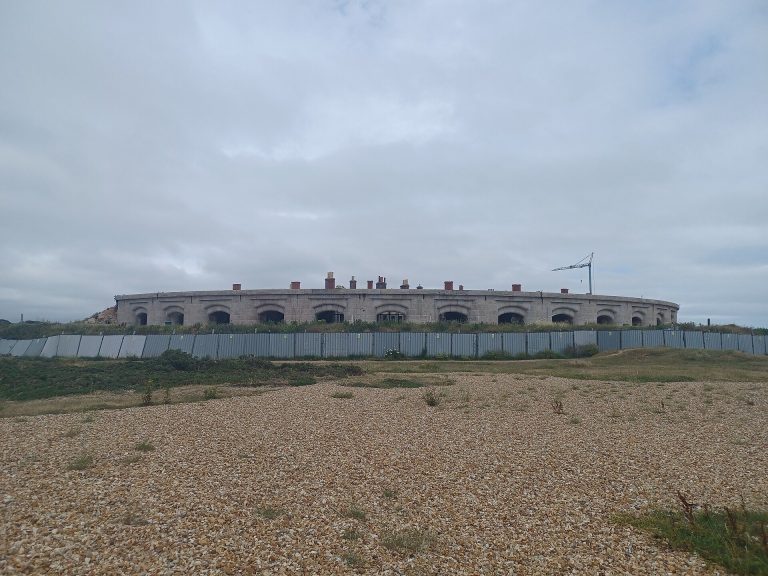
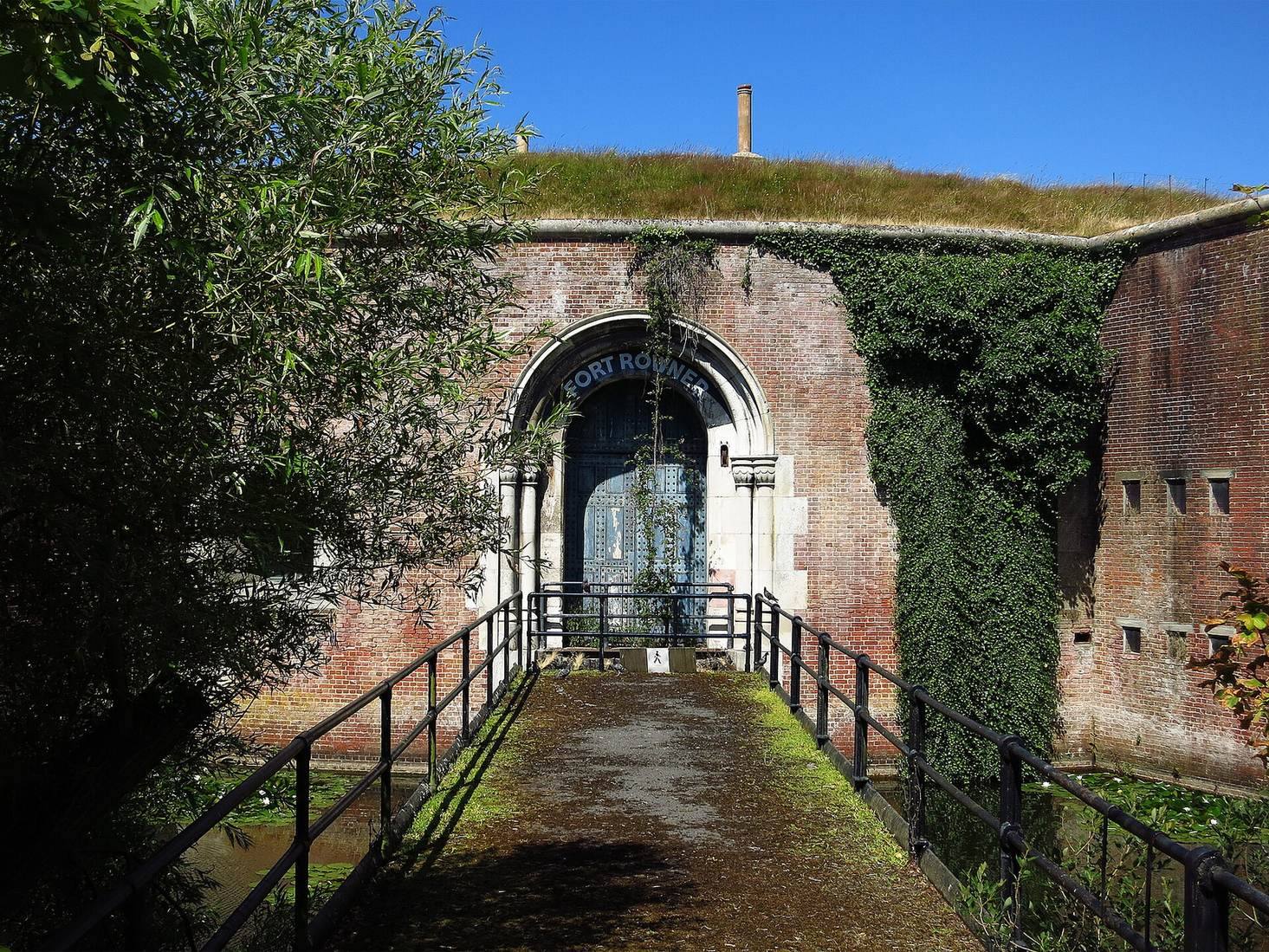
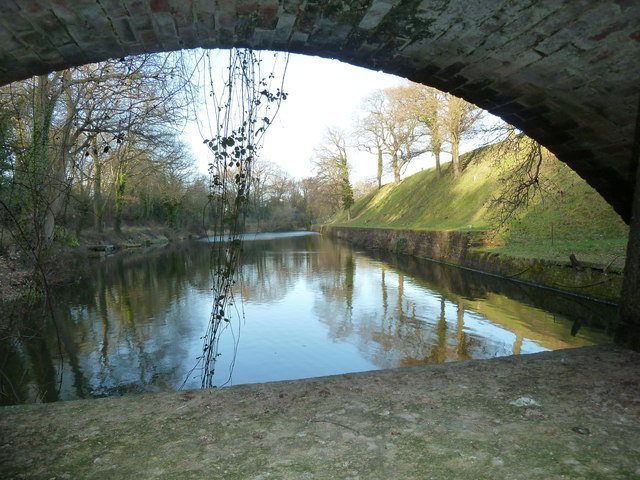
A circular keep stood centrally at the rear of the fort. During construction, the left-flank arches were rebuilt and tie rods inserted into the keep following the discovery of fractures. The keep is now mostly derelict. Its moat still holds water and contains coarse fish.
Planned gun positions
The planned armament comprised 53 heavy guns: 19 on the faces, 16 on the flanks, and nine in each of two lower galleries beneath the ramparts. The keep and caponiers were intended to accommodate 30 lighter guns, with four 13-inch mortars, short-barrelled guns for firing shells on a high trajectory, on the parade ground. An emplacement schedule listed 11 eight-inch smoothbore guns, with unrifled barrels, for the redoubt, an enclosed defensive work, and Haxo positions, protected gun emplacements associated with French military engineer François Nicolas Benoît Haxo. It allocated 13 guns to the left flank and caponier, including two Haxo positions, six to the central caponier, and 13 to the right flank and caponier, also including two Haxo positions. Two 40-pounder Armstrong guns were assigned to the shoulder terrepleins, level platforms behind parapets.