Sempronii (Forum Sempronii): An Ancient Roman Municipium in Italy


Site at a Glance
- Rating
- 2
- Popularity
- Very Low
- Country
- Italy
- Primary era
- Classical
- Eras represented
- Iron Age, Classical, Medieval, Early Modern
- Civilizations
- Duchy of Urbino, Papal States, Roman
- Site type
- City
On this page11 sections
History
Sempronii, known in antiquity as Forum Sempronii, was a Roman center at San Martino del Piano in Italy, near the later town of Fossombrone. It developed in territory inhabited by the northern Piceni, an ancient Italic population of the central Adriatic region, from approximately the eighth century BC. Celtic groups later conquered the area and partly merged with the Piceni, influencing local culture.
Roman origins and development
Forum Sempronii stood east of the later town, about 164 miles from Rome. It became a municipium during the first century BC. A municipium was a Roman community incorporated into the Roman state with a defined degree of local civic administration. The settlement prospered during the Roman imperial period, and Pliny the Elder identified its inhabitants as the Forosempronienses. Its name is associated with a Roman member of the Sempronius family, although the precise individual is uncertain. The modern name Fossombrone derives from Forum Sempronii.
Excavation has revealed successive cultural layers at the site. A Roman archaeological layer lies above a deeper settlement identified as a typical northern Picene village, showing the development of the later Roman center over an earlier community.
Destruction and Byzantine administration
Forum Sempronii was devastated in AD 409, when Goths led by Alaric passed through the region on their way toward Rome. During the Gothic War, a conflict between the Byzantine Empire and the Ostrogoths for control of Italy, Byzantine forces under Narses defeated the Gothic king Totila in AD 552. Forum Sempronii then became part of the Exarchate of Ravenna, the Byzantine imperial administration governing much of Italy from Ravenna, and of the Annonarian Pentapolis, an administrative grouping of five cities that included Urbino, Cagli, Gubbio, and Jesi.
After these devastations, the inhabitants established a new center on the hill above the present town. This settlement became the historical predecessor of Fossombrone. During the Lombard period, the territory was the scene of a battle between King Liutprand and Trasamond, the rebellious Duke of Spoleto. Liutprand defeated Trasamond, deposed him, and confined him to a monastery.
Medieval lordship
The later settlement remained outside direct Church rule until 999, when it passed under Pope Sylvester II. In the early thirteenth century it became a fief of Azzo VI d’Este, followed by his son Aldobrandino and then Azzo VII. In 1228, the Este family subinfeudated the settlement to Bishop Monaldo to defend its control against neighboring lords.
In the early fourteenth century, the Papal States invested the Malatesta family as lords of the city. The Malatesta, a powerful lordly family based chiefly in Romagna and the Marche, ordered the construction of major fortifications.
Montefeltro and della Rovere rule
In 1444, Galeazzo Malatesta, lord of Pesaro, sold the city to Count Federico da Montefeltro, the Renaissance ruler of Urbino. Under Federico, Fossombrone prospered through wool, paper, and silk production, while building renewal reshaped the settlement. His successor, Guidobaldo da Montefeltro, resided there frequently.
Francesco Maria I della Rovere succeeded Guidobaldo. Under the dukes della Rovere, the settlement expanded substantially. In 1616, Francesco Maria II extended it across the plain below the hill toward the Metauro River. After the della Rovere line became extinct in 1631, the Duchy of Urbino, including Fossombrone, passed under direct Papal States control. The city remained under papal rule until its annexation to the Kingdom of Italy in 1860.
Diplomacy and archaeological preservation
Fossombrone was also the setting for the Pact of Pope Pius II between the Republic of San Marino and the Papal States. Signed on 27 June 1463, the agreement concluded the Sanmarinese War of 1460 to 1463.
The archaeological museum and picture gallery was founded in 1901 by Augusto Vernarecci, a local humanist and archaeologist. Accidental discoveries and archaeological campaigns at Forum Sempronii enlarged its collections. Wartime damage led to the museum’s move to Corte Alta in the 1960s, and it was completely rearranged in 1997 to present the successive human cultures of the area.
Remains
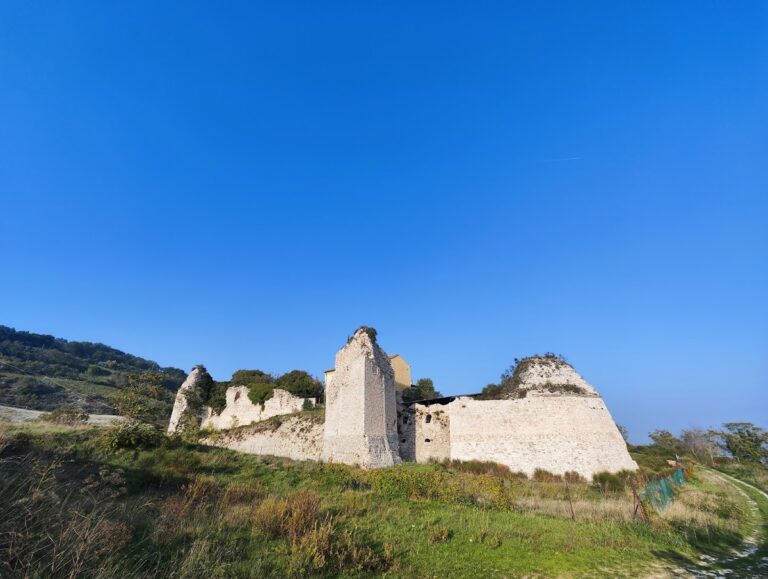
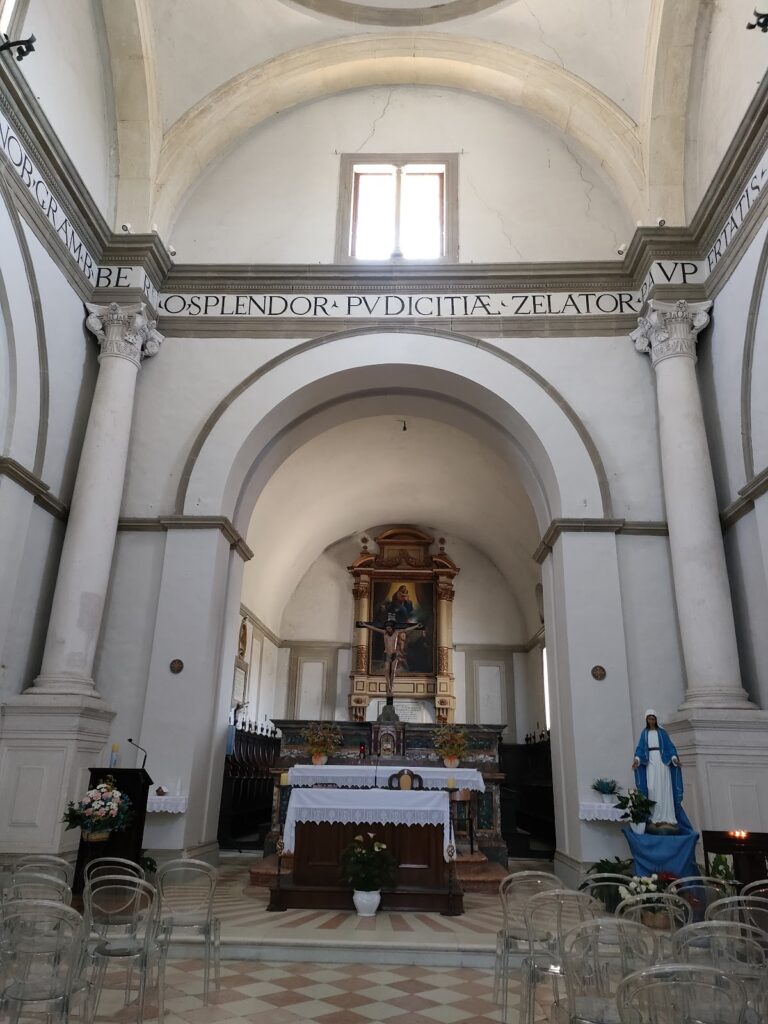
The remains of Forum Sempronii lie around the church of San Martino del Piano at the site of the ancient settlement. The excavated area includes part of the Via Flaminia, a major Roman road linking Rome with central and northern Italy and the Adriatic coast. Roman basalt paving, porticoed buildings, limited sections of the city walls, and bath structures together show elements of the settlement’s infrastructure and public architecture.
Roman streets and public buildings
Via Flaminia and porticoed buildings
A section of the Via Flaminia survives within the archaeological area, including a stretch of Roman basalt paving. Numerous porticoed buildings are also present, forming part of the built environment of Forum Sempronii. Limited remains of the city walls survive among the excavated features.
Bath complexes
One building was partly used as a bath complex. A second, large bath building in the southern part of the excavations dates to the first century BC. These structures form part of the Roman remains preserved at San Martino del Piano.
Objects and interpretation
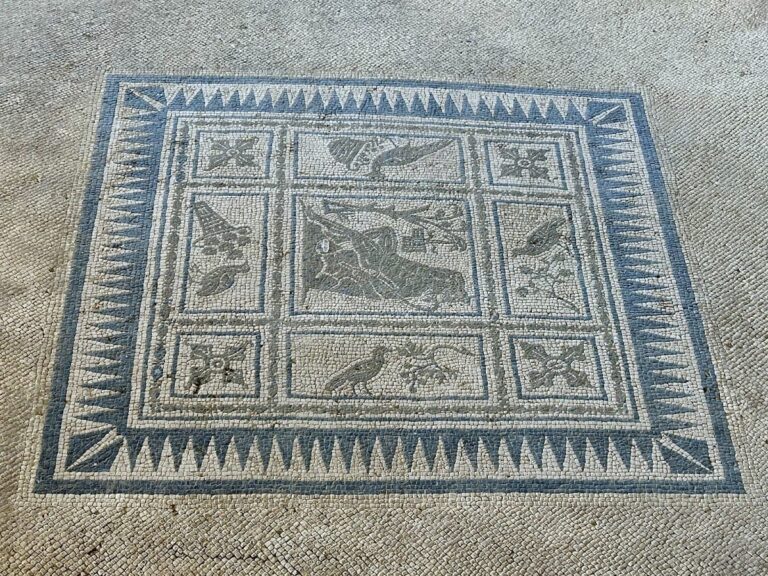
Statues and other movable archaeological remains recovered from Forum Sempronii are preserved in the Augusto Vernarecci Archaeological Museum. The museum also contains a painting of the Domus of Exotic Animals at Forum Sempronii, dated to the second century. Together with the excavated Roman layer and the deeper Picene settlement, these remains support the interpretation of the site as a place shaped by successive cultures.